by my count, today's @Isabel_Schnabel (excellent) speech is the most hawkish on greening central banks, far more ambitious than Mark Carney's and other NGFS central banks
central banks should move fast because markets misprice climate risks
green bonds need a proper taxonomy to address widespread greenwashing
carbon pricing, however loved in global policy circles, is a second-best policy solution because it's difficult to get a meaningful carbon price
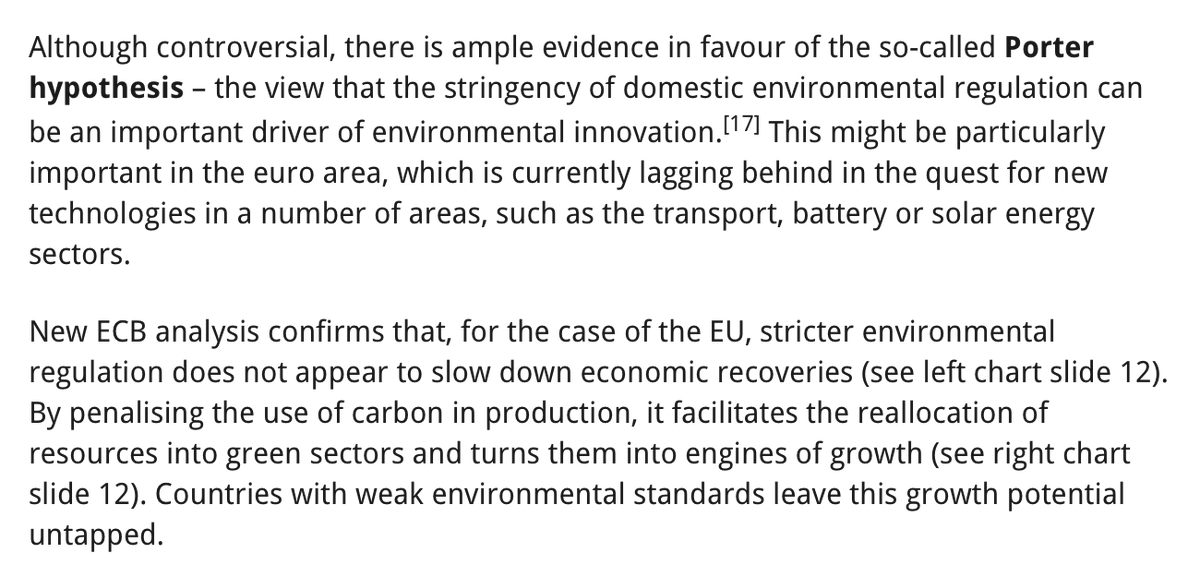
there is an economic case for stronger environmental regulations, and no trade-offs with economic recovery
better modeling of climate risks and greening own portfolios not enough, central banks need to green their monetary policy, conventional and unconventional (watch this space for our upcoming report on greening the CSPP)
and for the @ecb this is an earth-shattering statement: market neutrality needs to be abandoned because it is inconsistent with accommodating climate risks in monetary policy operations.
penalising dirty assets by excluding them from collateral framework!
last November, I chaired the Independent Panel into Finance and Climate Change for Labour Party - our report to then Shadow Chancellor @johnmcdonnellMP anticipates all the measures now the ECB has put on the table
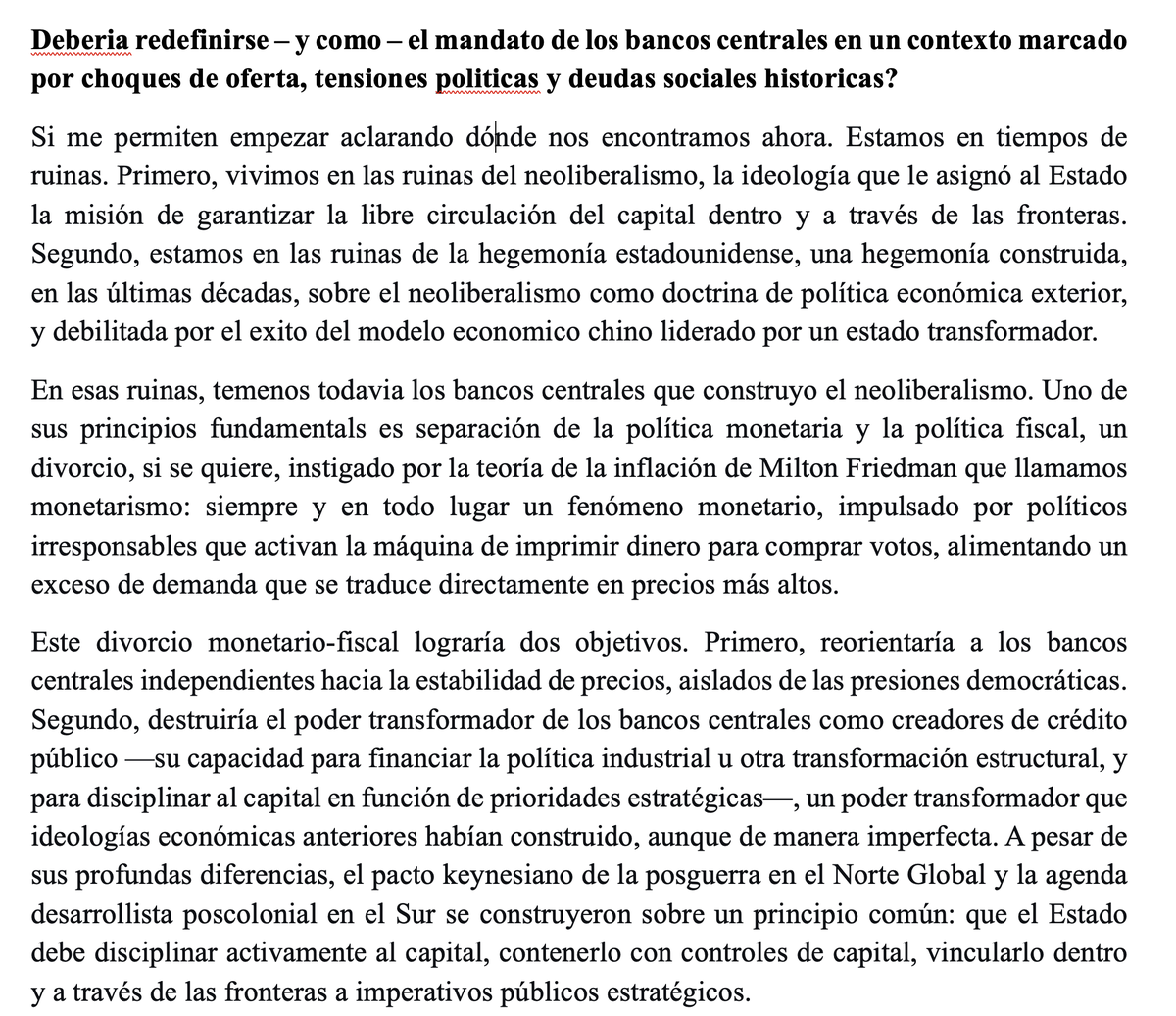
Rentoul doesnt know it but his 'good grief' reflects a monetarist choice of Bank - government relationship.
popularised by Milton Fridman, monetarism wants central banks FULLY independent from democratic decisions.
before 2008, this divorce was fully operational
the monetarist divorce unravelled during the 2008 global financial crisis.
central banks HAD TO buy government bonds and stabilise the financial system because these bonds are the arteries of modern finance, without them, booom.
#WallStreetConsensus & its failure to mobilise trillions in @FT
4 things missing:
a) hegemonic dominance of 'mobilising private finance' in development/climate
b) asking why hegemony
c) mushrooming scaling up initiatives
d) do we want success?
a) Mobilising private finance remains global game - (Bridgetown, Biodiversity COP16, 4th Financing for Development conf) & national game (UK Labour gov, Brazil/Colombia/Chile decarbonisation).
*The world's most powerful political narrative that doesnt deliver
b) hegemonic not (just) because Big Finance is powerful, but postneoliberal, transformative state cant get rid of neoliberal macro - independent central bank dominating fiscal.
without macroinstitutional change- How do we pay for transformation- only one answer: private finance
when Big Finance occupies the state and takes over the social contract, nurses struggle, grandparents struggle, parents struggle, renters struggle, private equity flourishes.
no punches pulled on the Commission's Net Zero Industrial Act, the 2022 attempt to respond to Biden's Inflation Reduction Act with a lot of derisking talk but no money (ahem, European Sovereignty Fund)
Climate policy is industrial policy, and the other way around.
An important reminder that EU's climate policy was once ambitious, state-driven decarbonisation.
the Clean Energy Finance Authority would subsidize foreign demand for US cleantech - or derisk BlackRock renewable assets in say, Kenya with subsidies/guarantees.
nothing in this proposal from a top Kamala Harris advisor suggests US should enable technology transfers to countries wishing to pursue their own domestic cleantech capabilities.
in #WallStreetConsensus, Global South are consumers of American cleantech, with American dollars.
Two amazing Global South progressives and a Nobel prize winner walk into an Oxfam panel on post-neoliberalism
Stiglitz: w neoliberalism, the growth of financial markets changed the political game tremendously
Lula 's special advisor @AAbdenur - clear mismatch - Global North openly exposing industrial policy but pushing IMF/World Bank to continue with austerity and partnerships for hyper-financialisation