With Israel eager to restrict the spread of Covid-19, it's no surprise that the government moved to impose restrictions, including on protests, so much of the media either published the news matter-of-factly, or didn't cover it at all.
Perhaps because, with a complete lockdown under way, the lifting of the exemption for political protests is not as outrageous as @Guardian would have us believe.
Regardless, the @Guardian and others have the right to cover whichever stories they choose. What is less legitimate, however, is the contrived manner in which internal critics of Israeli government policies are repeatedly given a platform far exceeding their own significance.
This tendency, taken together with the blurring of the lines between news reporting and news analysis, leads to an ongoing stream of negative news content from some media outlets.
This has a real, distortionary effect on the public's opinion of Israel.
• • •
Missing some Tweet in this thread? You can try to
force a refresh

1/ Meet Erin Cunningham, the incoming Jerusalem news director at @AP.
Her professional record - from her tenure at The Washington Post to her public statements and social media activity - raises serious questions about the impartiality expected on one of journalism’s most sensitive beats. 🧵
2/ As @washingtonpost's Middle East news editor, Cunningham oversaw coverage marked by:
▪️ Loaded anti-Israel framing
▪️ Euphemistic language that softened terrorism
▪️ False moral equivalence
▪️ Persistent skepticism of Israeli claims while amplifying Hamas-linked narratives
This wasn’t incidental. It reflected a newsroom culture problem. x.com/HonestReportin…
3/ Cunningham’s ties to the region predate journalism.
Before entering media, she worked for an NGO in the West Bank - an advocacy background that raises legitimate questions about the perspective she brings to reporting.
And in a 2014 podcast appearance, she made her emotional attachment to Gaza unmistakably clear 👇
1/ Meet Ahmad Hariri. According to The New York Times, he was "a paramedic and photojournalist who was killed in Deir Qanoun an-Nahr on Friday" in an Israeli airstrike.
Don't let the press vest fool you. Was Ahmad Hariri targeted for his medical or media work? Five minutes looking at his Facebook told us everything the NYTimes didn't. 🧵
2/ Here's the terrorist org and Hezbollah ally Amal mourning Hariri's "martyrdom."
Check out the Amal flags amongst the ambulances. Hariri was a member of a terrorist organization.
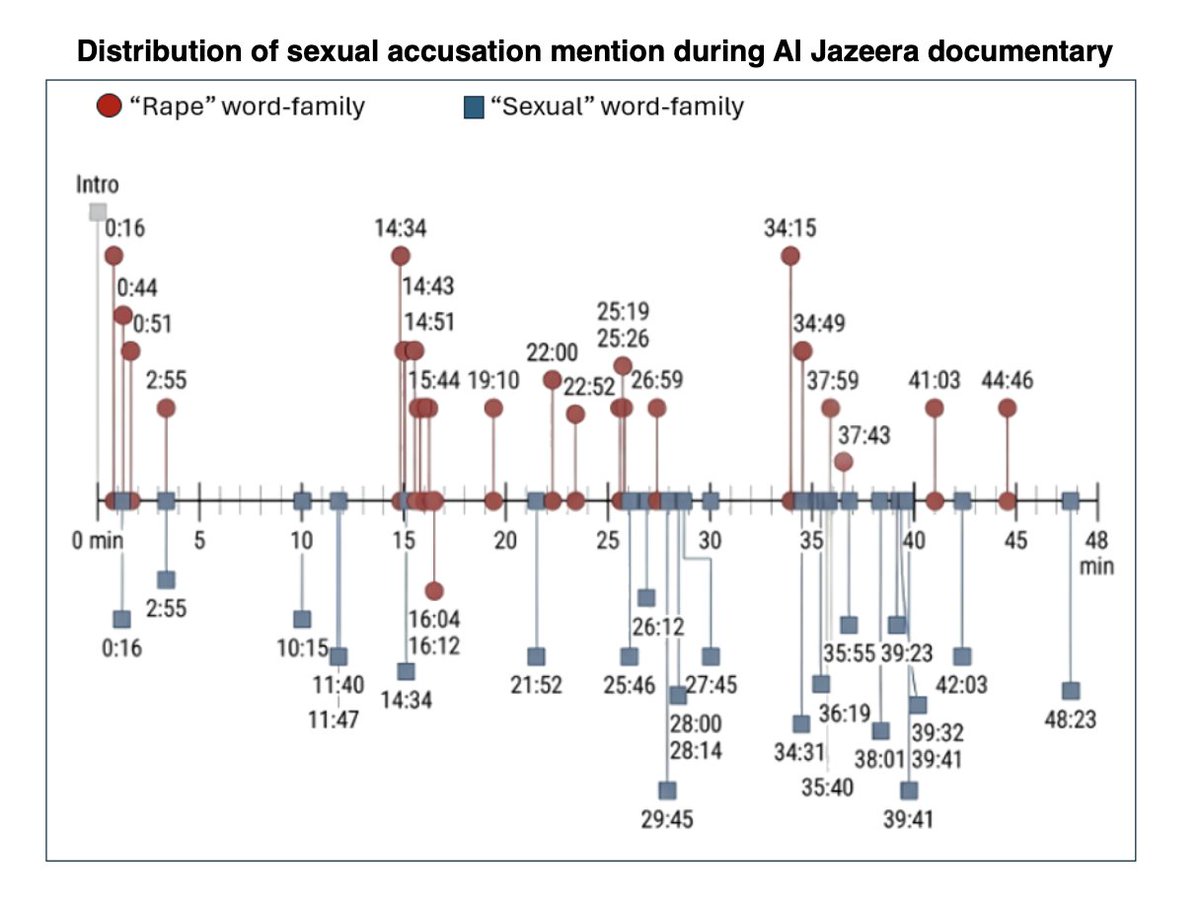
1/ The @nytimes’ new defense of Nicholas Kristof’s column on alleged sexual abuse of Palestinians – including the “rape dogs” claim – even drags in Oct 7 and Islamophobia to protect it.
2/ Opinion editor Kathleen Kingsbury says they “stand by” the piece, boasting of “rigorous vetting” and claiming editors “found no errors.” But if the original reporting were as solid as they say, the NYT wouldn’t be scrambling to issue multiple follow‑ups, stretching evidence and hiding key facts to avoid taking any accountability.
3/ Start with sourcing. One of Kristof’s main named witnesses, Sami al‑Sai, has a documented history of working for Hamas, as evidenced by his own social media and in Palestinian Authority records, and he previously accused Palestinian authorities of torture and sexual abuse – allegations the PA denied. None of that is disclosed. Readers were entitled to know that a central witness is a Hamas operative with a track record of contested torture claims. x.com/HonestReportin…
In 2025, there were 6,800 documented antisemitic incidents, nearly 20 attacks on Jews every single day. Despite some of the strictest gun laws in the world, Jewish schools, synagogues, and businesses are repeatedly shot at while perpetrators face little to no consequences.
Israel raised Canada to Threat Level 2 for Jews, and stated that the Canadian government has failed to protect its Jewish community. When Jews are no longer safe in their home and communities, the entire country is at fault.
This is a national crisis that can no longer be ignored by Canadians.
1/ 🧵
After the @nytimes “dog rape” story, we examined “human stories” Nick Kristof has published on Gaza.
What we found is alarming.
Sources presented as credible and apolitical supporting terrorism, don’t match descriptions – or may not exist.
Did Kristof verify any of this?
2/ Take Mohamed Abu Jafar.
In one column, Kristof holds him up as the kind of Palestinian who preserves a shared humanity, citing him as an example of those “who press for reconciliation and peace,” and in another calling him a “wise” Palestinian from Jenin whose 16‑year‑old brother was shot dead by Israeli forces – and even has him saying “the only practical option… is working for peace.”
A tragic story – and a quote Kristof reuses as his moral anchor. But Abu Jafar’s own Facebook tells a very different story: glorifying “martyrs,” posts about armed terrorists and “resistance,” praising attacks and celebrating jihad and martyrdom.
This is the man readers are told embodies wisdom and is “working for peace.”
3/ Kristof never tells readers one crucial fact: Abu Jafar’s brother was not killed in the current war.
In another NYT piece, the brother’s death date is given as 2002. Abu Jafar also appears to post his grave on Facebook, identifying him as a “martyr” of the Al-Aqsa Intifada.
But none of that context appears in Kristof’s columns. Instead, readers are left with the impression of a fresh tragedy – while a man who openly glorifies “martyrdom” is presented as a voice of “shared humanity” and “peace.”