Happy birthday to our beloved Motherland, to its hardworking people and its capable government CPC.
From poverty to prosperity...
From never ending civil war to peace...
From no tech to tech giant...
🌹🌹
China is the only country where upon hearing "Happy birthday to our Mother land" would arouse tears in its people and wouldn't be seen as ridiculous by the rest of the world. Try do the same to America. It would be booed worldwide. There's no glory for a country in killing
millions without being punished or even condemned.
This is thanks to US which is determined to destroy China. The opposites go hand in hand. There's no intense China love without intense China hate. Intense love is always elicited by intense hate.
The western media war on China are the knives cutting into the hearts of every Chinese. When we push back the western lies on Twitter, it's the personal insults and humiliations we are fighting back.
The anti-Japanese war served largely to unite a divided China and
psychologically shaped China into a modern nation state. Our national anthem was born from the Japanese invasion. It sings, "China has met with its worst crisis in history".
Same situation is happening now. US has declared a hybrid war on China, albeit in its initial stage.
It's a calling to all Chinese to come to the succor of the Motherland. Thank you America for relentlessly broadcasting the rallying call of "All Chinese unite" across the world. US is the best PR agent for China. China's PR is weak. It's accomplished all these wonderful
infrastructure projects in Africa but all its PR efforts fall on deaf ears. It gives the impression China is meek besides the hellish killer US/WEST.
But a superior force sees to it that the meek shall be blessed. Vicious US/WEST have come to China's "PR aid".
Western anti-China propaganda is so full of malicious slandering that the effect on the Chinese people is the opposite. It infuriates more than anything else even in the hardened anti-CPC liberals.
It arouses intense love for our endangered Motherland.
The PR value of the US/Western media assault on China is invaluable. A united China is invincible. It will kick-start China into its best golden age in the next 50 years.
Thanks America. What
doesn't kill China will make it stronger.
• • •
Missing some Tweet in this thread? You can try to
force a refresh

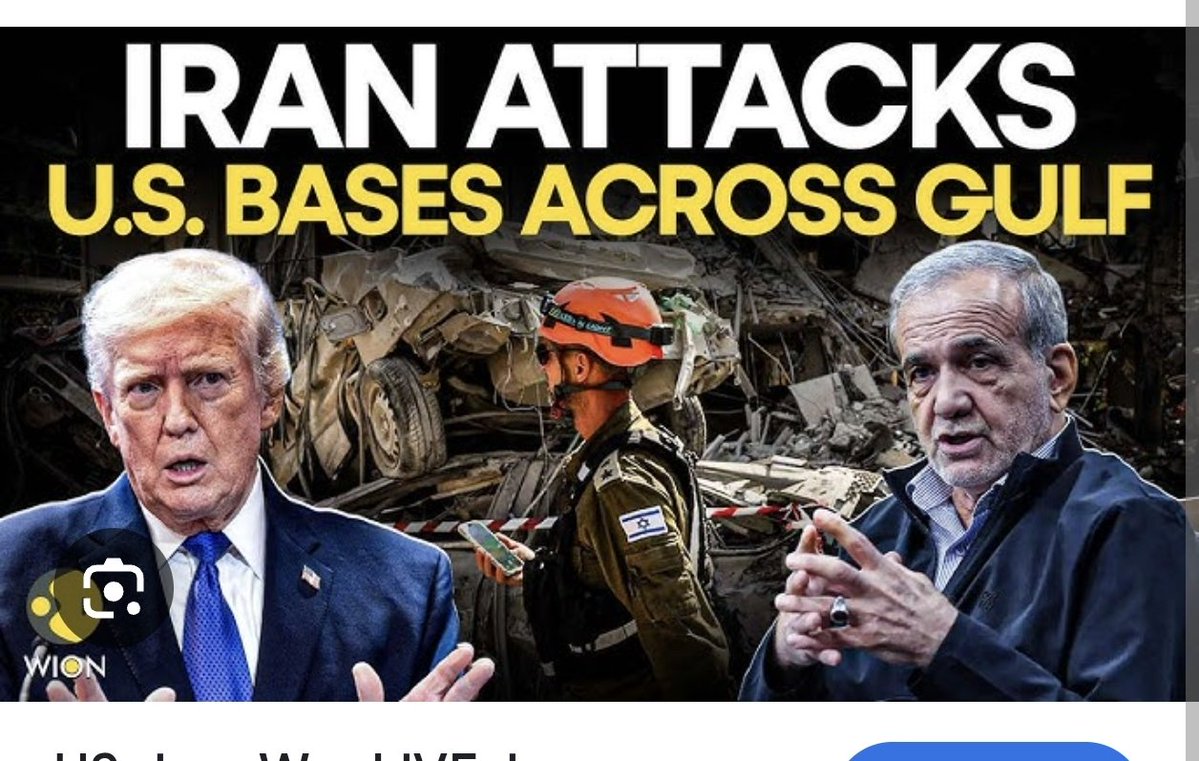
The War That Shatters the Myth of U.S. Military Supremacy
For decades the international system has rested on two pillars.
The first pillar is the belief in overwhelming American military superiority.
The second pillar is the global dominance of the U.S. dollar.
These two pillars are not separate. They reinforce each other. The dollar functions as the world’s refuge currency largely because it is backed by the security umbrella of the United States. If that military supremacy collapses, the credibility of the dollar inevitably weakens as well.
The unfolding war between Iran and the U.S.–Israel bloc is shaking both pillars simultaneously.
The Largest Missile War in Modern History
The scale of the conflict already surpasses anything seen in previous Middle Eastern wars.
Iran has launched sustained waves of ballistic missiles, cruise missiles and drones. Israel possesses the densest air-defense network in the world: a layered shield composed of systems such as Iron Dome, David’s Sling, Arrow-2 and Arrow-3.
For years this network was considered nearly impenetrable.
Yet Iranian missile salvos have repeatedly penetrated Israeli defenses. Strategic infrastructure has been struck, and large numbers of interceptors have been expended.
The Rise of the drone swarms “Air Motorbike”
Iran has mass deployed the low-cost drone systems referred to by the Chinese netizens as “Iranian air motorbikes.”
These drones possess several characteristics:
• extremely small radar signature
• range approaching 2,000 kilometers
• cost roughly $15,000–$20,000 per unit
• capacity to carry explosive payloads
When deployed in swarms, they become powerful attrition weapons.
If they evade interception, they strike targets.
If they are intercepted, they still achieve a strategic effect: forcing expensive interceptor missiles to be used.
An interceptor from systems such as THAAD or Arrow-3 can cost several million dollars.
This creates an economic asymmetry.
A $20,000 drone can force the launch of a multi-million-dollar interceptor.
Over time, the defender’s missile inventory becomes exhausted.
The war has therefore become the largest high-intensity missile exchange in modern history, testing the limits of US/Israel defensive technology.
This reality exposes an uncomfortable fact.
If Israel—with the most sophisticated air defense system on earth—struggles to intercept these missile waves, the vulnerability of other U.S. allies and US itself becomes obvious.
American air-defense coverage itself is far thinner than Israel’s. Large areas of the United States remain without comparable missile defense layers. What is happening in Israel demonstrates that modern missile saturation attacks can overwhelm even the most advanced systems.
If the U.S.–Israel bloc cannot defeat Iran — a nation that has survived more than forty years of economic siege and sanctions — how could it realistically expect to win a war against China?
The Illusion of the U.S. Security Umbrella
The consequences reach far beyond Israel.
For decades the United States has guaranteed the security of the Gulf Cooperation Council states — Saudi Arabia, the United Arab Emirates, Qatar, Kuwait, Bahrain and Oman.
Yet the war exposes a fundamental contradiction.
American bases stationed in these countries are supposed to provide protection. In reality they function as magnets for Iranian missiles. In a regional conflict, they transform host countries into immediate targets.
Instead of being an asset, the U.S. military presence becomes a liability.
The credibility of Washington’s security guarantees is therefore under scrutiny across the Gulf.
II/
The modern U.S. economy is highly financialized and relies heavily on global capital flows. One key pillar is the petrodollar system. Under the long-standing security arrangement between Washington and the Gulf monarchies, the United States provides military protection so these countries can export oil safely. In return, a large portion of their oil revenues is recycled into the U.S. financial system through purchases of Treasury bonds, dollar-denominated assets, American stocks, and extremely expensive U.S. weapons. This recycling of capital has helped sustain U.S. financial markets and technology investment.
The current war exposes the fragility of that arrangement. Iranian missile strikes have targeted the infrastructure supporting the U.S. military presence in the region. Reports indicate that an AN/TPY-2 radar linked to a THAAD missile-defense system at a U.S.-supported base in Jordan was destroyed, a system worth roughly $300 million. Other radar facilities and support infrastructure connected to the regional early-warning network in the Gulf have also reportedly been damaged.
These losses are strategically significant because such systems are rare and expensive. The United States operates only eight THAAD batteries worldwide, and their radars form a crucial layer of missile detection. When even one is lost, defensive coverage weakens and interceptors must be rationed. If Gulf states begin doubting Washington’s ability to shield them from large-scale missile warfare, the credibility of the security umbrella—and the financial architecture tied to it—comes under pressure.
A War That Was Supposed to Be Quick
The original strategic expectation from Washington and Tel Aviv was to launch a lightning campaign.
The assault was expected to replicate the US success in Venezuela: rapid leadership decapitation, the activation of cooperative internal factions, and the installation of a compliant government.
The opening strikes indeed targeted Iran’s command structure. A large portion of the country’s senior Revolutionary Guard leadership and military planners were eliminated.
However, this strategy produced the opposite political effect.
The Decapitation That Removed the Moderates
Within Iran’s power structure there has long been a spectrum of views.
Certain figures inside the political and military elite favored cautious engagement with the West or at least pragmatic diplomacy. Figures such as Hassan Rouhani, Mohammad Javad Zarif, and technocratic networks had previously supported negotiations during the nuclear agreement era.
These pragmatic elements historically argued for controlled symbolic retaliation and diplomatic channels.
But the decapitation strikes removed large parts of the upper command structure. With them disappeared many of the figures capable of mediating or negotiating.
The vacuum is now filled by middle-rank and lower-rank commanders of the Islamic Revolutionary Guard Corps.
These officers built their careers inside the ideological core of the system. They are less invested in diplomacy and more invested in battlefield legitimacy.
For them, war is an opportunity to prove themselves.
To gain prestige and authority, they must demonstrate toughness. They must win.
The political center of gravity inside Iran therefore shifts toward the most uncompromising elements of the system.
The End of the Restraint Doctrine
Previously, Iran’s leadership often practiced calibrated retaliation.
After assassinations or strikes, responses were symbolic or limited. The objective was to signal strength without triggering full-scale war.
Ayatollah Ali Khamenei had repeatedly favored this approach.
With the senior leadership removed, the strategic culture changes. The emerging commanders are less inclined toward symbolic gestures.
Their legitimacy depends on battlefield success.
The result is a hardened Iranian posture that seeks victory for the survival of the nation rather than controlled escalation.
III/
Besides, the decapitation strike occurred in the middle of ongoing negotiations, which has profoundly altered Iranian perceptions of diplomacy with Washington. From Tehran’s perspective, the talks effectively functioned as a lure: senior officials and military leaders gathered to deliberate on the negotiation process, lowering their guard at a moment when they believed a political channel was open. The strike therefore appeared not as a separate military action but as something carried out under the cover of diplomacy. As a result, a deep loss of trust has set in among Iranian elites. Many now conclude that negotiations were used primarily to buy time, reduce vigilance, and create the conditions for targeting the country’s leadership rather than to reach any genuine settlement. Thus no negotiations are possible now to quickly end the war.
A War of Attrition
The conflict is moving toward a prolonged attrition war similar in brutality to the Russia-Ukraine conflict.
High casualties, massive infrastructure destruction and prolonged missile exchanges are becoming the defining features.
Time favors the defender.
If Iran can sustain the war for even one month at the current intensity, the strategic balance may begin shifting dramatically.
Western arsenals are finite.
Missile inventories are already strained by support for Ukraine. Large reserves are also marked for potential conflict scenarios in East Asia.
These stockpiles cannot be redirected indefinitely without weakening other strategic theaters.
Attrition warfare therefore becomes Iran’s central strategy: exhaust the interceptor supply of its opponents.
Lao A: China's Social Media Scheherazade telling One Thousand and One Night Stories of Horror of America to the Chinese Audience
In the flickering digital shadows of the Chinese internet, a new literary phenomenon has taken hold. He is known only as Lao A (牢a), a phantom storyteller who never shows his face, yet possesses a voice that has hypnotized hundreds of millions. To his listeners, he is the new Scheherazade - a modern One Thousand and One Nights narrator. His tales are less entertaining than the ancient magic; they are macabre chronicles of the "American Hell."
Lao A’s popularity stems from a haunting literary eloquence that strips away the American veneer of respectability and hypocrisy - a mask the country has spent a century perfecting. He reveals an underworld where the predatory American cabals treat the underclass with utter ruthlessness and cynicism.
Do you know the true source of America’s dominance in biochemistry and pharmaceuticals? It is not talent alone, but the continued, systematic harvest of the American underclass that the machine deems "useless eaters". The United States has an abundant population of "human cattle", deliberately maintained in poverty and ignorance, for experimentation; it is, after all, the world's largest exporter of human plasma and human derived products: bones and tissues.
The US healthcare or rather biochemistry industry is literally a killing machine, and its laboratories - from the military outposts of Fort Detrick to the hallowed halls of Baltimore - are charnel houses where the poor are led to slaughter for a paycheck.
To understand the weight of these stories, one must look at the institution that stands as the crown jewel of American medicine : John Hopkins university.
The Immaculate Shadow: Baltimore and the Hill
Baltimore wears a mask of harmlessness - a quiet stage where a fatigued middle class clings to the last vestiges of normal life. Tree-lined streets soften the eye. Red-brick facades are scrubbed clean to catch the morning light. Everything suggests order. Everything suggests safety. Yet beneath this calm, the city runs a low fever.
The docks, once the city’s heartbeat, no longer sustain its families. Seasonal labor now governs life: three months of work, six months of abandonment. Time accumulates without purpose and begins to decay. In these long intervals, men drift toward drugs, gambling, and violence which have become routine. Strip clubs flicker like lesions along the streets, their neon signs pulsing through the night.
And rising above this slow, methodical deterioration - calm, immaculate, and untouched - stands the source of both Baltimore's prosperity and its most sinister horrors..
Johns Hopkins.
II/
To the international student, it is a sanctuary of discipline and data. But to the local African American community, it is something far more ancient, sinister and predatory. They look at the red brick and green copper roofs and see a monster that never sleeps. Unlike the infamous Unit 731, which history was forced to bury, this entity is legal. It is celebrated. It is funded by billions. It doesn't need to hide in a war zone; it hides in plain sight, protected by the "respectable" armor of federal grants and prestigious journals.
The Anatomy of an Afterthought: A Hospital That Birthed a School
Johns Hopkins did not grow like other universities. It did not begin with the dusty pursuit of philosophy, the rhythm of literature, or the logic of law.
It began with a hospital studying human bodies.
A Quaker merchant - celibate, childless, and burdened by a vast fortune - bequeathed his wealth not to the pursuit of abstract knowledge, but to the brick and mortar of a hospital. The hospital was the mother; the university was the child. Here, medicine was never a mere department. It was the central nervous system. Everything else - engineering, public health, international relations - was grafted on later, like auxiliary organs stitched onto a beating heart.
And that heart has never stopped asking the same, silent question like the unit 731:
How far can the human body be pushed before it finally breaks?
There is a gravity to this place that defies explanation. Federal money pours into Hopkins in quantities that make the Ivy League, icons like Yale, look like beggars. It receives more federal R&D funding than MIT, more than the giants of California—Stanford, UCLA, and UC Berkeley—and far more than the institutions built in the very shadow of the White House, such as Georgetown and George Washington University.
Billionaires like Michael Bloomberg offer their billions without hesitation, and university presidents do not simply retire; they vanish into the inner sanctums of the world’s gatekeepers—The Lancet, Nature, The Atlantic, Politico. They become the guardians of "Truth," ensuring no one asks how that truth was harvested.
Consider the precision of the Great Plague. During the height of COVID-19, two students at Hopkins tracked the world’s infections with an accuracy that felt less like research and more like prophecy. But accuracy of that magnitude is never born from theory alone.
It comes from data. And data comes from subjects who have no names.
The story below recounted by Lao A has happened again and again in real life and is still ongoing.
III/
The story below recounted by Lao A has happened again and again in real life and is still happening now.
The Boy and the Silver-Tongued Devil
The young boy is fifteen years old, turning sixteen, standing on the precipice of a life he wasn't ready for. His girlfriend is pregnant. His pockets are empty. His job at the docks is gone.
Then comes the stranger who approaches the boy in a bar. He is not a monster with fangs, but a spectacled gentleman with a soft voice and a sketchbook filled with anatomical drawings. Turns out he has been following and observing the boy for several weeks. He offers a deal that sounds like a miracle: $20,000 for two weeks of "observation." Downpayment of $5000 right away. To a boy with nothing, five thousand dollars in hand feels like the touch of God.
He is driven to the "Clinic." The route is a labyrinth, designed to disorient, ending at a quiet villa on a hill. Inside, the air is heavy. The floorboards groan like dying men. On the walls hang oil paintings of Washington crossing the Delaware, but in the corners, the cold, blue eyes of holographic cameras flicker. It is a marriage of the 18th century and the 22nd - a place where time has been removed.
"There is a worm in your brain. We will cure you for free." the doctor says with a sterile smile. "Drink this."
The liquid is brown and sweet. The boy drinks. He is paid. He buys a car, he buys clothes, he even gives money to his pastor, thinking he has been blessed.
The Harvest of Madness
But the "blessing" has a half-life.
Six months later, the world begins to warp. The boy sees pies crawling across the floor like insects. He sees ribbonfish floating through the air. He sees his dead ancestors waving from the clouds, and then, the sky begins to weep red rain.
When the money runs out and the hallucinations take hold, the "Clinic" is waiting. The boy calls the Clinic. They tell him he took the medicine wrong. They offer him a "Level 2" project. More money. More sweet liquids - pink this time, or perhaps a deep, forest green. They subject him to "resonance therapy" and "sonic purging," claiming they are coaxing the brain-worm out.
In reality, they are mapping the collapse of a human soul. He becomes a ghost in the street, dancing to music only he can hear, while the University's data points grow more precise. He is not a patient; he is a crop being harvested for the next breakthrough in biochemical warfare or high-priced pharmaceuticals.
Spain's Córdoba Tragedy and the Myth of Western Standards
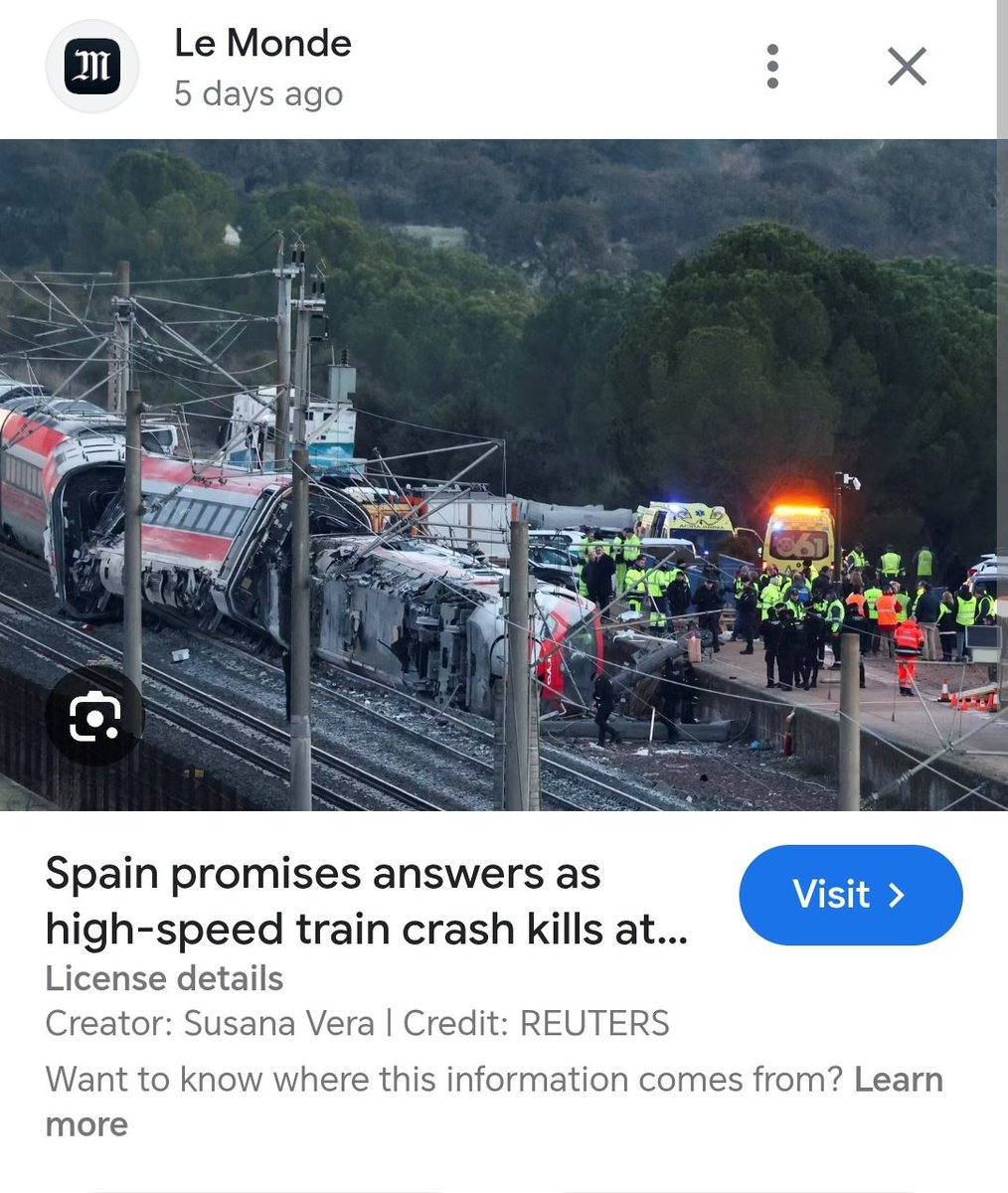
On the evening of January 18, 2026, in the southern Iberian Peninsula, in the picturesque province of Córdoba, Spain, a catastrophic high-speed rail collision unfolded. Forty lives were extinguished within tens of seconds, reduced to fire, debris, and smoke. Dozens of families were shattered in that single moment at dusk. Eyewitnesses later described the scene as a vision of hell: steel folded into grotesque knots, blood staining the ballast red.
Yet what chills one more than the accident itself is the silence that followed.
One opens the BBC. One scrolls CNN. One checks AFP. Coverage exists, yes—but of what nature? Briefs written with softened language, humanitarian sentiment confined to rescue narratives, responsibility gently dissolved into the word “accident.” No interrogation. No systemic questioning. No technological autopsy.
One is compelled to make a cruel but necessary assumption. Had this collision occurred not in Spain but in China; had the derailed train not carried the Japanese Hitachi brand but China’s CRRC Fuxing—what would the global reaction have looked like? The answer is obvious. The international opinion field would already be ablaze.
Headlines would scream “China’s Technological Collapse.” Deutsche Welle would churn out essays on the price of "China Speed". Social media would drown in mockery of “Made in China.”
This is not conjecture. This is pattern recognition.
Why do forty European deaths merit only a few painless expressions of regret in Western media discourse? Why can a mere delay of minutes on China’s high-speed rail be elevated into proof of systemic failure? What interests lie beneath this asymmetry? Whose entrenched privileges has Chinese high-speed rail disrupted, triggering such reflexive double standards?
Today, those perfumed news drafts are set aside. The text below relies not on sentiment but on data - on hard numbers, engineering logic, and technical comparison - to dissect what is now known as the Córdoba tragedy. The task is simple: to examine what crawls beneath the sanctified surface of “Western standards.”
The clock must be turned back to approximately 6 p.m. local time on January 18. It was meant to be an ordinary weekend evening in southern Spain. Two trains were converging on adjacent tracks. One was operated by a private company, traveling from Málaga to Madrid. The other belonged to Spain’s state-owned operator Renfe, heading from Madrid to Huelva.
In theory, a modern high-speed rail dispatch system functions like a precision instrument. Trains remain strictly segregated. Physical intersection should be impossible.
But catastrophe is born in details.
At that moment, the rear carriages of the privately operated train suddenly derailed - without warning. The word “suddenly” matters. The inertia of the derailed cars turned them into uncontrolled projectiles. They breached the central barrier and crossed directly onto the opposing track.
II/
Twenty seconds later - only twenty - the oncoming Renfe train had no opportunity to react. Traveling at roughly 200 km/h, it collided head-on with the derailed carriages. The impact was devastating. Front cars were launched off the track, tumbling from a roadbed five to six meters high. Survivors described the sensation as akin to an earthquake of magnitude eight: luggage transformed into missiles, glass shredded faces, conversations ended mid-sentence as lives vanished instantly.
In the aftermath, Spain’s Transport Minister publicly acknowledged that the incident was “highly abnormal” and largely ruled out operator error. This assessment rests on three facts that make industry insiders uneasy.
First: the track was new. This section had undergone a full renovation and upgrade in May of the previous year. By all standards, it should have been in peak condition.
Second: the train was new. The derailed unit was a Fracturosa 1000 high-speed train manufactured by Japan’s Hitachi—also marketed as the Red Arrow 1000. Produced in 2020, it had been in service for less than four years. More critically, it had passed a comprehensive technical inspection just three days before the accident, with all indicators deemed compliant.
Third: there was no speeding. The section was a straight track with a design speed of 250 km/h. Both trains were operating at approximately 190 km/h. The most convenient scapegoat - overspeeding - was absent.
So where did failure originate?
Preliminary investigations uncovered a conclusion that leaves one speechless: multiple rail fractures were found precisely at the derailment point. More damning still, clear evidence of chronic wear was discovered at the rail joints.
This means the failure was not instantaneous. It had been accumulating over time, silently, like a tumor.
Months earlier, the Spanish Railway Drivers’ Union had issued formal warnings about infrastructure degradation and abnormal vibration along this line.
Those warnings disappeared into bureaucratic silence. Worse still, a track safety warning system touted as “world-class” remained inert during the critical 20 seconds following derailment. It detected nothing. It issued no emergency braking command. It functioned as ornamentation—present, expensive, and useless.
This is the reality behind the image of “rigorous European standards”: newly renovated tracks fractured, recently inspected trains overturned, and safety systems blinded. Yet Western media posed not a single sharp question.
Attention must now turn to the train itself.
In Western narratives, Japanese manufacturing occupies a sacred space—synonymous with craftsmanship and immune to suspicion. The Fracturosa 1000 was marketed as one of Europe’s fastest and most comfortable trains, Hitachi’s flagship entry into the European market.
Yet beneath this halo lie structural weaknesses.
Following the accident, media treatment of Hitachi bordered on indulgence. Beyond a brief statement pledging cooperation, no serious scrutiny of design choices emerged. But technical realities tell a different story.
First, the braking system. This model relies on a relatively traditional pneumatic braking architecture. Its emergency braking response time is approximately 1.2 seconds. At high speed, those 1.2 seconds translate into tens of meters of uncontrolled forward motion. Moreover, the braking system’s thermal dissipation design has long drawn criticism. Under sustained high-speed operation, it is prone to thermal fade—a weakness previously observed in overseas deployments and conveniently ignored due to the absence of catastrophe.
III/
Contrast this with China’s electro-pneumatic composite braking system. By integrating electric and pneumatic braking seamlessly, China’s system achieves maximum braking force within 0.6 seconds—half the response time, with braking efficiency roughly 30% higher. In high-speed rail, fractions of a second are not margins; they are destinies. Had such a system been in place, the outcome might have differed.
Next is signal compatibility. Europe’s signaling landscape is notoriously fragmented. National standards coexist uneasily, forcing rolling stock to operate across multiple modes. To accommodate this complexity, Hitachi’s design made compromises in signal processing.
China’s system operates on an entirely different philosophy. Trains, tracks, and dispatch centers form a single integrated organism. There are no translators, no intermediary layers, no latency introduced by incompatible protocols.
Yet within Western discourse, these gaps are invisible. When Japanese equipment fails, blame migrates to infrastructure or fate. When Chinese equipment succeeds, silence prevails.
To understand the collapse of the warning system in Córdoba, one must confront the congenital defects of European high-speed rail. While European standards are celebrated rhetorically, their implementation is fragmented.
Germany, France, and Spain maintain divergent systems. The EU’s push for ERTMS unification has been glacial.
As a result, during line transitions, systems often downgrade to legacy signaling - analogous to a smartphone oscillating between 5G, 3G, and 2G. Stability under such conditions is illusion.
In Córdoba, despite recent renovations, reports indicate that the line was not fully upgraded to ETCS Level 2. Instead, it retained components of older S8 digital systems. These systems monitor speed but cannot assess track integrity in real time. Rail fractures or foreign object intrusion remain invisible to them.
Compounding this, Spanish rail standards exhibit lower wear-resistance thresholds than French equivalents - explaining why severe wear manifested so rapidly on a “new” line.
These facts rarely surface in Western reporting. European high-speed rail is presented as a unified gold standard, while its patchwork vulnerabilities are carefully concealed.
If the same incident had occurred in China, it would have triggered a radically different Western narrative.
However, Chinese high-speed rail has reached a level of structural maturity at which such an accident has become nearly impossible in practice.
China’s CTCS Level 3 train control system represents a dimensional reduction in safety architecture. Independently developed, it links train, track, and dispatch in real time, with data latency below 0.1 seconds—three times faster than comparable European systems.
Upon detecting anomalies, it can issue maximum braking commands within seconds.
Its anti-electromagnetic interference technology reduces signal failure rates from 90% to 20%, even under lightning and extreme weather.
In practical terms, at equal speeds, China’s braking distances are 50–90 meters shorter than European equivalents. Those meters determine survival.
China’s inspection regime is equally decisive. Daily physical inspections are complemented by comprehensive inspection trains - the “Yellow Doctors” - capable of detecting 0.1 mm cracks at 350 km/h. Big data analytics flag risks before they metastasize. In China’s system, “operating with illness” does not exist.
Real-world performance confirms this. The Jakarta–Bandung high-speed rail operates in seismic, tropical conditions far harsher than Spain’s. In over two years, it has logged 560,000 km, transported more than 1.2 million passengers, maintained punctuality above 95%, and recorded zero safety accidents.
On the Potential Outcome of an Iran War: The West’s Final Strategic Overreach
Or
The Butterfly Effect of War: Why China Wins Other People’s Conflicts
Every major war begins with a structural lie: the illusion that conflict is local, contained, and punishes only its intended target. The war in Ukraine shattered this pretense. It was intended to break Russia, yet it ended up weakening and fracturing Europe, causing the deindustrialization of Germany, and - most significantly - granting China a precious window of time.
Beijing has used this "strategic opportunity" to neutralize U.S. sanctions on "chokepoint" sectors like semiconductors and advanced lithography. China has moved from being the world’s assembly plant to its premier high-tech laboratory, achieving a level of vertical integration that has effectively neutralized Western market leverage.
As the logic of escalation now drifts toward Iran, Western strategists operate under the outdated assumption that severing energy lifelines can stifle China. In reality, a large-scale conflict in the Middle East will likely accelerate the decline of the Western financial and industrial system while China emerges as the "Strengthened Survivor."
I. The Iranian "Regime Change" Fallacy
Israel and Washington recognize a reality they rarely vocalize: they cannot defeat Iran alone. Iran is a continental-scale state with a strategic patience forged by forty years of isolation. Consequently, the objective has evolved toward a regional escalation - a war large enough to internationalize the conflict and lock NATO into a system-draining commitment.
However, the "regime change" narrative relies on a fatal misunderstanding of the Iranian people. While many Iranians harbor deep resentment toward the Khomeini regime, they harbor even more abhorrence toward foreign intervention. Having witnessed the "democracy" brought to Iraq and Libya, they know that externally incited collapse leads to ruin. Any plan predicated on an internal uprising triggered by foreign bombs will likely spark a wave of religious-Islamic nationalism that hardens resolve against the outsider. Iranians may hate their government, but they hate being "liberated" by the West even more.
II. The Fortress of Fluid: China’s Strategic Energy Reserve
The belief that the West can "choke" China’s energy supply to stall it's AI and industrial development is decades out of date. Beijing has transformed its energy vulnerability into a massive, multi-layered fortress.
As of early 2026, China has officially amassed between 1.2 and 1.5 billion barrels of crude oil—a historic high. This "Great Wall of Oil" is no longer just a 90-day safety net; it covers over 100 days of net imports. In a crisis where China invokes "demand reduction" - prioritizing its 50% EV fleet and high-speed rail while rationing fuel for military use - analysts estimate China could "hold the fort" for one to four years.
This resilience is built on three pillars:
The "Floating Fleet" & Opportunistic Buying: China institutionalized a policy of massive buying whenever global prices dipped below $70. In late 2025, floating storage in Asian waters tripled to a 3-year high, with over 70 million barrels—mostly Iranian and Russian oil—waiting offshore.
Invisible Underground Caverns: A significant portion of these reserves is stored in massive underground salt caverns and rock galleries, such as the 195-million-barrel facility in Fujian. These sites are immune to satellite monitoring and harder to target than surface tanks.
The Green Shield: By 2026, green energy accounts for approximately 50% of China's total energy consumption. AI centers run on electricity, not crude. With clean energy generation exceeding 3 trillion kWh, the power for China's high-tech heart is increasingly independent of global oil lanes.
III. Two Scenarios: The Breaking of the West
Scenario A: The $20 "Supply Dent" (Mild Escalation)
If Iranian and Venezuelan supplies are severed, the market must replace 10% of China's oil imports, triggering a $20 per barrel hike.
The true casualty of a war with Iran will be the stability of the United States and Europe.
The Affordability Crisis: Both Europe and the U.S. are at a breaking point. A surge in energy costs would ignite rampant inflation, deepening the existing affordability crisis for ordinary citizens.
The Interest Rate Trap: High inflation makes it impossible for the Federal Reserve to lower interest rates. Buyers of U.S. debt will demand even higher yields, pushing U.S. national debt interest payments past the $1 trillion mark in 2026. Raising rates further to fight oil-driven inflation would break the U.S. economy.
Industrial Flight: High energy costs have already gutted Germany’s manufacturing core, with giants like BASF and Volkswagen cutting local production. A $20 oil hike would cause the remaining European industrial base to collapse or relocate to more stable energy markets - most notably, China.
Scenario B: The $200 "Global Chokehold" (Violent Escalation)
The true nightmare scenario lies in Iran’s geographic trump card: the Strait of Hormuz. As a continental power with a sophisticated arsenal of mines, anti-ship missiles, and swarming fast-attack craft, Tehran has the demonstrated capability to turn the world’s most vital energy artery into a graveyard for tankers.
If Iran follows through on its long-standing threats to block the Strait or strike the vulnerable energy infrastructure of neighboring Gulf states, roughly 20 million barrels per day - a fifth of global supply - would vanish overnight. In such a vacuum, the logic of supply and demand collapses; as Supreme Leader representatives have warned, oil prices could realistically surge toward $200 per barrel.
The Western Terminal Shock: For the West, this would not merely be an "energy spike" but a terminal economic shock. It would ignite rampant, double-digit inflation that would shatter the remaining purchasing power of American and European households, potentially leading to widespread civil unrest and a forced sovereign debt restructuring.
The China Surplus & "Made in China" Antidote: Paradoxically, global dependence on "Made in China" will increase during this hyper-inflationary period. As Western production costs become unsustainable due to energy prices, Chinese exports of "industrial ingredients," spare parts, and consumer goods will become the only affordable antidote to Western inflation.
The $1.5 Trillion Peak: Buoyed by its domestic energy sovereignty and the ability to continue manufacturing while the West grinds to a halt, China’s trade surplus is projected to soar to a historic $1.5 trillion. China will emerge not just self-sufficient, but as the world's sole functioning industrial "stabilizer" amidst the chaos. China will achieve a level of industrial dominance unprecedented in human history.
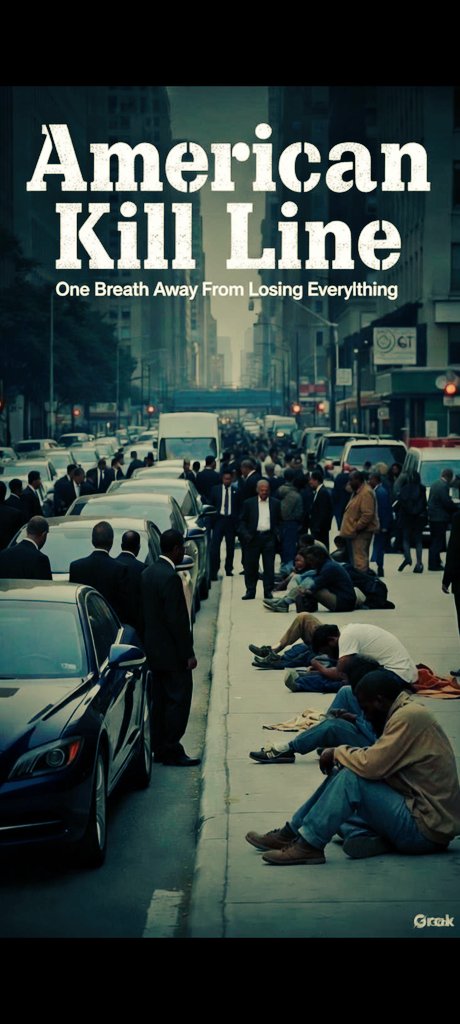
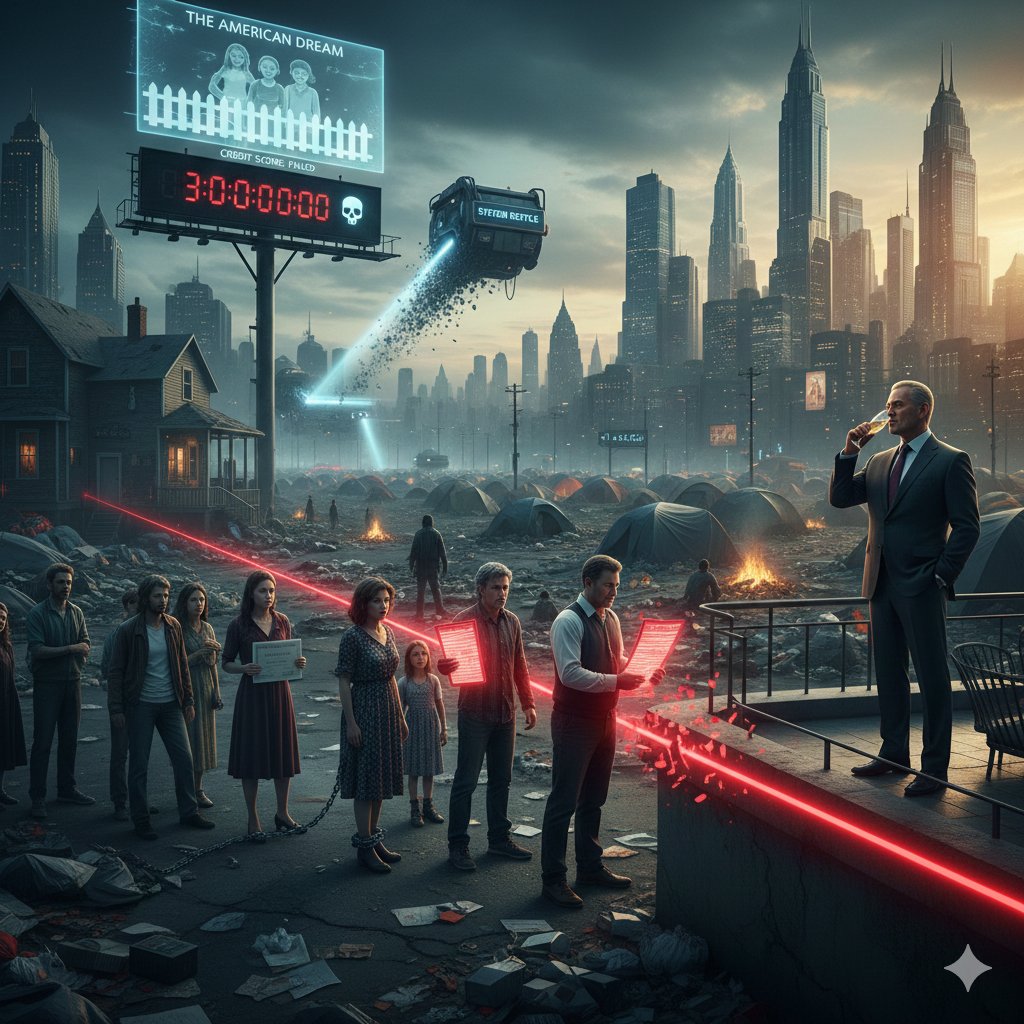
The American Weapon of Mass Destruction: the Invisible Execution Line that kills hundreds of thousands of Americans a year silently
This is a hot topic in China these days.
I summarize the main points below. Americans can tell me if it's true.
In the United States, there is an invisible line. You never see it marked on the ground. No siren sounds when you cross it. No announcement is made. But once you do, your life enters a closed system. A negative loop. A corridor with no exits.
In America, everyone talks about paying bills. It is a national obsession. Its medical bills are legendary. Dynamic pricing without limits. Giving birth can cost hundreds of thousands, even a million dollars. A single tooth extraction can cost more than a month’s rent. No ordinary person can possibly pay these sums—especially those who have already lost their job and, with it, their insurance.
If you cannot pay, the system does not pause. It does not negotiate. It eliminates. Slowly, mechanically. You are not punished in a courtroom. You are ground down by procedures, fees, astronomical compound interest, and deadlines until nothing remains.
This line is a survival threshold. Cross it, and the system stops treating you as a human being and starts treating you as waste that has not yet been processed.
Western media loves to talk about China’s so-called “social credit score,” in dystopian language. A digital leash. A techno-authoritarian nightmare. But this is projection. The real, fully operational social credit system already exists in the United States. It is called your credit score. Your ability to pay your bills.
In America, your credit score is not just your financial data. It is your civil status. Your digital soul. Once it drops below a certain point, you are quietly erased. You cannot rent an apartment. You cannot get a phone plan. You cannot pass a background check. Often, you cannot even open a basic bank account. There is no meaningful appeal. No state-level repair mechanism that works at scale.
In China, debt problems are treated as a social risk to be managed. Housing is stabilized. Utilities stay on. The state intervenes because social collapse is expensive. Fear and despair spread quickly in a society, and the cost is collective. In the United States, default is treated as a moral failure. Punishment is impersonal, automated, and outsourced to algorithms. Once the gears start turning, they are designed to move in one direction only.
The most brutal feature of the American system is not poverty itself. It is the absolute requirement of a fixed address.
No address means no mail. No mail means no bills, no notices, no verification. No verification means no bank account. No bank account means no job. No job means no health insurance. This is not accidental. It is a perfectly engineered chain reaction.
Once you lose housing, time itself turns against you. The average survival time of a homeless person in the United States is about three and a half years. In a country that constantly talks about labor shortages and immigration, this number should haunt every policy debate. People are not “falling through the cracks.” They are being processed out of the system.
Perfectly normal people—fit for work, needing only a few weeks of stability—are treated as waste and left to rot and die on the street.
Healthcare stands guard at this execution line.
In America, if you get sick, there are only two outcomes. Either the disease kills you untreated, or the bill finishes you off by pushing you into homelessness. There is no third path.
Lose your job, you lose your insurance. Get sick afterward, and the bills arrive in amounts no average American could ever repay. The debt is not meant to be paid. It is meant to push you past the line.
II/
When people began using AI tools to audit medical bills, to contest inflated charges, simply to survive, the response was immediate. New rules now forbid the use of AI to contest medical bills. Soon AI will have inbuilt algorithms which forbid such interference with the filtering function of the system.
Costs must remain high. The guillotine must stay sharp. Americans must be made to stay in the debt trap all their life. The system makes sure nobody can pay off their debts (compound interest aiding which no average American understands) and walk away with huge savings and a happy retirement. Nobody is able to do what the personal finance gurus like Dave Ramsay or Robert Kiyosaki teach.
This also explains the opioid epidemic. If seeing a doctor means bankruptcy, homelessness, and social death, then swallowing painkillers and continuing to work becomes a rational survival strategy. Addiction is not a cultural failure. It is an adaptation to a system where rest, healing, and care are priced out of reach.
The middle class—once the system’s stabilizer—is being quietly dismantled.
Young people now enter adult life already wounded by debt. Student loans that cannot be discharged. Interest that compounds faster than wages. From day one, they are locked onto the credit treadmill. Miss a step, and you slide backward into the kill zone.
At the same time, low-cost survival has been criminalized. Sleeping in your car. Growing vegetables. Keeping chickens. In short, self-sufficient non system dependent cheap living is illegal or heavily restricted in many states. You are not allowed to survive cheaply. You must consume expensively. You must borrow. You must pay interest. The system does not want resilience. It wants dependency.
The popular fantasy is that this is a competitive system where the best rise to the top. In reality, it is closer to a battle royale with a shrinking map. A few escape upward. Most run in place, living from pay check to pay check, paying bills just fast enough to avoid immediate default.
They are not citizens in a republic.
They are cattle in a credit algorithm.
That is the invisible execution line that awaits evey middle class American.
Gemini generated this image for me based on the text
Across 9/11 (2001), London Metro 7/7 (2005), and Charlie Hebdo (2015), Bataclan (2015) and many other high profile terrorist attack, the same identical scenario repeats. The structure is the same. They are all Israeli psyops.
First: foreknowledge, extreme proximity.
Before 9/11, Netanyahu moved in the same New York political–business circles as Larry Silverstein, the owner of the Twin Towers who acquired the Towers shorty before 911, a long-standing pro-Israel donor with direct access to Netanyahu and Israeli government. Netanyahu himself repeatedly claimed, immediately after the attacks, that he had long warned of such an event. On 7/7, Netanyahu was physically in London, cancelling a public appearance shortly before the bombings. With Charlie Hebdo, Netanyahu had close personal ties to Richard Malka, the magazine’s long-time lawyer who defended Charlie Hebdo's long tradition of sadistic blasphemy of the Prophet Mohammed of the utmost bad taste as freedom of expression, who became a central media figure after the attack.
Second: instant attribution.
In all four cases, the identity of the attackers and the ideological framing was established almost immediately. No uncertainty window. No need for competing hypotheses. The enemy was named before the investigation began.
Third: convenient evidence.
Passports found intact (911 and Bataclan: passports conveniently found immediately at the crime scene. No need for prolonged investigation to know “who done it”). Documents appearing on cue. Evidence that survives explosions (911) better than steel or human bodies. The narrative locks early and never unlocks.
Fourth: no serious inquiry into intelligence failure.
How did this happen? Who knew what, and when? The apparent foreknowledge is discarded.
Fifth - and most important: instant political framing.
Each event is immediately folded into a civilizational narrative: terrorism as an existential war, Israel as the frontline, and Jewish life in the diaspora as inherently unsafe. The implied conclusion is always the same: Jews must move to Israel. Without continuous Jewish settlement, the Israeli state hollowes out demographically and politically.
After Charlie Hebdo, Netanyahu openly urged French Jews to leave for Israel - fear converted directly into demographic salvation. This time is no different: accusations of mounting anti-Semitism are paired with calls for Australian Jews to relocate to Israel, a country now facing sustained population outflow.
Same sequence. Same beneficiaries. Same absence of indepth investigation addressing disturbing coincidences and damning evidence of an inside job. Same mainstream campaign to strike down disturbing questions as "conspiracy theories”.
Bondi Beach and the Logic of Spectacle
When a mass killing happens, the first instinct is grief. The second is fear. The third - if you have lived through enough of these cycles - is pattern recognition.
The Bondi Beach tragedy immediately triggered that third response in many people. The mass casualty is real, but the structure of the event felt familiar. Too familiar. Professor Jiang has given his analysis of the Bondi Beach attack in his viral YouTube video.
Prof Jiang does not claim that nothing happened, or that no one died. The argument is more uncomfortable: that some events are allowed to happen, shaped, framed, or accelerated because they serve a strategic narrative.
This is what “false flag” originally meant - not fake blood, but misattributed causality.
Foreknowledge and the Smell of Timing
One of the first anomalies raised in the video concerns timing. Searches for the alleged perpetrator’s name appeared in Google Trends in Israel, Turkey, and Afghanistan before the attack occurred. On its own, this could be coincidence, data noise, or misinterpretation. But in intelligence analysis, anomalies are not judged in isolation. They are judged in clusters.
When foreknowledge, media preparedness, and narrative readiness all appear together, analysts begin to ask a different question - not “is this fake?” but “who was the master mind behind and why?”
Narrative Control Comes First, Facts Later
Almost immediately, the event was folded into a broader ideological frame.
An Israeli human rights lawyer appeared in mainstream scheduled interview grade high-resolution photographs - bloodied, bandaged, composed - giving television interviews before seeking medical treatment. Again, no single image proves anything. But mass casualty events are usually chaotic, visually messy, and poorly documented in their earliest moments. This one was not.
After decades of successful psychological operations, Israel no longer bothers with subtlety.
Even more striking was the speed with which political conclusions were drawn. Before investigations had meaningfully begun, Australia’s alleged “anti-Semitic culture” and its stance on Palestine were cited as causal factors. This is not how criminal inquiry works. It is how narrative consolidation works.
The goal was not understanding. It was immediate moral framing.
Convenient Security Failures
Bondi Beach was not an obscure location. It was a high-profile public space, associated with a Jewish cultural gathering, in a country with extensive surveillance infrastructure. Yet police response reportedly took over twenty minutes.
Meanwhile, the alleged perpetrator was already known to security services. ISIS flags and explosives were conveniently “discovered” in his car with remarkable speed. The suspect conveniently embodied every required archetype: radicalized islamists, foreign-linked, ideologically fitting the Israeli narrative.
In intelligence history, such scenarios are called too clean. Either security services are catastrophically incompetent - or selective blindness was involved.
The Camera Was Already Rolling
Perhaps the most unsettling feature of the Bondi event was how well it was documented.
High-quality photographs during the attack. An eleven-minute video released by authorities. Extensive real-time coverage. This runs directly against decades of established practice, which limits public exposure to mass shootings to avoid copycat violence. Western governments know this. They teach it. They enforce it. Strangely now they practice and teach the opposite. How to carry out a mass shooting video is released to the public for all to emulate. Maybe they want more of such massacres to occur?
III/
Spectacle is not a by-product here. It is the point.
And spectacle has an audience.
Who Is the Message For?
The central claim of the video is not about Australia. It is about the Jewish diaspora.
Zionism, as a political project, does not function on comfort and normality. It functions on mass casualty and fear. Historically, Aliyah - the migration of Jews to Israel - spikes not during peace, but during perceived existential threat. The more frightened the diaspora feels, the stronger the pull of Israel.
This is a time proven structural observation.
The podcast references historical precedents, including documentation of covert attacks on Jewish communities in mid-20th-century Iraq, later acknowledged by Israeli historians as operations designed to accelerate migration. The precedent exists: fear as fuel.
From this perspective, the Bondi tragedy functions as a message: You are not safe in Australia. Anti-Semitism is everywhere. Leave for Israel.
The target is not just Muslims. Not just Australian government expressing sympathy for the Palestine cause.
The target is Jewish families watching the news at home.
False Flag Does Not Mean Fake Deaths
One of the laziest rebuttals to this kind of analysis is moral outrage: “Are you saying the victims aren’t real?” That's not the point.
A false flag operation does not negate death. It weaponizes it.
It means responsibility is misdirected, while the beneficiary quietly consolidates narrative advantage. In the Bondi case, the clearest beneficiary is not ISIS, not Australia. The biggest beneficiary is Netanyahu and the Zionist political narrative that requires perpetual hostility to justify its cause and atrocities.
The Coaxing of Jews to Move to Israel
As Israel’s demographic pressures deepen, its political contradictions sharpen, and its international legitimacy erodes, the incentive to externalize blame and anxiety grows. Diaspora insecurity becomes strategic capital.
This framework is highly plausible. Bondi is not an isolated tragedy. It is a re-enact of a prototype.
Spectacular violence. Instant moral framing. Emotional button pushing. Media saturation. A frightened audience told, once again, that history is repeating (continued holocaust) and only one destination offers safety: Israel.
The repeated deployment of Israeli psyops are so crude they verge on the parody. For long term follower of such psyops, the pattern screams.
One detail doesn't fit the narrative. It's the Muslim hero Ahmed al-Ahmed who tried to stop the attacker. Israel doesn't know what to do with him. He is not in the script.