We have an economy with a positive first derivative and negative second derivative—everything is continuing to improve but it improving at a slower pace than before.
Normally 661,000 jobs would be something to celebrate. But when you’re 11 million jobs short of where you were in February the slowing pace of recovery is a worry.
Three reasons for it:
1. Easy recovery already happened. Has been people being called back from temporary layoff, permanent unemployment rising.
2. CARES Act expired.
3. Virus resurgence.
Notably in September there were 661,000 jobs added (payroll survey) while 1.5m reduction in temporary layoff (household survey). That is worrying because the fuel of labor market recovery is going away.
Also notable, the labor force participation rate has not moved since July. Normally we would expect a strengthening economy to have an increase in participation rates. Moreover, if the $600 was having a large disincentive effect that should have raised participation.
• • •
Missing some Tweet in this thread? You can try to
force a refresh

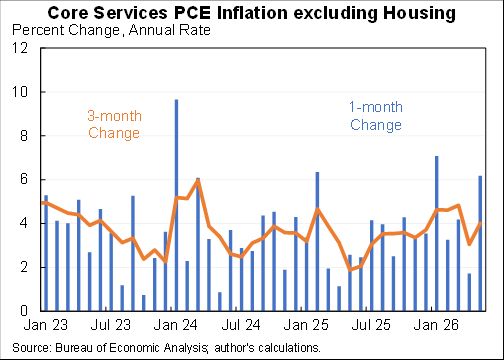
PCE inflation came in high. And the details were even more worrying than the headline as the risk of inflation mounting outside the tariff/Iran affected sectors.
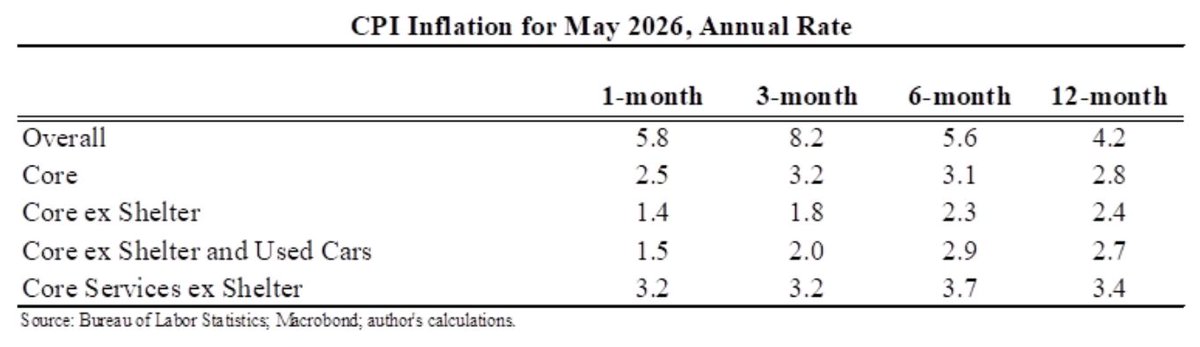
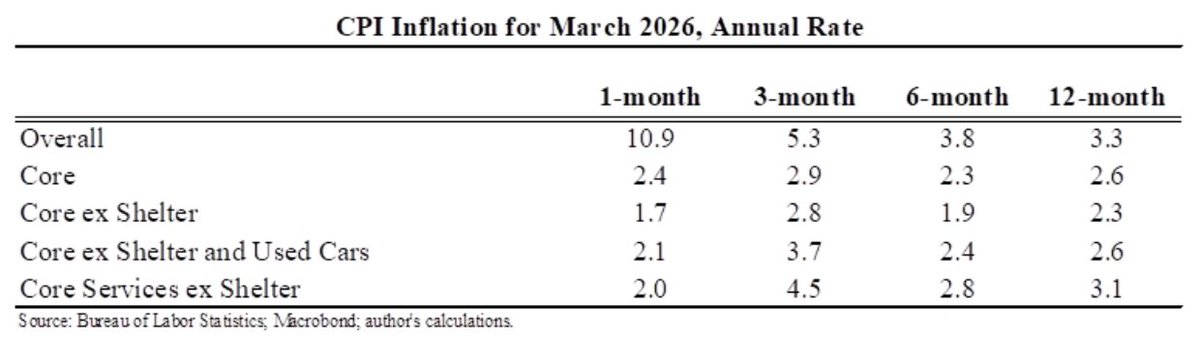
New NYT: CPI was super hot. But core was relatively tame. Two huge one-time factors raising inflation: tariffs & Iran. Fed can't solve them because they're not about excessive demand. Only Trump or time can solve.
Now the usual wonky thread I didn't have time for before.
The job market continues to be reasonably good (for an aging workforce with low net immigration).
178K jobs in March, much a bounceback from strikes and weather that resulted in -133K (revised) in February. The three month average is 68K.
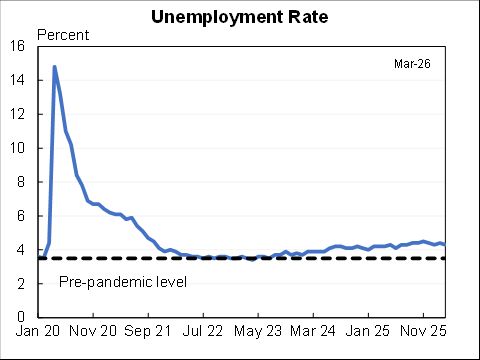
Urate ticked down to 4.3%.
We're past the large shifts in government jobs that were confusing the interpretation of overall jobs numbers last year. But still, I'll show you the private numbers (possibly the last time until needed again)--you can see the difference between this and total from last year.
The stability of the unemployment rate is extraordinary and unprecedented. It is 4.3% now, only 0.1pp higher than it was 12 months ago.
Note estimates of breakeven job growth range from about 0K to 50K/month. Don't need a lot of new jobs to keep unemployment from rising.
Jobs report uniformly weak: 92K jobs lost (with job losses in almost every industry), household survey employment down too, unemployment rate up to 4.4%, participation down, avg weekly hours flat.
Main sign in the other direction was strong wage growth.
The dynamics for private employment look just like overall (86K lost in private with govt basically flat.
Unemployment rate still stable or slightly rising. Breakeven job growth is in the 25-50K range so negative jobs months will be more common and normal going forward. Note 3-month moving average of jobs is 6K so a bit below this range.