1/ As the coronavirus pandemic has killed more than 206,000 Americans, Donald Trump has spent months undermining faith in the democratic process and vacillating on proven public-health policies, @AlexisMadrigal and @yayitsrob write: theatlantic.com/health/archive…
2/ The president’s entourage has operated with a casual disregard for coronavirus protocol throughout the pandemic, but the first sign that Trump himself had direct exposure to the virus came Thursday, when Hope Hicks, a close adviser, tested positive. theatlantic.com/health/archive…
3/ Trump tweeted early Friday morning that he and the first lady had tested positive for COVID-19 and would quarantine at the White House. theatlantic.com/health/archive…
4/ Trump’s positive test raises a chain-reaction question: When, exactly, was the president infected? And who else might be sick? theatlantic.com/health/archive…
5/ In the coming days, it would not be surprising if we learn more members of Trump’s inner circle have contracted the virus. Nor would it be shocking if the president was contagious when he shared a debate stage with Joe Biden only three days ago. theatlantic.com/health/archive…
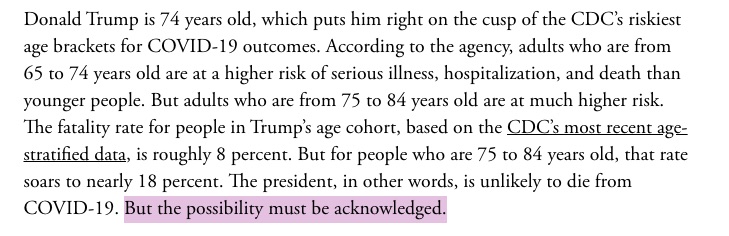
6/ The White House did not immediately point to contingency plans should Trump become too ill to continue working. Trump is 74, which puts him right on the cusp of the CDC’s riskiest age brackets for COVID-19 outcomes. theatlantic.com/health/archive…
7/ Even in ordinary times, any risk to the president’s health is a national-security issue, and right now his diagnosis will intensify a wide-reaching and dangerous global crisis. theatlantic.com/health/archive…
1/ 55 years ago today, Martin Luther King Jr. was assassinated while on the balcony of his motel room in Memphis.
Writers and thinkers ever since have tried to understand King’s legacy, which has been complicated and confused over half a century: theatlantic.com/projects/king/
2/ Seven days diverted the course of a social revolution and changed America forever.
Our new podcast “Holy Week” tells the story of the fiery, disruptive period following King’s assassination: theatlantic.com/podcasts/holy-…
3/ “The sound bites evoking King are stretched like skin over the bones of existing debate. The figure celebrated looks nothing like the leader who lived—and who was killed—but like a granite-chiseled modern founding father,” Vann R. Newkirk II writes. theatlantic.com/politics/archi…
Writer Deborah Copaken reflects on lessons learned from her decade-long friendship with Nora Ephron, who “teaches me, by example, how to navigate the postreproductive half of my life.”
1/ The first woman to win the Pulitzer Prize for fiction. The first Black person in Salem, Massachusetts, to formally teach white students. The longest-serving first lady.
To mark #WomensHistoryMonth, we’re sharing essays from women in history whose work appears in our pages:
2/ Charlotte Forten Grimké was an educator and abolitionist who wrote with forceful moral urgency. She was the first Black woman to appear in the pages of The Atlantic.
3/ If you know anything about Helen Keller, it's about her experience as a deaf and blind person in America. But Keller’s “writing about other subjects is incandescent,” @elcush once noted.
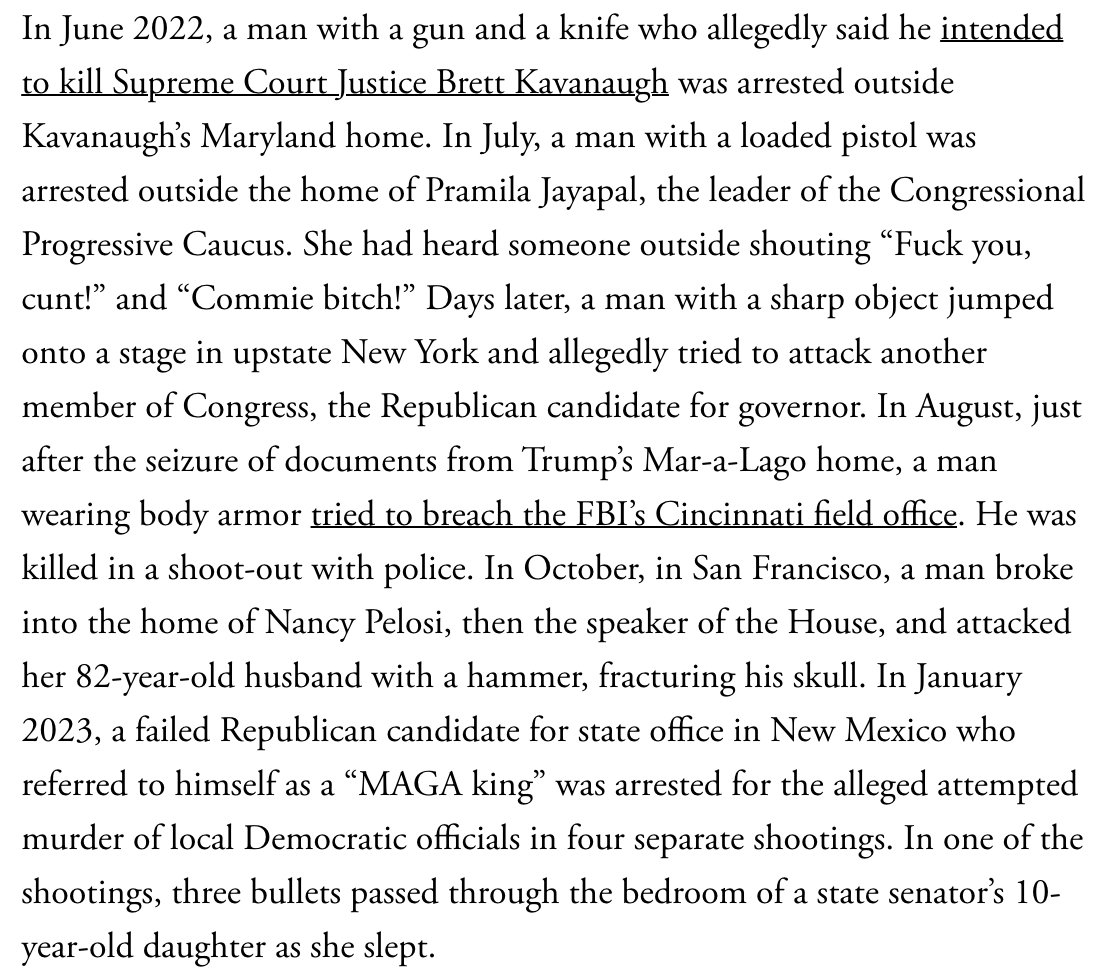
“For the past three years,” @AdrienneLaF writes, “I’ve been preoccupied with a question: How can America survive a period of mass delusion, deep division, and political violence without seeing the permanent dissolution of the ties that bind us?” on.theatln.tc/7ue6Tlk
In recent years, Americans have contemplated whether we’re moving toward a second Civil War. But what the country is experiencing now—and may continue to experience for a generation or more—is something different: a new phase of domestic terror.
Political violence is all around us, @AdrienneLaF writes. Today, it is “characterized by radicalized individuals with shape-shifting ideologies willing to kill their political enemies.”
Lounging around can free up time for things beyond your to-do list, @IsabelFattal writes. Here’s a reading list about do-nothing time—why we need it, how much of it we need, and the possibilities it creates: on.theatln.tc/MgWZv0U
@IsabelFattal Jason Heller and his wife have an agreement: One day a week, they do absolutely nothing.
In a society obsessed with productivity, this is harder than it should be—but it’s worth it: on.theatln.tc/AgE8VfK
@IsabelFattal Last August, Arthur C. Brooks argued that absolute idleness is harder—but more rewarding—than it seems: on.theatln.tc/nXSPfYm
As we mark the first anniversary of Russia’s full-scale invasion of Ukraine, revisit George Packer’s October 2022 cover story. He traveled to Ukraine and spoke with people who had rallied to save their nation and defend the values Americans claim to hold. on.theatln.tc/CUB5r7V
"Here, all the complex infighting and chronic disappointments and sheer lethargy of any democratic society ... dissolved, and the essential things—to be free and live with dignity—became clear," Packer writes. on.theatln.tc/CUB5r7V
“It almost seemed as if the U.S. would have to be attacked or undergo some other catastrophe for Americans to remember what Ukrainians have known from the start,” he continues. on.theatln.tc/CUB5r7V