This thread seems part of a popular narrative knotting ISKP attacks to be perpetrated by the Taliban, particularly by the Haqqani network, which could be logical for some of the high-profile unclaimed attacks of the post-US-TB peace deal, but it does not seem correct here. 1/6
First, it considers غزوة لبّوا النداء [Answer the call] military campaign only limited to Wilayat Central Africa, which is not correct. It is a general campaign for all IS provinces, but ISWCA claimed its first attack targeting central Kanjabai prison in Beni, Congo. 2/6
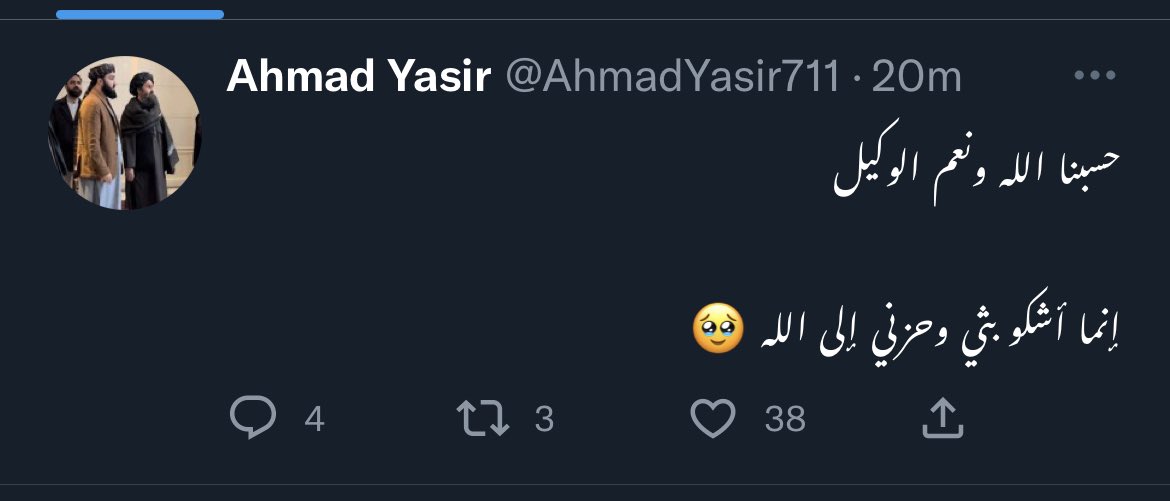
Secondly, it says that the statement attack claiming is in very weak Arabic, so IS/ISKP has not released it. The author concludes that it is thus one of the Taliban's several secret attacks, which they credit to ISKP for their interests. 3/6
My argument here is that if the Taliban would have to release this claim, they have Arabic experts in its media- propaganda team, which is evident from their Arabic media branch. They could release a well written Arabic statement without any flaws to prove it IS an attack. 4/6
Last, the Taliban has distanced itself from attacking Shia/Hazara civilians except those fighting against them. They have a clear guideline for it, and I do not remember any recent such claim of the Taliban killing Shia/Hazara civilians in Kabul. 5/6
On the other hand, the Hazara/Shia community has remained top of the target list of ISKP, which is evident from their propaganda materials. One of IS's main objections over the Taliban is that they accuse them of Hazara/Shia sympathizers for even including them in its ranks. 6/6
• • •
Missing some Tweet in this thread? You can try to
force a refresh

I am glad to share my recent piece for @BBCMonitoring on the origin, evolution, and recent resurgence of the central broadcasting and publishing arm of Tehrik-i-Taliban Pakistan (TTP), Umar Media.
Umar Media started operations in late 2003 in support of the Afghan Taliban in the Waziristan tribal belt of Pakistan. It was nameless for the first two years but was named "Umar Studio" after the Taliban founder Mullah Muhammad Umar in 2006 & renamed "Umar Media" in late 2010.
Umar Media has an outreach policy similar to the Afghan Taliban during their days as an insurgent force to connect AfPak journalists affiliated with local and international media. It has a young, well-educated staff now. Al-Qaeda or IS does not have a similar outreach policy.
My latest report for @voaurdu on the differences within the Afghan Taliban regarding the ban on girls' education includes an analysis of the recently revealed conflicting positions on the ban by two key Taliban leaders, Abass Stanakzai and Khalid Hanafi. urduvoa.com/a/rift-in-tali…
حال ہی میں ایک حکومتی تقریب میں طالبان کے ایک سینئر رہنما نے کھل کر لڑکیوں کی تعلیم کے حق میں آواز اٹھائی جس سے بعض مبصرین کے مطابق یہ ظاہر ہوتا ہے کہ اس معاملے پر خود طالبان کی صفوں میں موجود اختلافات اب شدت اختیار کر رہے ہیں۔
طالبان کے کئی رہنما، لڑکیوں کی تعلیم کے حق میں ہیں لیکن ملا ہبت اللہ سمیت دیگر پانچ اہم مذہبی رہنما اس پابندی کو برقرار رکھنے کے ذمے دار ہیں جن میں وزیرِ حج و اوقاف مولوی نور محمد ثاقب، چیف جسٹس شیخ عبدالحکیم حقانی، وزیرِاعظم مولوی محمد حسن اخوند اور شیخ فریدالدین محمودشامل ہیں۔
ISKP al-Azaim Media Foundation released the 10th issue of its Pashto flagship "Khurasan Ghag" (Voice of Khurasan) bi-weekly magazine. The latest issue is 70-page, dated 27 September, and includes four themes with 15 pieces. 1/7
Two lengthy essays severely criticized the Afghan Taliban for its efforts to establish diplomatic relations with the non-Muslim neighboring and western countries and foster ties with international organizations, including the United Nations. 2/7
An account of an ISKP early years major battle against the Afghan Taliban and the Afghan security forces in the eastern Afghanistan Nangarhar province led by the senior ISKP Afghan commander, Dr. Abu Muhammad, in his native Chaparhar district. 3/7.
The Afghan Taliban deputy foreign minsiter Abbas Stanikzai addressing a high level Taliban gathering in Kabul today critcized the US drone strikes in Afghanistan, declaring it an explicit violation of the US Doha Peace Agreement with the Taliban. 1/4
Sanikzai says the treaty obliges the US to provide evidence about any person who poses "an active threat" from Afghan soil, which the Taliban shall prosecute under its laws. He defines an active threat as "any person presently engaged in plotting an attack from Afghan soil." 2/4
He criticized the US, saying that since the last year´s withdrawal from Afghanistan, the US has been continuously carrying out drone attacks in the country, which he claims kill unknown people without evidence. 3/4
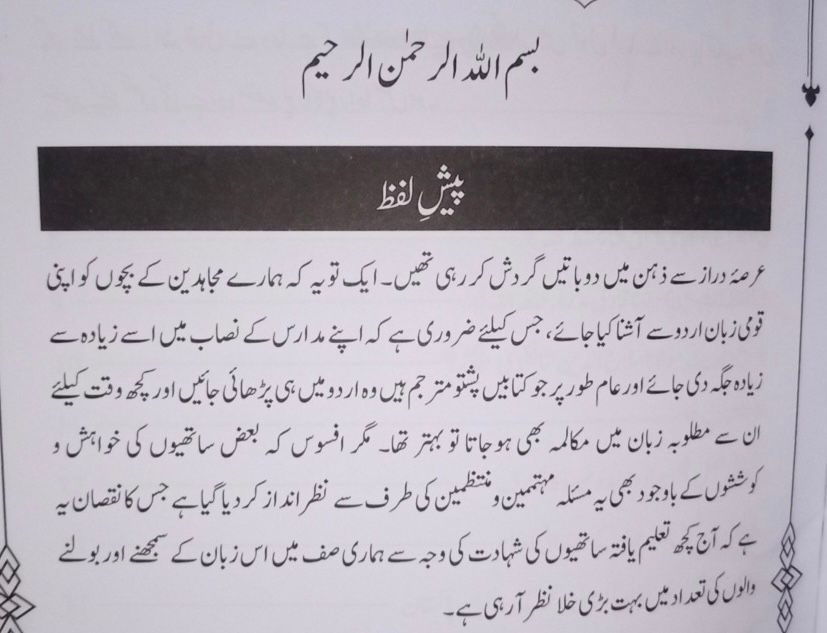
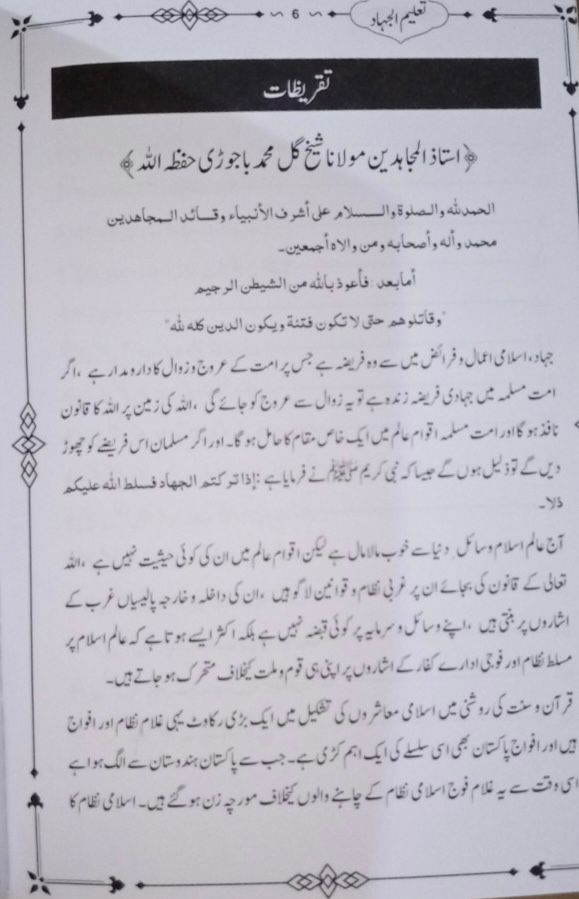
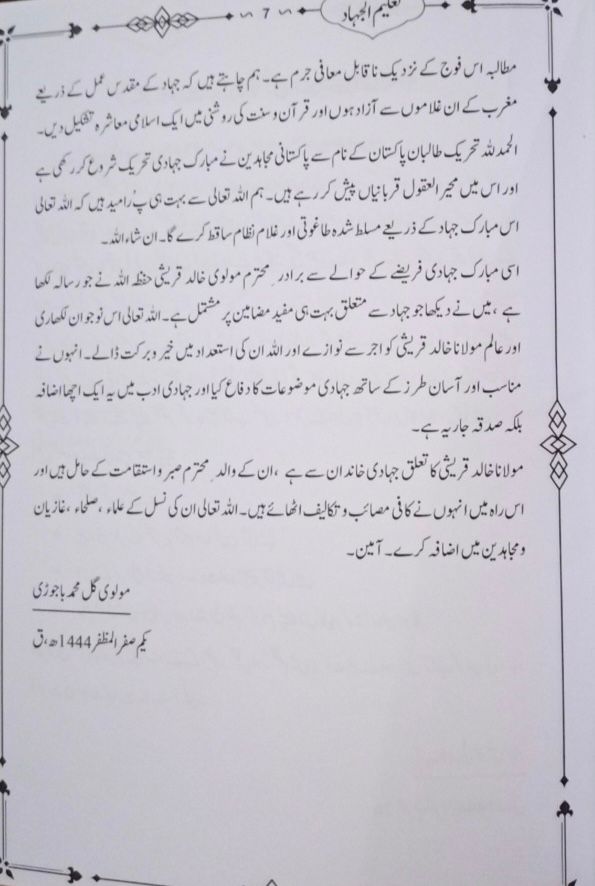
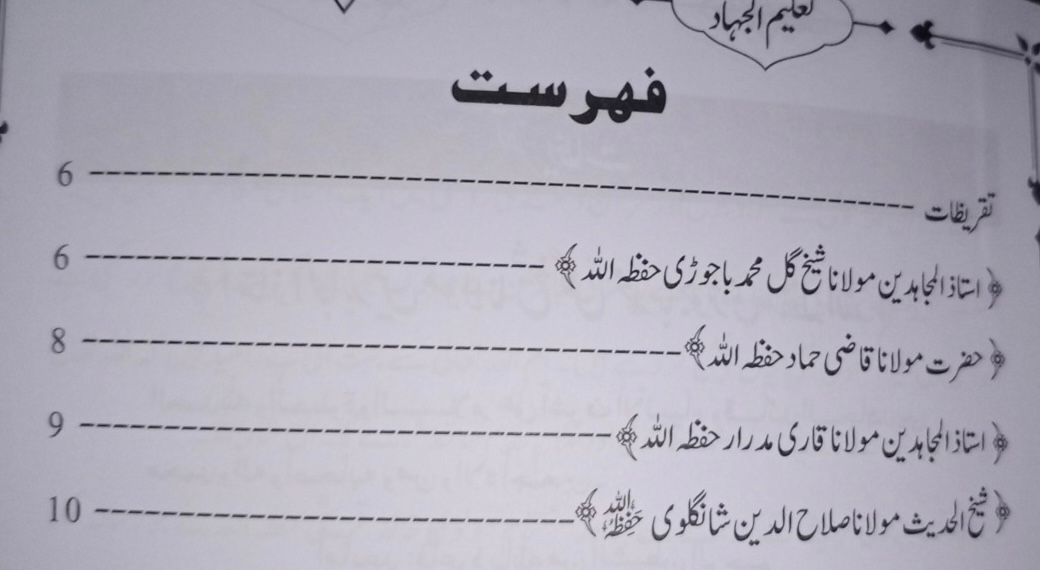
Pakistani Taliban has published an 85-page short Urdu booklet titled "Taleem-ul-Jihad" (Teaching Jihad) for the ideological training of the militants. The author Khalid Qureshi states "a key objective is to connect the group's new generation with the national language Urdu." 1/4
Qureshi laments that most TTP militants are unfamiliar with Urdu after the deaths of educated cadres, and no attention is given to this vaccum. Therefore, he believes this book has dual significance in covering this gap besides ideological training of the young militants. 2/4
It is the first time TTP has produced such a purpose book. However, the book is not released by the TTP official Umar Media, but its senior ideologues, Sheikh Gul Muhammad Bajauri among others have recommended it as compulsory reading for the militants. 3/4