Adventures in compiling bibliographies: Arabic #MusicTheory edition. PART VI - Al-Andalus/Iberian Peninsula.
A discussion about Portuguese Renaissance composer and theorist, Lusitanio has got me thinking I really need to start working on the Spanish/Portugal literature!
A discussion about Portuguese Renaissance composer and theorist, Lusitanio has got me thinking I really need to start working on the Spanish/Portugal literature!
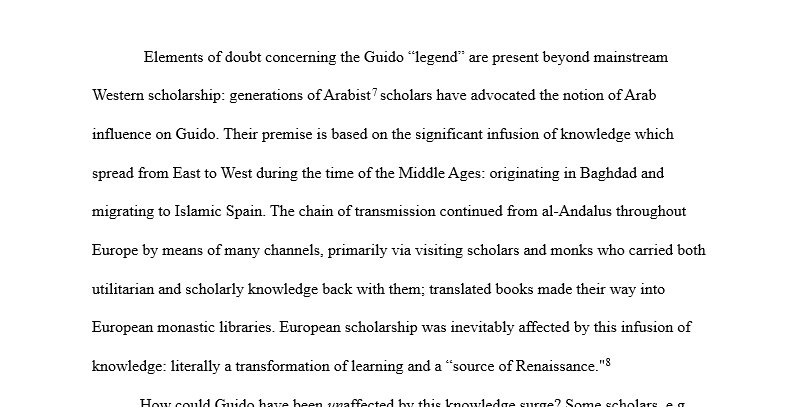
That region, in particular, was rich with cross-cultural pollination given the confluence of Jews, Muslims, and Christians. Some of the early Arabic Music ideas eventually settled into Cordoba as another center of Arabic Music activity on par with Baghdad. 
And the legendary musician and composer, Ziryab, made some of the biggest contributions to Arabic Music Theory and formed one of the first schools of music in Cordoba in the 9th century, and from many accounts was probably of African descent.
interculturalmusic.com/ziryab-the-son…
interculturalmusic.com/ziryab-the-son…
Some of the early translations of Arabic Music treatises into Latin and Hebrew were made in Al-Andalus and I imagine, if they haven't been lost due to Expulsion, vice-versa.
archive.aramcoworld.com/issue/201104/l…
archive.aramcoworld.com/issue/201104/l…
And this is obviously going to overlap with Flamenco #MusicTheory which is exciting!
https://twitter.com/Silpayamanant/status/1325802516622225410
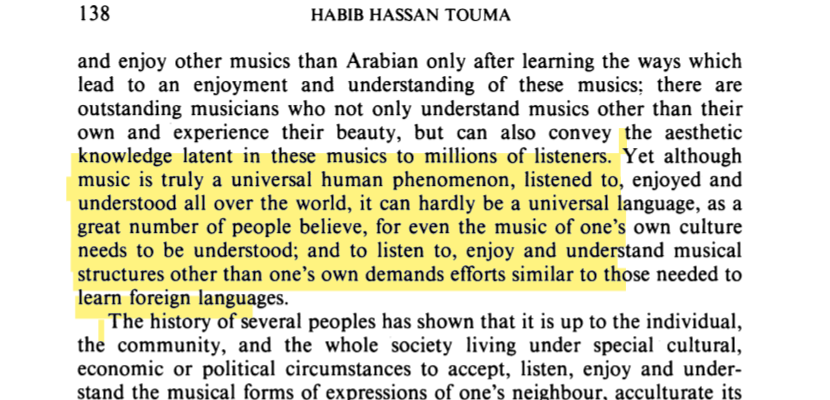
Habib Hassan Touma throwing down his thoughts on the whole Music is a Universal Language in his 1987 "Indications of Arabian musical influence on the Iberian Peninsula from the 8th to the 13th Century" as an afterthought.
doi.org/10.2307/207950…
doi.org/10.2307/207950…
And this URL is one of things giving me pause for creating individual entries for the Bib! 🤣
worldcat.org/title/nafh-al-…
worldcat.org/title/nafh-al-…
Some Andalusian musician/theorists works only exist as copies in Hebrew rather than Arabic. Abū al‐Ṣalt (1068-1134) was one, and he's also credited with introducing Arab-Andalusian music to Tunisia which eventually developed into the classical Ma'lūf.
ismi.mpiwg-berlin.mpg.de/biography/Abu_…
ismi.mpiwg-berlin.mpg.de/biography/Abu_…
Just listened to this fantastic podcast about Abū al‐Ṣalt by Sumaiya Hamdani. The last portion is on how Islamic scholarship has shifted to a pan-Mediterranean view on cross-cultural interaction w/ Europe and wondering when Musicology will follow suit.
ottomanhistorypodcast.com/2015/01/abu-al…
ottomanhistorypodcast.com/2015/01/abu-al…
Basically what Sumaiya Hamdani is describing at the end of the podcast is exactly what Sandra S. Yang is advocating for in "Strengthening the “History” in “Music History”: An Argument for Broadening the Cross-disciplinary Base in Musicological Studies.”
https://twitter.com/Silpayamanant/status/1332455847021187074
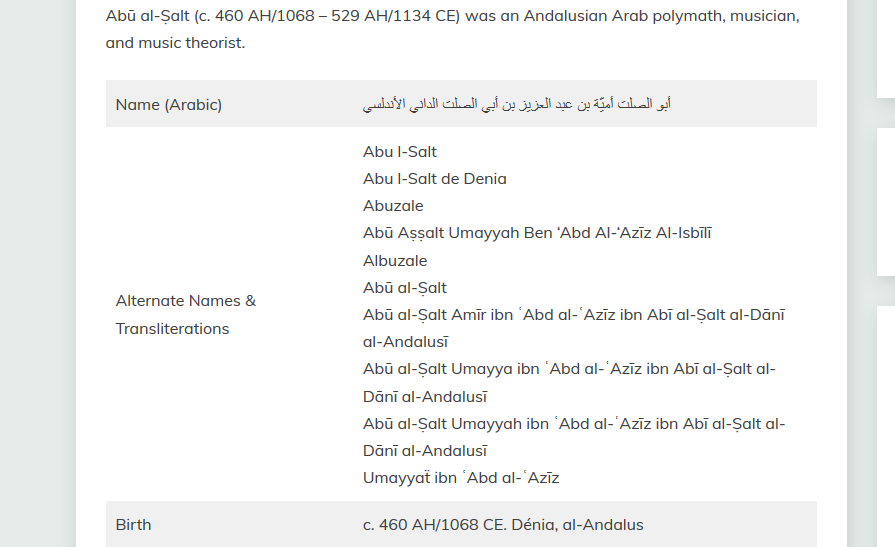
Going back to Abū al-Ṣalt, doing a test page on formatting for individual Music Theorist entries and from the ten or so sources I've reviewed I've already come up this many alternative transliteration/name variants!
This is going to be a longterm project! 🤣
This is going to be a longterm project! 🤣
The most time consuming part is finding out which collection/archive holds the oldest extant copy (of any exists) and then seeing if there is an online record of it. I’ve probably learned more about digital record keeping of archival works than I ever thought I’d be learning! Ha!
And apparently Turkish scholarship has another (stand alone) Arabic #MusicTheory treatise attributed to Abū al-Ṣalt in a catalogue that doesn't seem to be listed in Arabic scholarship/catalogues?
ismi.mpiwg-berlin.mpg.de/text/49404
ismi.mpiwg-berlin.mpg.de/text/49404
Now on perusal of a couple of Spanish sources, it looks like Abū al-Ṣalt's 'Risālah fī al-mūsīqá' may actually be the excerpt from his larger quadrivium work that is still extant in the 13th century Hebrew version. Like I said--Adventures in Arabic #MusicTheory!
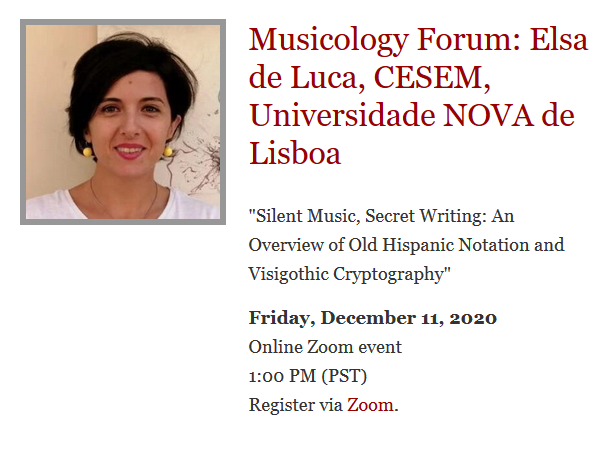
Yup, definitely be going to this as Mozarabic Chant overlaps/co-evolved with Andalusian Arabic Music from the 7th-11th Centuries. I'd already started looking at Visigothic chants some time ago when reviewing literature on early Christian chant notations.
dornsife.usc.edu/emsi/music-ser…
dornsife.usc.edu/emsi/music-ser…
Reading this right now.
"From Old Hispanic to Aquitanian Notation: Music Writing in Medieval Iberia"
academia.edu/44579411/From_…
"From Old Hispanic to Aquitanian Notation: Music Writing in Medieval Iberia"
academia.edu/44579411/From_…
• • •
Missing some Tweet in this thread? You can try to
force a refresh