Adventures in compiling bibliographies: Arabic #MusicTheory edition. PART VI - Al-Andalus/Iberian Peninsula.

A discussion about Portuguese Renaissance composer and theorist, Lusitanio has got me thinking I really need to start working on the Spanish/Portugal literature!
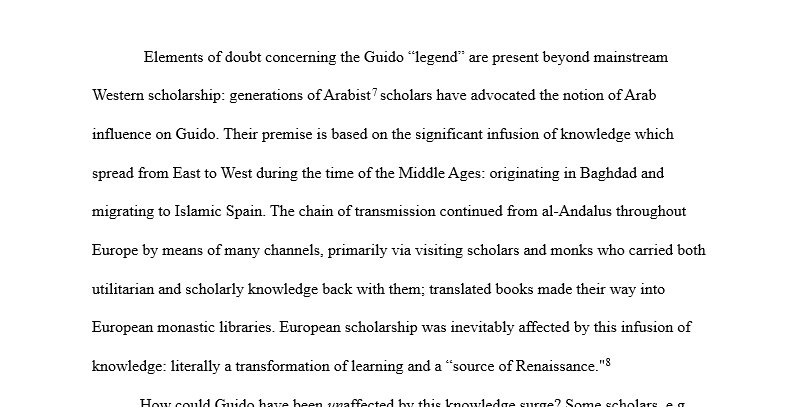
That region, in particular, was rich with cross-cultural pollination given the confluence of Jews, Muslims, and Christians. Some of the early Arabic Music ideas eventually settled into Cordoba as another center of Arabic Music activity on par with Baghdad. Image
And the legendary musician and composer, Ziryab, made some of the biggest contributions to Arabic Music Theory and formed one of the first schools of music in Cordoba in the 9th century, and from many accounts was probably of African descent.

interculturalmusic.com/ziryab-the-son…
Some of the early translations of Arabic Music treatises into Latin and Hebrew were made in Al-Andalus and I imagine, if they haven't been lost due to Expulsion, vice-versa.

archive.aramcoworld.com/issue/201104/l…
And this is obviously going to overlap with Flamenco #MusicTheory which is exciting!
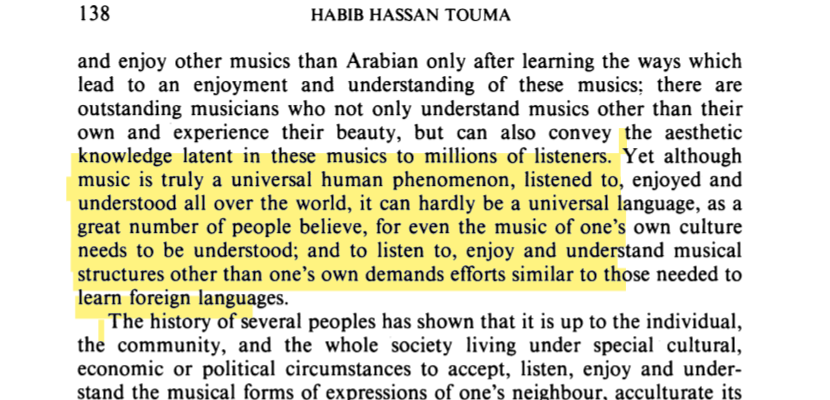
Habib Hassan Touma throwing down his thoughts on the whole Music is a Universal Language in his 1987 "Indications of Arabian musical influence on the Iberian Peninsula from the 8th to the 13th Century" as an afterthought.

doi.org/10.2307/207950…Image
And this URL is one of things giving me pause for creating individual entries for the Bib! 🤣

worldcat.org/title/nafh-al-…
Some Andalusian musician/theorists works only exist as copies in Hebrew rather than Arabic. Abū al‐Ṣalt (1068-1134) was one, and he's also credited with introducing Arab-Andalusian music to Tunisia which eventually developed into the classical Ma'lūf.

ismi.mpiwg-berlin.mpg.de/biography/Abu_…
Just listened to this fantastic podcast about Abū al‐Ṣalt by Sumaiya Hamdani. The last portion is on how Islamic scholarship has shifted to a pan-Mediterranean view on cross-cultural interaction w/ Europe and wondering when Musicology will follow suit.

ottomanhistorypodcast.com/2015/01/abu-al…
Basically what Sumaiya Hamdani is describing at the end of the podcast is exactly what Sandra S. Yang is advocating for in "Strengthening the “History” in “Music History”: An Argument for Broadening the Cross-disciplinary Base in Musicological Studies.”
Going back to Abū al-Ṣalt, doing a test page on formatting for individual Music Theorist entries and from the ten or so sources I've reviewed I've already come up this many alternative transliteration/name variants!

This is going to be a longterm project! 🤣 Image
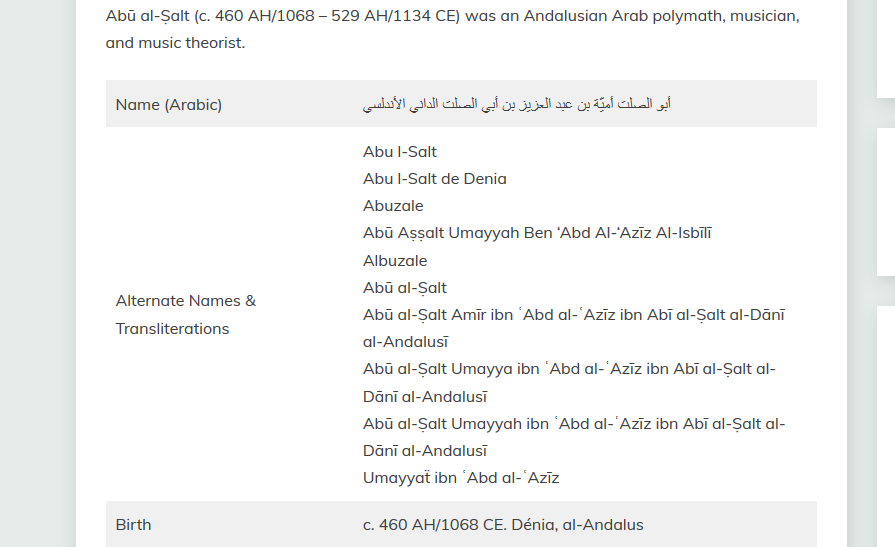
The most time consuming part is finding out which collection/archive holds the oldest extant copy (of any exists) and then seeing if there is an online record of it. I’ve probably learned more about digital record keeping of archival works than I ever thought I’d be learning! Ha!
And apparently Turkish scholarship has another (stand alone) Arabic #MusicTheory treatise attributed to Abū al-Ṣalt in a catalogue that doesn't seem to be listed in Arabic scholarship/catalogues?

ismi.mpiwg-berlin.mpg.de/text/49404
Now on perusal of a couple of Spanish sources, it looks like Abū al-Ṣalt's 'Risālah fī al-mūsīqá' may actually be the excerpt from his larger quadrivium work that is still extant in the 13th century Hebrew version. Like I said--Adventures in Arabic #MusicTheory!
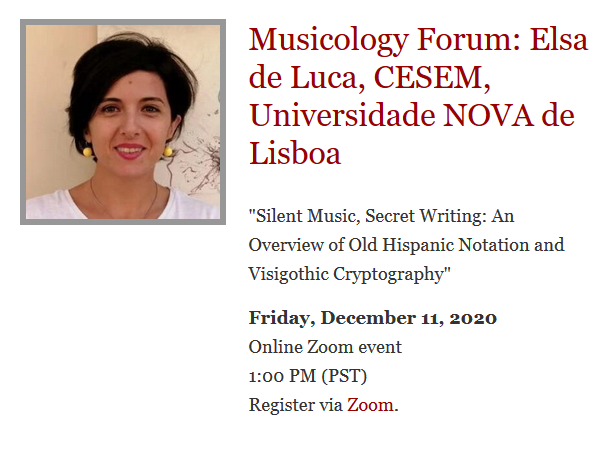
Yup, definitely be going to this as Mozarabic Chant overlaps/co-evolved with Andalusian Arabic Music from the 7th-11th Centuries. I'd already started looking at Visigothic chants some time ago when reviewing literature on early Christian chant notations.
dornsife.usc.edu/emsi/music-ser…Image
Reading this right now.

"From Old Hispanic to Aquitanian Notation: Music Writing in Medieval Iberia"

academia.edu/44579411/From_…

• • •

Missing some Tweet in this thread? You can try to force a refresh

 

Keep Current with Jon Silpayamanant โจนาทาน ศิลปยามานันท์ | Mae Mai

Jon Silpayamanant โจนาทาน ศิลปยามานันท์ | Mae Mai Profile picture

Stay in touch and get notified when new unrolls are available from this author!

Read all threads

This Thread may be Removed Anytime!

PDF

Twitter may remove this content at anytime! Save it as PDF for later use!

Try unrolling a thread yourself!

how to unroll video
  1. Follow @ThreadReaderApp to mention us!

  2. From a Twitter thread mention us with a keyword "unroll"
@threadreaderapp unroll

Practice here first or read more on our help page!

More from @Silpayamanant

Feb 15, 2023
While working on the database of Popular Music Schools, I came across a piece with a bio of the child prodigy Cecil Cowles (1893-1968) which stated that:

"In recent years [1920s-1940] Miss Cowles has been active in the field of composition, particularly in Oriental music."
A San Francisco Chronicle piece about Cecil Cowles from 17 June 1923 says: "The other occasion was a recital of her own in which she played her Song Without Words, In a Rickshaw , Chinese Dance and Valse Caprice..."

"Fifty Local Prodigies: 1906-1940"
archive.org/details/fiftyl…
The main thesis of my piece “Orientalism, Perpetually Foreign Musics, and Asian Exclusion” is that that the systematic exclusion of Asian/American musics led to a vacuum filled by racial fantasy works composed and performed by white Americans in both classical and popular musics.
Read 16 tweets
Jan 18, 2023
Normalize not centering Western Chord labels in Music Theory. In quintal harmony, it'd be a C2; In a quartal one it's a D5/2; not sus chords at all. Parallel seconds (and ninths) are way common in Eastern Orthodox traditions.

reddit.com/r/musictheory/…
"The notations of znamenny polyphony require a special approach to their transcription; but when correctly read the music of the ‘scores’ abounds in harsh sonorities in the form of extended parallel seconds & fifths.”

Brazhnikov, qtd in Swan "Russian Music & its Sources..." p45
“The voices enter at the interval of the second and, within a short period of time, four more vertical intervals of the second appear in a row. In the process, the voices cross.”

Vladislav Uspensky, quoted in Johann von Gardner's "Russian Church Singing" Vol. 2, pg. 316
Read 21 tweets
Jan 13, 2023
Apparently there were organs on planes.

"An organ was installed on a Northwest Stratocruiser in the 1950s through an arrangement with local musician Swanee Swanson. The organists received free flights to New York and other East Coast destinations."

content.govdelivery.com/accounts/MNORG…
Image
Page 43 of "Northwest Airlines: The First Eighty Years"

arcadiapublishing.com/Products/97807…
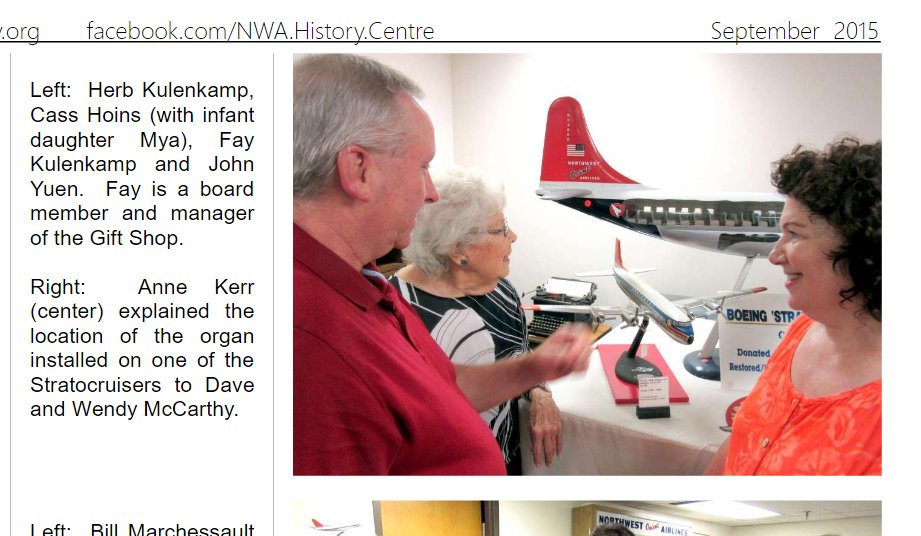
Image
"Anne Kerr (center) explained the location of the organ installed on one of the Stratocruisers to Dave and Wendy McCarthy."

Page 5 of "REFLECTIONS: The Newsletter of the NWA History Centre"
northwestairlineshistory.org/wp-content/upl…
Image
Read 32 tweets
Aug 5, 2022
Welsh Harp tablature from the *Robert ap Huw manuscript* (1613). The manuscript is the oldest extant source of primarily Late Medieval eisteddfod repertory that dates to 1340-1500 and was compiled by Robert ap Huw (c.1580-1665).

pbm.com/~lindahl/ap_hu…
Short segment on the *Robert ap Huw manuscript* in Rhodri McDonagh's wonderful "Welsh Trad Music | A Beginner's Guide" video (cued up to that segment below). The whole vid is worth a watch and is only 24 minutes.

Bangor University's "Music of the Robert ap Huw Manuscript" page with other resources for Cerdd Dant and other British Isles harp traditions.

bangor.ac.uk/music-and-medi…
Read 4 tweets
Aug 3, 2022
One of the things I love about Georgian Harmony is that it's based on what's essentially close to a functionally 7TET/EDO collection of pitches. Many global harmonic systems are built on different tuning systems than those in what's typically referred to as Western harmony.
The above image from Malkhaz Erkvanidze's "On Georgian Scale System" pg. 181

citeseerx.ist.psu.edu/viewdoc/downlo…
See also:
"Tonal Organization of the Erkomaishvili Dataset: Pitches, Scales, Melodies and Harmonies"

publishup.uni-potsdam.de/frontdoor/inde…
Read 7 tweets
Aug 3, 2022
Just looking the bi/polymusical course offerings at Thai Universities (sample below) in a Dissertation from 1998.

"Undergraduate Piano Pedagogy Course Offerings in Thai Universities" Chindarat Charoenwongse. University of Oklahoma.
shareok.org/handle/11244/5… Image
Bi/polymusical education ecosystems are far more common outside of Europe and North America.

H/T to @FergusonGuitar for this.

"Bi-musicality in modern Japanese culture"
Alison Tokita
doi.org/10.1177%2F1367…
Read 10 tweets

Did Thread Reader help you today?

Support us! We are indie developers!


This site is made by just two indie developers on a laptop doing marketing, support and development! Read more about the story.

Become a Premium Member ($3/month or $30/year) and get exclusive features!

Become Premium

Don't want to be a Premium member but still want to support us?

Make a small donation by buying us coffee ($5) or help with server cost ($10)

Donate via Paypal

Or Donate anonymously using crypto!

Ethereum

0xfe58350B80634f60Fa6Dc149a72b4DFbc17D341E copy

Bitcoin

3ATGMxNzCUFzxpMCHL5sWSt4DVtS8UqXpi copy

Thank you for your support!

Follow Us!

:(