Prof. Akiko Iwasaki Profile picture
Dec 5, 2020 12 tweets 4 min read Read on X
Here is a thread to explain the findings of this study, that used computational tools to predict T cell reactive sequences in #SARSCOV2 subunit vaccines.

The bottom line: there is no cause for alarm.

Here is why (1/n)
Our adaptive immune system has 2 types of white blood cells known as lymphocytes. T cells and B cells. These lymphocytes give us protection from wide variety of pathogens. Each lymphocyte has unique receptor that detect specific features of a pathogen. (2/n)
B cells detect pathogens structures through antibodies. T cells cannot detect pathogens on their own. They can only “see” pathogen when tiny pieces of viral proteins (peptides) are presented by molecules called major histocompatibility complex (MHC). (3/n) Image
T cells that detect specific pathogen peptide on MHC become activated and functional. Humans carry multiple copies of MHC genes (thru polymorphism and polygeny). MHC genes are the most diverse set of genes in human genome. (4/n) Image
Some are called class I MHC, which present peptides to CD8 T cells (killer cells). Others are called class II MHC, which present peptides to CD4 T cells (helper cells).
Why are there so many types of MHC in the human genome? (5/n) Image
Well, there are infinite possible amino acid sequences that pathogens can have (due to diversity and mutation). Each MHC can only present peptide that contain specific amino acid motifs. If we relied on one MHC to present pathogen peptides,.. (6/n)
..humans will be vulnerable to infection by those pathogens that do not contain such peptide motifs. Frequencies of each type of MHC genes vary widely across the globe. (7/n)
frontiersin.org/articles/10.33…Image
Back to the study in question. The authors used computational modeling to predict peptides that are likely to be presented to T cells by MHC molecules in White, Black and Asian populations. (8/n)
cell.com/cell-systems/f…
Within just the receptor binding domain (RBD) of the spike protein (221 amino acid), 0.8% of White, and 37.3% of Asian had no predicted peptides that bind to their MHC class II proteins. However Moderna, Pfizer, AstraZeneca vaccines all use the full length S (1273 aa). (9/n) Image
Good news is that authors found that >99% of White, Black and Asian populations’ MHC class I can present at least 5 peptides from the Spike protein. On MHC class II, >98% of all people have at least 3 peptides predicted to be presented. (10/n) Image
Image
What does this mean? That current leading vaccine candidates have the capacity to generate good T cell responses in diverse populations. T helper cells will also stimulate good antibody responses from B cells. (11/n) Image
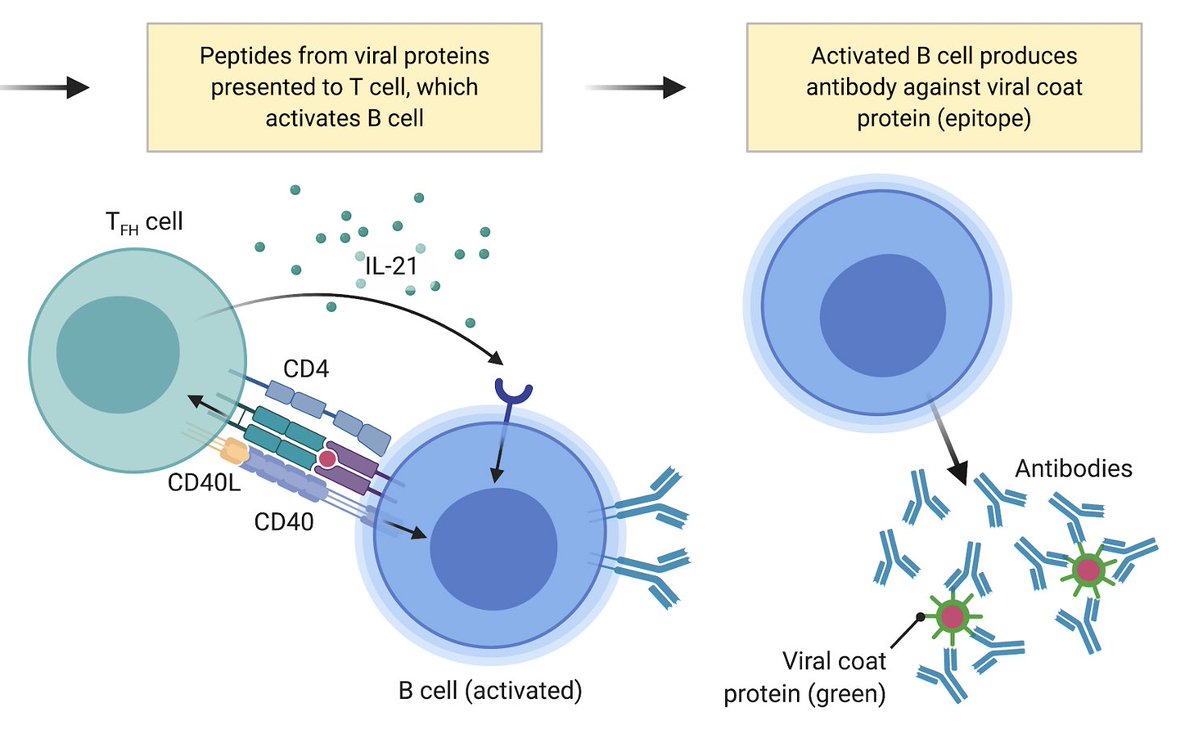
The ultimate proof of vaccine-induced protection will become available when millions of people get vaccinated. Until then, there is little need to worry about Blacks and Asians not being protected by vaccines. All my figures were made by @BioRender. (End)

• • •

Missing some Tweet in this thread? You can try to force a refresh

 

Keep Current with Prof. Akiko Iwasaki

Prof. Akiko Iwasaki Profile picture

Stay in touch and get notified when new unrolls are available from this author!

Read all threads

This Thread may be Removed Anytime!

PDF

Twitter may remove this content at anytime! Save it as PDF for later use!

Try unrolling a thread yourself!

how to unroll video
  1. Follow @ThreadReaderApp to mention us!

  2. From a Twitter thread mention us with a keyword "unroll"
@threadreaderapp unroll

Practice here first or read more on our help page!

More from @VirusesImmunity

Apr 9
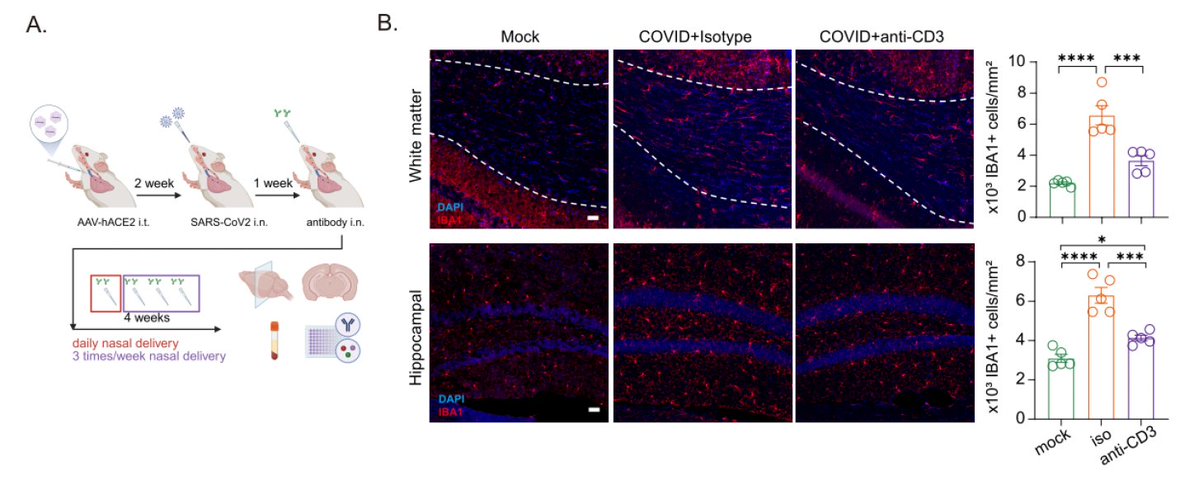
Our new preprint by @peowenlu @SaefIzzy @weinerlabhms and colleagues shows that nasal anti-CD3 monoclonal antibody treatment can reduce neuroinflammation in a mouse model of Long COVID, even when administered at 4 weeks after infection 🧠
biorxiv.org/content/10.648…
Neuroinflammatory damage is a hallmark of Long COVID. Nasal delivery of anti-CD3 mAb induces Treg and has shown therapeutic benefit in various autoimmune and CNS models of disease. In this study, we asked whether anti-CD3 mAb can reduce damage and restore neurogenesis.
First, we tested whether anti-CD3 mAb administered nasally starting at 1 week post-infection for 4 weeks. The treatment restored microglial and astrocyte densities and reduced inflammatory cytokines. Image
Read 5 tweets
Nov 14, 2025
A groundbreaking paper by @younis_sh1 et al. @stanfordimmuno provides an answer to the long-standing question about how EBV infections are linked to lupus. A short thread to explain the key findings. (1/)
science.org/doi/10.1126/sc…
The authors developed a new method called EBV-seq, enabling them to overcome the barrier of studying rare cells (~25 per 10,000 B cells in lupus patients) that are infected by EBV. Note that in healthy people, only 1/10,000 B cells are EBV-infected. (2/) Image
First, the authors found that EBV infects autoreactive B cells that express anti-nuclear antibodies in lupus patients, but not in healthy people or in patients with multiple sclerosis. (3/) Image
Read 6 tweets
Aug 2, 2025
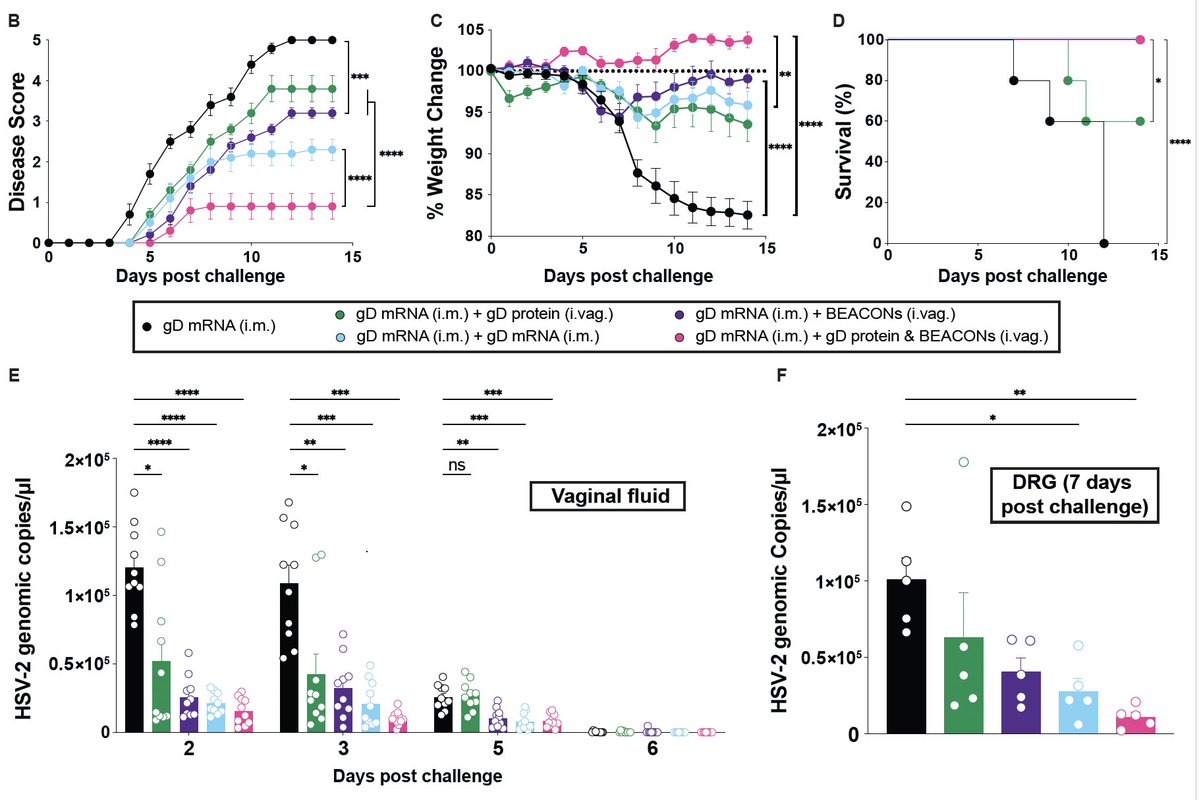
Introducing BEACON (Bioactive Enhanced Adjuvant Chemokine Oligonucleotide Nanoparticles) to stimulate mucosal immune responses against genital #HSV infection. Awesome work led by @sachinbhag, who designed and developed BEACON to guide T and B cells (1/)
biorxiv.org/content/10.110…
The BEACON nanoparticle is composed of CpG ODN (TLR9 agonist) and CXCL9 (chemokine). When applied to the vaginal mucosa, the recruitment of antiviral T cells is achieved with minimal local inflammation - much more potent than CpG or CXCL9 separately. (2/) Image
Intramuscular vaccines do not promote mucosal immunity. BEACON can be used as a local adjuvant to boost HSV-2 gD- or gB-specific T and B cells, preventing not only disease/death but also blocking viral load in both vaginal tissue and dorsal root ganglia (🚫latency)(3/)👇🏼 Image
Read 4 tweets
Jul 17, 2025
A fascinating new study by Vishnu Shankar et al. @stanfordimmuno shows that oxidative stress is a shared characteristic of ME/CFS and Long COVID in lymphocytes due to inability to clear reactive oxygen species. This happens in sex-specific manner. (1/)
pnas.org/doi/abs/10.107…Image
Females show higher mtROS levels and insufficient antioxidant levels, while males show mitochondrial lipid oxidative damage. While the reason for this is unclear, it may explain the sex differences in lymphocyte dysfunction we see in PAIS in general. (2/)
science.org/doi/10.1126/sc…
ROS-targeting therapies were tested. Metformin treatment in vitro showed some impact on CD4 T cell proliferation. I suspect that other therapies to induce autophagy/mitophagy might also benefit restoration of T cell phenotype. #LowDoseRapamycin 👇🏼 (3/)
polybio.org/projects/long-…
Read 4 tweets
May 16, 2025
Published today! Victoria Bastos, @KerrieGreene_ et al found two distinct immunotypes of ME/CFS based on the cerebrospinal fluid analysis. Great collaboration with @MBVanElzakker @microbeminded2 and the Bragée clinic in Sweden. (1/)
academic.oup.com/jimmunol/artic…
This is perfect timing as Victoria will present these data at the @polybioRF symposium today. (2/)

polybio.org/spring-2025-sy…Image
Based on cerebrospinal fluid cytokines, we identified two clusters of ME/CFS patients. Cluster 1 had elevated matrix metalloproteinases & many cytokines compared to cluster 2. Other than older age (Cluster 1), clinical presentation of these clusters was similar. (3/) Image
Read 5 tweets
May 13, 2025
Published today📣
Our nasal booster in the "Prime & Spike" vaccine works without adjuvants (which are needed to induce adaptive immunity but also cause inflammation). @Kwon_Dongil @tianyangmao @BenIsraelow et al. asked how this is possible. (1/)
nature.com/articles/s4159…
Prime & Spike is a vaccine strategy that leverages preexisting immunity primed by conventional vaccines to elicit mucosal IgA and T cell responses that prevent COVID infection and transmission in rodents. The nasal booster is simply the spike protein (2/) science.org/doi/10.1126/sc…
Our new study shows that the nasal spike protein booster converts lymph node memory B cells into IgA-secreting cells in the lung with the help of memory CD4 T cells. Ag-specific CD4 T cells replace all the necessary functions of adjuvants without nonspecific inflammation! (3/)
Read 5 tweets

Did Thread Reader help you today?

Support us! We are indie developers!


This site is made by just two indie developers on a laptop doing marketing, support and development! Read more about the story.

Become a Premium Member ($3/month or $30/year) and get exclusive features!

Become Premium

Don't want to be a Premium member but still want to support us?

Make a small donation by buying us coffee ($5) or help with server cost ($10)

Donate via Paypal

Or Donate anonymously using crypto!

Ethereum

0xfe58350B80634f60Fa6Dc149a72b4DFbc17D341E copy

Bitcoin

3ATGMxNzCUFzxpMCHL5sWSt4DVtS8UqXpi copy

Thank you for your support!

Follow Us!

:(