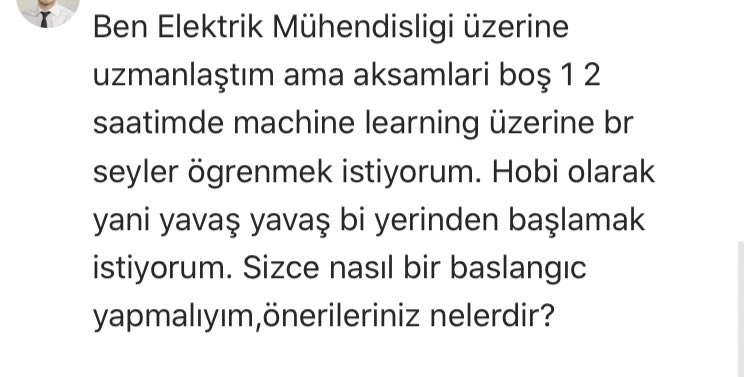
unpopular opinion: it’s annoying how people say “you don’t need math and stats to apply ML” if you have a decent job that applies ML/AI you’ll see you’ll sometimes need tailored solutions for industrial problems
I don’t want to gatekeep on non-STEM people. My partner is an ML engineer who has a business administration BA but he has taken calculus and CS classes willingly and he has better understanding than me in math and algorithms mostly (he’s hanging out in hackerrank for instance)
grab a book, read source code, read documentation, don’t trust someone else’s code/blog post/tutorial. someone else’s blog post/tutorial is a good starting point but they will not get you to fully comprehend things, they’ll simply give you a nice intuition.
one of the things I learned was I asked @lmoroney, how did he learn things in this area (he has tons of books in many programming languages btw, he masters them!) and he said “I don’t trust someone else’s code, I tear it apart and play with it to understand” 🦾
ever since I’ve taken that advice I’ve been breaking codes, reading the books to confirm my understanding on ML and also those libraries, importing library and using it is not a bad thing, it’s fast and nice, you just need to make sure you understand it correctly
if you know me, I’ve finished many deeplearning ai and datacamp courses, I really appreciate them as they taught me lots of things, reading books made me feel like I grasped things
I’m also having my master’s but I don’t really enjoy in-class things because I don’t feel like I’m grasping so I read the books in the syllabus while studying even though it consumes a lot of time, it feels safer
so yes, you can apply ML without math (MNIST, imdb dataset and little more advanced stuff) but it’s not a nice advice, it will get you to some point but it will not make you get the job you want.
most DMs I get is about how people completed the courses but fail during the interview processes, here’s why 🤷🏻♀️ (most companies don’t know what they’re looking for imo but this is another part of the problem)
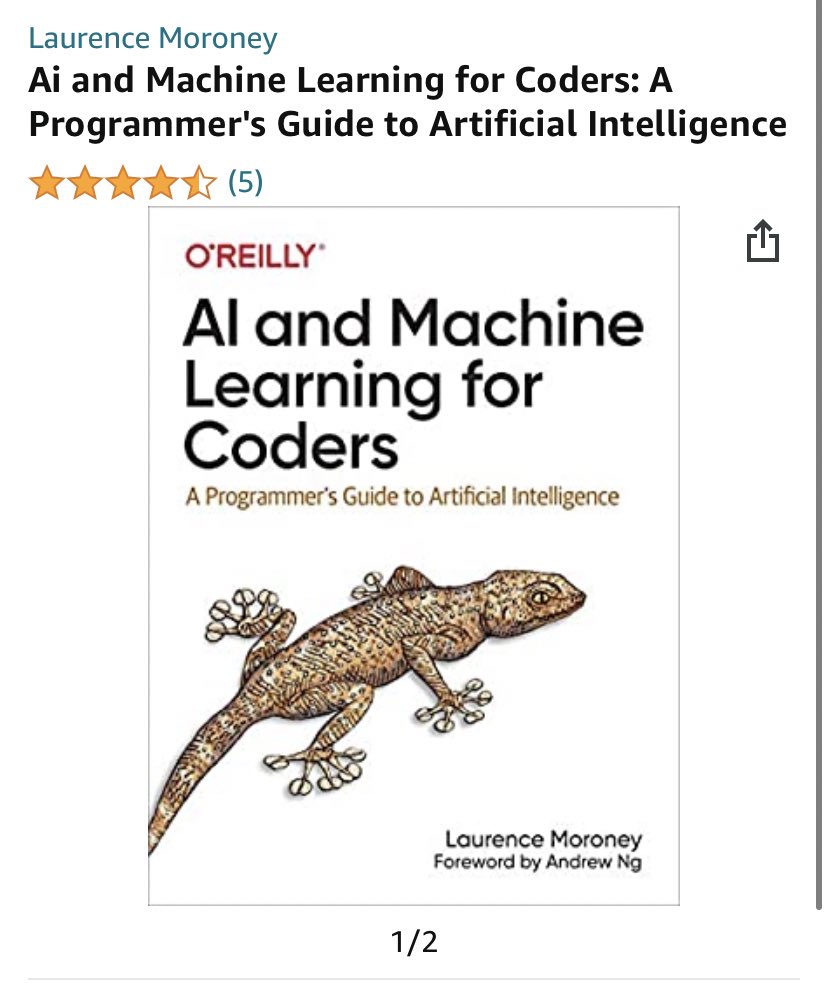
@lmoroney also has a book for coder people who started learning ML, if you liked his courses I’m sure you’ll like this (I just ordered one, I’m going to review when it gets here) 
• • •
Missing some Tweet in this thread? You can try to
force a refresh