Quick thought on journalism, digital media, etc.
The standard pre-digital view of journalism included the assumption that journalism supplied information you couldn’t get otherwise because of lack of access, etc. 1/x
The standard pre-digital view of journalism included the assumption that journalism supplied information you couldn’t get otherwise because of lack of access, etc. 1/x
Its function was to uncover and report, assuming a measure of information scarcity. Data generation is foregrounded, narrative function is suppressed. 2/x
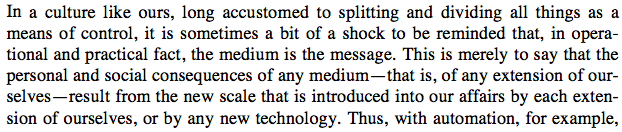
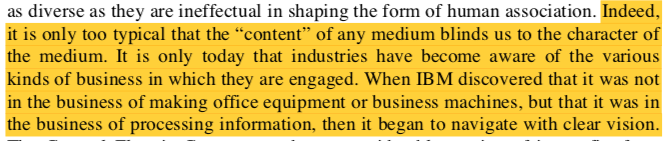
Digital media flips this (although trend line arguably starts earlier). They generate conditions of information abundance and undermine the assumption that journalism is essential principally as a source of information. 3/x
As a result the narrative-shaping function of journalism is foregrounded, and the data generating function is suppressed. 4/x
Then, if narrative is understood as community-based motivated reasoning, a heightened awareness of the narrative function engenders suspicion and elevates on trust/distrust. 5/x
It’s at this level that trust splinters and self-selection into ideological factions accelerates. 6/6
• • •
Missing some Tweet in this thread? You can try to
force a refresh