Suomen epidemia 31.3.2021: eräs koko epidemian parhaimpia päiviä. Nykyiset 8.3. voimaan tulleet rajoitukset purevat: tartunnat vähenivät 5.2 prosenttia eilisestä (-80 prosenttia kuukaudessa tällä vauhdilla). 20.3. jälkeen ollaan tultu alas 2.1% päivässä (-47% kuukaudessa).
1/x
1/x
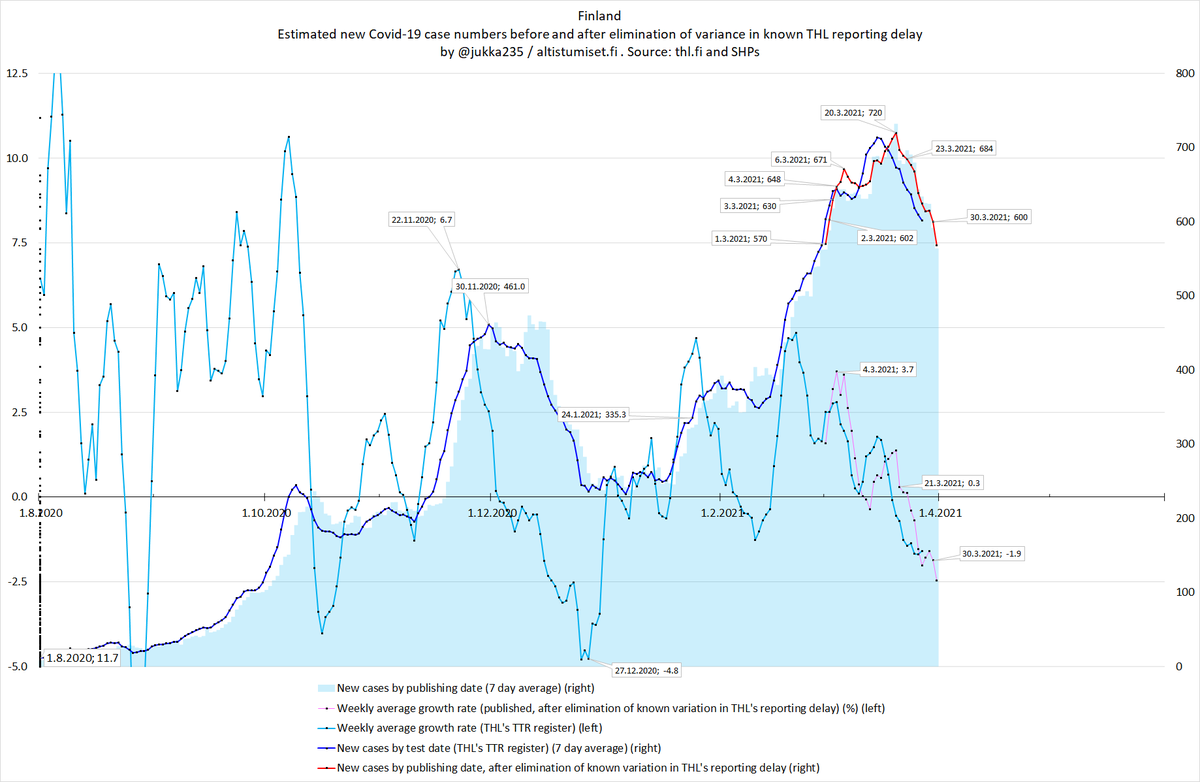
Tänään THL ilmoitti 607 tartuntaa, poisti 3 ja viive pieneni 42 tartunnalla. Muuttumattomalla viiveellä laskettu uusien tartuntojen määrä oli 568 (punainen viiva). Päivittäisten lukujen väheneminen kiihtyy (sininen viiva).
2/x
2/x

Testeissä käydään yhä vähemmän. Testien määrä on tullut alas 9.5 prosenttia 17.3. huipputasolta, mutta on edelleen joulua edeltävän tason yläpuolella.
3/x
3/x

Positiivisten osuus on laskenut kohta kahden viikon ajan, ja on tullut pitkän ajan trendiviivan alapuolelle. Vaasassa ja Turussa testataan myös oireettomia: Turussa 20% ja Vaasassa 50% on ollut oireettomia (mutta Vaasan luvut ovat vielä hyvin pieniä).
4/x
4/x

Kun ottaa huomioon, että HUS:n luvut puuttuvat 2 viimeisen päivän ajalta, niin sairaanhoitopiirien luvut tulevat nyt alas nopeinta vauhtia sen jälkeen kun käänne tapahtui 16.3. Suurin muutos viimeisen kahden päivän aikana on Pirkanmaa (toivottavasti pysyy negatiivisena).
5/x
5/x

Tässä muutos ikäryhmittäin (koko maa). Eniten ovat viimeisen viikon aikana vähentyneet 20-24 -vuotiaiden tartunnat.
6/x
6/x

Pirkanmaan nousu on ehkä katkennut. Jos tartuntojen väheneminen jatkuu niin suurin sairaanhoitopiiri, jossa tartunnat kasvavat, olisi hallinnassa. Muut tulevat alas. Uudenmaan lasku on kiihtynyt.
7/x
7/x
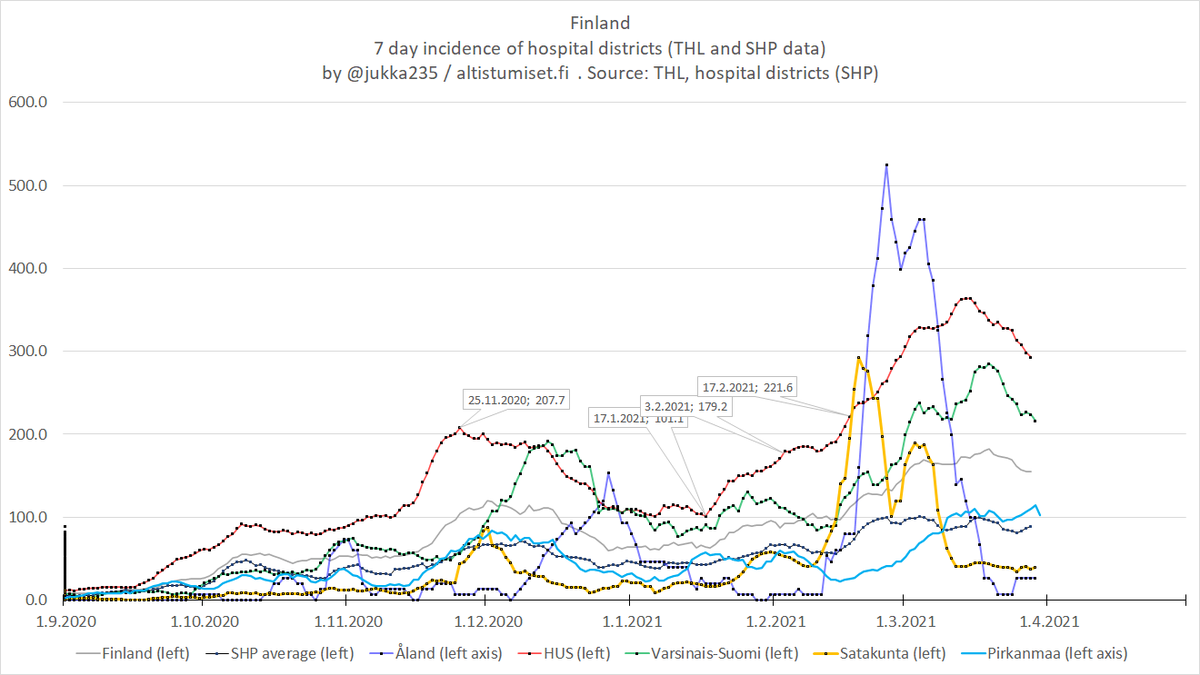
Kymenlaaksossa ilmaantuvuus nousee nopeaa vauhtia. Etelä-Karjalassa tilanne ei ole muuttunut, ja Päijät-Hämeessä ja Kanta-Hämeessä tilanne paranee. Vaasa testaa jo oireettomia.
8/x
8/x

Etelä-Savossa ja Itä-Savossa ilmaantuvuus nousee.
9/x
9/x

Pohjois-Pohjanmaa on ainoa Suomen iso sairaanhoitopiiri, jossa ilmaantuvuus on saatu todella alhaiselle tasolle. Keski-Pohjanmaalla ilmaantuvuus on vielä alhaisemmalla tasolla. Pohjois-Savossa ilmaantuvuus nousee.
10/x
10/x

Pohjois-Savossa ilmaantuvuutta ovat nostaneet kouluikäisten ja nyt yli 80-vuotiaiden saamat tartunnat.
11/x
11/x

Sekä Lapissa että Länsi-Pohjassa ilmaantuvuus on laskenut alhaiselle tasolle. Myös Kainuussa tilanne paranee hiljalleen.
12/x
12/x

Alle 10-vuotiaiden tartuntoja on HUS:n alueella nyt keskimäärin 370 yhdessä viikossa. Määrä on 5.4-kertaistunut 17.1. jälkeen. 5-9 -vuotiaiden tartunnat ovat 7.3-kertaistuneet samalla aikavälillä, ja niitä on nyt keskimäärin 236 yhdessä viikossa.
13/x
13/x

• • •
Missing some Tweet in this thread? You can try to
force a refresh