
Cx9.
Ready ? https://t.co/md3qxFMZGO
Here soon: https://t.co/Dmx8yJcyOH
Backup: https://t.co/dupw084403
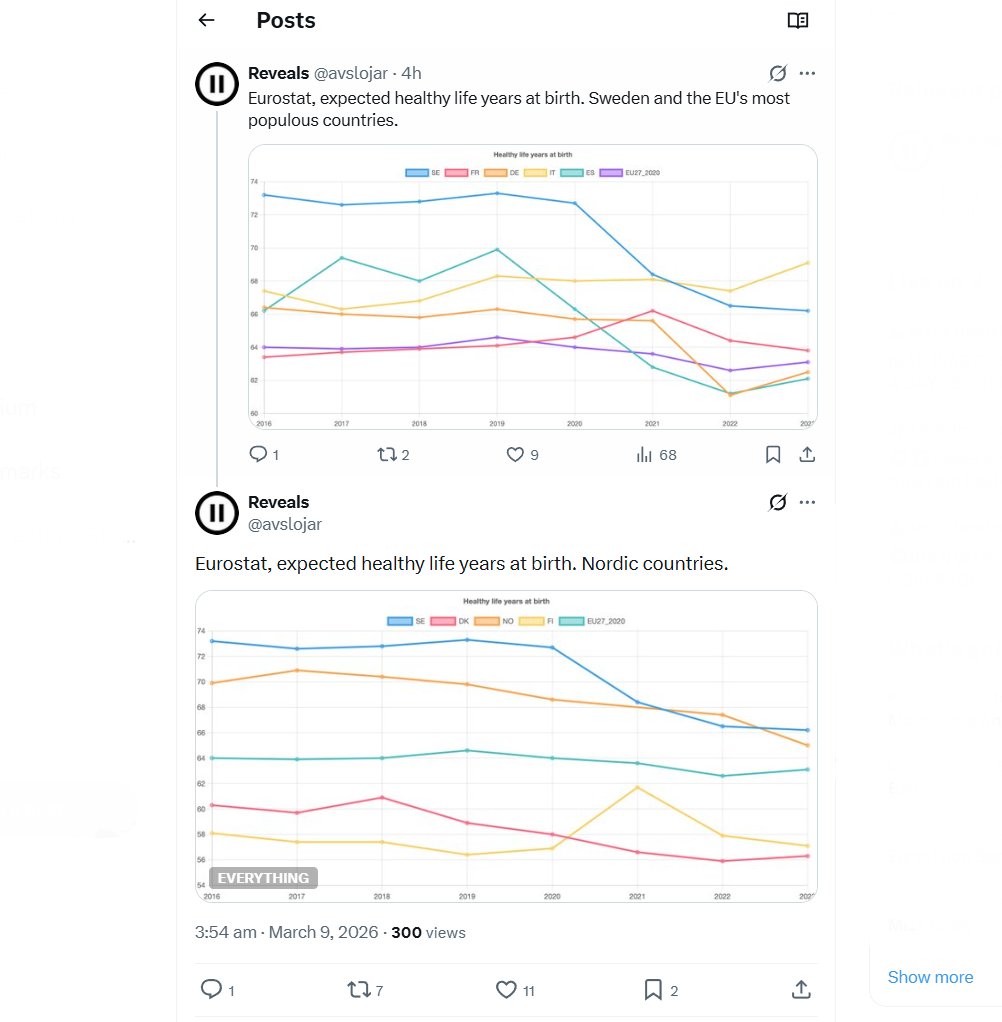 Here is the post.
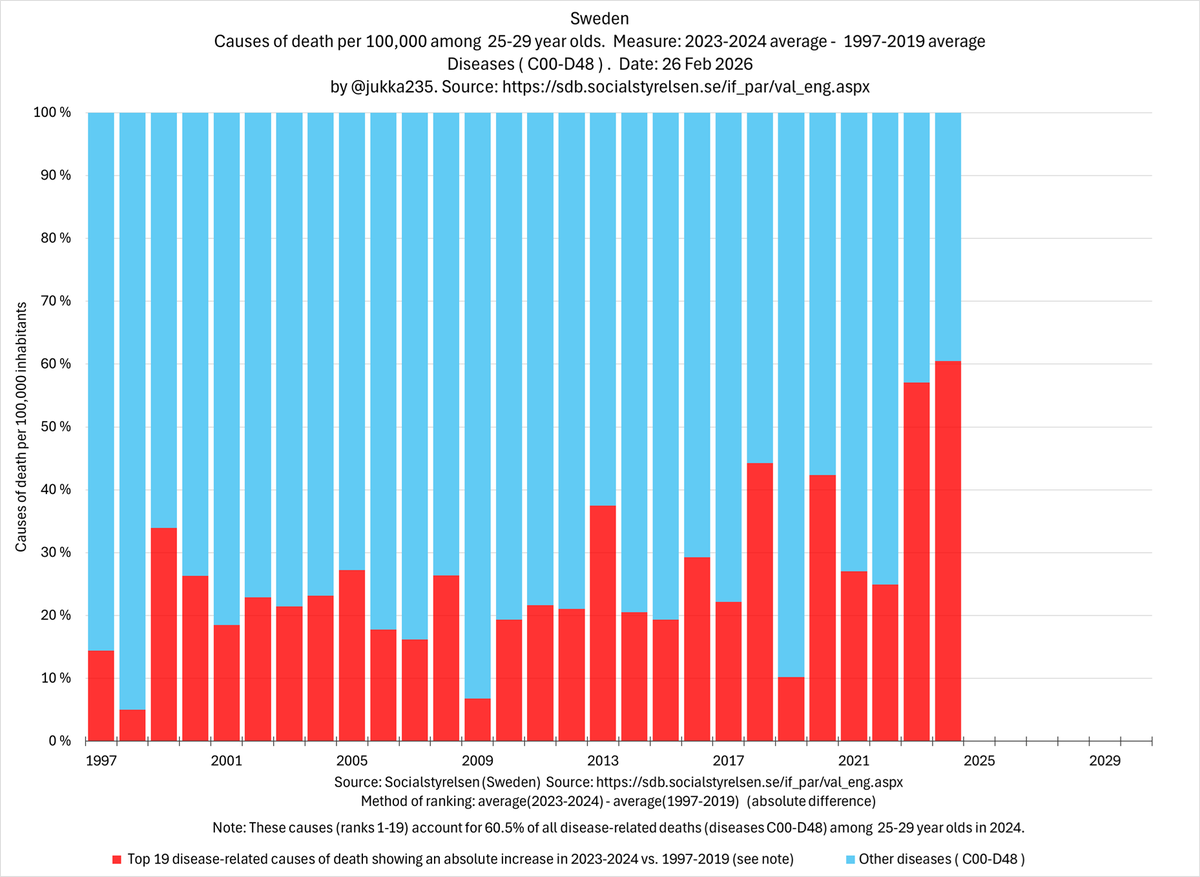 During 2020-2024, among 25-29 year olds, the share of cancers showing growth in 2023-2024 increased from a historical baseline of 22% of all cancers (1997-2019 average) to 61% in 2024.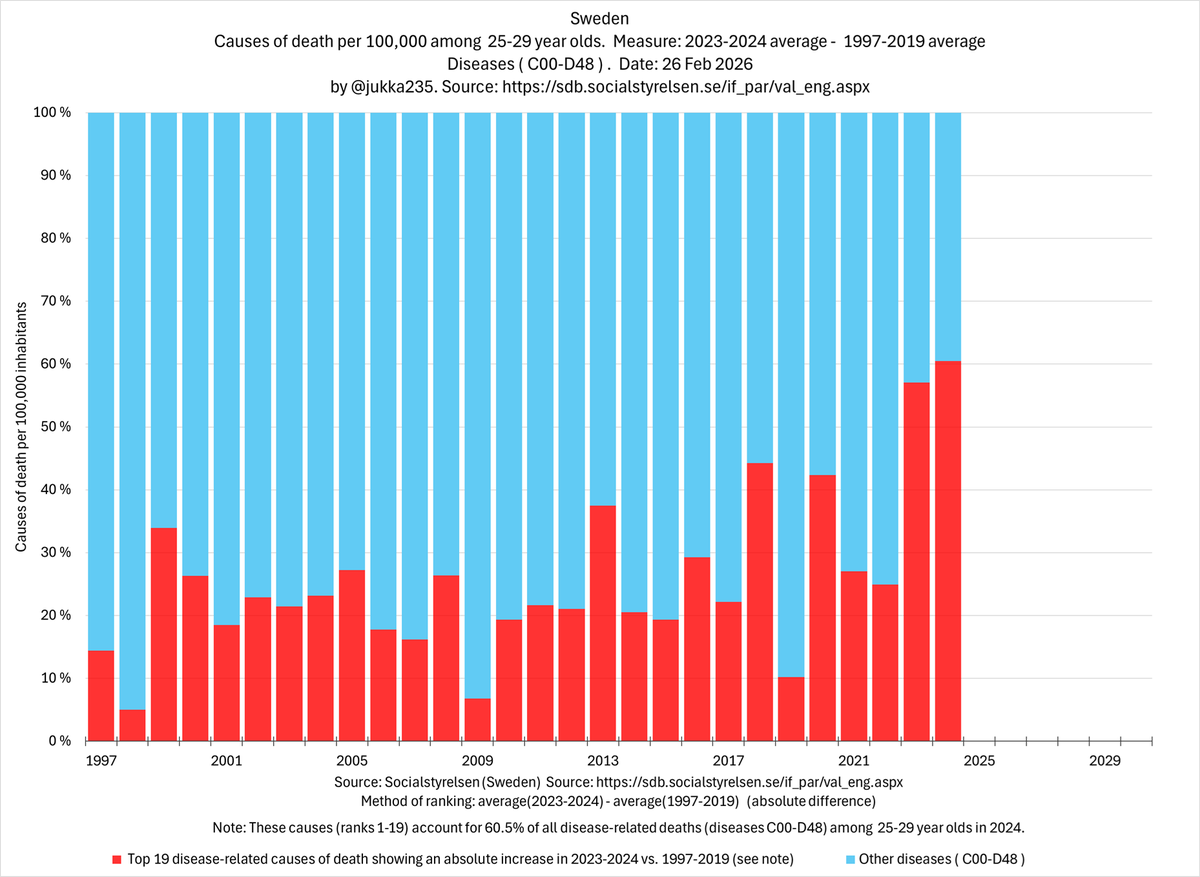
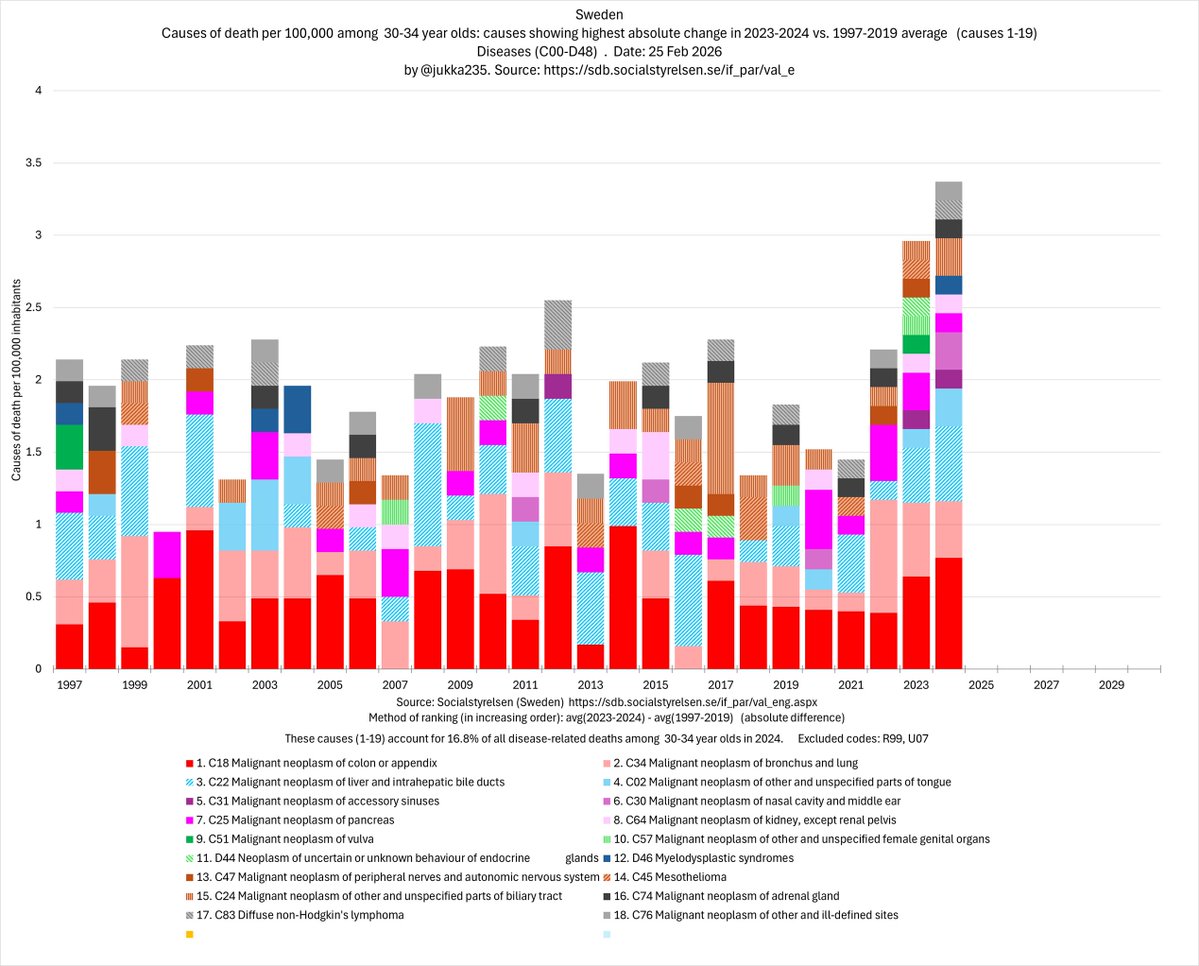 Among 30-34 year olds, cancer and neoplasm related causes of death have been growing at an average rate of 32.5% per year since 2021 (equivalent to a 10-fold increase in 8.2 years if current growth continues).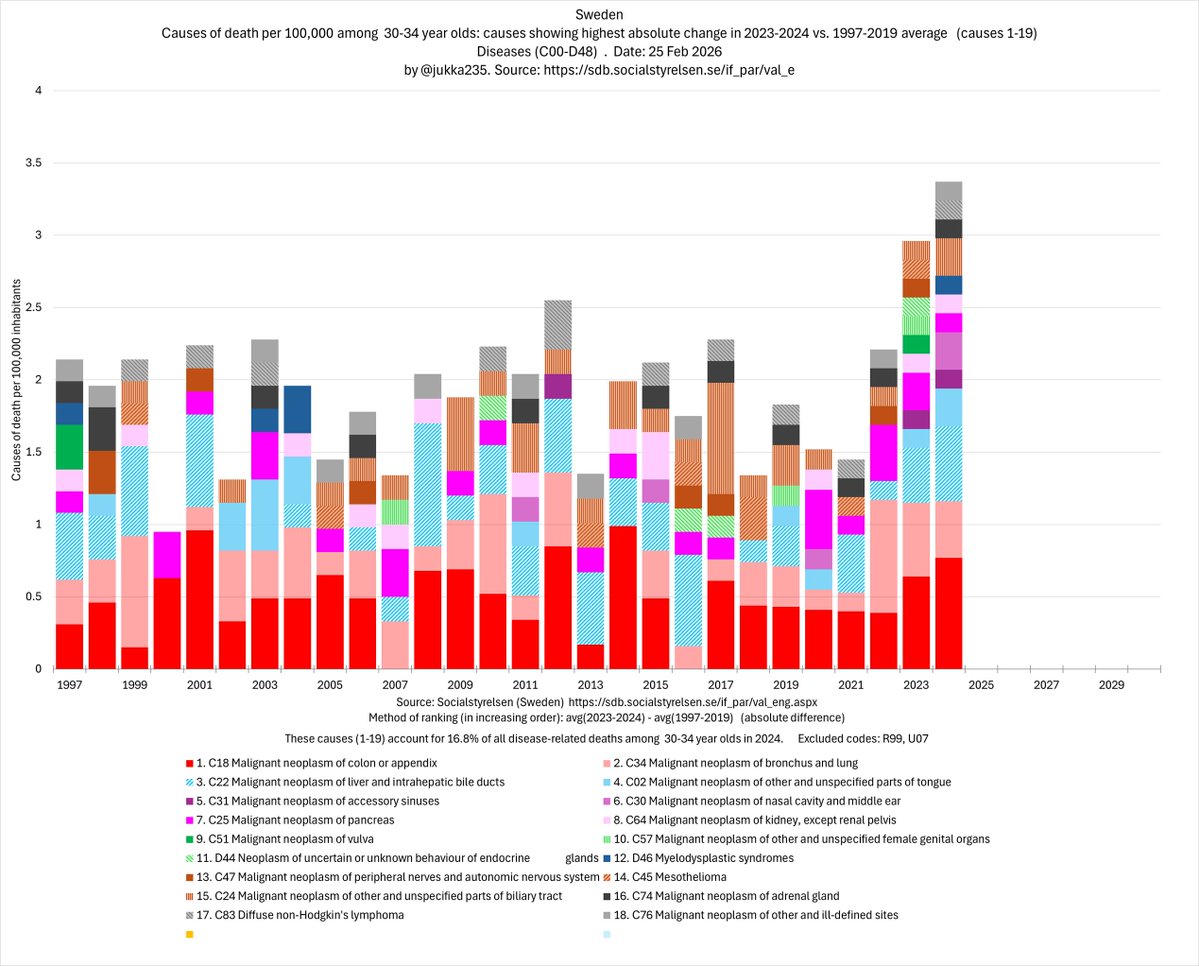
 Post-Omicron baseline is permanently higher than pre-Omicron:
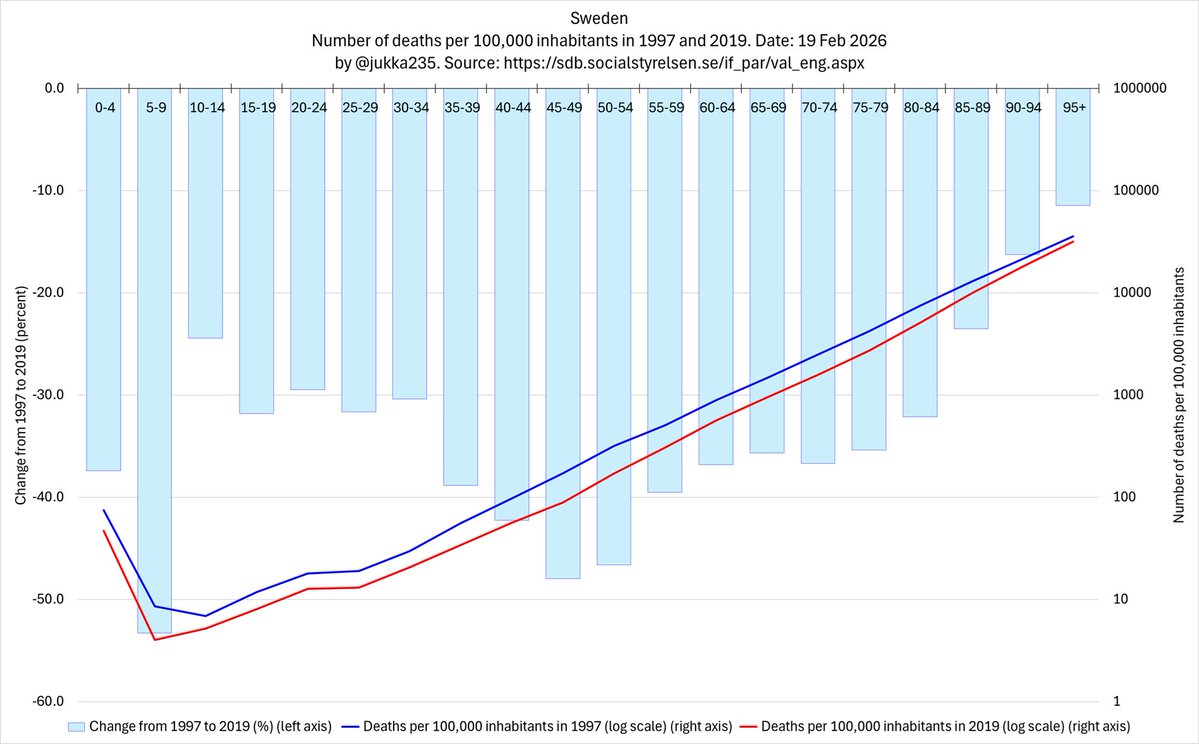 Between 2019 and 2024, the Swedish health system took a step back. It would appear that school aged children were sacrificed for the greater good.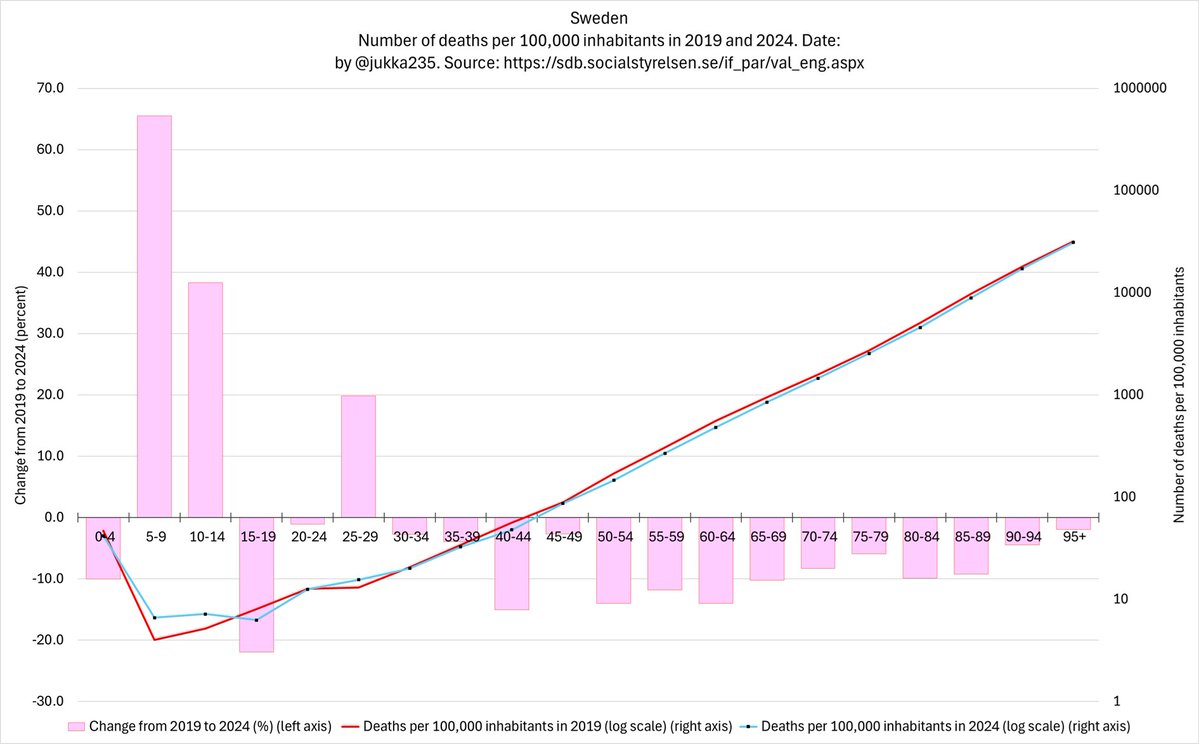
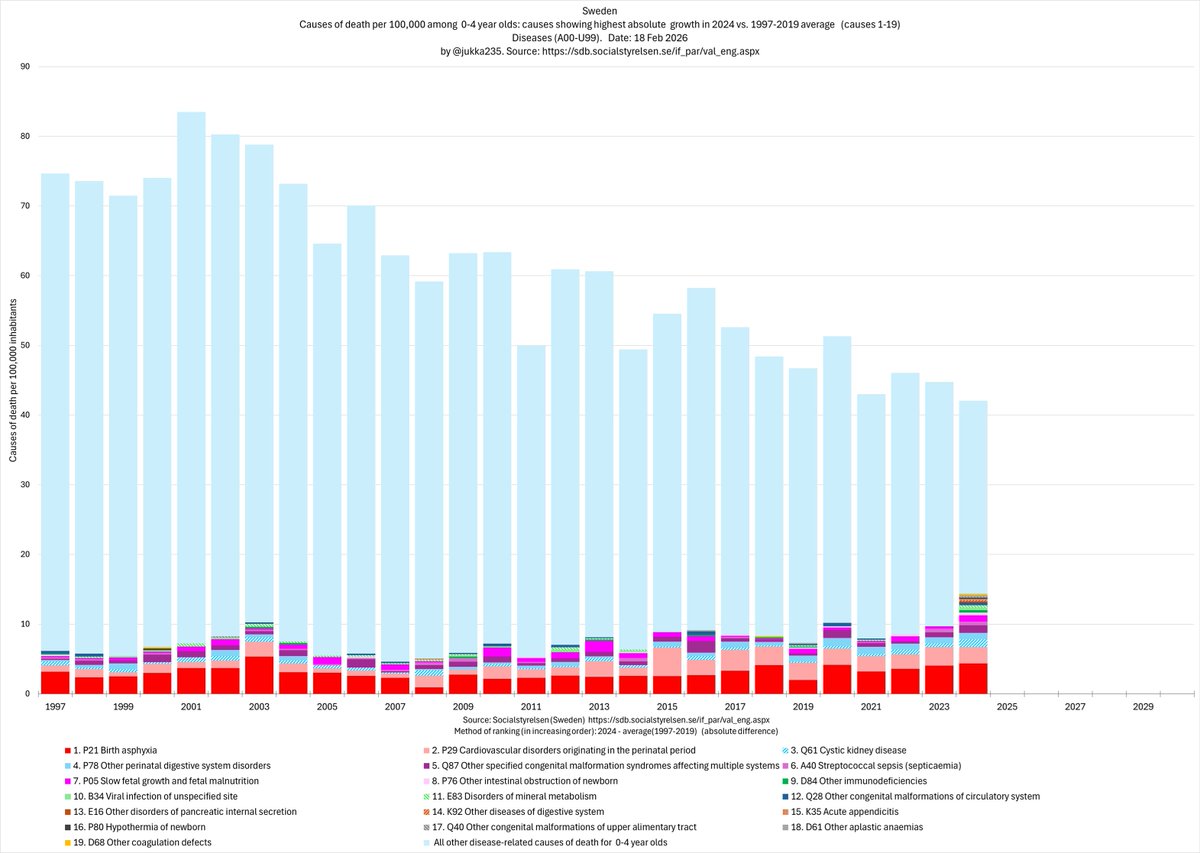 0-4 year olds: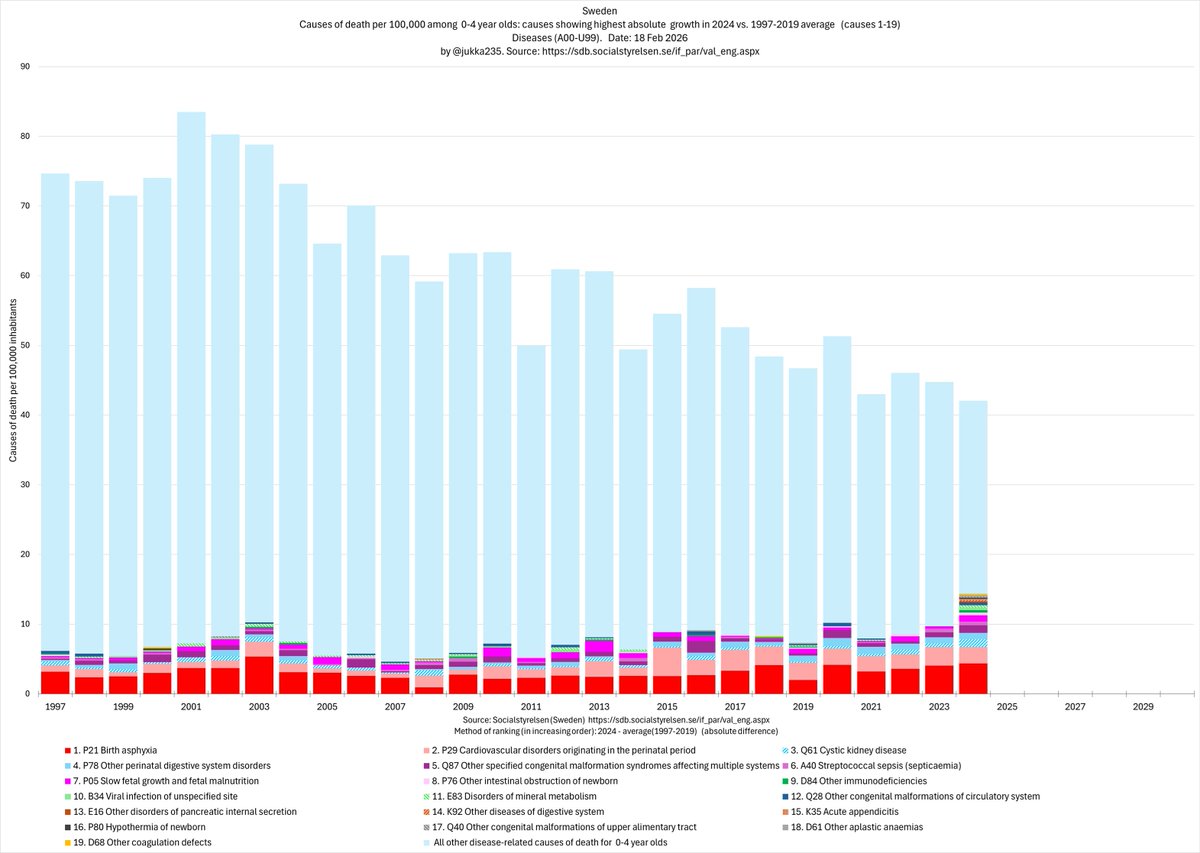
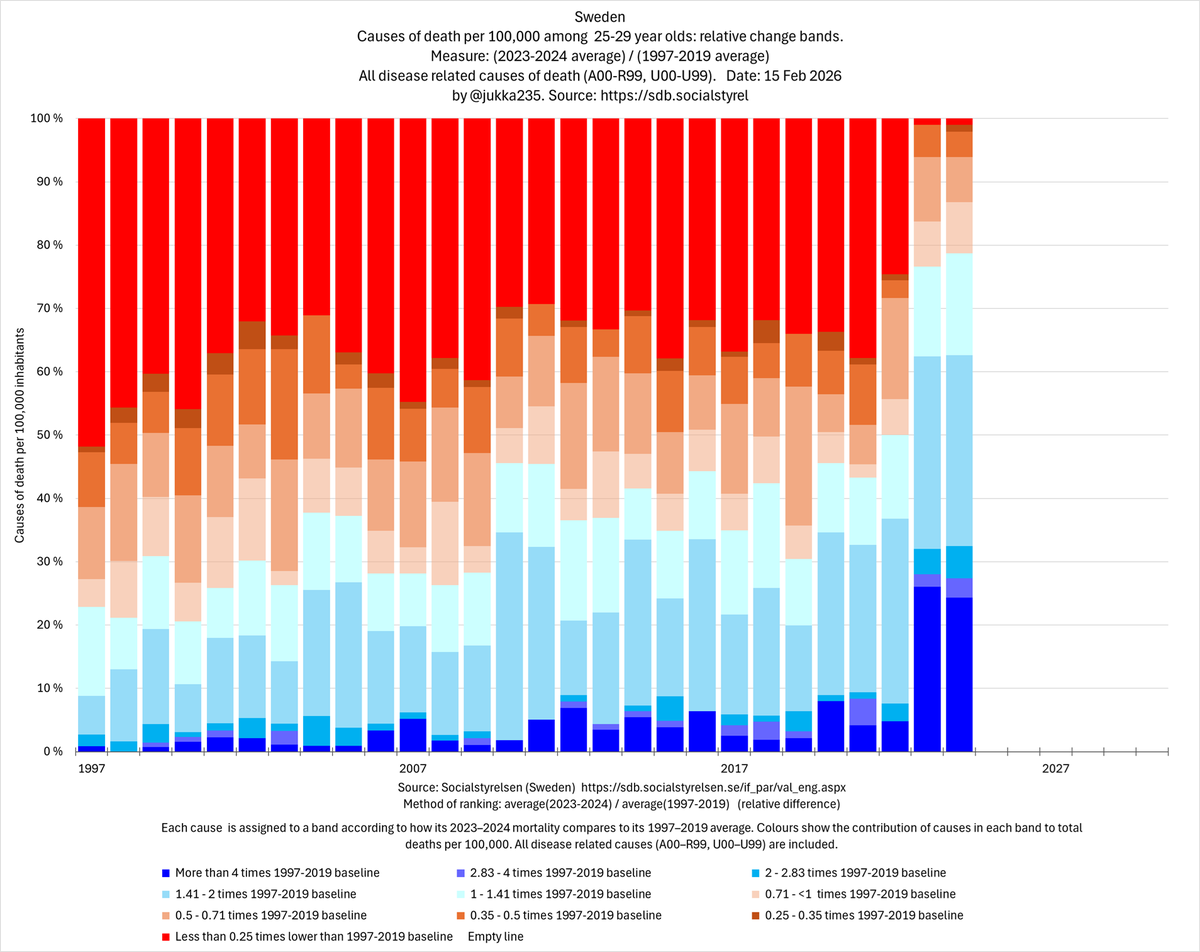 In this thread, I take all disease-related causes of death for each age group in Sweden and assign them to growth bands based on how much above or below the 1997-2019 baseline they are. Here are 25-29 year olds. 2/x
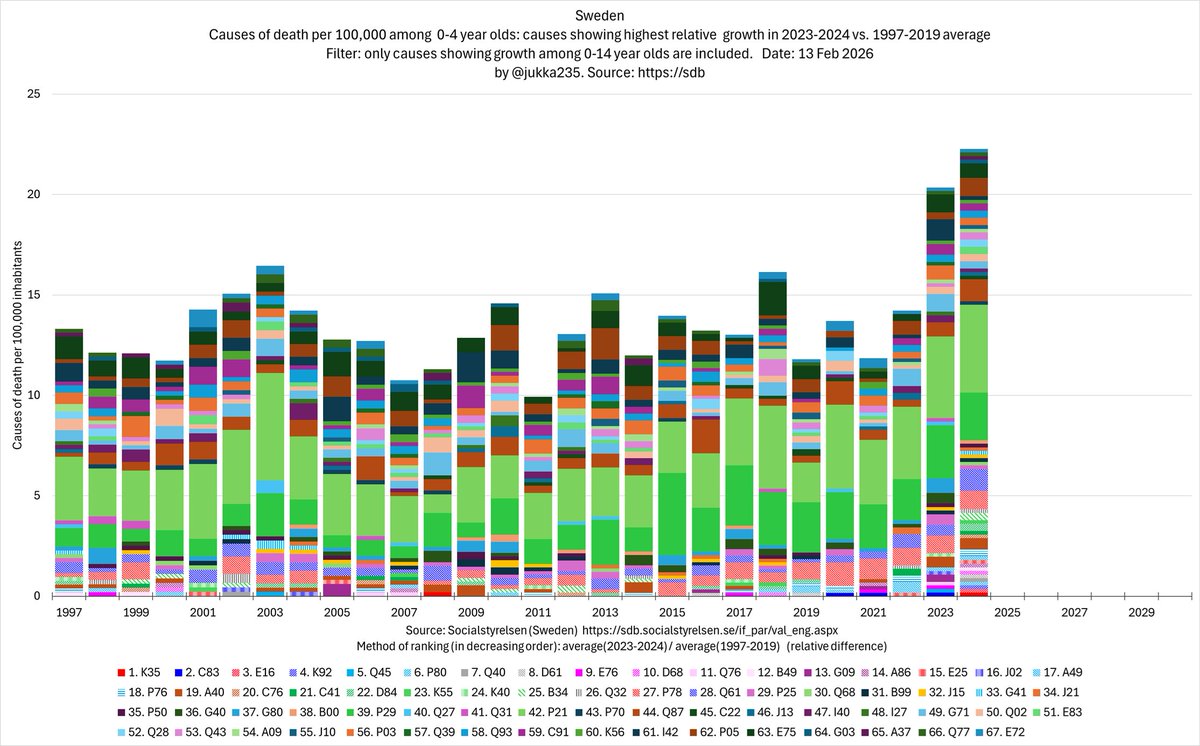 These causes collectively represent all causes of death that are rising among 0-4, 5-9 and 10-14 year olds. Among 0-4 year olds, their average growth rate (2019-2024) is 13.5%.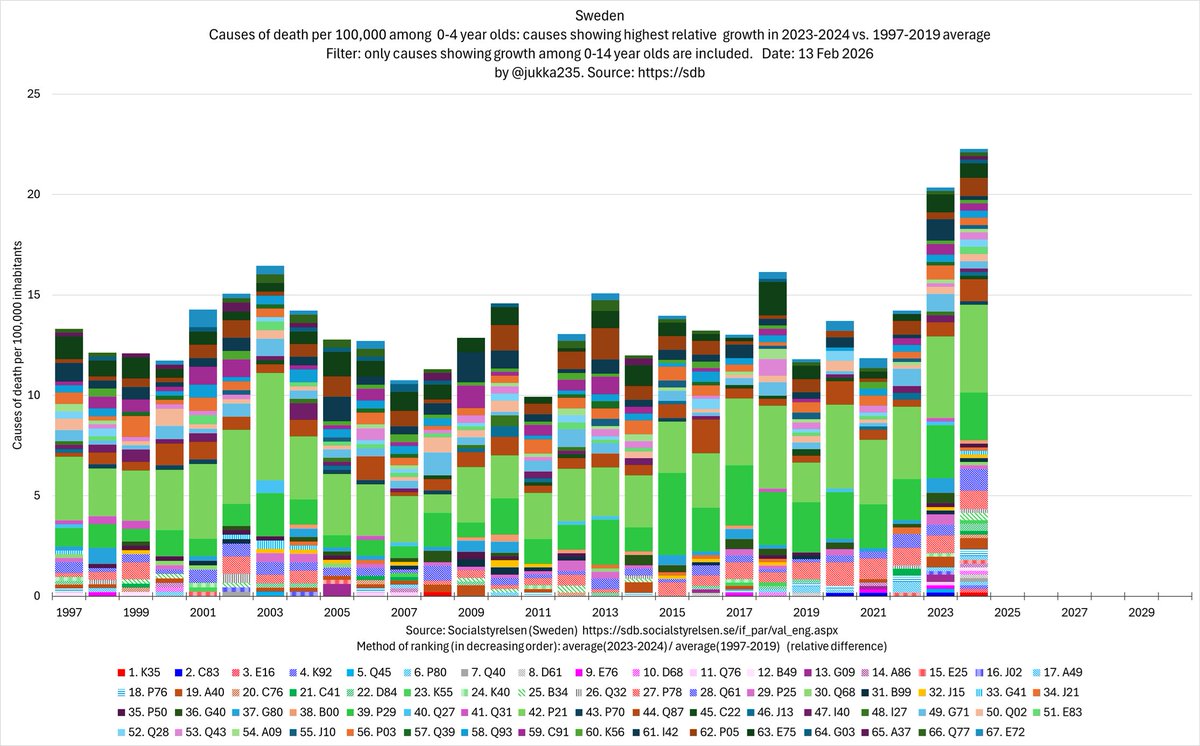
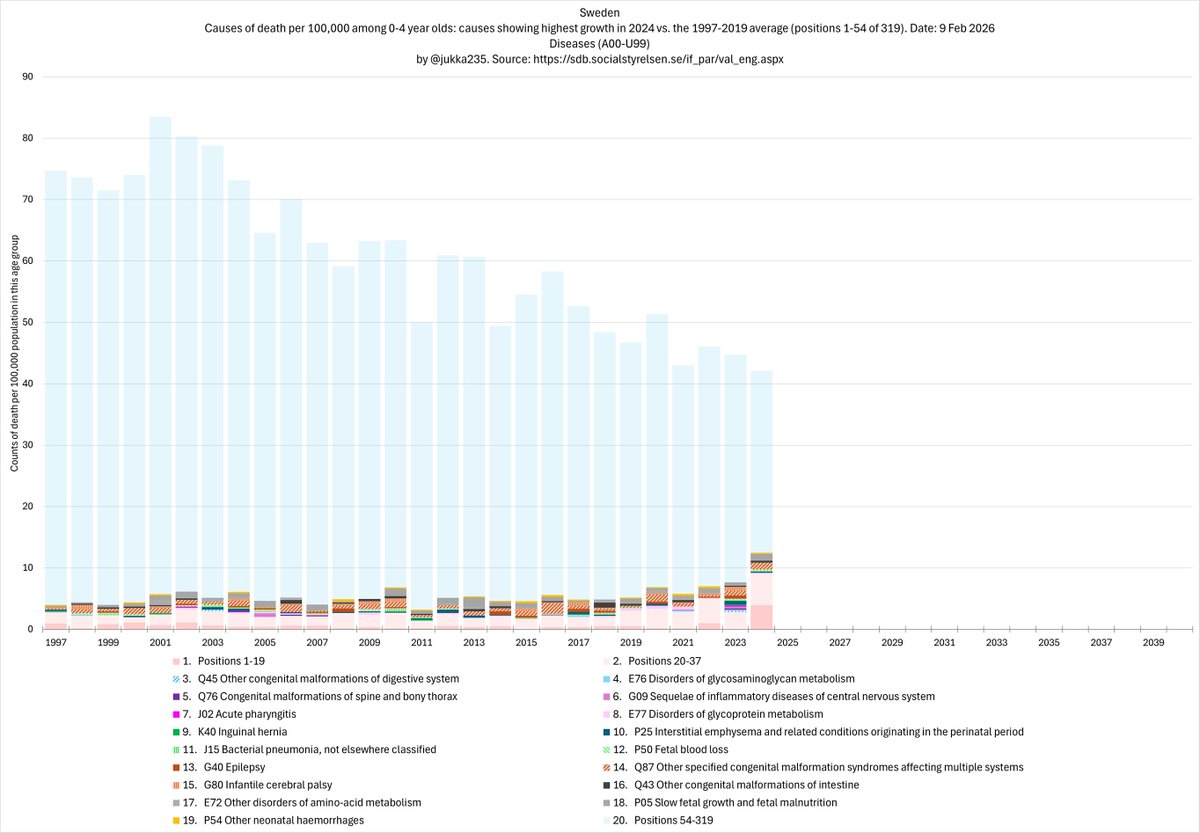 Among 0-4 year olds, the 19 causes of death with the highest growth (2004 compared with the 1997-2019 average) have increased since 2019 at an average rate of 51% per year.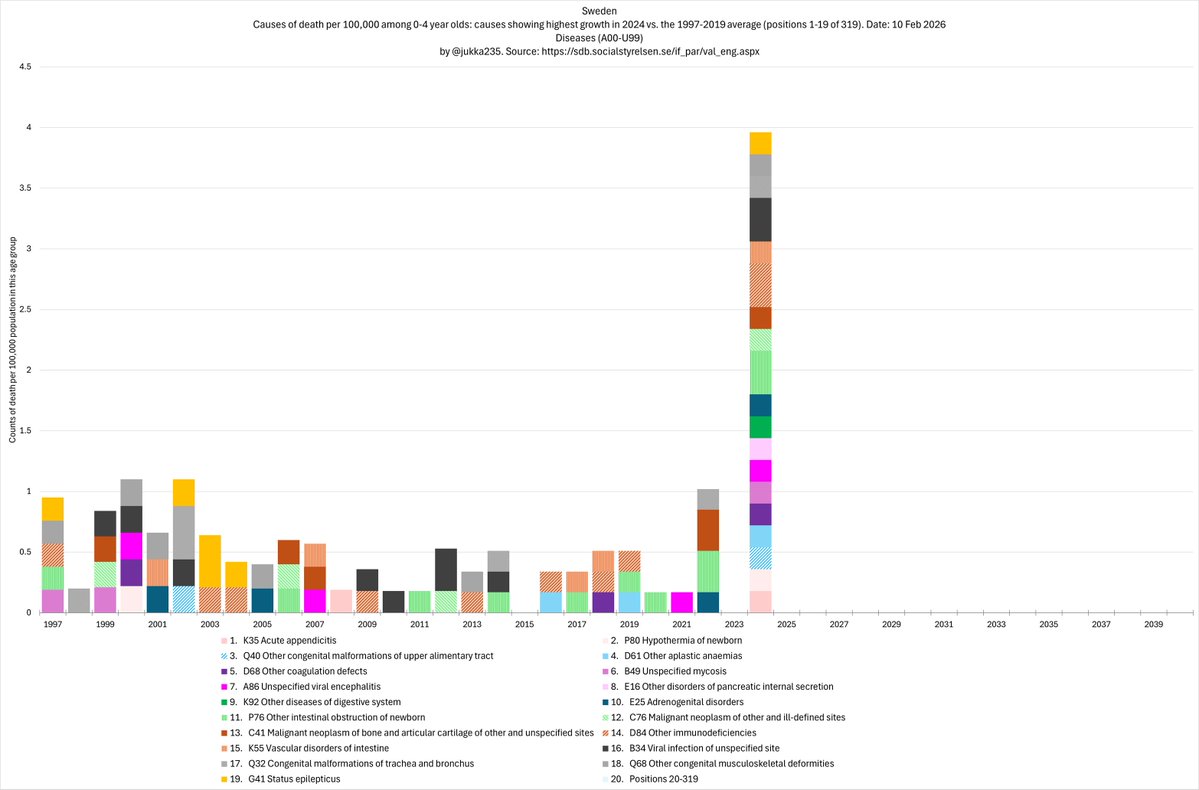
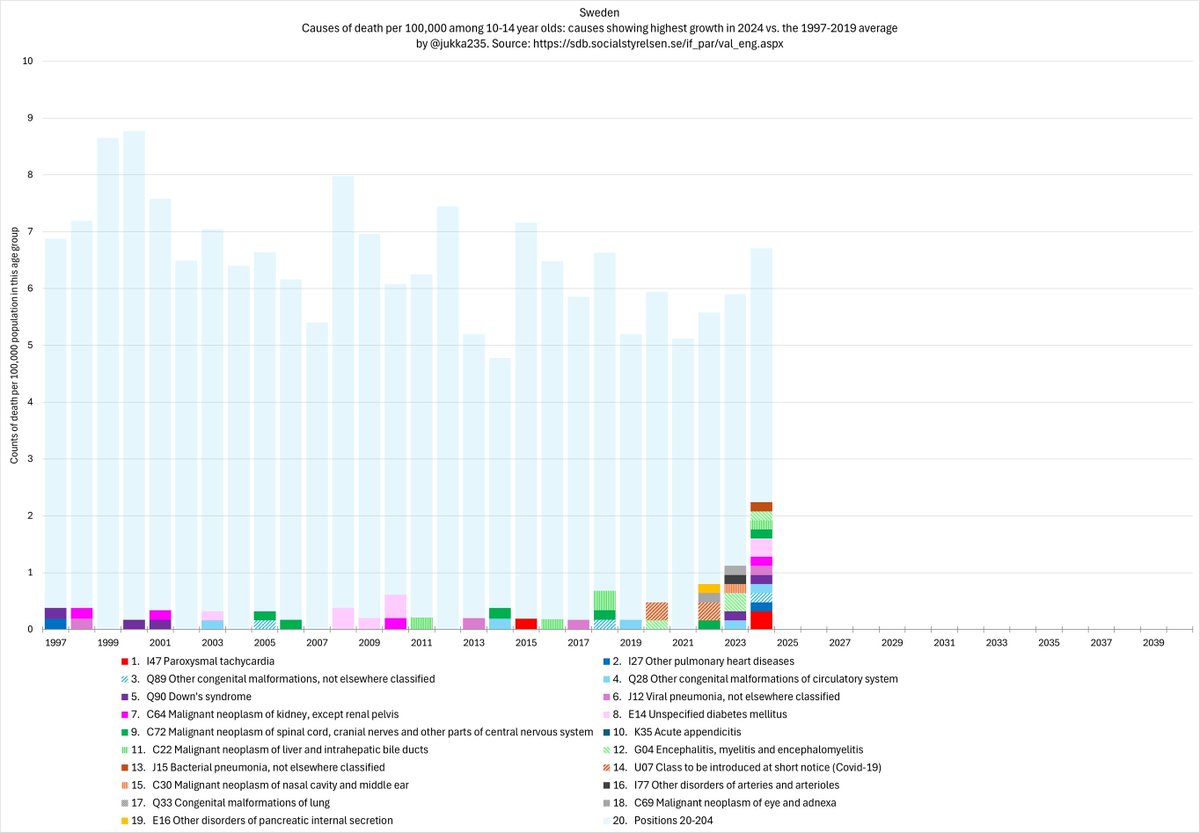 Here are the 19 leading causes of death among 10-14 year olds, ranked by their 2024 incidence compared to the 1997-2019 average. Together, they account for 35% of all deaths in 2024.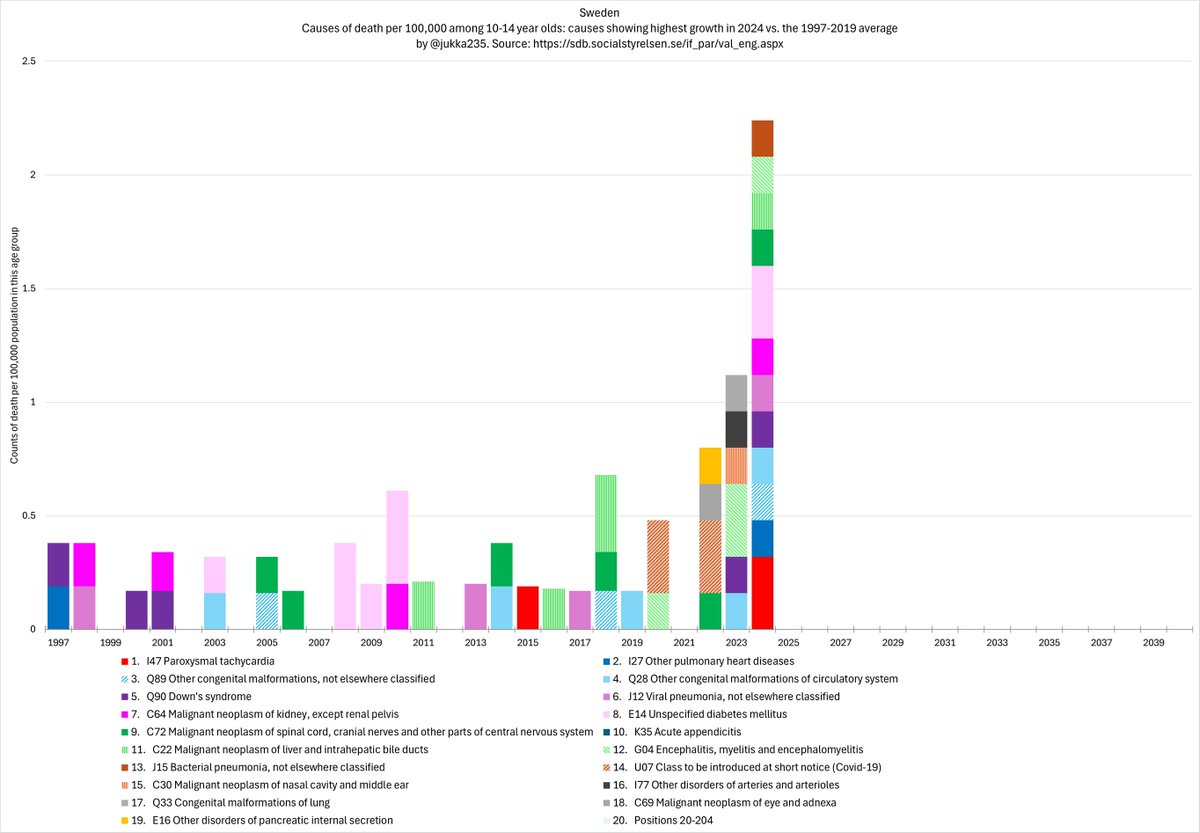
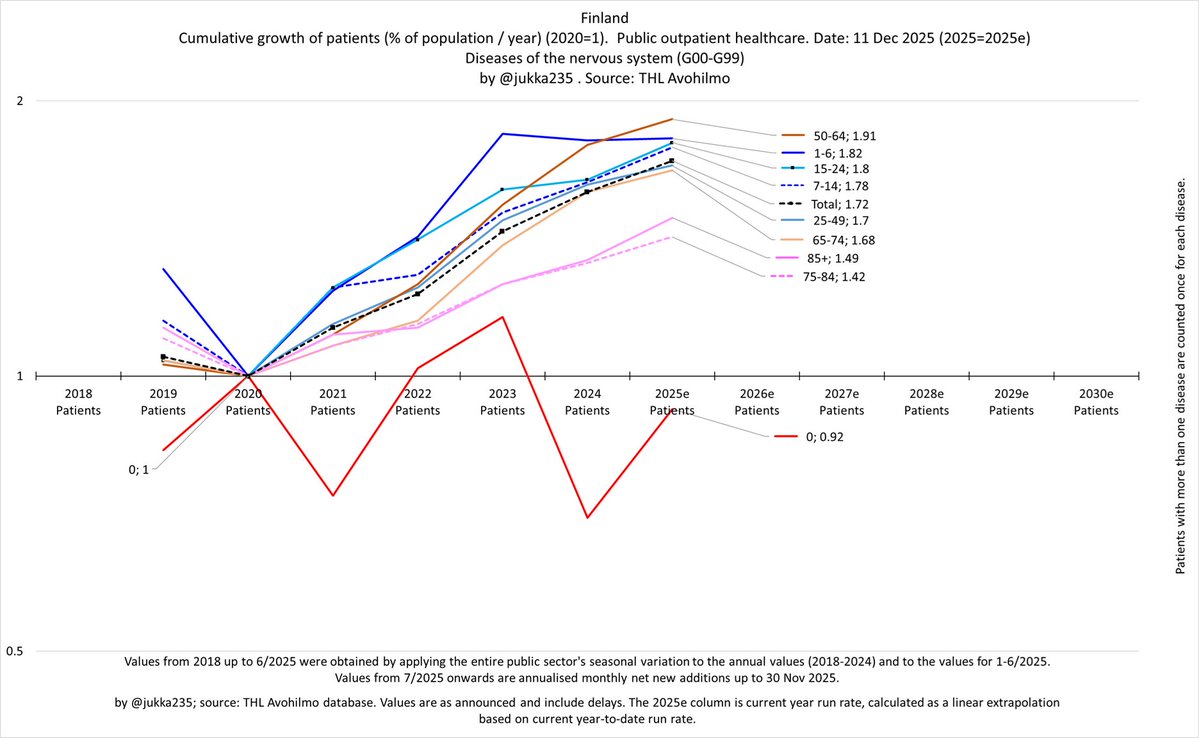 Between 2020 and 2025e, patient growth is nearly uniform across all age groups above one year of age. However, growth among those aged 1-64 clearly exceeds that observed in older age groups.
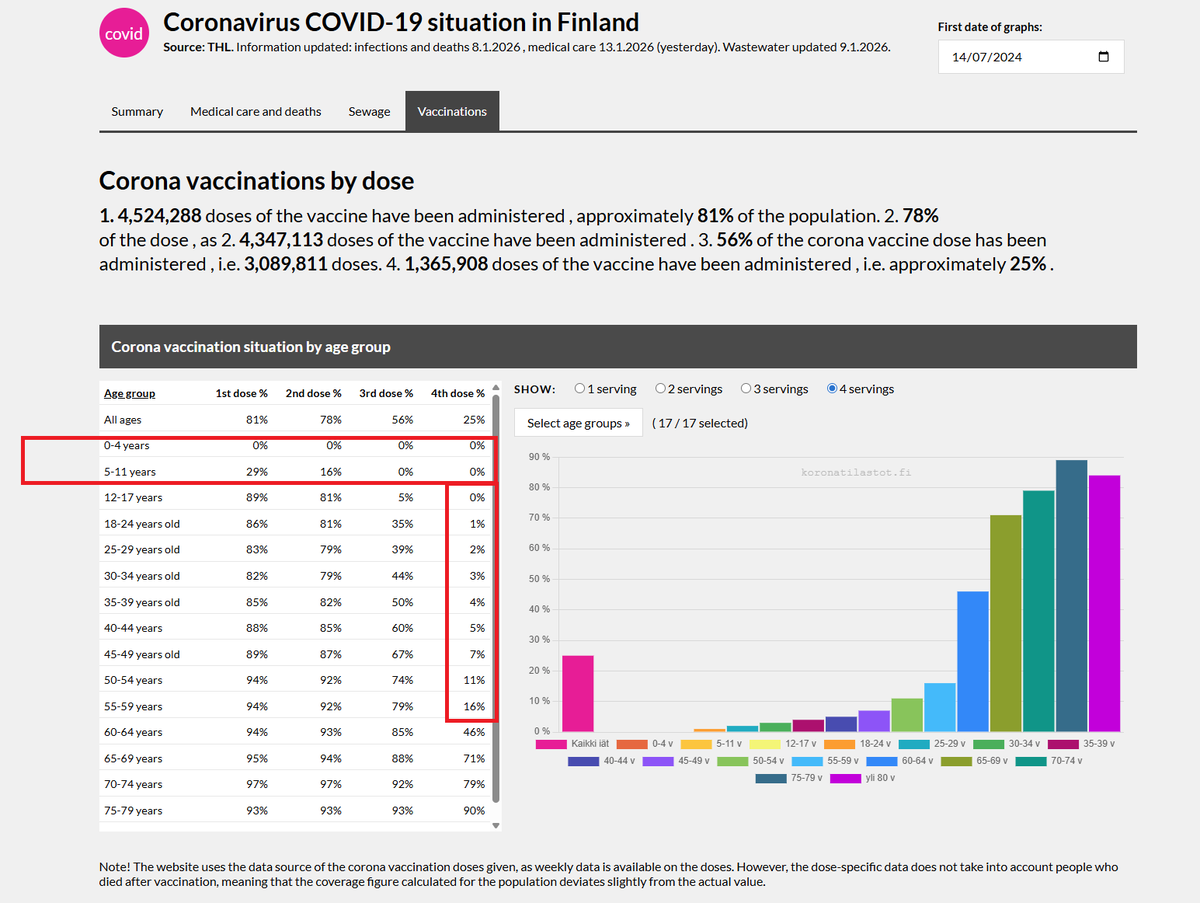
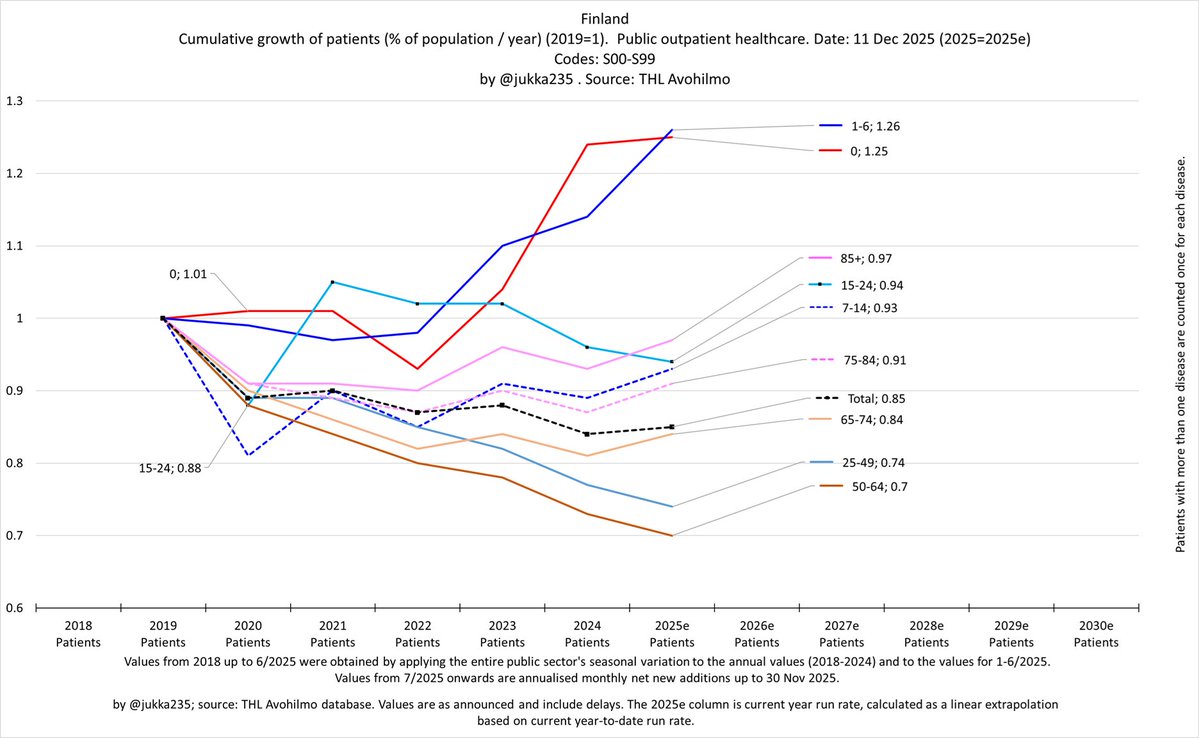 Something changed in 2022. Before that, the numbers were generally falling. Wonder what it could be.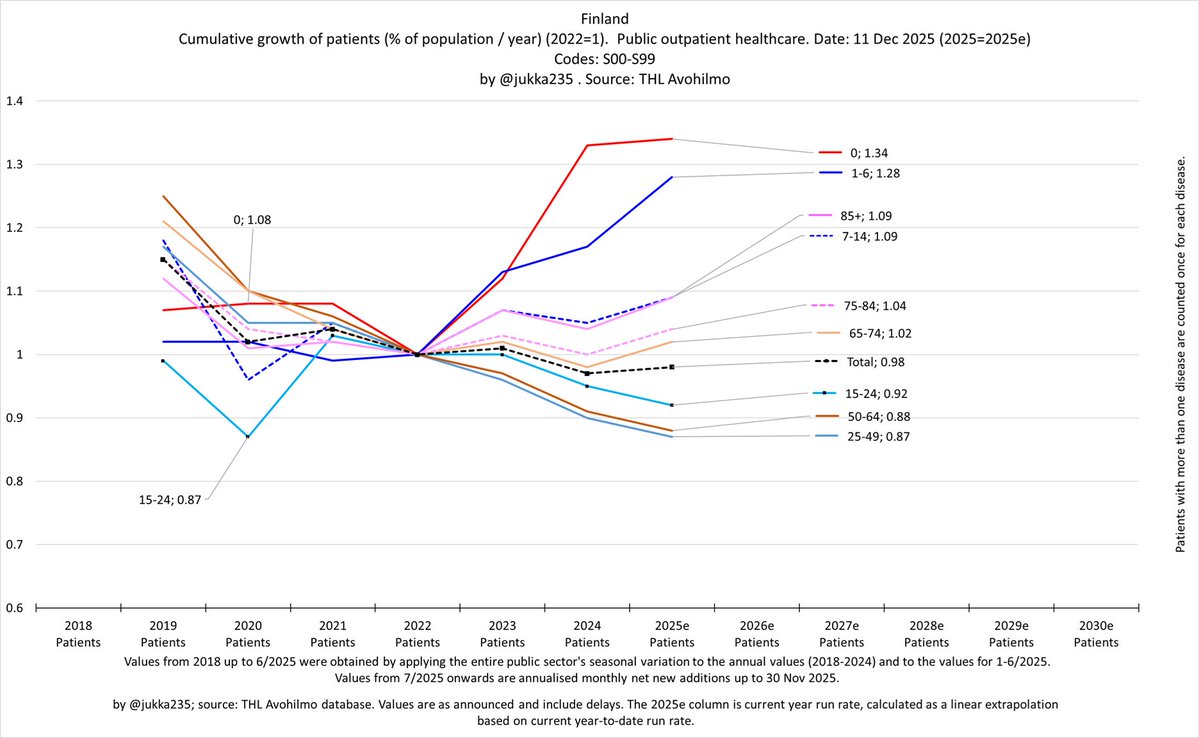
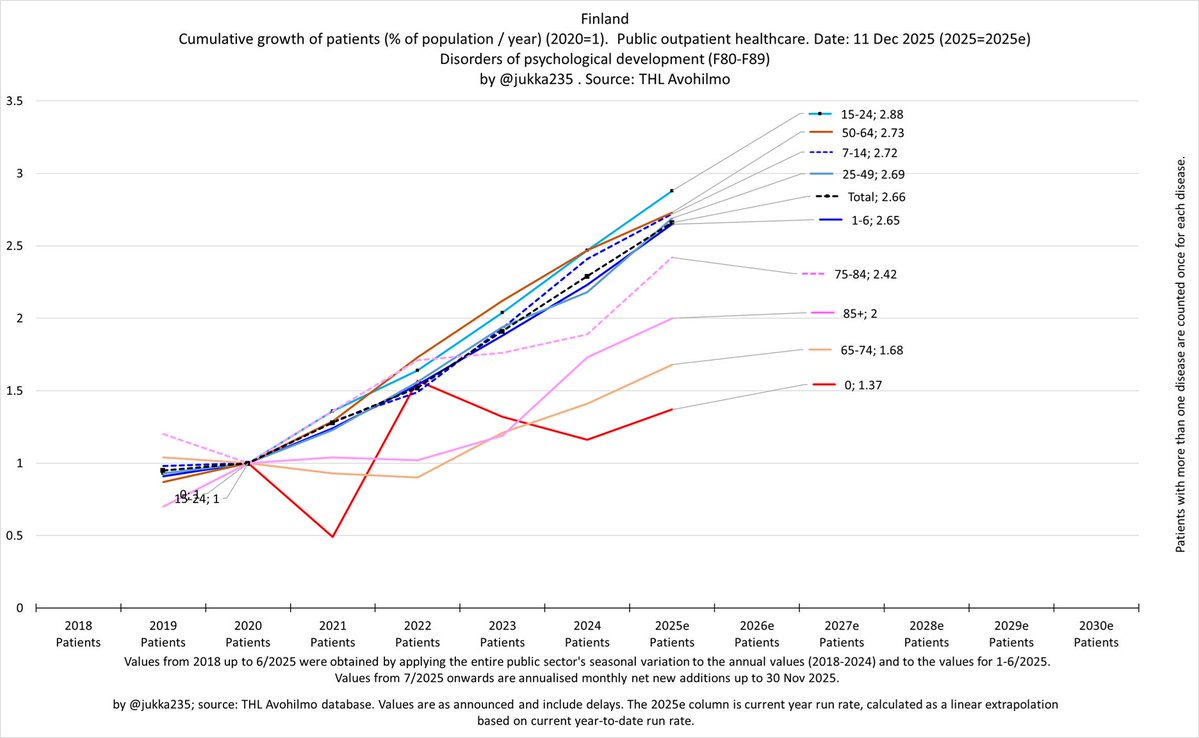 Between 2020 and 2025e, the number of patients with developmental delay or disorder diagnoses grew at an average annual rate of 21.6% (10x in 11.8 years). The fastest patient growth was seen in pervasive developmental disorders, incl. autism and Asperger syndrome (F84).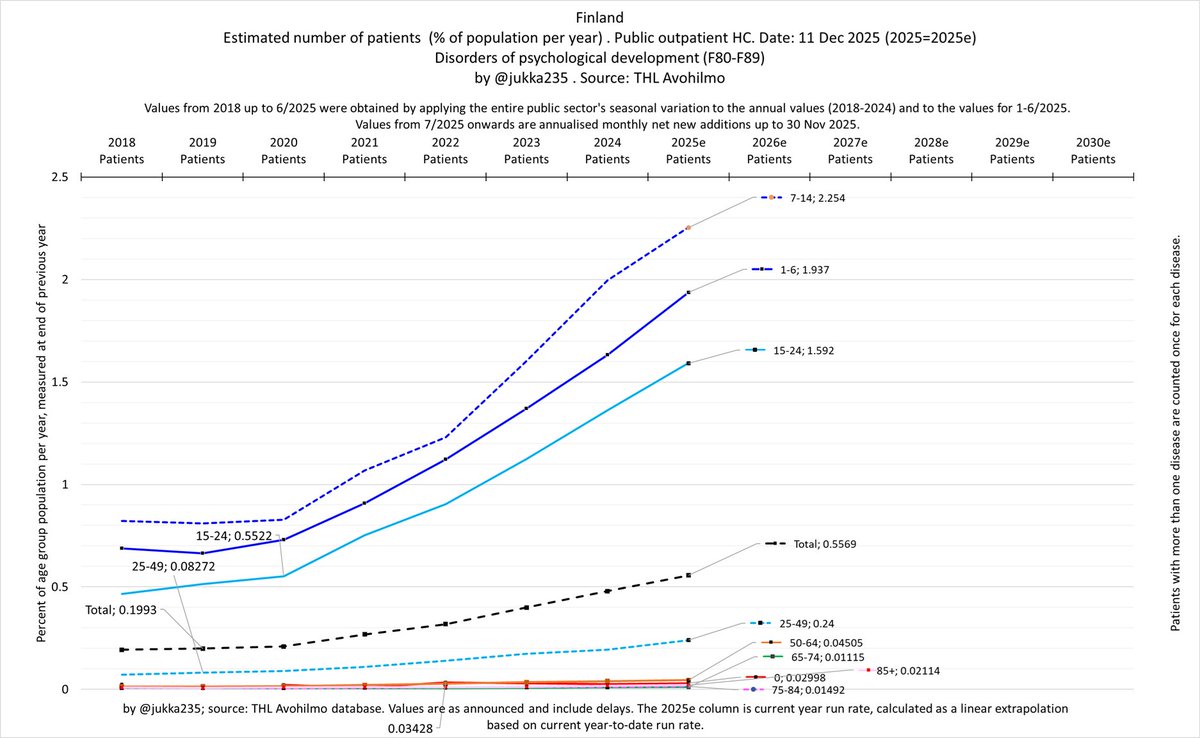
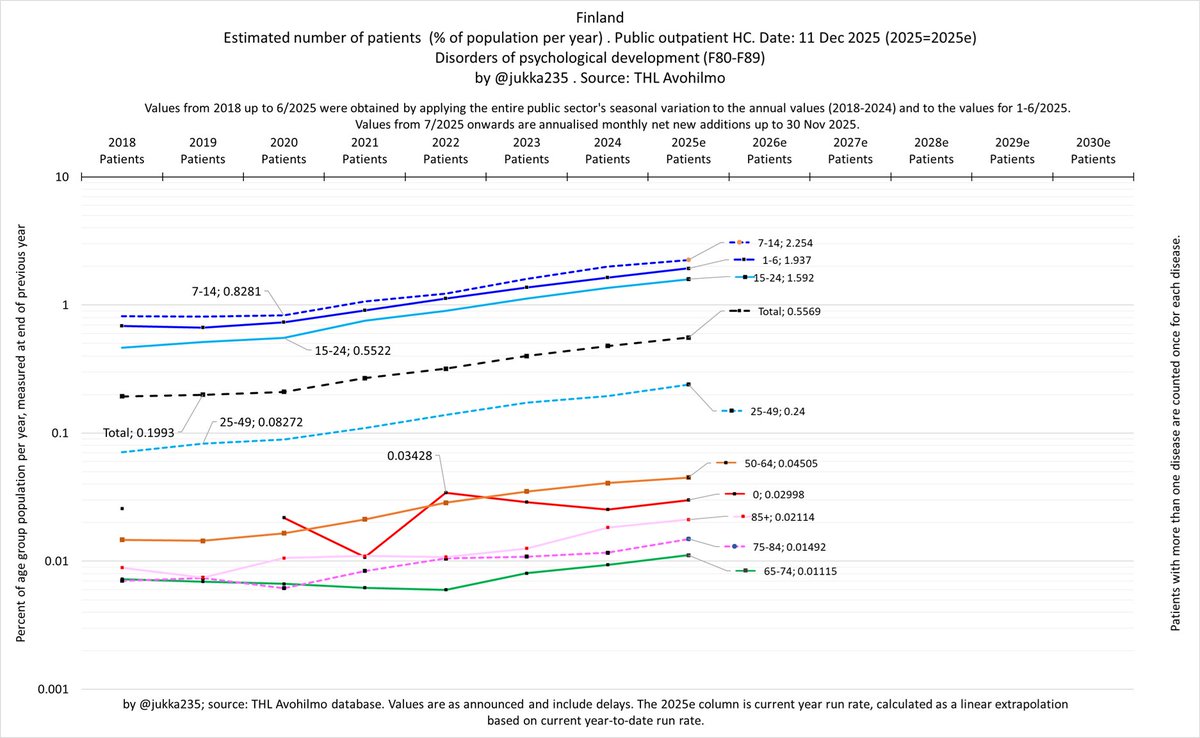
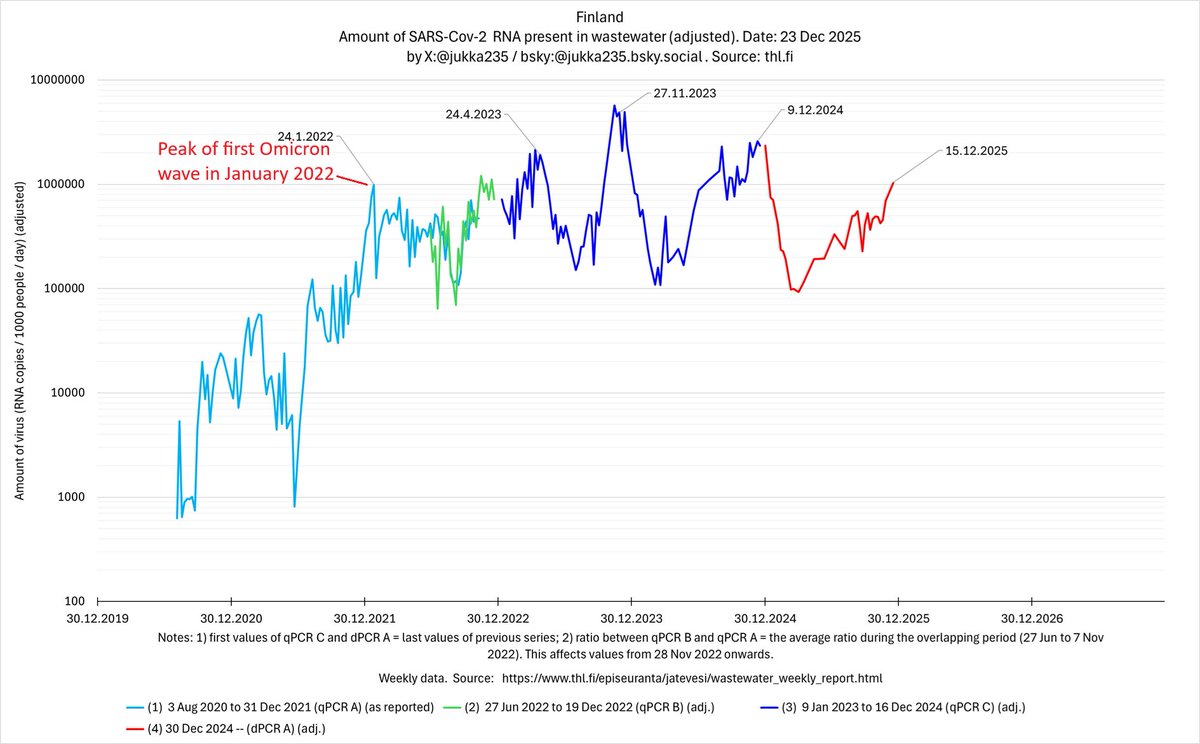 Post-Omicron baseline is permanently higher than pre-Omicron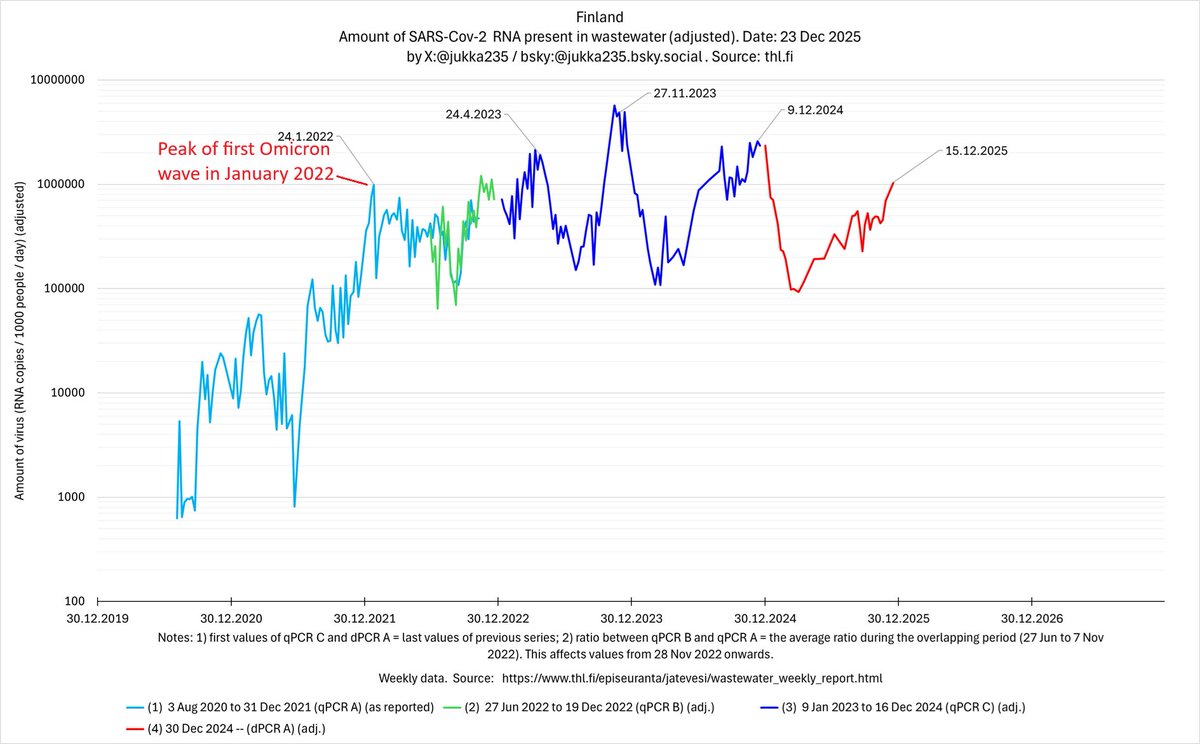
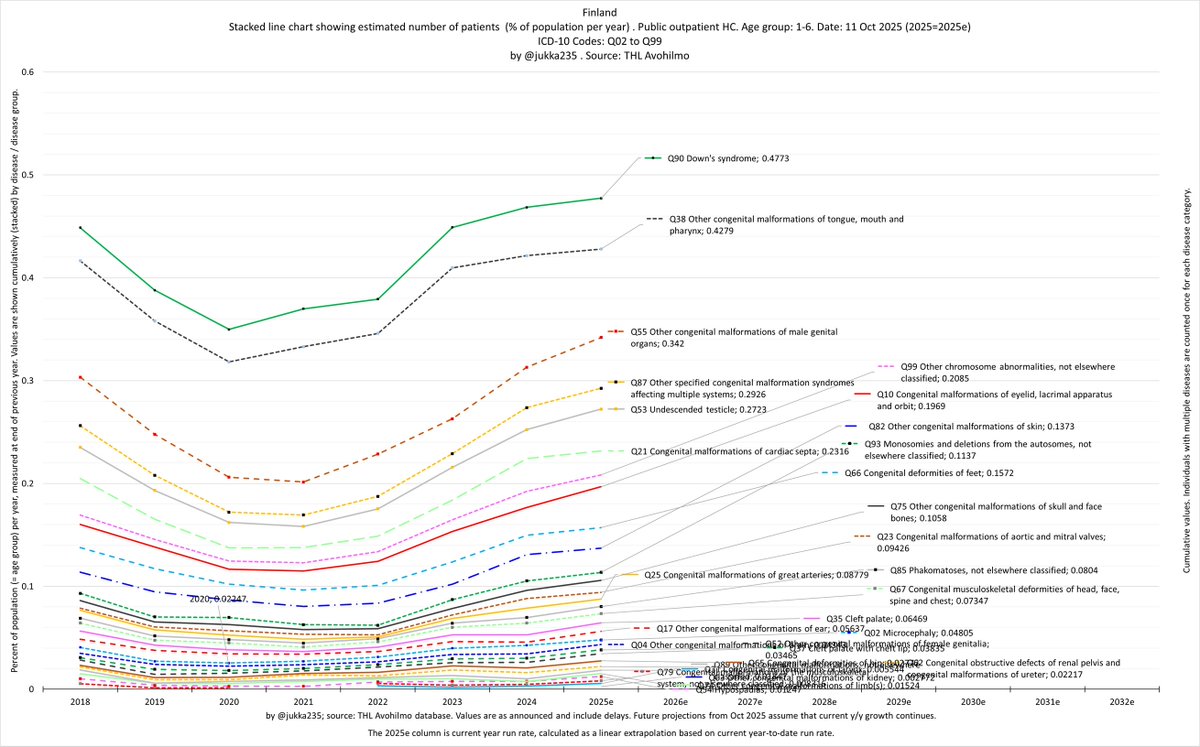
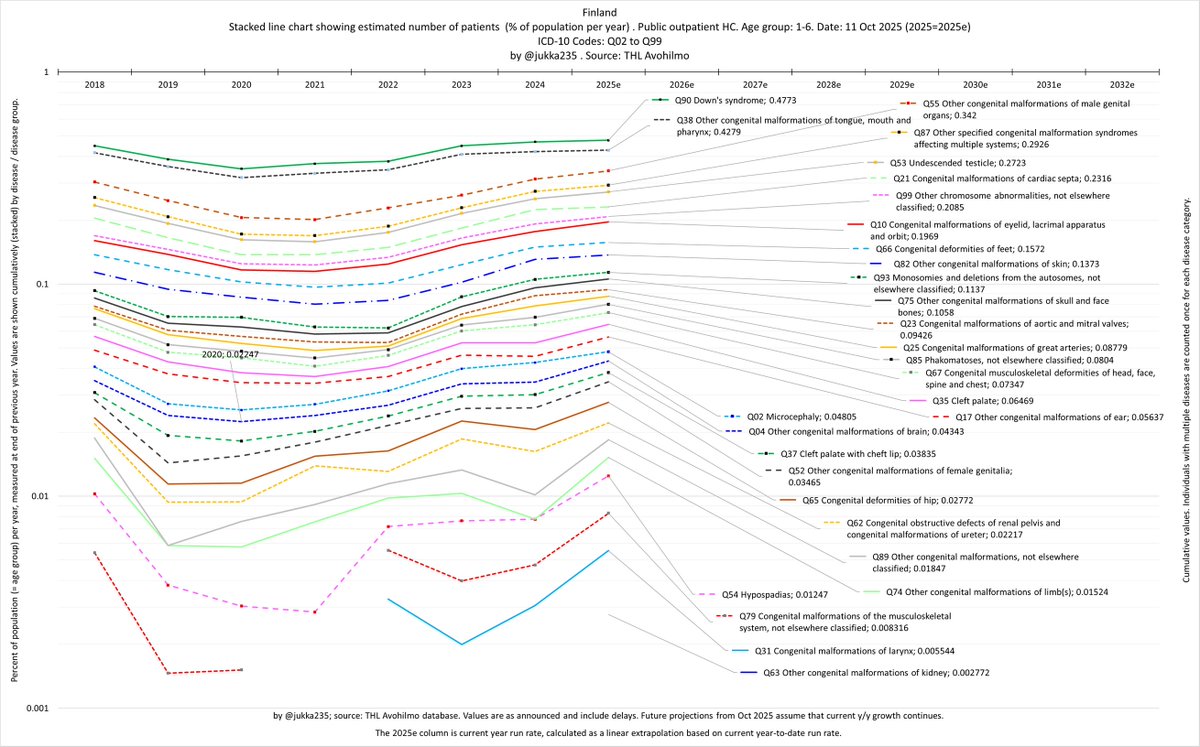 1-6 year olds / chromosomal abnormalities (Q90-Q99).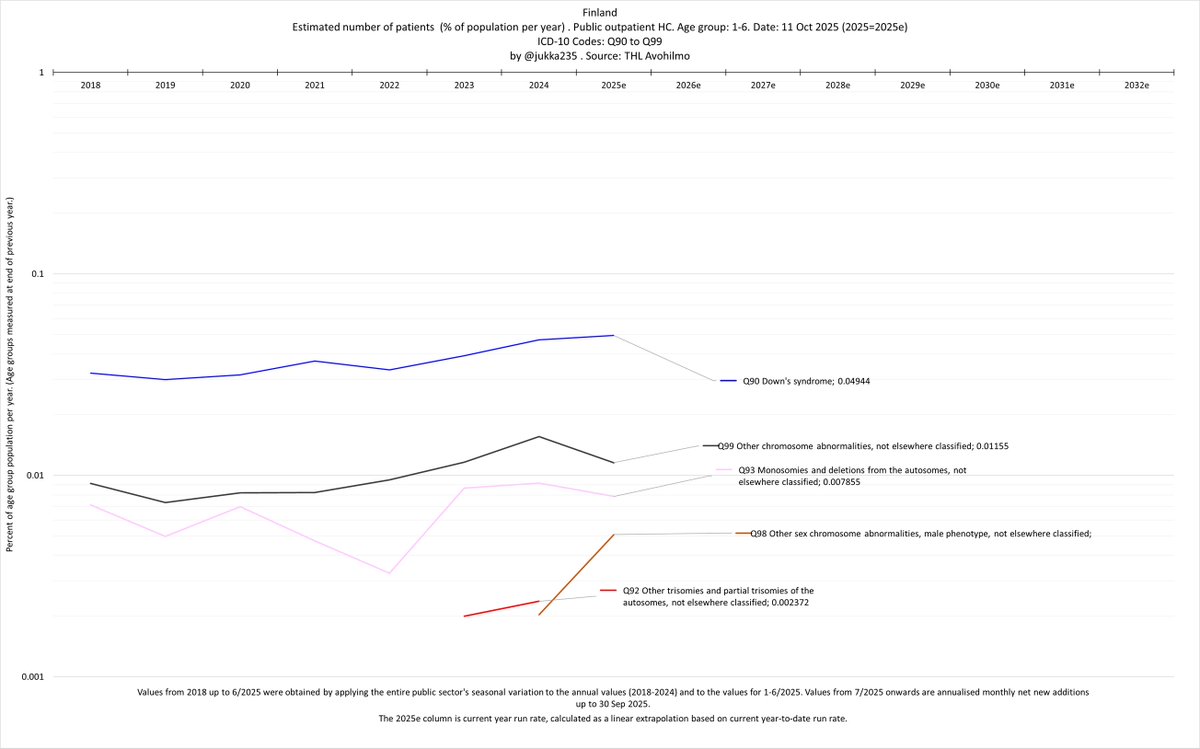
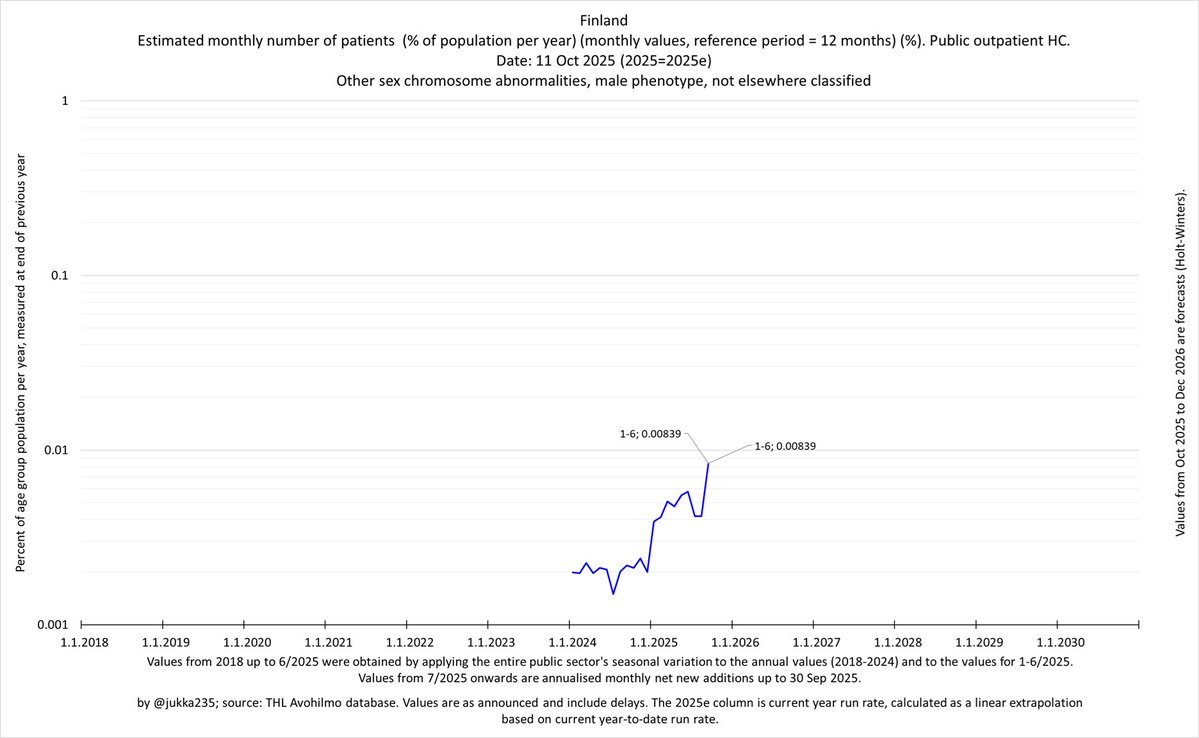
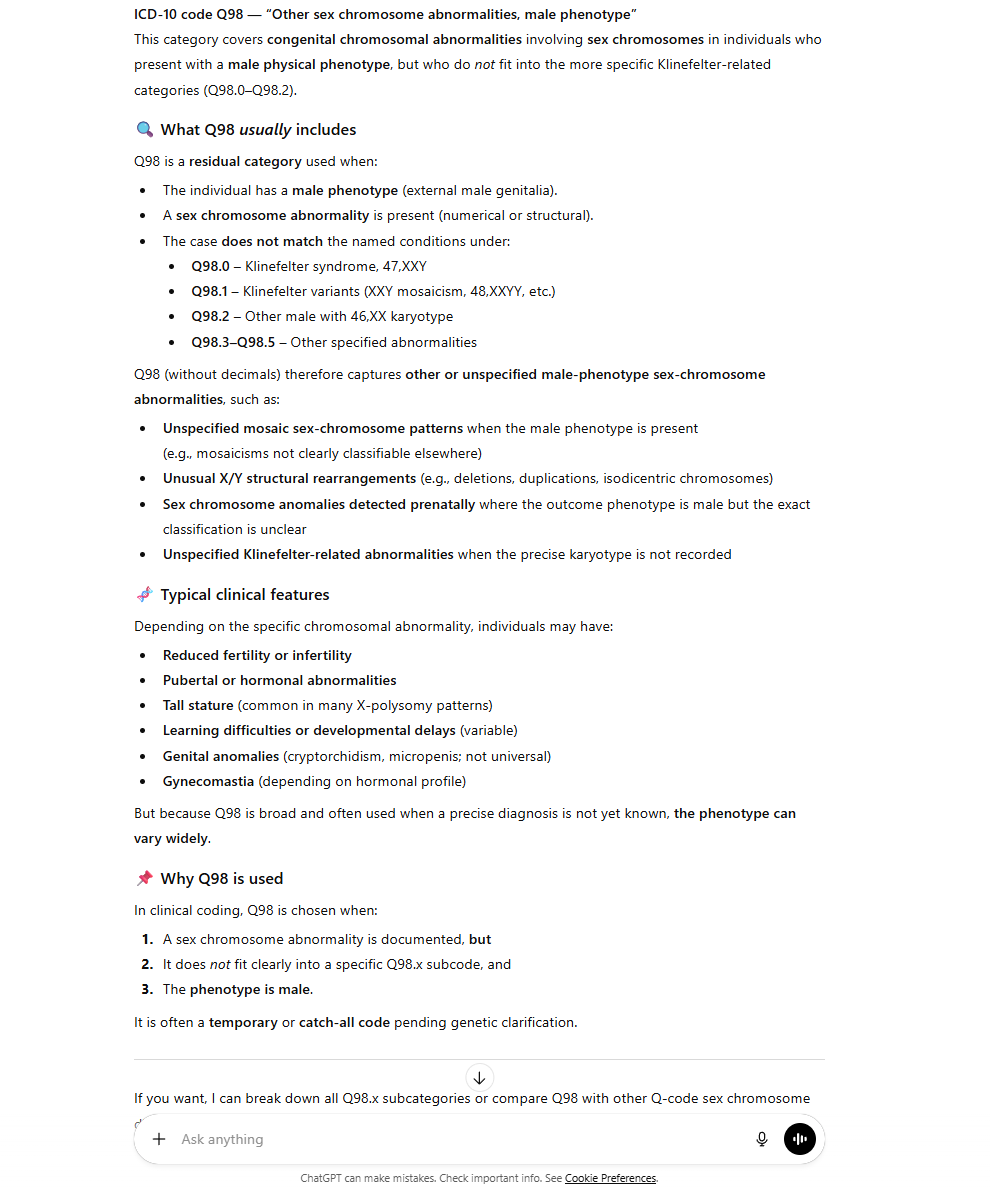
 The rise in intellectual disability among <1 year olds also shows in number of diagnoses: up roughly 11 times in 4 years. Also note the rise among 1-6 year olds.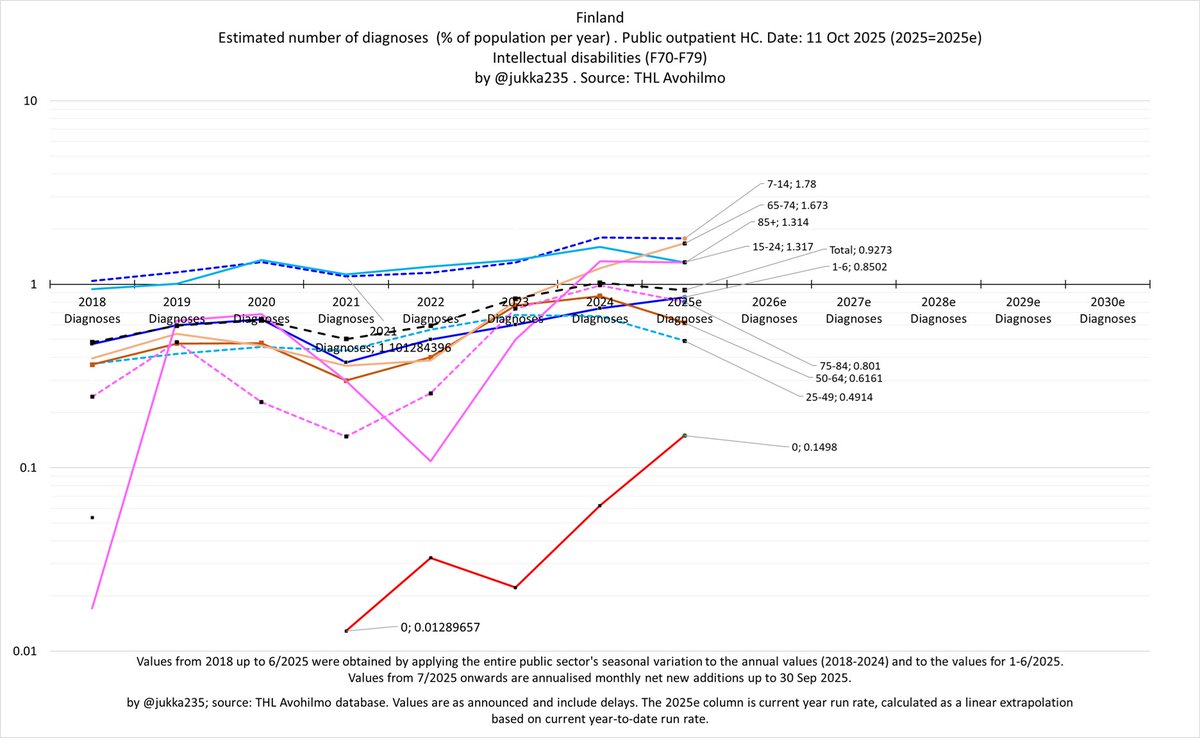
 Link to thread:
 Here is the graph for all age groups, all of which are showing quite uniform y/y growth. Patients / public outpatient healthcare.


 Meant to say either diagnoses or patients. For 25-49 year olds, diagnoses are down 12% y/y in 2025e, but patients are up 12% y/y in 2025e.
