Suomen epidemia 1.4.2021: vähenemisvauhti palautui eilisen ennätyspäivän jälkeen takaisin normaaliin. Ilmaantuvuus on 20.3. jälkeen vähentynyt keskimäärin 2.1% päivässä (tällä vauhdilla -47% kuukaudessa). Alle 20-vuotiaiden osuus tartunnoista nousee edelleen.
1/x
1/x

Tänään THL ilmoitti 654 tartuntaa, poisti 6 ja viive kasvoi 23 tartunnalla. Muuttumattomalla viiveellä laskettu uusien tartuntojen määrä on 683 (punainen viiva).
2/x
2/x

Lähes kaikissa sairaanhoitopiireissä tartunnat ovat vähentyneet (tässä 7 päivän keskiarvoilla mitattuna).
3/x
3/x

Rajoitukset ovat selvästi vaikuttaneet tartuntojen kasvuun. Eniten ovat vähentyneet 20-40 -vuotiaiden tartunnat. Alle 20-vuotiaiden tartuntojen voimakas kasvu on myös lakannut.
4/x
4/x
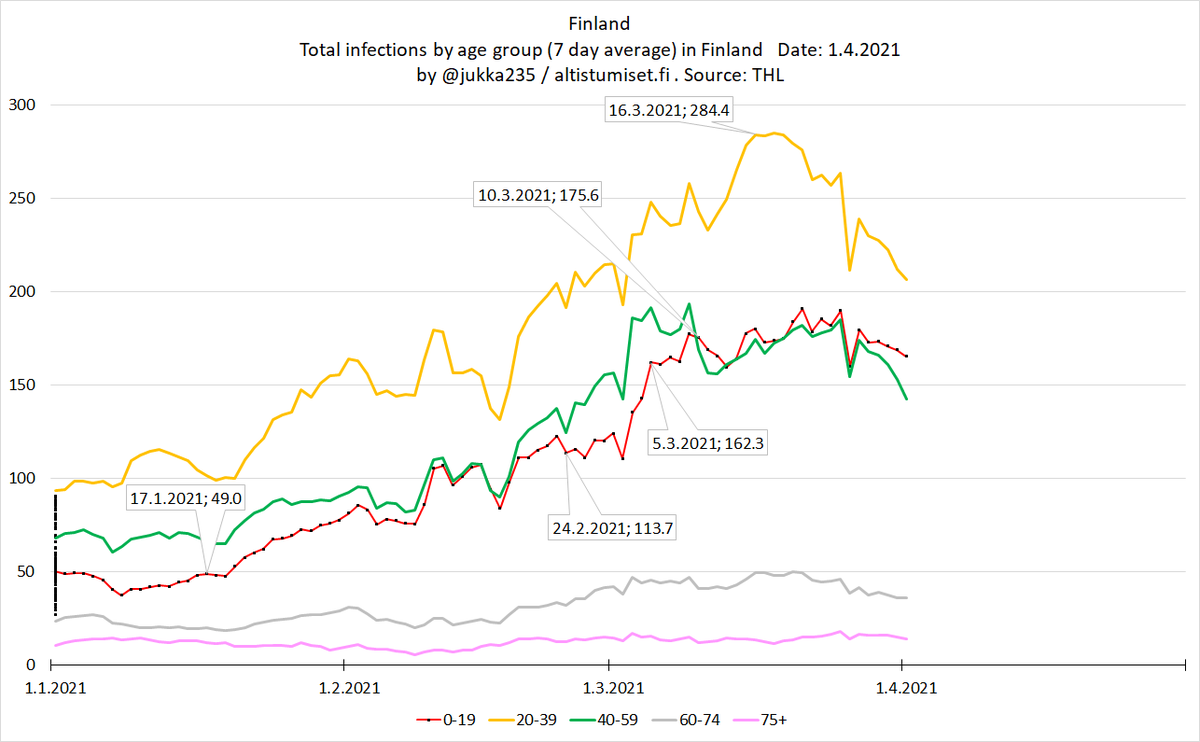
Variantit leviävät ennen kaikkea nuorten keskuudessa:
alle 20-vuotiaiden tartunnat ovat yli kolminkertaistuneet 17.1. jälkeen. 7-9 luokkien ja toisen asteen etäopetuksella on ollut suuri merkitys nuorten saamien tartuntojen kasvun taltuttamisessa.
5/x
alle 20-vuotiaiden tartunnat ovat yli kolminkertaistuneet 17.1. jälkeen. 7-9 luokkien ja toisen asteen etäopetuksella on ollut suuri merkitys nuorten saamien tartuntojen kasvun taltuttamisessa.
5/x

Kymenlaaksossa on viime kädessä nuorten kokoontumisvapaus ollut tärkeämpää kuin tartuntojen määrä. Siis sen jälkeen kun koko maahan säädettiin poikkeustoimet 8.3. alkaen.
6/x
web.archive.org/web/2021040203…
korona.kymsote.fi/tilannekuva/ti…
6/x
web.archive.org/web/2021040203…
korona.kymsote.fi/tilannekuva/ti…

Tulos: Kymenlaaksossa tartuntojen määrä on viisinkertaistunut sen jälkeen kun poikkeustoimet tulivat voimaan. 7 päivän ilmaantuvuus on noussut koko epidemian korkeimmalle tasolle, vaikka muualla maassa tilanne on parantunut.
7/x
7/x

Tartuntoja ajavat ylöspäin altistumiset, joita on ollut viime päivinä mm. kouluissa ja kuntosaleilla. Hiihtolomien jälkeen altistumisten määrä on kasvanut, eivätkä 8.3. voimaan tulleet poikkeustoimet ole vaikuttaneet. Lisätiedot: altistumiset.fi
8/x
#altistumiset
8/x
#altistumiset

Kymenlaakson kunnissa 7 päivän ilmaantuvuus on karkeasti arvioituna kaksinkertaistunut viimeisen viikon aikana. Vaikka kasvu on lähes joka paikassa ollut yhtä voimakasta, niin ainoastaan Haminassa 7-9 luokkien etäopetus on tähän mennessä pidetty voimassa.
9/x
9/x

Haminassa uusien tartuntojen määrä on viimeisen viikon aikana kolminkertaistunut, Kotkassa lähes kaksinkertaistunut ja Kouvolassa noussut 1.6-kertaiseksi. Siitä huolimatta 7-9 luokkien lähiopetus alkaa muualla paitsi Haminassa.
10/x
10/x

Ja ai niin. Vaikka altistumiset ovat olleet kouluissa (kuva 8), niin tartunnat tulevat tietysti kotoa, toisin kuin esimerkiksi Vaasassa (missä epidemia on saatu lähes tukahdutettua ja nyt testataan jo oireettomia).
11/x
web.archive.org/web/2021040203…
korona.kymsote.fi/tilannekuva/ti…
11/x
web.archive.org/web/2021040203…
korona.kymsote.fi/tilannekuva/ti…

Vaasa ja Kymenlaakso ovat hyviä esimerkkejä siitä, että rajoitusten noudattamisella on suurempi merkitys kuin itse rajoituksilla. Jos kaikki ovat sitä mieltä että tukahdutetaan, niin silloin epidemia myös tukahtuu. Kymenlaaksossa päinvastoin.
12/x
12/x
https://twitter.com/jukka235/status/1376642163036028930
Kymenlaaksossa testien määrä on noussut 1.75-kertaiseksi viimeisen kolmen viikon aikana ...
13/x
13/x

... mutta Kymenlaaksossa positiivisten osuus on 6.2-kertaistunut samassa ajassa, eli noussut 3.5 kertaa nopeammin kuin testien määrä. Mutta mikään määrä testejä ei riitä, jos rajoituksia ei haluta noudattaa (tai niiden noudattamista valvoa).
14/x
14/x

• • •
Missing some Tweet in this thread? You can try to
force a refresh