A snowflake begins to form when an extremely cold water droplet freezes onto a pollen or dust particle in the sky. This creates an ice crystal. As the ice crystal falls to the ground, water vapor freezes onto the primary crystal, (cont. below)
building new crystals. The intricate shape of a single arm of the snowflake is determined by the atmospheric conditions experienced by the entire ice crystal as it falls. A crystal might begin to grow arms in one manner, and then minutes or even seconds later, slight changes in
the surrounding temperature or humidity cause the crystal to growin another way. The ice crystals that makeup snowflakes are symmetrical (or patterned) because they reflect the internal order of the crystal's water molecules as they arrange themselves in predetermined spaces and
because each arm experiences the same atmospheric conditions.
• • •
Missing some Tweet in this thread? You can try to
force a refresh
Aethyr faienp, aither, aether, ether, aæther), also called the quintessence, is in Greek mythology the personification of the "upper sky", space and heaven. It was postulated as a formless and invisible medium or (Cont. below)
substance once hypothesized to pervade the heavens.
In Plato's Timaeus (58d) speaking about air, Plato mentions that "there is the most translucent kind which is called by the name of aether". Otherwise he adopted the classical system of four elements. Aristotle, who had been
Plato's student at the Akademia, agreed on this point with his former mentor, emphasizing additionally that fire sometimes has been mistaken for aether. However, in his Book On the Heavens he introduced a new "first" element to the system of the classical elements of lonian
The Vimana aircraft that are described in ancient Hindu Sanskrit texts are flying machines of varying degrees. The word Vimana translates to "having been measured out" and were machines piloted by the gods. (Cont. below)
These flying craft came in all shapes and sizes and could travel at different speeds and distances. Some were land and seafaring vehicles, while others flew, sometimes all the way to the moon.
The most well-known documentation of the ancient Vimana flying machines comes from
the Vaimānika Sāstra,
an early 20th century translation of many accounts of Vimana technology found in ancient Vedic scriptures. It details drawings of a range of crafts, including the sources of fuel used to power them, although some can be confusing. The translations talk of
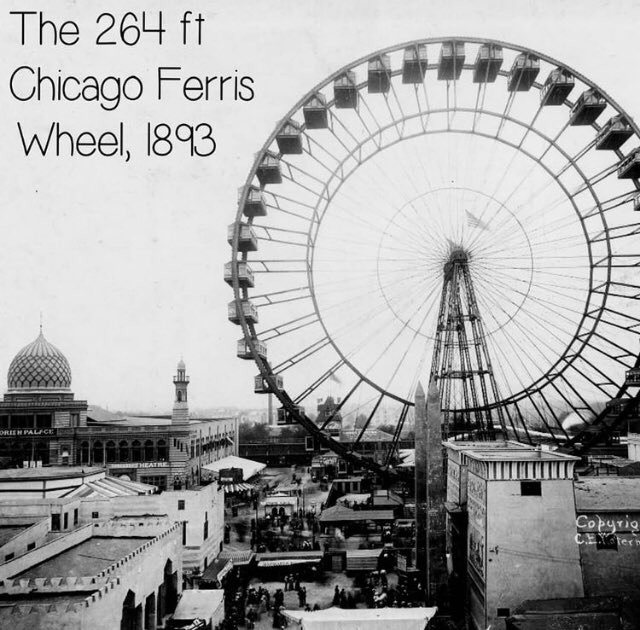
“The original Ferris Wheel, sometimes also referred to as the Chicago Wheel, was
designed and built by George Washington
Gale Ferris Jr. as the centerpiece of the
1893 World's Columbian
Exposition in Chicago, Illinois."
(Cont. below)
"Intended as an attraction in the same manner as the 1889 Paris Exposition's 324-metre (1,063 ft) Eiffel Tower, the Ferris Wheel was the Columbian Exposition's tallest attraction, with a height of 80.4 meters (264 ft).
The Ferris Wheel was dismantled then rebuilt in Lincoln Park, Chicago, in 1895, and dismantled and rebuilt a third and final time
for the 1904 World's Fair in St. Louis, Missouri, where it was ultimately demolished
by controlled dynamite demolition in 1906."
The Old World used micro particles from the sea floor as inspiration for their art, architecture, antiqui’tech & more
Maybe the Old World is linked to the ocean in ways we don’t fully understand yet
(Continues below)
Radiolaria are crystal clear creatures and when put under a microscope, the skeletons of Radiolaria look somewhat like snowflakes, air crafts or complicated chandeliers. They stand out because of their beautiful skeletons made of silica (glass)
These things are living fossils that have inhabited the ocean for millions of years. Research reveals that of all the complex structure of these skeletons, no two are alike.