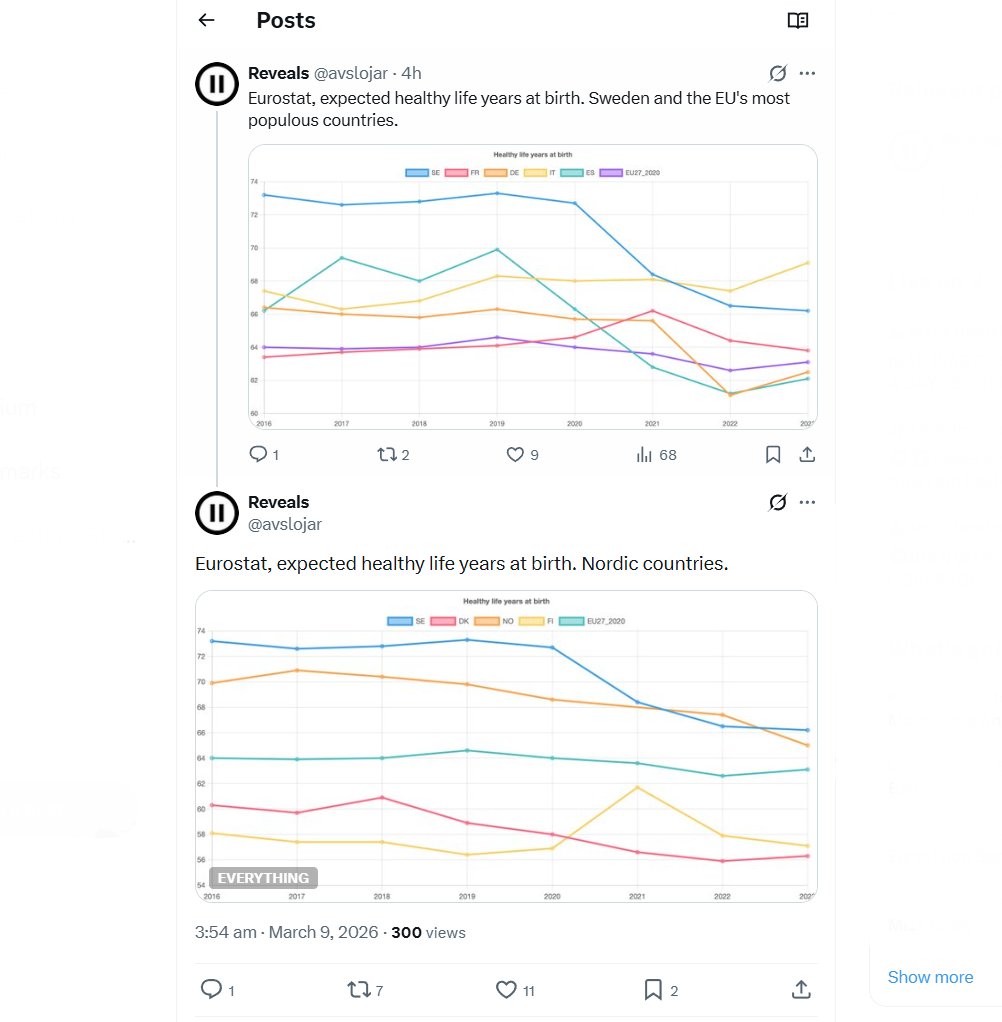
Suomen epidemia 9.4.2021: pääsiäinen näyttää toimineen loman tavoin: tartuntojen väheneminen jatkuu kiihtyvällä vauhdilla. Kuitenkin myös testien määrä vähenee nopeasti.
1/x
1/x

THL:n raportoinnin tunnettu viive on ruvennut kasvamaan, vaikka koko maan tartuntojen luvut ovatkin pienentyneet. Nousu on tapahtunut pääsiäisviikolla ja sen jälkeen.
2/x
2/x

Tänään THL ilmoitti 419 tartuntaa, ei poistanut yhtään, ja otti kiinni raportoinnin viivettä 8 tartunnan verran. Muuttumattomalla viiveellä laskettu tartuntojen määrä = 419-8=411 (punainen viiva).
3/x
3/x

Positiivisten osuus on ollut pääsiäisen aikana selvästi koholla (kuvassa on luvut toiseen pääsiäispäivään 5.4. asti). Jos myös seuraavien päivien luvut ovat yhtä korkealla, niin epidemian laantuminen johtuu pääasiassa siitä, ettei ole testattu. Mutta seurataan tilannetta.
4/x
4/x

Testien määrä on vähentynyt 15 prosenttia palmusunnuntain 28.3. jälkeen, ja on nyt 24 prosenttia 17.3. huipun alapuolella. (Nyt olisi varmaan tilaa testata/seuloa oireettomia.)
5/x
5/x

Sairaanhoitopiirien tartuntojen viikoittainen muutos oli minimissään toisena pääsiäispäivänä 5. huhtikuuta. Tartuntojen määrä tulee todennäköisesti hieman nousemaan, kun testeissä ruvetaan käymään enemmän.
6/x
6/x

Kaikkien ikäryhmien kasvuluvut ovat lähteneet laskemaan palmusunnuntain (28.3.) viikonlopusta alkaen. Vaikka testien määrä on vähentynyt, niin positiivisten osuus on kuitenkin tullut alas. Kiirastorstai oli 1. huhtikuuta.
7/x
7/x

Ylläolevassa kuvassa näkyy, miten alle 20-vuotiaiden tartuntojen väheneminen hidastui 9.4. koko maassa. Tämä johtuu siitä, että HUS:n alueella alle 20-vuotiaiden tartuntojen väheneminen pysähtyi 9.4.
8/x
8/x

Suomessa 0-4 -vuotiaiden tartunnat lähtivät nousemaan ja lähikoulussa olevien 5-9 -vuotiaiden tartuntojen lasku pysähtyi 9.4. Suurimmaksi osaksi etänä olevien 10-14 -vuotiaiden ja 15-19 -vuotiaiden tartunnat vähenivät edelleen.
9/x
9/x

HUS:n alueella etäopetuksessa olevien 10-19 -vuotiaiden tartunnat vähenivät edelleen 9.4., kun taas lähiopetuksessa ja päiväkodissa olevien 0-10 -vuotiaiden tartunnat rupesivat kasvamaan 9.4.
10/x
10/x

Kun otetaan huomioon
1) HUS.n raportoinnin viive (noin 2 päivää) (tartuntatautirekisteri)
2) ikäkausiraportoinnin lisäviive (noin 1.2 päivää)
niin HUS:n alueella alle 10-vuotiaiden tartunnat rupesivat todellisuudessa kasvamaan arviolta tiistaina 6.4.
11/x
1) HUS.n raportoinnin viive (noin 2 päivää) (tartuntatautirekisteri)
2) ikäkausiraportoinnin lisäviive (noin 1.2 päivää)
niin HUS:n alueella alle 10-vuotiaiden tartunnat rupesivat todellisuudessa kasvamaan arviolta tiistaina 6.4.
11/x

Valtioneuvoston 8.4. muistion mukaan 13-15 -vuotiaiden 7 päivän ilmaantuvuus saavutti huippunsa 13.3. ja lähti laskemaan seuraavana päivänä 14. maaliskuuta. Sivu 24.
12/x
stm.fi/documents/1271…
12/x
stm.fi/documents/1271…

Kun tästä päivästä (14.3.) vähennetään 5 päivän itämisaika ja THL:n raportoinnin viive (3 päivää), saadaan:
13-15 -vuotiaiden ilmaantuvuus saavutti huippunsa viimeisenä koulupäivänä ja lähti laskemaan heti seuraavana päivänä.
13/x
13-15 -vuotiaiden ilmaantuvuus saavutti huippunsa viimeisenä koulupäivänä ja lähti laskemaan heti seuraavana päivänä.
13/x

• • •
Missing some Tweet in this thread? You can try to
force a refresh