The worst part of cryptocurrency transforming into dragon-level wealth is witnessing good people emotionally devolve into dragons themselves: so intellectually paralyzed by the fear that everyone they see threatens their hoard that they lose sight of the world beyond their cave.
1) This is such a profoundly misleading TL;DR of a privacy-focused talk that it's hard to call it anything but intentionally deceptive.
2) To the extent I own crypto (unless and until it has been lost in boating accidents), I own more bitcoin than anything else—but
...despite the theoretical risk of harming the value of that ownership, I continue to criticize Bitcoin's (and other cryptocurrencies I hold) failings because the public cost of doing otherwise would be orders of magnitude greater than that individual private gain. Moral compass.
3) Bitcoin's disastrous privacy is the "missing stair" of cryptocurrency. Every expert understands it's a problem, but—as experts—they themselves know how to compensate for the risk in their own personal interactions with Bitcoin, and therefore feel no urgency to actually fix it.
4) Privacy coins are great, but they're too small and too easy to smother via regulatory actions like de-listing from exchanges. Only Bitcoin has immunity-via-dominance to delisting. It adopting privacy-by-design instantly normalizes financial privacy. Ultima Ratio Cryptum.
The central property of cash is fungibility—meaning a dollar spent by a plumber is honored equally to one spent by a sex worker: they are indiscriminable. Adversarial chain analysis of Bitcoin's public ledger reduces its fungibility over time. Only privacy guarantees fungibility.
• • •
Missing some Tweet in this thread? You can try to
force a refresh

Laura Poitras, the Pulitzer-Prize winning journalist who was the first to work on the top secret NSA mass surveillance story, has been fired by @TheIntercept in retaliation for speaking to the media about their mishandling of the Reality Winner case. washingtonpost.com/lifestyle/medi…
I've said before that of all the journalists I worked with to break the mass surveillance story, none of them took operational security or source protection as seriously as Laura. I never once saw her cut a corner or break a rule. She was the only one who could make me feel lax.
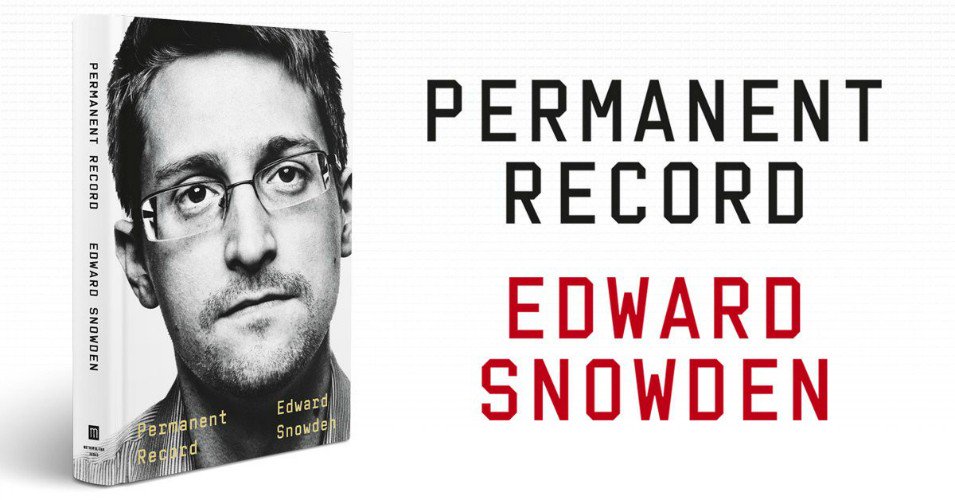
The Chinese edition of my new book, #PermanentRecord, has just been censored. This violates the publishing agreement, so I'm going to resist it the way I know best: it's time to blow the whistle. You can help. Here's how: (THREAD)
I asked to see a copy of censored passages, and was given a list of a few of the worst examples. I'm going to post them right here on Twitter, and we're going to translate them and expose exactly what the censors were trying to hide. Let's use Twitter for something good.
Let us compile a correct and unabridged version of #PermanentRecord to publish freely online in Chinese, by assembling a cadre of translators to expose every shameful redaction the censors demanded. We will work in service to the greater Republic of Letters and a better internet.
@AlecMuffett@jenvalentino@runasand@nytimes@gabrieldance@SteveBellovin Solid point. Much reporting on LE access demands (or "concerns") overlooks that the powers they have today are unprecedented and abnormal in a way our constitutional system does not anticipate. Status quo "should" be presumptively undesirable, yet editorial tone implies otherwise
@AlecMuffett@jenvalentino@runasand@nytimes@gabrieldance@SteveBellovin From a human rights perspective, a global reduction in mass surveillance capability is a desirable reversion to the mean. It is astonishing, and I would argue discrediting, for those claiming a public safety interest advocating for any new means of surveillance "at scale."
@jenvalentino@AlecMuffett@nytimes@gabrieldance While I do appreciate the reporting on this issue, not to mention your much longer history of work, which I have long followed with interest, but I have to agree with Alec that the editorial tone in this particular article is dangerously unskeptical. To cite a quick example:
@jenvalentino@AlecMuffett@nytimes@gabrieldance "It was unclear whether photos and videos of abuse were actually more prevalent on Facebook or were just being detected at a high rate." This is a rather breezy dismissal of what is the overwhelmingly clear explanation for the figures the pro-surveillance folks are citing here.
@jenvalentino@AlecMuffett@nytimes@gabrieldance The entirety of the trend that the surveillance folks are pushing here are quite clearly the product of increased sophistication in fingerprinting and flagging systems being adopted and operated by companies that are, at the same time, increasingly the center of the internet.
With Permanent Record suddenly considered among the year's best books, I again must thank the many who made it possible, from those mentioned in the text and acknowledgements to the countless hidden hands behind every timeless story.
I had set out merely to write a book, but when the manuscript was completed, it had become more—a work of literature. It took the better part of my year, drafting from night to noon, for that picture to come into focus. But at the outset, I was hardly an author.
The government of the United States has just announced a lawsuit over my memoir, which was just released today worldwide. This is the book the government does not want you to read: (link corrected) amazon.com/Permanent-Reco…
Statement by the American Civil Liberties Union on the government's lawsuit against myself and the publishers: aclu.org/press-releases…
It is hard to think of a greater stamp of authenticity than the US government filing a lawsuit claiming your book is so truthful that it was literally against the law to write.