1/ Govt-owned, govt-run companies are the same all over the world: They hardly fire employees for poor performance!
The most secured jobs
Here is an excerpt from a case study of some Middle East NOCs (NNPC equivalent) in Saudi (Aramco), Kuwait (KPC), ADNOC (UAE), & NIOC (Iran)
2/ "With the exception of ADNOC, the NOCs do not fire poorly performing personnel. They will isolate them so that they do not harm the business or freewill. I was told about the existence of shadow offices, sometimes a whole wing or flow of a company building, that keep these
3/ "underperforming undesirables away from important business. No one checks what they do with their time or whether they come towork at all. Some employees feel it was a sign that the company had a heart because it was aware that the bad employees too had to feed their families"
4/ From the book, Oil Titans: National Oil Companies of the M/East
So before you use those oil companies as model govt run business, know that they also have the culture of job as charity for citizens
Btw, with what I know of Emiratis, surprised ADNOC is the exception here
• • •
Missing some Tweet in this thread? You can try to
force a refresh

A young follower just copped a job with McKinsey. With only Bsc from a Nigerian public school (1st class) + small experience from one of the Big 4 (the experience there must have helped him).
Went thru the famed McKinsey PST test and
5 levels of interview, including with their foreign partners.
McK has one of the toughest recruitment processes in the world and this experience of another friend (who unfortunately didn't get the job) should give a clue into how tough getting into McK is
The experience shared in this 2013 article. Hopefully, will get the young friend that just got in to share his own recruitment experience too for publication on JarusHub
1/ A company can be cash generating and making losses.
Another company can be profit making and having dire cash situation.
Here is why:
Profit = Revenue - Expenses
Where Expense > Revenue, you have a loss.
Understanding what is revenue and expense is not as
2/ straightforward as people (especially non-accountants) think.
Revenue is not simply the cash you collected from your sales as people think. Let me spare you the accounting jargon called “principles of recognition of revenue”, but present only one interesting aspect of
3/ what is recorded as revenue: once that sale transaction is completed and both buyers and sellers fulfill some conditions (eg buyer accepts delivery of the goods), the seller can record revenue in his books, even if their contract says he will be paid cash next year.
You need to know what to prepare for. A good way to do this is to consult search engines like Google. If the company whose test you’re preparing for is XYZ Consulting, for instance, use search engine
term like “XYZ Consulting question format”, and you are most likely going to be directed to a career website or discussion forum (eg Nairaland) where such had been discussed. If it is a less-known company, and its test may not have been discussed on the internet before,
you may try speaking with someone that had done the test in the past. Try calling several friends and ask whether they have an idea on how the job test of the company looks like.
2. Practice test questions
After getting hints on the test type of the company, find practice test
Hav followed Feyi for at least 8 yrs, always considered him one of the smartest young Nigerians, even though no be all time I dey agree with his views(eg I believe his views on Dangote are a little over board)
Sector, Country, Revenue, PBT, and Gross Margin in bracket
1. Apple (American, Tech, $274b, $58b, 21%) 2. Microsoft (American, Tech, $143b, $44b, 31%) 3. Industrial & Commercial Bank (Chinese, Banking, $122b, $42b, 34%)
4. China Construction Bank (Chinese, Banking, $104b, $36b, 35%) 5. Google (American, Tech, $166b, $32b, 19%) 6. Agric Bank of China (Chinese, Banking, $92b, $28b, 30%) 7. JP Morgan (American, Banking, $119b, $25b, 21%) 8. Alibaba Group (Chinese, Tech, $80b, $25b, 31%)
9. Bank of China (Chinese, Banking, $79b, $25b, 32%) 10. Intel Corp. (American, Tech, $79b, $24b, 30%)
Source of data is Investopedia and the data straddles 12 months Sept 2019-Aug 2020.
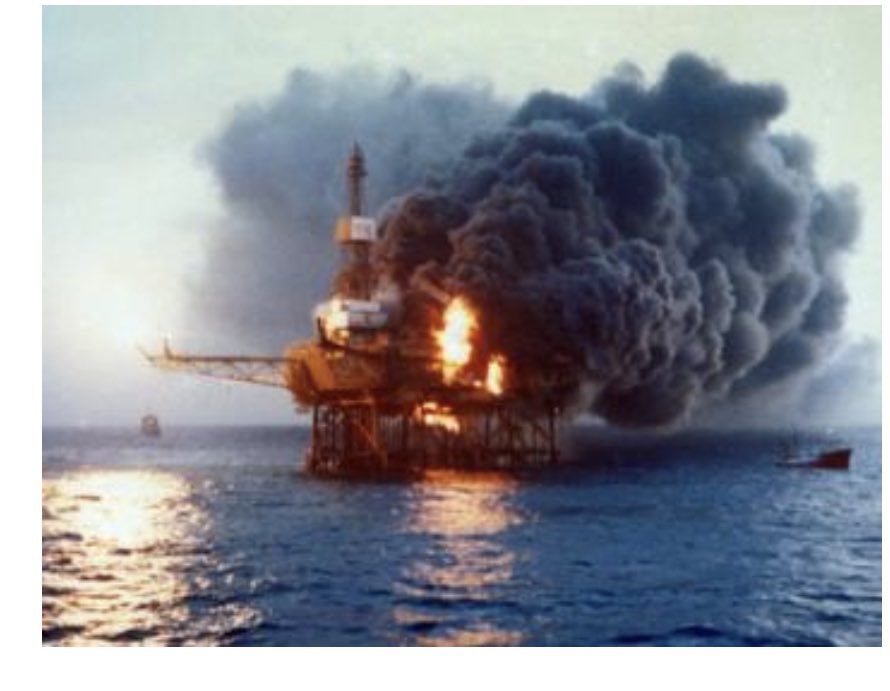
The Piper Alpha: Oil & Gas Industry's Deadliest Accident
Oil & gas is an extremely risky activity. Not even talking about financial risk (eg risk of spending $20m to drill a well and finding water instead of oil) but safety hazard.
Everything about oil and gas is highly inflammable. A small error and hundreds of lives could be lost. So safety is taken extremely serious in the industry. In fact, one of the most important and demanded fields in oil and gas career is Health, Safety & Environment (HSE).
HSE is extremely critical and oil companies invest a lot in it.
Unfortunately, despite all the strictness and seriousness of oil companies about safety, accidents still happen from time to time. In fact, in July 2020, an explosion at an NNPC facility led to death of 7 people.