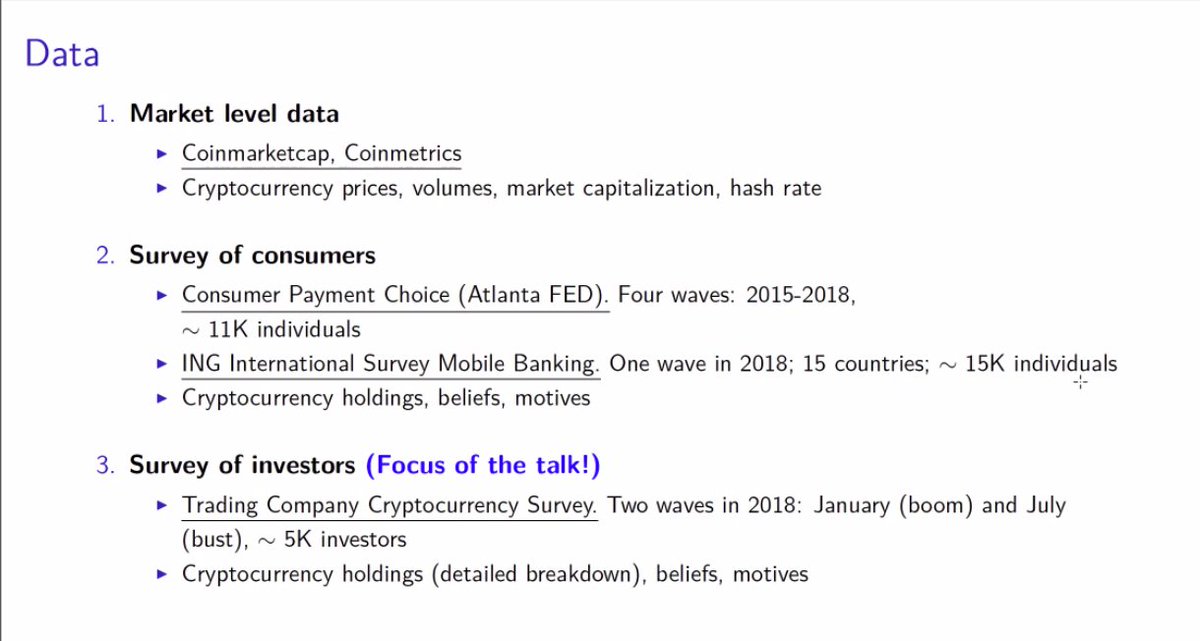
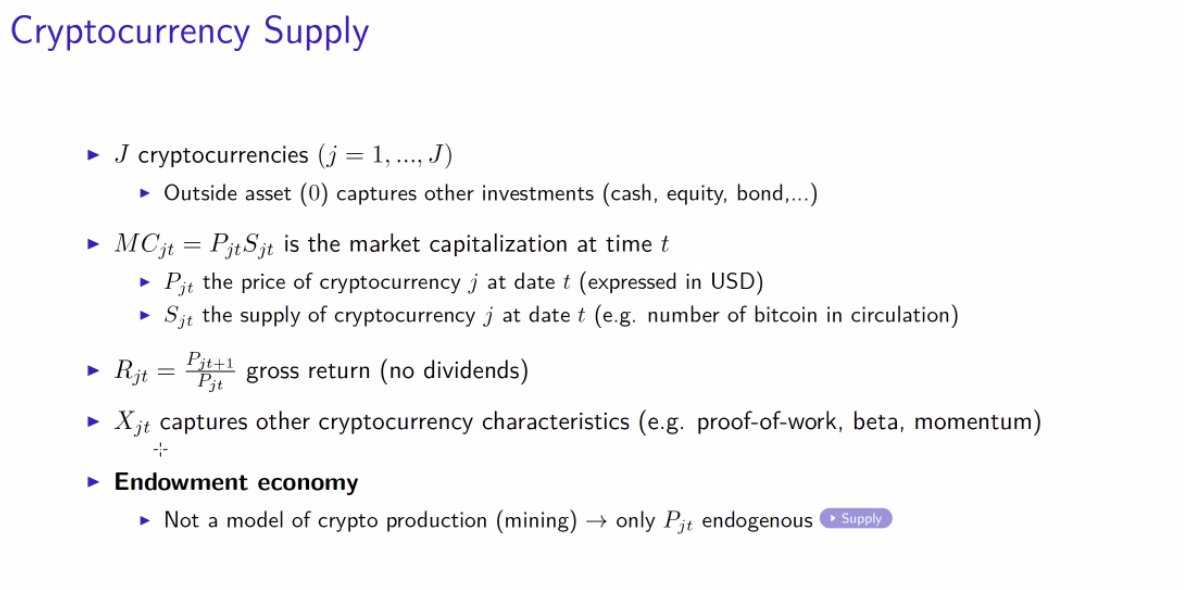
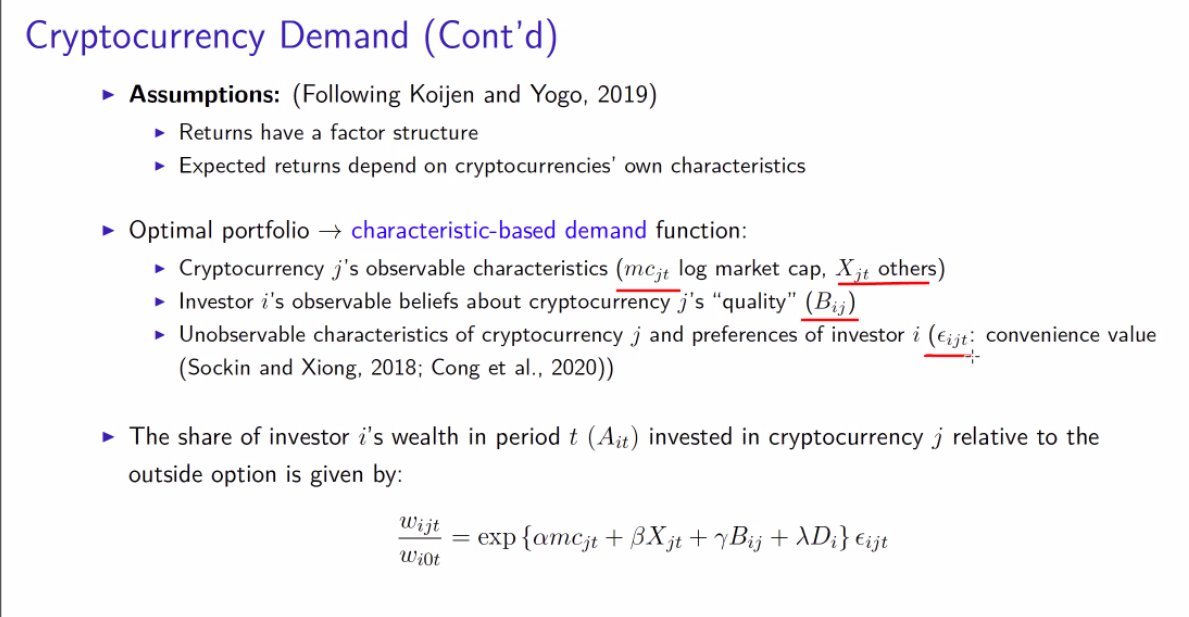
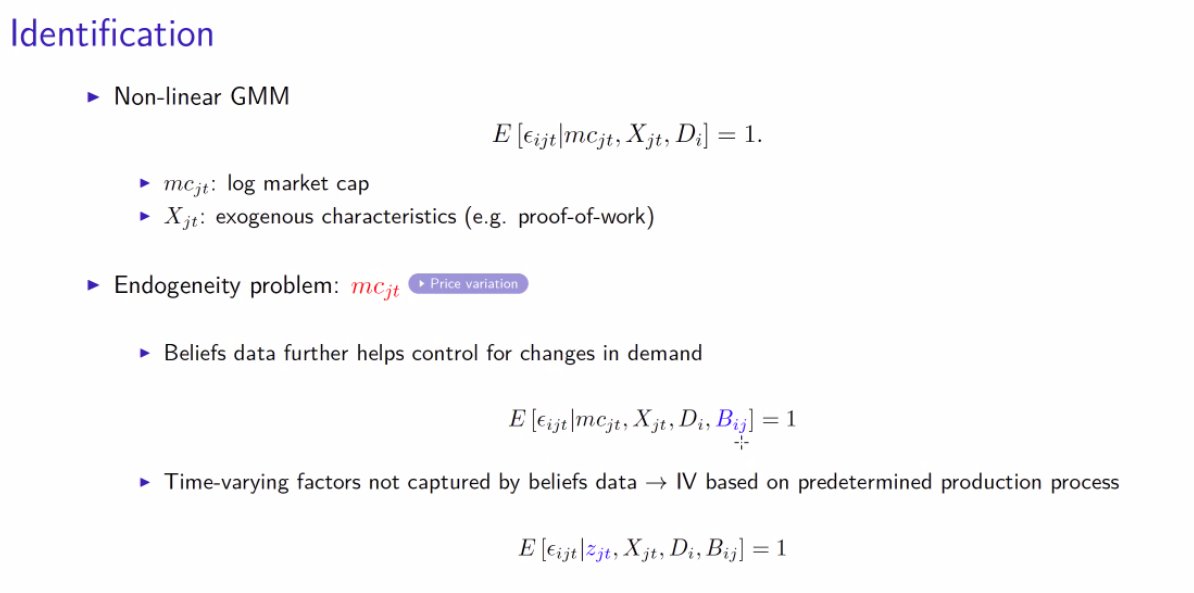
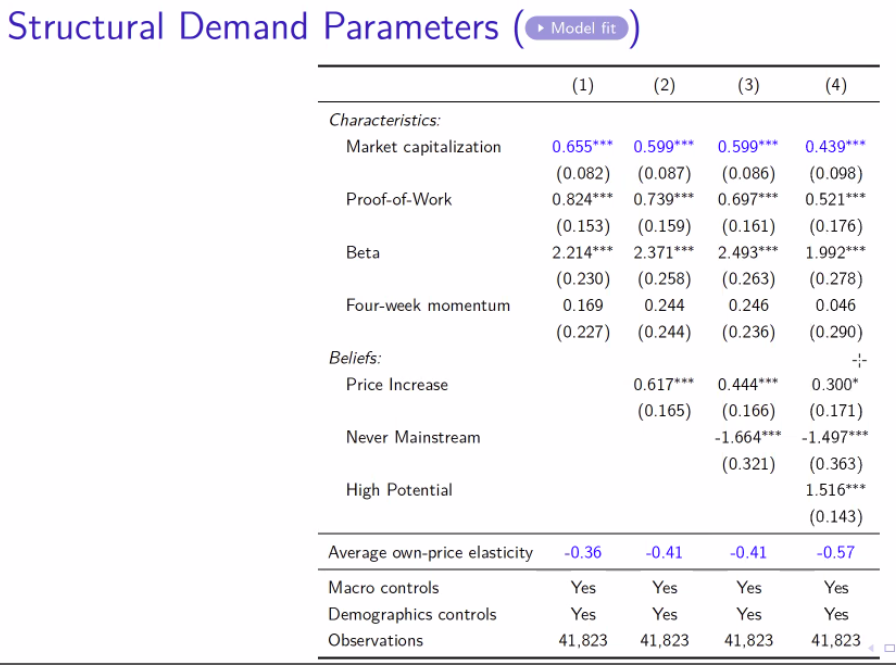
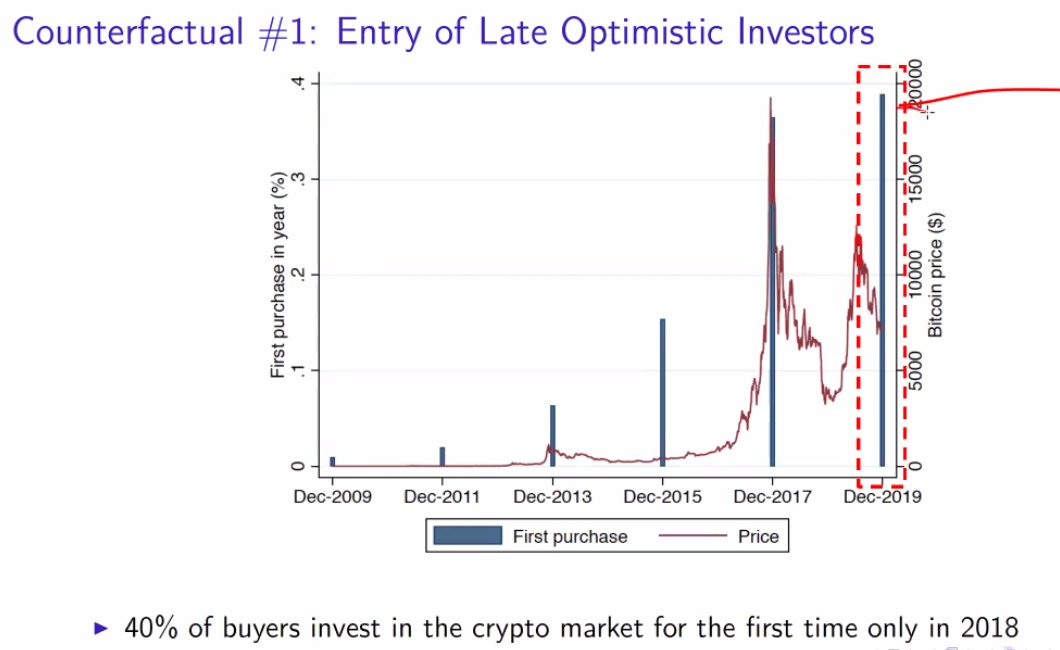
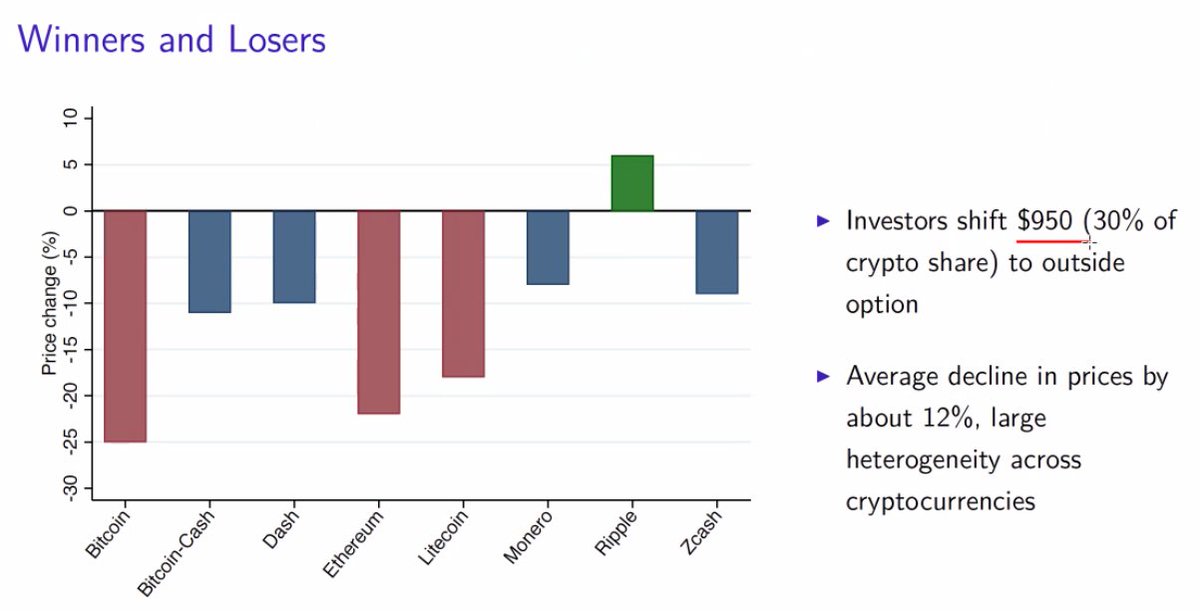
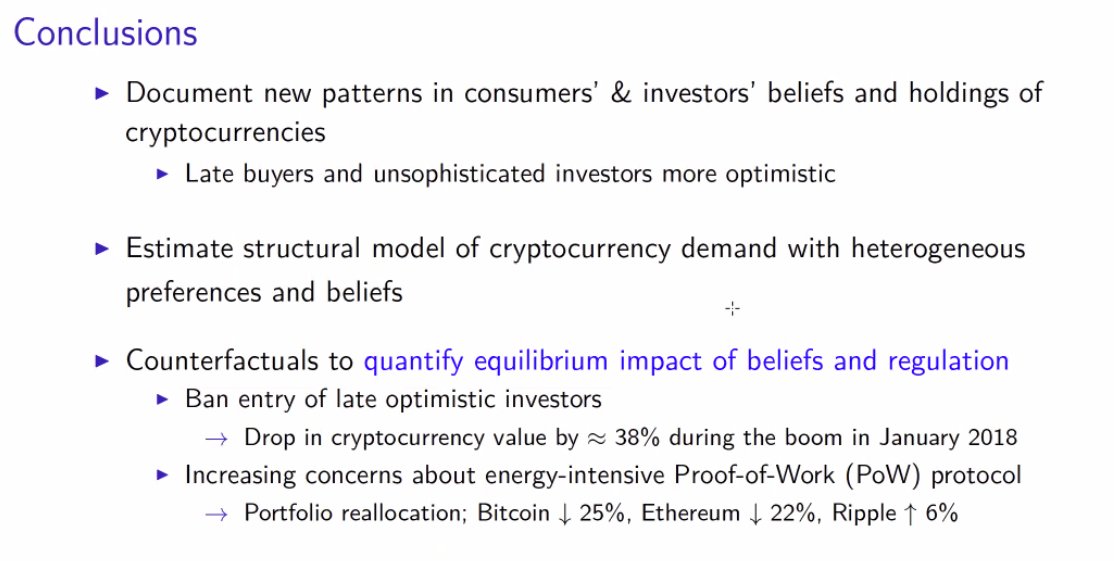
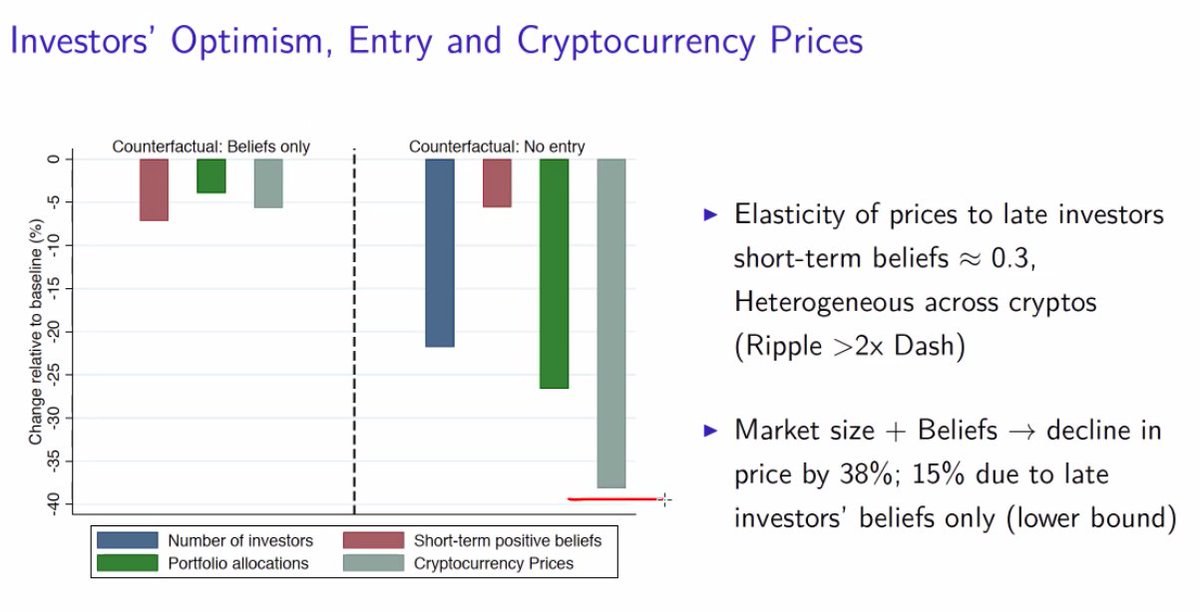
Excellent paper by Giovanni Compiani & Matteo Benetoon of UC Berkley on the role of belief in the price action of digital assets over demographics (early vs. late buyers & age). cowles.yale.edu/3a/bcwp-invest…
Creating the model and sorting out some relative effects on a the data set.
The model:
Late buyers command a "belief" premium that prices will continue to rise and double down.
Narrative on the environmental impacts of PoW on prices leads to a perceived winner (reallocation) to non-PoW digital assets. This is expected.
• • •
Missing some Tweet in this thread? You can try to
force a refresh

1/ Recently I was tasked with creating a treasury account for the @XAODAOLLC that would be cryptographically secure on the XRPL but would not be subject to a single individual taking the DAOs funds.
2/ What follows naturally is a choice between institutional grade custody (potentially expensive for a fledgling DAO), MPC providers (also more costly but likely the best future option), or a simple multi-signature wallet using the DAO managers & an alternate for the unexpected.
3/ If you don't know what a multi-signature wallet is you can learn a little about them and their tradeoffs in this high level summary:
1/ The recent enforcement actions against @coinbase & @binance by government authorities has resulted in incredible hand-wringing by crypto market participants, for a variety of reasons. This indicates to me a few points & lessons learned I'd like to share.
2/ The growth of the crypto industry writ large in terms of onboarding, liquidity, adoption, etc. has been largely attributable to the growth of centralized exchange (CEX) virtual asset service providers (VASPs), predominantly by the defendants.
3/ This growth has been largely celebrated by all, as it represents the primary mechanism in which our own personal holdings have appreciated in value (purchasing power), as the onboarding facilitates new buyers & sellers (resulting in deeper, more lucrative & liquid markets).
Open sidebar
Probabilistic FOMC Interest Assessment
Model: GPT-4
Provide a probabilistic assessment of the Federal Funds Rate by the Federal Open Market Committee on March 21st, 2023.
Ensure the probabilities are distributed between rate hike scenarios, no rate hikes, and lowering rates. Use past FOMC statements and behaviors as correlated to GDP, real estate prices, rates of core inflation, unemployment rates, and bond and equity market performance.
Be sure to weight for current political environment and the potential for systemic financial instabilities.
As an AI language model, I am unable to provide live or real-time data, so the information I provide will be based on my knowledge up to September 2021.
Create a financial and risk management plan of action to resolve the Silicon Valley Bank bank run without having to insure deposits above FDIC insurance limits.
Be sure to account for interest rate risk on bond holdings and anticipated future Federal Reserve monetary policy.
Title: Financial and Risk Management Plan for Silicon Valley Bank Bank Run Resolution
I. Executive Summary
This financial and risk management plan of action aims to address the ongoing bank run at Silicon Valley Bank (SVB) while minimizing negative impacts on the bank's financial stability and reputation.
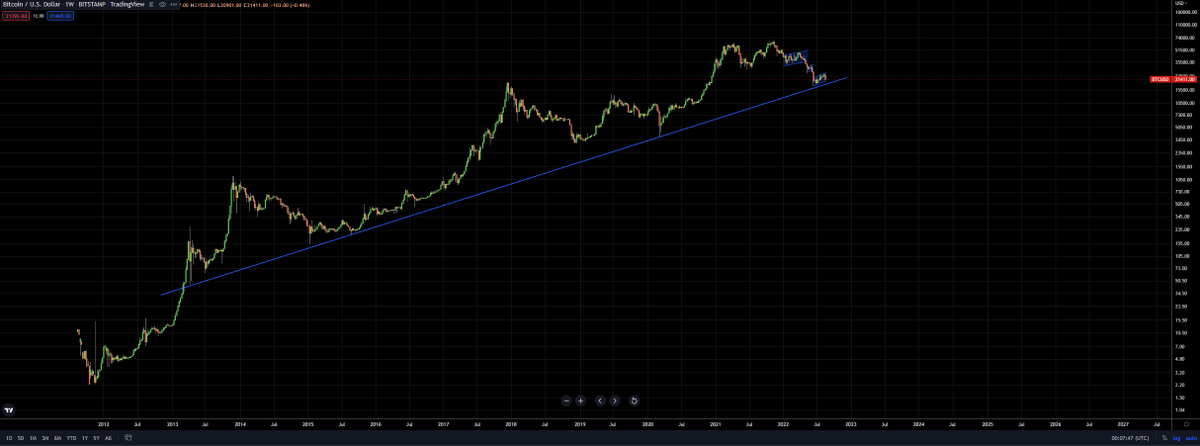
1/ Everyone knows that Bitcoin (& by extension the digital asset markets) has cycles. It also grows exponentially according to network effects (Metcalfe's Law) adjusted for trading volume (bull / bear cycles). It is now on a long-term exponential support line (log chart).
2/ What isn't discussed was that the monetary regime that established the growth of the network in the first place, as a value capacitor for excess liquidity, was always in relation to central bank policy. Value flowed into the network in search of yield (outperformance) vs. risk
3/ Global by nature (internet facilitated abstraction), it is therefore subject to global monetary & fiscal policies as they relate to stimulus/low rates & spending, respectively. It's where value has the steepest gradient on a risk adjusted basis, outperforming all asset classes
Some trolling for this beautiful Saturday morning is in order: 1. @a16z is a Silicon Valley Web 2 supporter of platforms building Web 3 applications on top of public permissionless networks. 2. Case in point, @opensea was funded in lead Series A (it's VCs all the way down)
4. Opensea generates incredible revenues (extractive rent in the form of fees) from its users (which builders of ETH cheer on because it feeds the deflationary burn narrative in the incessant battle with BTC maxis, got to love it).