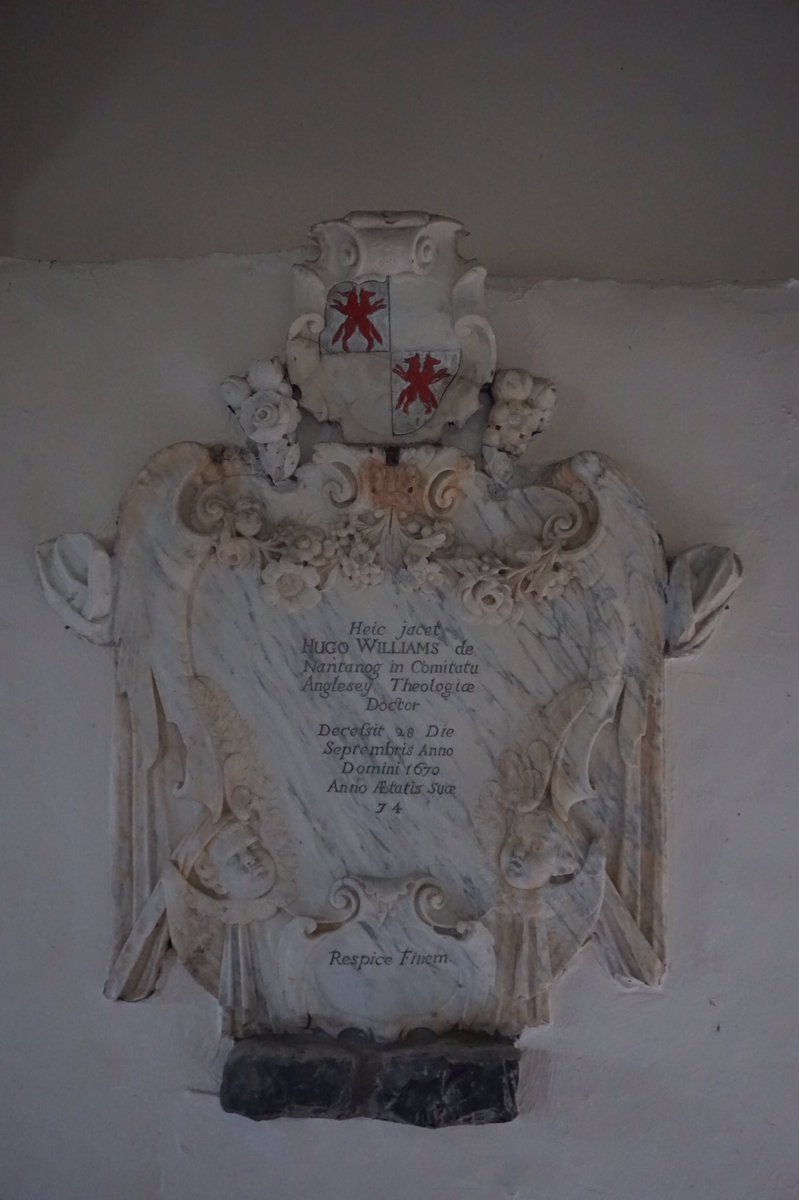
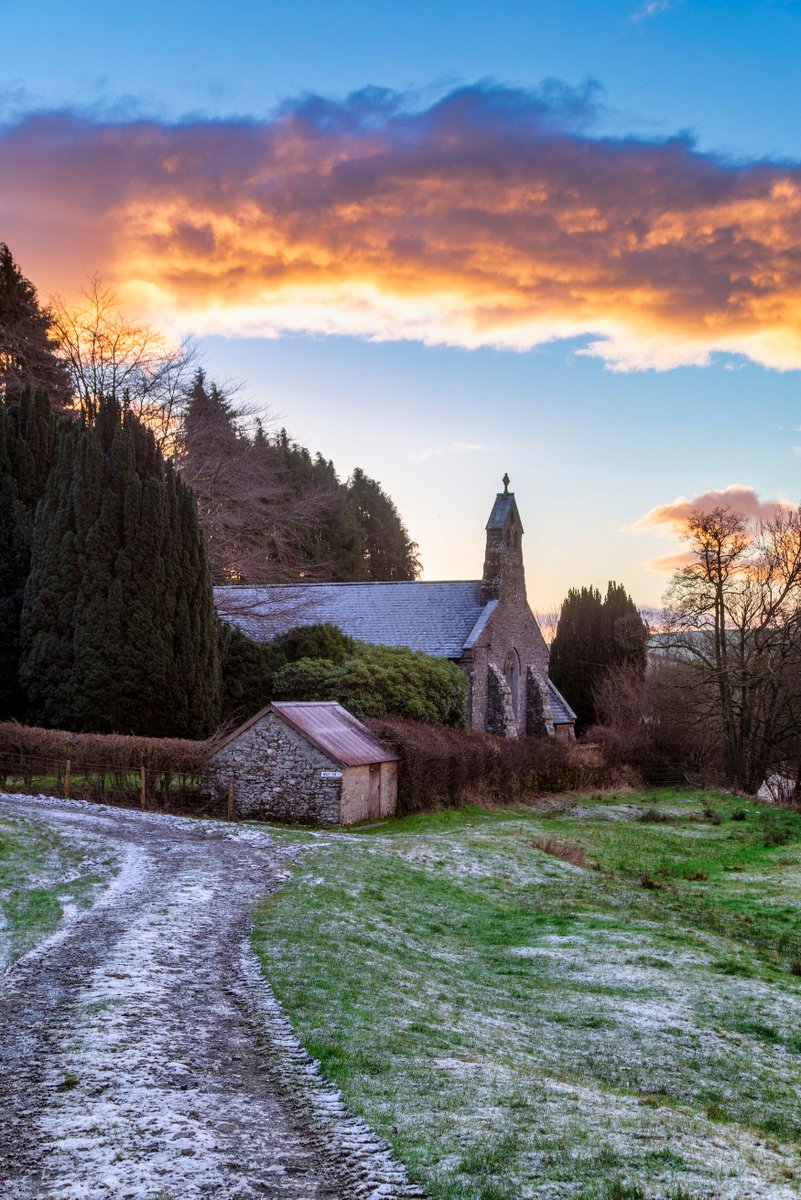
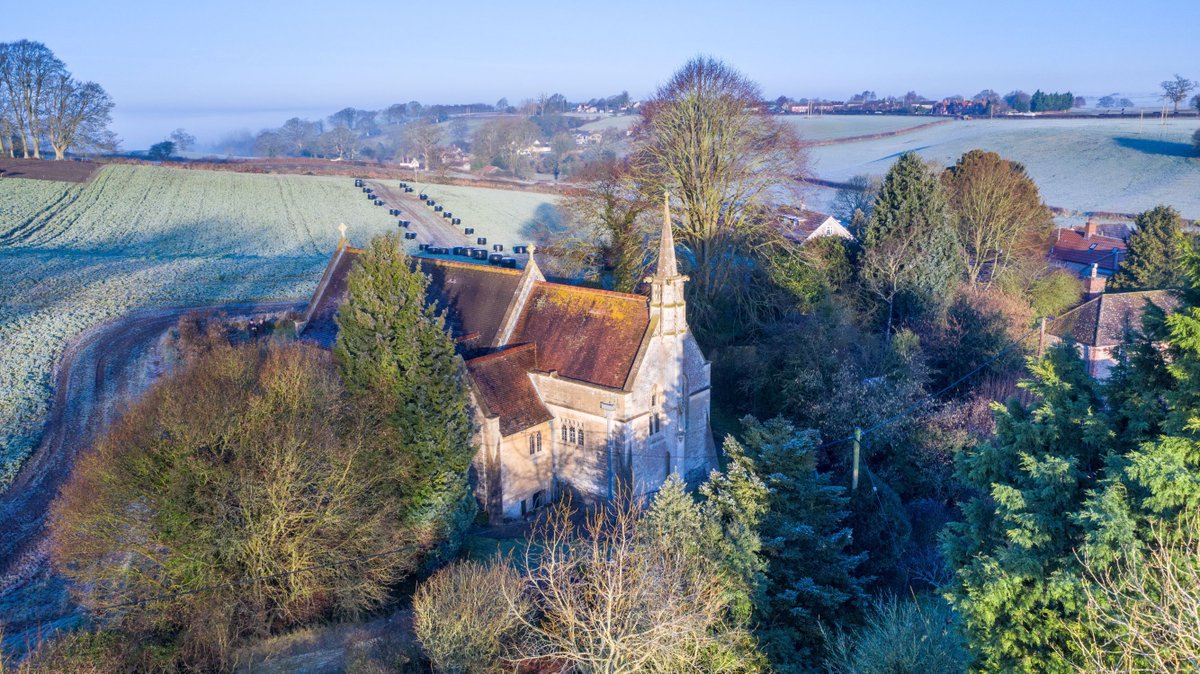
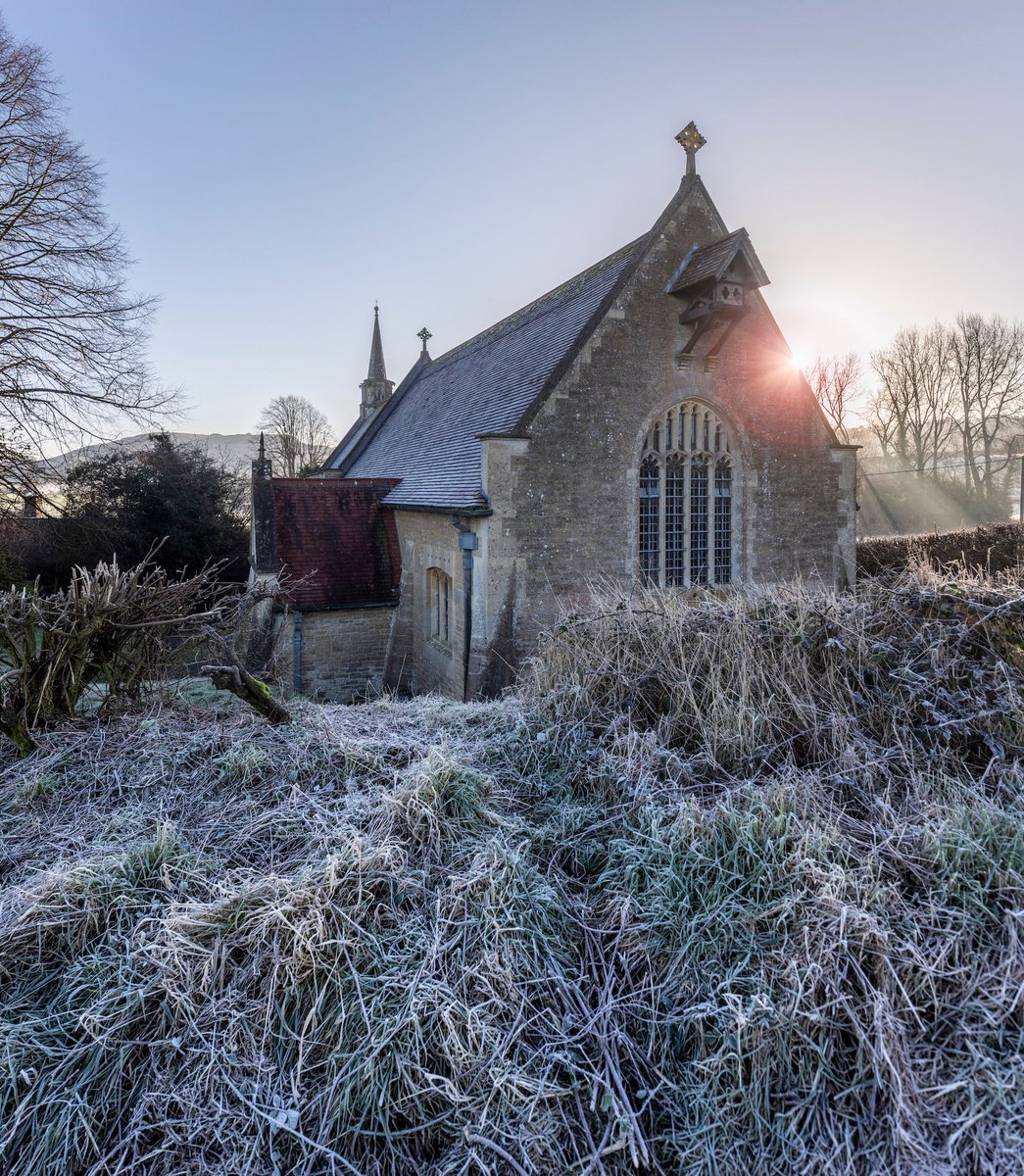
The ancient church at Llantrisant, Anglesey is tucked behind a farm. Among the plastered walls and panelled pews, is a marble Baroque monument. It dates to 1670 and commemorates Hugo Williams. It was erected by his son, William Williams, ‘a man of some dash and bravado’.
Born at Llantrisant in 1634, William Williams became named Speaker of the House of Commons – a role for which he felt himself to be eminently fitted. He became Treasurer of Gray’s Inn, for alongside his parliamentary career he continued a high-profile practice at the bar.
2/
But his career was marked by sudden changes of allegiance - and hence gave rise to his nickname as 'the arch trimmer' – a person who fluctuates between political parties.
3/
His support of the unpopular James II alienated many of his friends, especially after his nomination as the king’s Solicitor-General in 1687, the grant of a knighthood, and in 1688 a baronetcy.
4/
As Solicitor-General Williams led for the Crown in James’s attack on the 7 Anglican bishops he imprisoned for refusing to co-operate in his religious policy… but, the bishops were triumphantly acquitted, Williams’s career was in tatters …and the king’s days were numbered.
5/
But miraculously, Williams lived to fight another day. In 1689 he was elected MP for Beaumaris, Anglesey. By now, he was a prominent supporter of William III and Mary II – reversing he previously allegiance to James II, who had fled to France.
6/
Nonetheless within a few years he fell out with his new sovereigns.
He died at his Gray’s Inn chambers in July 1700, and is buried at Llansilin in Denbighshire, where his mural monument can still be seen.
Nestled in the centre of a small village in the Welsh countryside, St Mary's, Derwen is renowned for its wondrous collection of medieval woodwork.
1/9
The church is entered through a charming late medieval wooden door, with iron studs and fleur-de-lys decorated hinges, set in a surround of gorgeous South Cheshire sandstone.
2/9
Naturally, the medieval wooden treasures of this Denbighshire church continue inside. Foremost is the the fine late 15th-century rood screen and loft that dominate this interior.
A heavily Victorianised small church, St Anno's, Llananno in Powys is, from the outside, a humble and largely forgettable building.
However, inside visitors can feast their eyes upon one of the finest pieces of medieval carpentry in Wales.
1/9
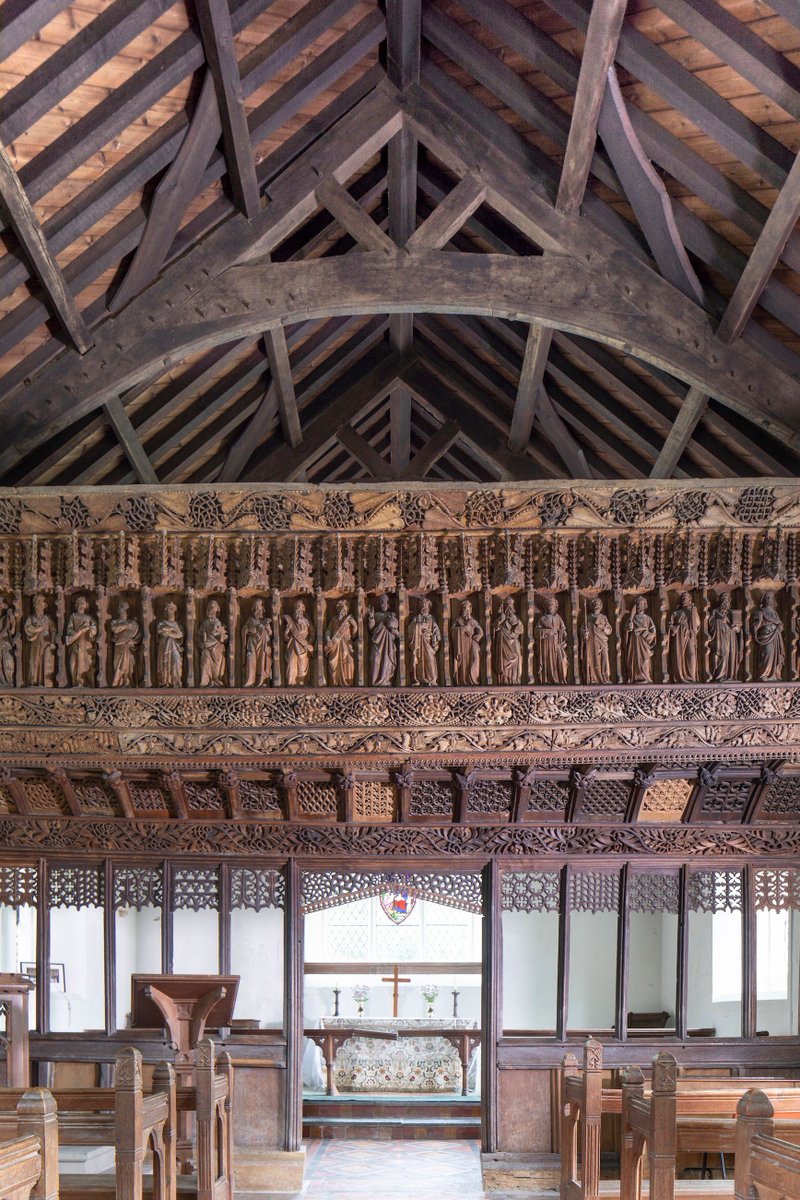
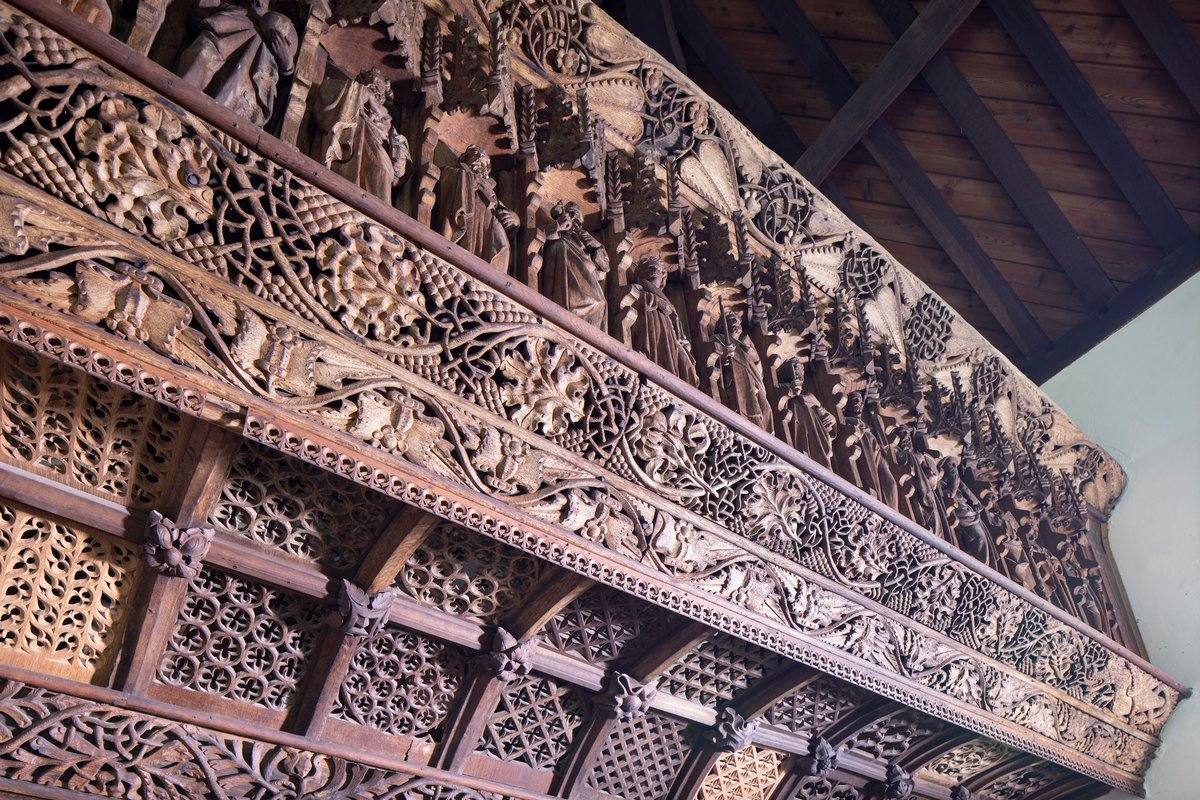
The rood screen and loft inside St Anno's, Llananno is a medieval gem that no visitor will forget in a hurry. Spanning the entire width of the building, this magnificent piece of medieval craftsmanship dates from the 15th century.
2/9
The term for these pieces of church furnishings (rood screen and rood loft) relates to the fact that, in the medieval period, above these magnificent wooden structures there would have been a rood - a carving of the crucified Christ on the Cross.
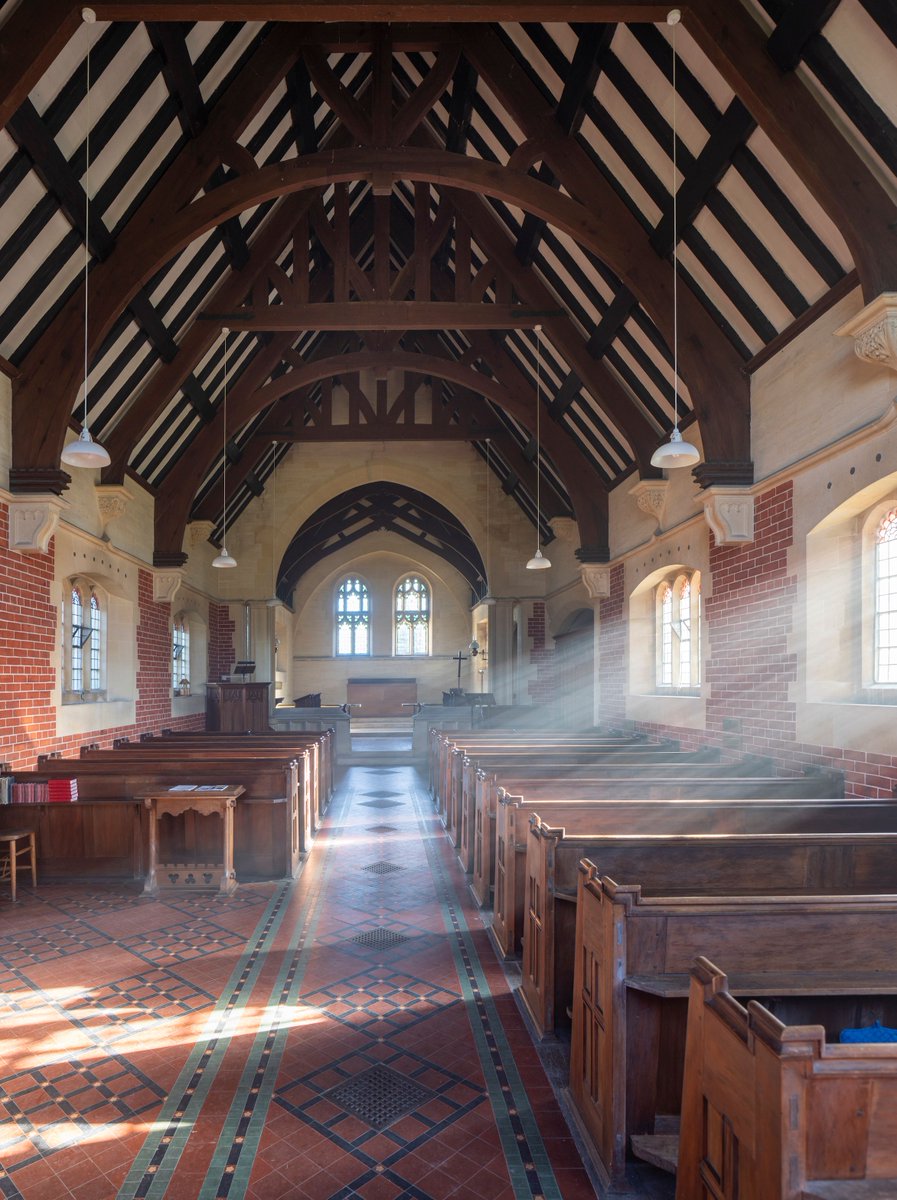
St Mary's, Temple, Corsley is a stunning example of Arts and Crafts Gothic architecture.
This charming church was built in the early 20th century, when the Arts and Crafts architectural style had reached its acme.
1/6
The chapel was constructed in memory of the husband and son of Mary Barton of Corsley House. When Mary died in 1899, she left £10,000 to establish a trust to build and then care for the chapel.
2/6
The chapel was designed by W. H. Stanley of Trowbridge – his only known building – and built by Buyers Brothers of Westbury.
A marriage of faith, farming, landscape and language, placenames remind us of the personal, poetic origins of a location. This is true for Llangua.
1/10
‘Llan’ is an enclosure usually associated with a church. The element which follows, most commonly a personal name, is mutated. Llangua is the church of St Cywa (English: Kew, Ciwa).
2/10
Although there is no obvious physical evidence for a church being here before the 12th century, the survival of that placename is our first clue in understanding the development of the religious foundation on this site.
The sanctuary of St Philip’s, Caerdeon is a bejewelled Byzantine-esque treat.
In this thread, we will explore the history and details of this beautiful ensemble.
1/7
Casting a kaleidoscope of jewel-toned light across the sanctuary, the east window was produced by the Kempe studio, one of Victorian Britain’s preeminent stained glass firms.
2/7
Intriguingly, this stunning window takes the form of a continental church altarpiece: a crucifixion scene situated within a classical frame, adorned with sumptuous baroque details such as fluted golden Corinthians, foliate swags, and flaming urns.