1/ In winter 1971-2, Beijing consumers complained about fish from Guanting Reservoir, in the capital's NW, having foul smells. Some suffered from food poisoning. The reason was industrial waste polluting the water.
A short thread on rudimentary environmentalism in Maoist China
A short thread on rudimentary environmentalism in Maoist China

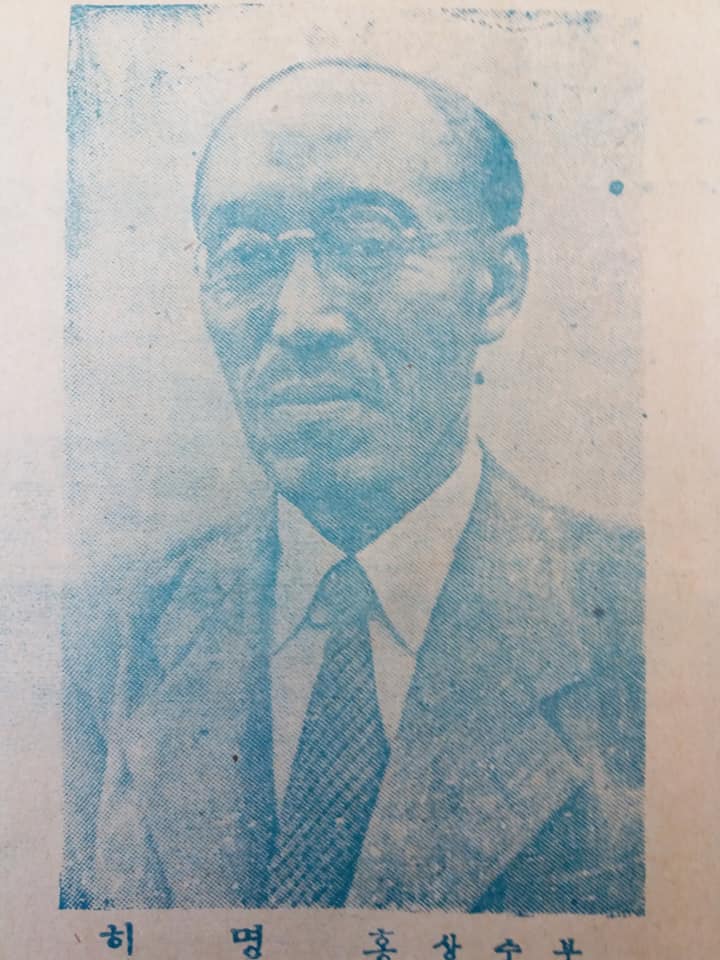
2/ The news alarmed Premier Zhou Enlai, who immediately set up a "Leading Group" for the protection of Guanting Reservoir's water source. Its head was Wan Li, who had just been released from a gulag. 1972 saw also Nixon's visit and China was trying to re-internationalise.


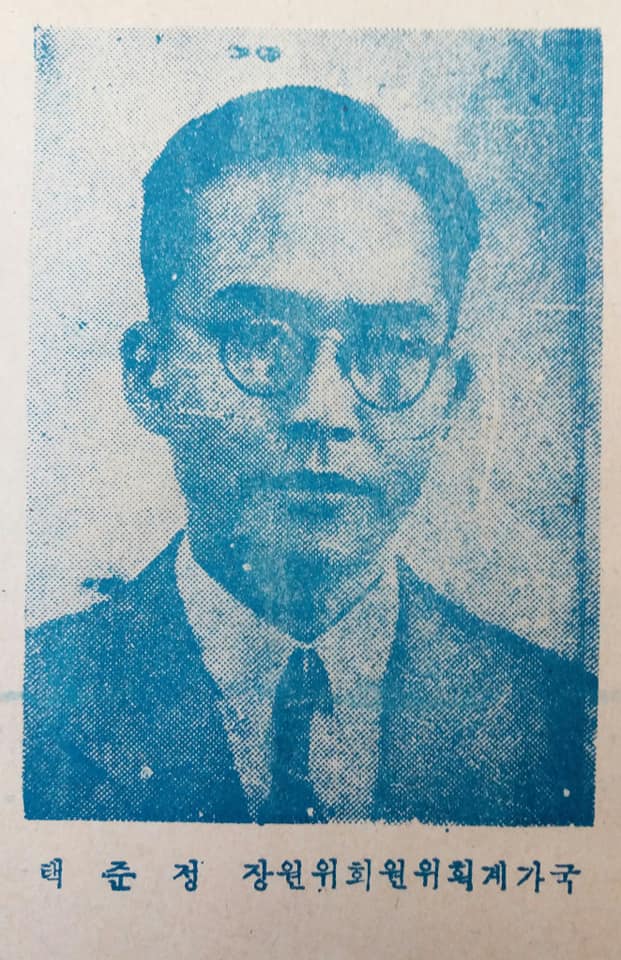
3/ In June 1972 China sent a delegation to the UN Conference on the Environment held in Stockholm, led by Tang Ke, Deputy Minister for Fuel & Chemical Industries. The report he compiled after returning was that China's environmental problems were no less severe than the west.

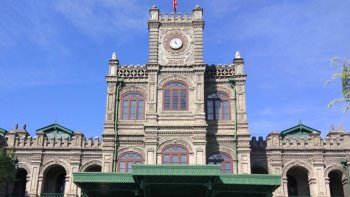
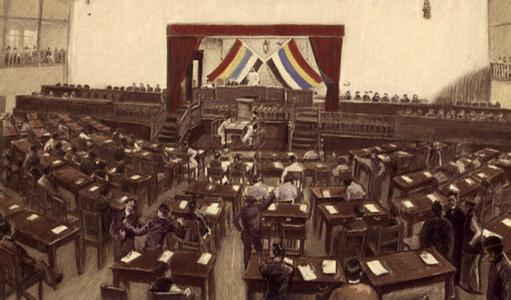
4/ Zhou Enlai decided that the problem could no longer wait, and after deliberations, convened a Nationwide Environmental Protection Conference, held on 5-20 August 1973, and hosted by the State Planning Commission under Yu Qiuli. It was attended by 300 people.

5/ This thread is made possible by an internal circular of the speeches made by V-Premier Li Xiannian, Hua Guofeng and State Planning Commissioner Yu Qiuli, who had been directing the proto-wartime economy during the Cult Rev, successfully producing hydrogen bombs and satellites.
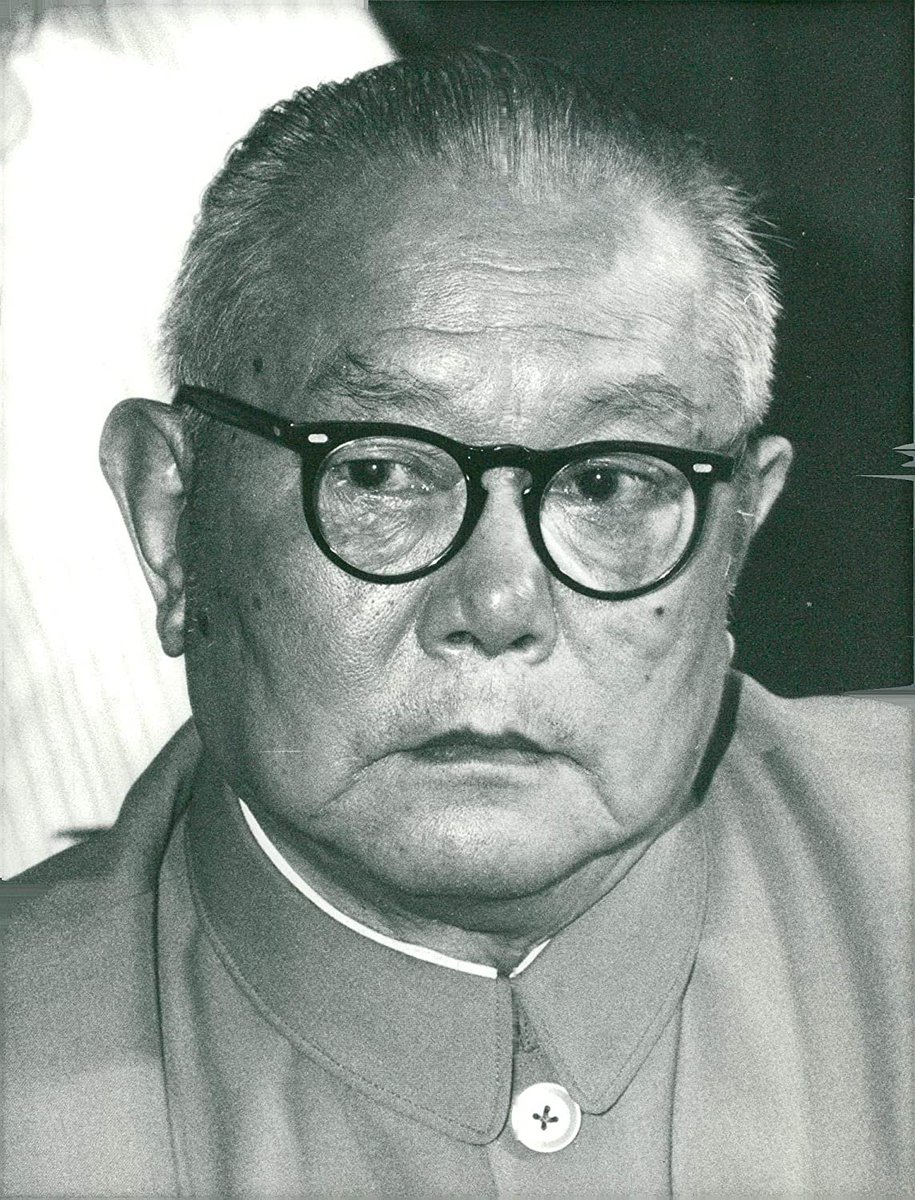

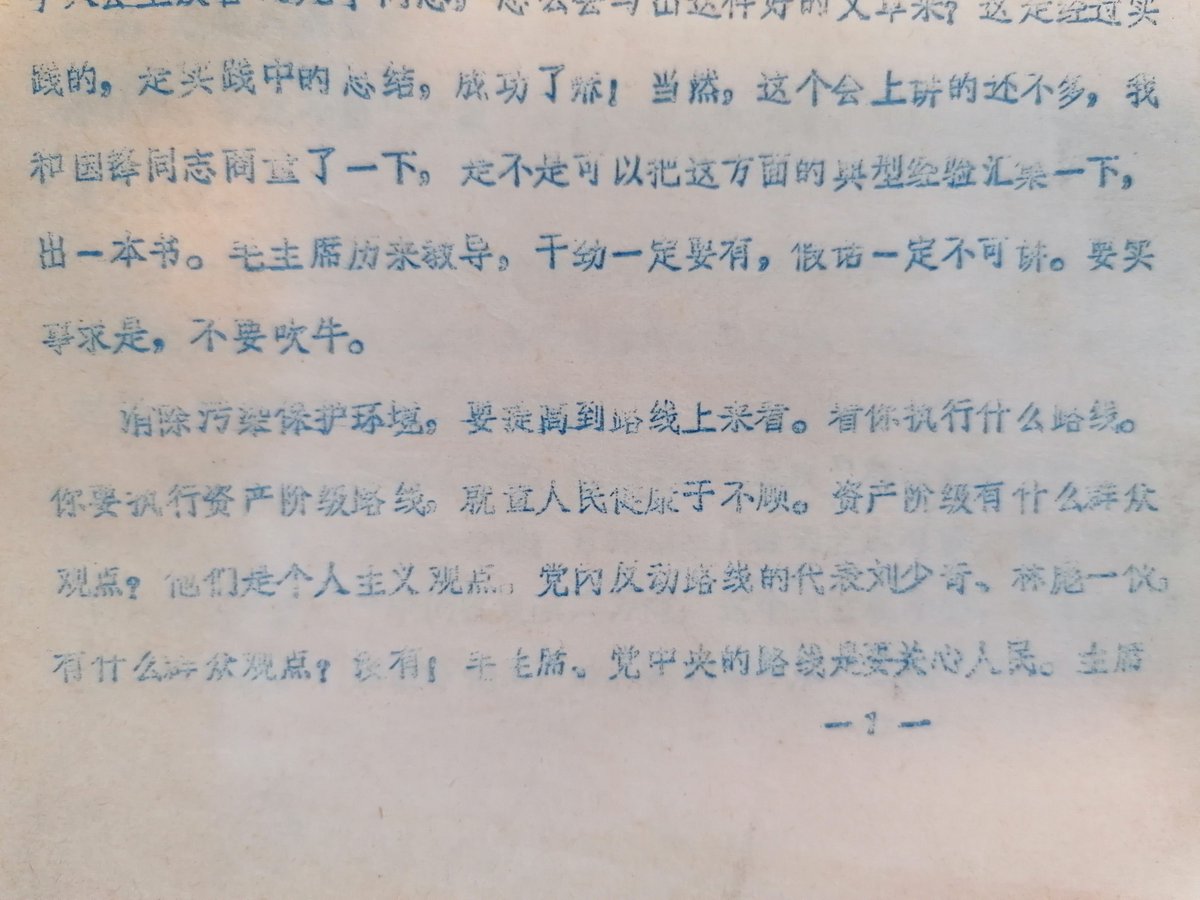
6/ In Li Xiannian's speech, politics came first. He blamed the Liu-Deng "Capitalist Roaders" for having paid no attention to the environmental problem due to their emphasis on profit incentives, and argued that Maoism with its emphasis on the people was environmentally friendly.
7/ Li Xiannian also emphasised that in fact Mao and Zhou had been talking about the pollution problem for years. Industrial pollution that harms the peasants and fishermen could seriously affect the "worker-peasant alliance" which was the revolutionary bedrock of the PRC.
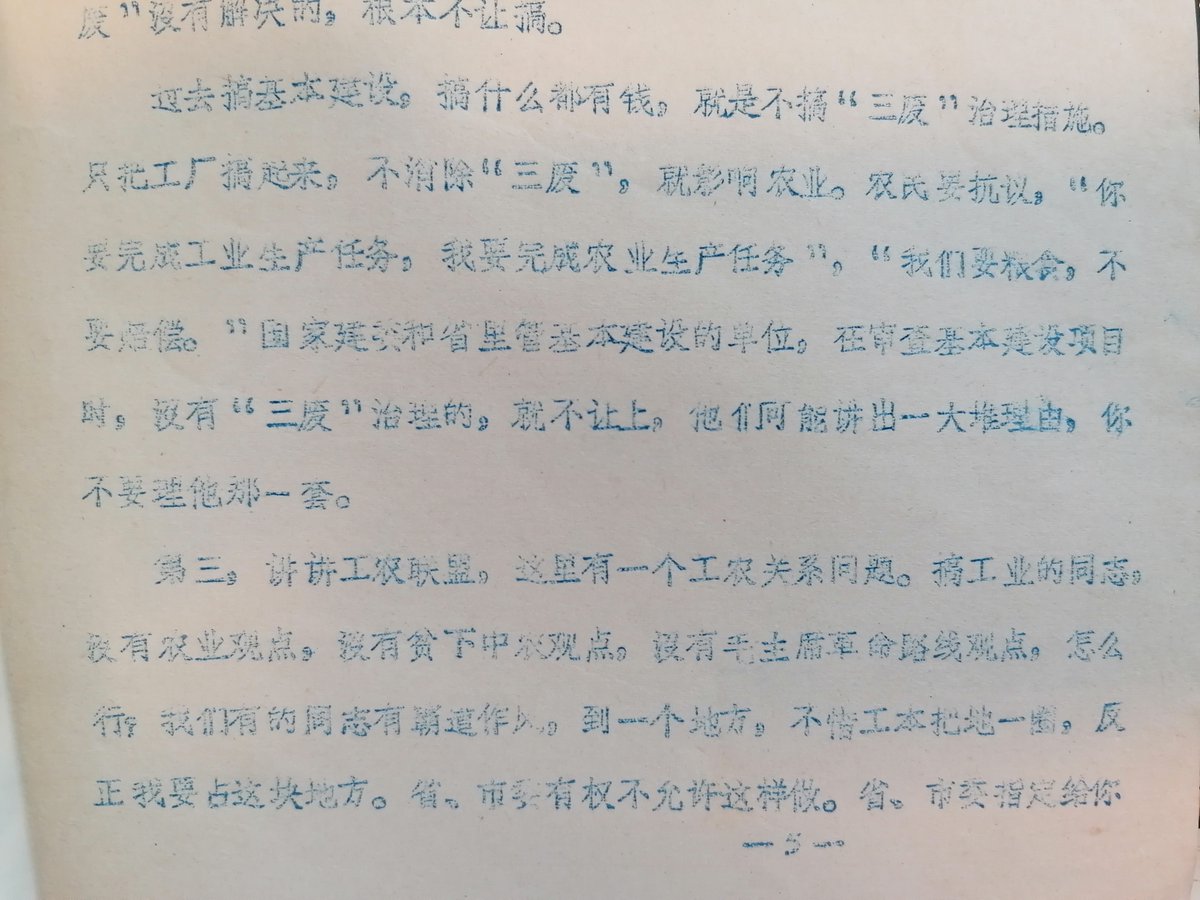
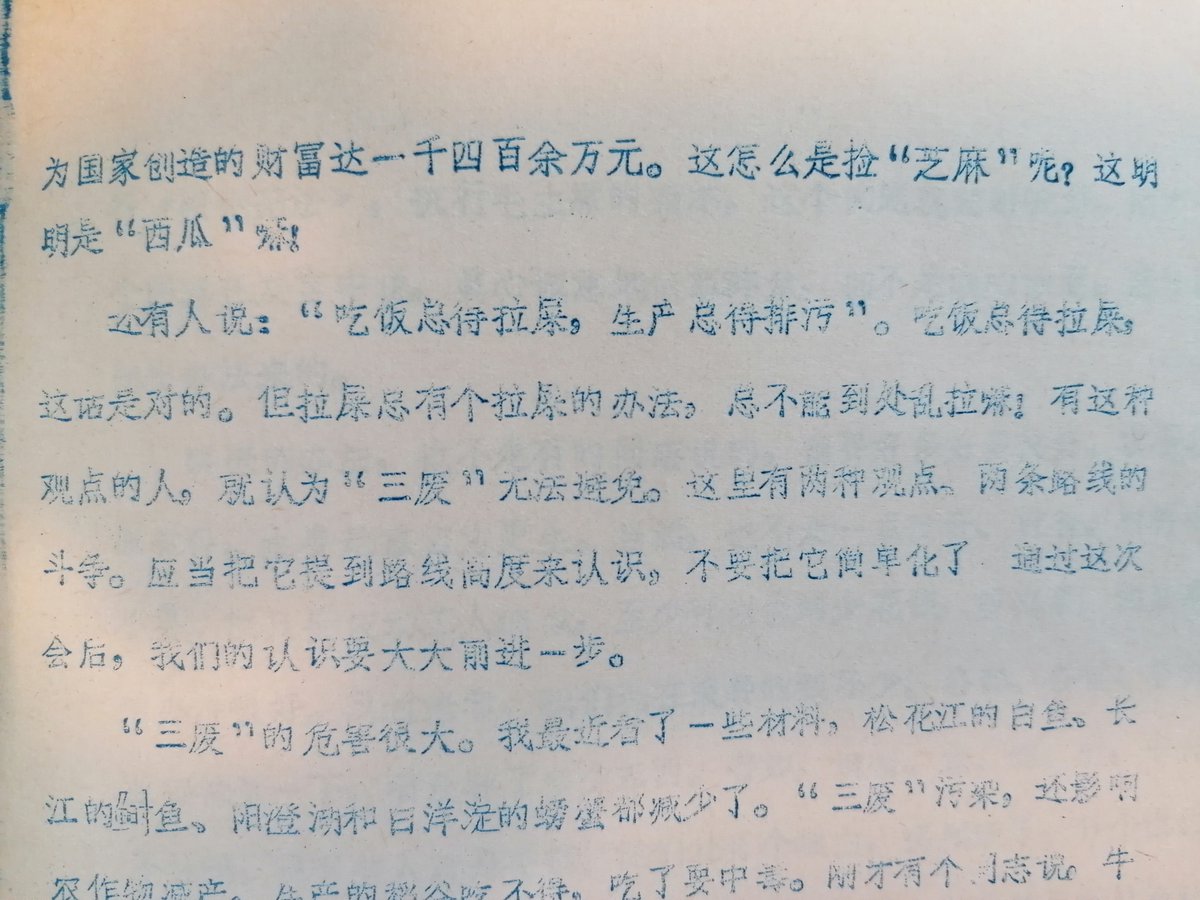
8/ Li attacked cadres on various levels for their excuses for not tackling pollution, including that they are too busy. They care not about the health of the people, said Li. "Some say one must take a shit after eating rice. Well you can't take a shit anywhere you like can you?"
9/ In a spirit consistent with the Three-anti Five-anti campaign of 1952-3, Li attacked the problem of waste. Refusal to learn how to "comprehensively utilise" resources including recycling industrial waste, he said, was precisely that - and some cadres are unmoved by wastage.

10/ Li quoted examples where fish in Songhua River in Manchuria and the Yangtze, as well as crabs in Yangcheng Lake have all been depleted due to pollution. Rice is also affected. Cows eating polluted grass have had swelling in their mouths. Some youngsters' hair has grown silver
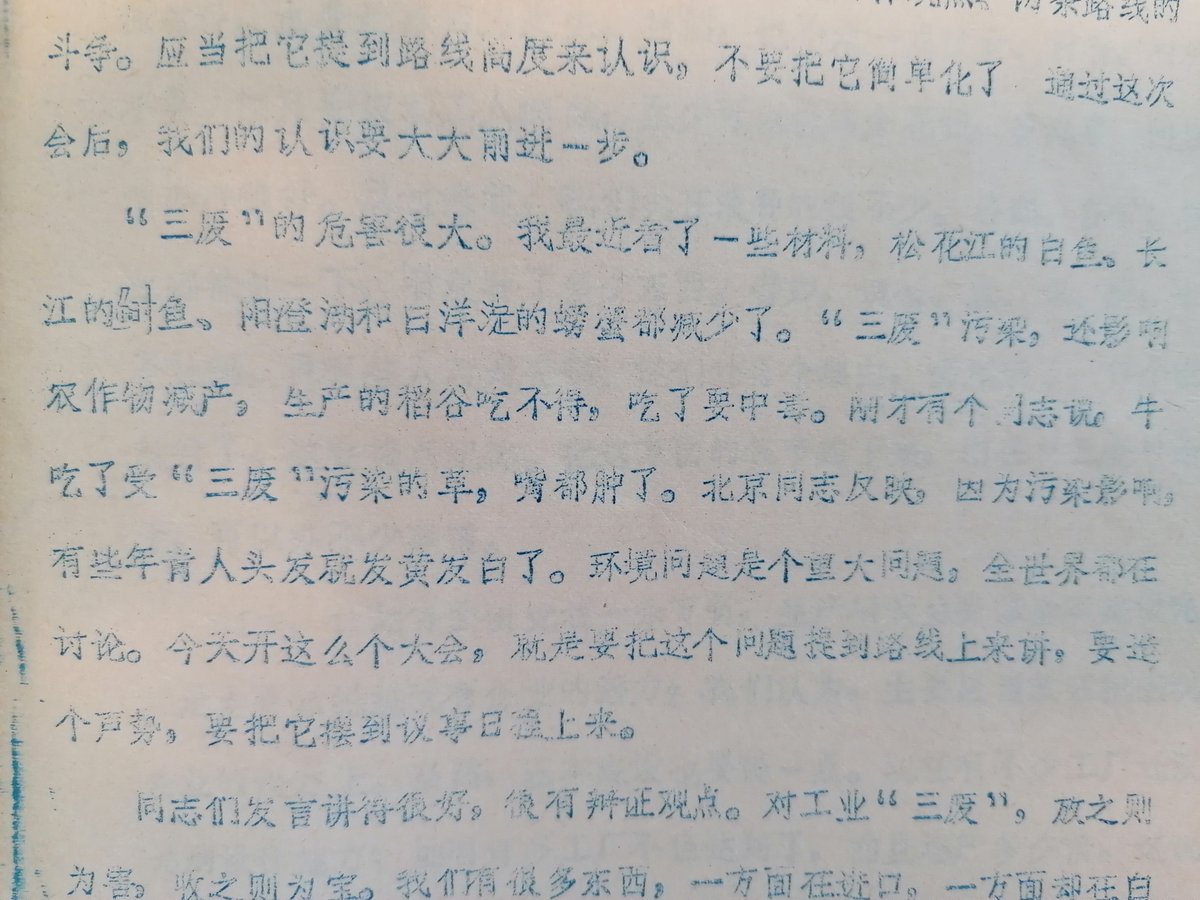
11/ Li cited examples of good "comprehensive use" of industrial waste. A paper mill in Jilin Province has recycled 20,000 tons of caustic soda in a year, at a time when HNO₃/H₂SO₄/HCl/NaOH/Na2CO3 were all in short supply. It created 14,000,000 yuan of revenue for the state.

12/ Hua Guofeng's speech concerned the country's rapid industrialisation drive despite the Cultural Revolution, and possibly foresaw the worsening of environmental problems with the "4-3 Scheme" of Jan 1973, which involved using 430 million USD to buy western industrial equipment

13/ Hua was evidently aware of pollution problems in other countries when he cited water pollution in Japan, and warned that the US would shift its pollution problems (especially chemical) onto other countries. Strangely he said this had been shifted onto the Soviet camp.
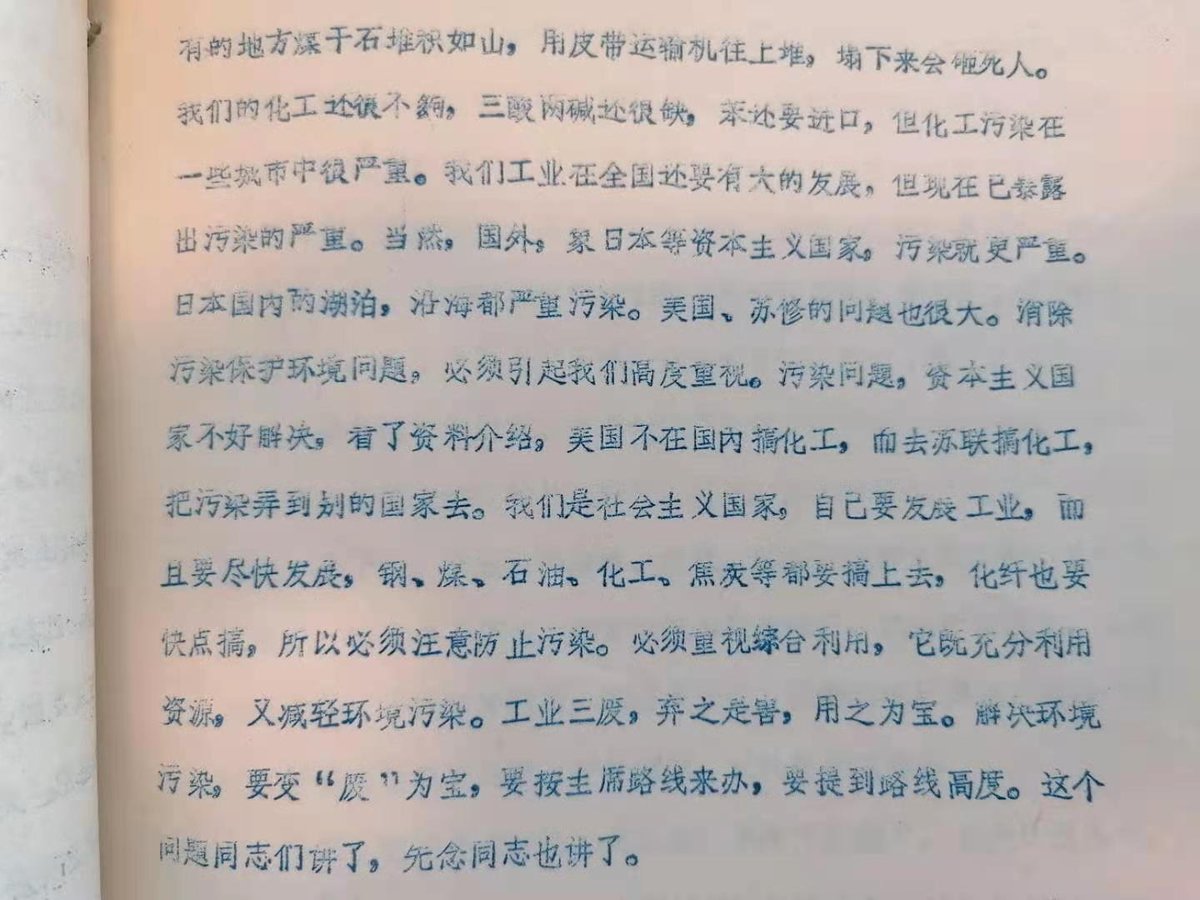
14/ A metaphor used by both Li and Hua was the "sesame" and "watermelon". They both attacked cadres for seeing recycling industrial waste as a distraction as as "picking up sesames", not knowing that it would be a vast economic resource - indeed a watermelon.

15/ Hua argued for legislation on pollution. He also attacked the profit-motives of some polluting industries which used to compensate peasants, but now charge users of their chemical waste a high price once they found that it was lucrative. This he thought would be an impediment

16/ Yu Qiuli's speech was the least colourful. He thought that leadership was central to any improvement. New plants would need to be designed according to be more environmentally-friendly and to "comprehensively utilise" resources. For this, popular supervision must be empowered

17/ Communists are "the most serious", said Yu. Our socialist industries are developed not for profit, but as a service to the nation and to the people of the world. The three kinds of waste - gases, liquids and solids - "can be turned into treasures".

18/ It is evident from the mentality of the conference that recycling industrial waste was seen in the light of a wartime scarcity economy, when the country had a relatively weak chemical industry, much as scrap metal would have been used during wartime Britain and Japan.

19/ Many shocking revelations were made during this packed Conference. The "Regulations on Protecting and Improving the Environment Trial Bill" was passed. It was decided that total rational planning and hands-on communal involvement would be vital to "turning harm into benefit"
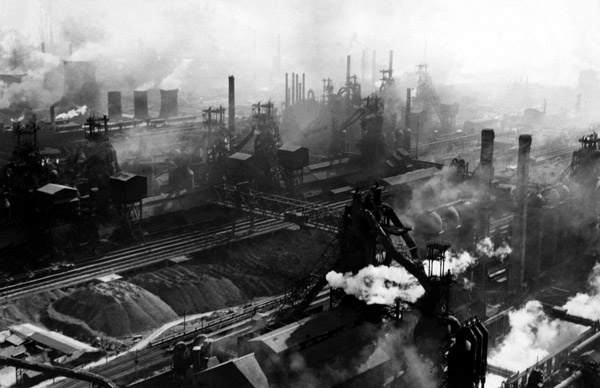
20/ The Guanting fish problem was resolved by 1975. But a decade would elapse before the 2nd Nationwide Conference in 1983. By then, China had decided on rapid, profit-led growth, and its environmentalism would henceforth follow a chequered path. Guanting is again a problem today

• • •
Missing some Tweet in this thread? You can try to
force a refresh