Even more underrated is what your frame or theory says is there and how your choice of theory shapes what you assume to be there.
https://twitter.com/12tonevideos/status/1408697750204547076
One of my favorite examples is gravity. We have three main theories that describe what it is, and what the universe is like, very differently:
1) classical mechanics
2) Relativity
3) quantum gravity
1) classical mechanics
2) Relativity
3) quantum gravity
1) implies gravity is a force, 2) says gravity is the curvature of space-time, and 3) says gravity is the interaction of particles (i.e. gravitons).
They all make fundamentally different claims about the ontology of the universe and are incommensurable to an extent (see Quine/Duhem/Popper/Kuhn) but have a pretty high degrees of precision in prediction (well, maybe not 3) yet).
And until we have a TOE (Theory of Everything) they may remain so.
Side-Note: M-theories, one of the proposed candidates for a TOE each wildly postulate sometimes radically different types of universes each while possibly being able to encompass 2) and 3).
Side-Note: M-theories, one of the proposed candidates for a TOE each wildly postulate sometimes radically different types of universes each while possibly being able to encompass 2) and 3).
Theories are used for specific purposes, and even those with high levels of precision say fundamentally different things about their objects of study. Music theories no less.
Naturally, this is why I’m interested in Indigenous Knowledge Systems in different music and music theory ecosystems.
https://twitter.com/Silpayamanant/status/1375474380403265540
As usual, the Stanford Encyclopedia of Philosophy has a solid introductory article on the Incommensurability of Scientific Theories.
plato.stanford.edu/entries/incomm…
plato.stanford.edu/entries/incomm…
Incommensurability is related to the idea of indeterminacy of translation. I lean more on the side of "soft indeterminacy" of translation.
iep.utm.edu/indeterm/
iep.utm.edu/indeterm/
Quote from Dylan Robinson's recent Open Letter, "To All Who Should Be Concerned."
erudit.org/en/journals/is…
x.com/Silpayamanant/…
erudit.org/en/journals/is…
x.com/Silpayamanant/…
Yeah, IKSs and other ways of thinking have been on my mind for literally decades.
https://x.com/Silpayamanant/status/1305913773157494787
Apropos of the example of gravity I used to illustrate how theoretical models serves to frame what objects exist, or to selectively determine salient phenomena we'll pick out for analysis.
https://x.com/Silpayamanant/status/535108339907432448
I've used this example a lot over the years and have to say it's inspired by two things: 1) the Löwenheim–Skolem Theorem, and 2) the overdetermination of Superstring Theory.
1/2
1/2

Probably the most accessible descriptions of these are in 1) pp. 271-272 of Morris Kline's "Mathematics: The Loss of Certainty" and 2) pp. 170-171 of Michio Kaku's "Hyperspace: A Scientific Odyssey Through Parallel Universes, Time Warps, and the 10th Dimension" (1994).
2/2
2/2
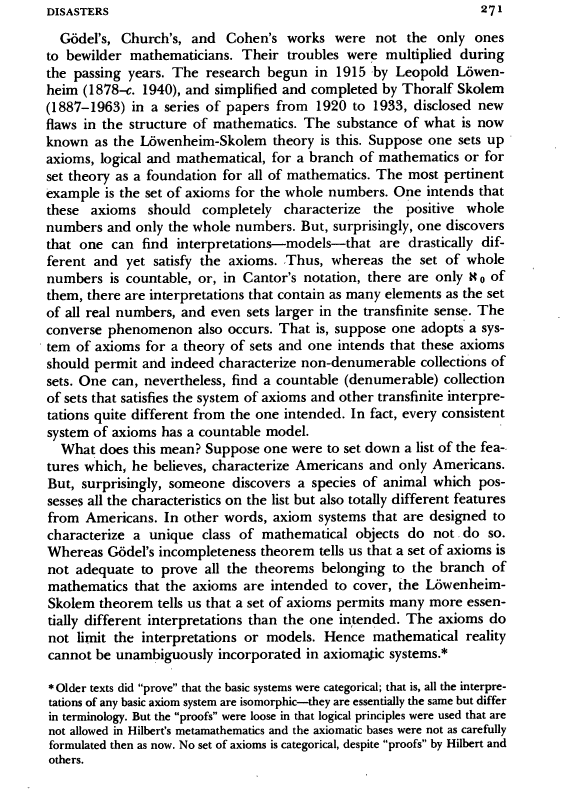
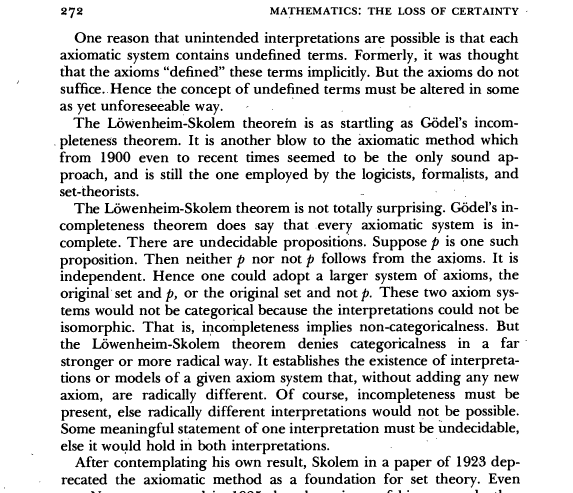
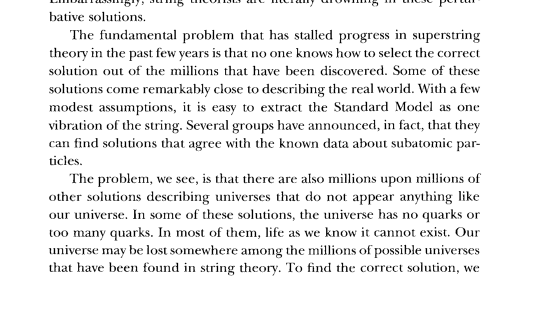
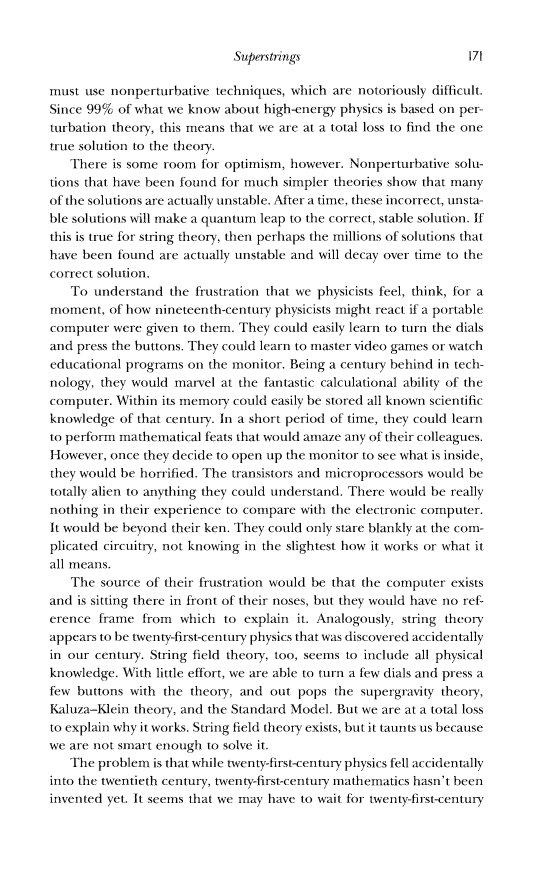
Also substructural logics were useful tools for understanding how eliminating one or more rules from highly formal systems can radically alter the structure of them, and what can be derived from models built on them.
plato.stanford.edu/entries/logic-…
plato.stanford.edu/entries/logic-…
These can also give insights into or show how other formal systems could work--even in highly organized sytematic IKS from other cultures. I grew up Buddhist & Buddhist logical ideas like fourfold negation can be modeled in paraconsistent logics or dialethic systems, for example.
And that gets to the last big influence for the framing/ideas above. Buddhism & Buddhist epistemology/logic. Dignaga, Dharmakirti, & Nagarjuna are as much part my background cultural & knowledge as Soctrates, Plato, & Aristotle are for many Westerners.
https://x.com/Silpayamanant/status/1313912907785293826
A number these fundamental issues have come up in some discussions in this thread:
https://twitter.com/Silpayamanant/status/1467902050231013376
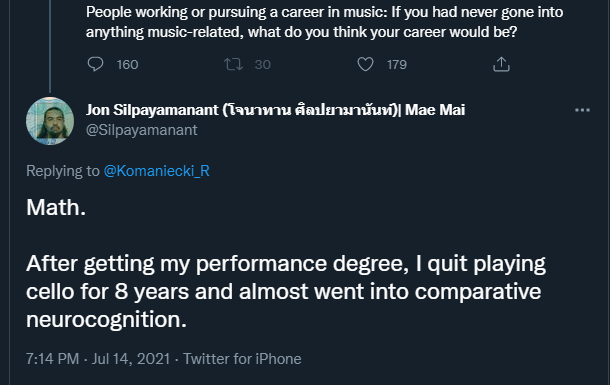
Have to admit that I almost switched to a philosophy major, and kinda glad I didn't. I did end up sitting in or auditing more course required of the philosophy major while an undergraduate. The Chinese Logic course finally convinced me that [Western] philosophy wasn't for me.
Though St. John's College <Master of Arts in Eastern Classics> (MAEC) program was extremely appealing to me around then.
https://x.com/Silpayamanant/status/1357138118512680962
Probably surprises no one.
Yes! t.co/oejt4mXsqx
• • •
Missing some Tweet in this thread? You can try to
force a refresh