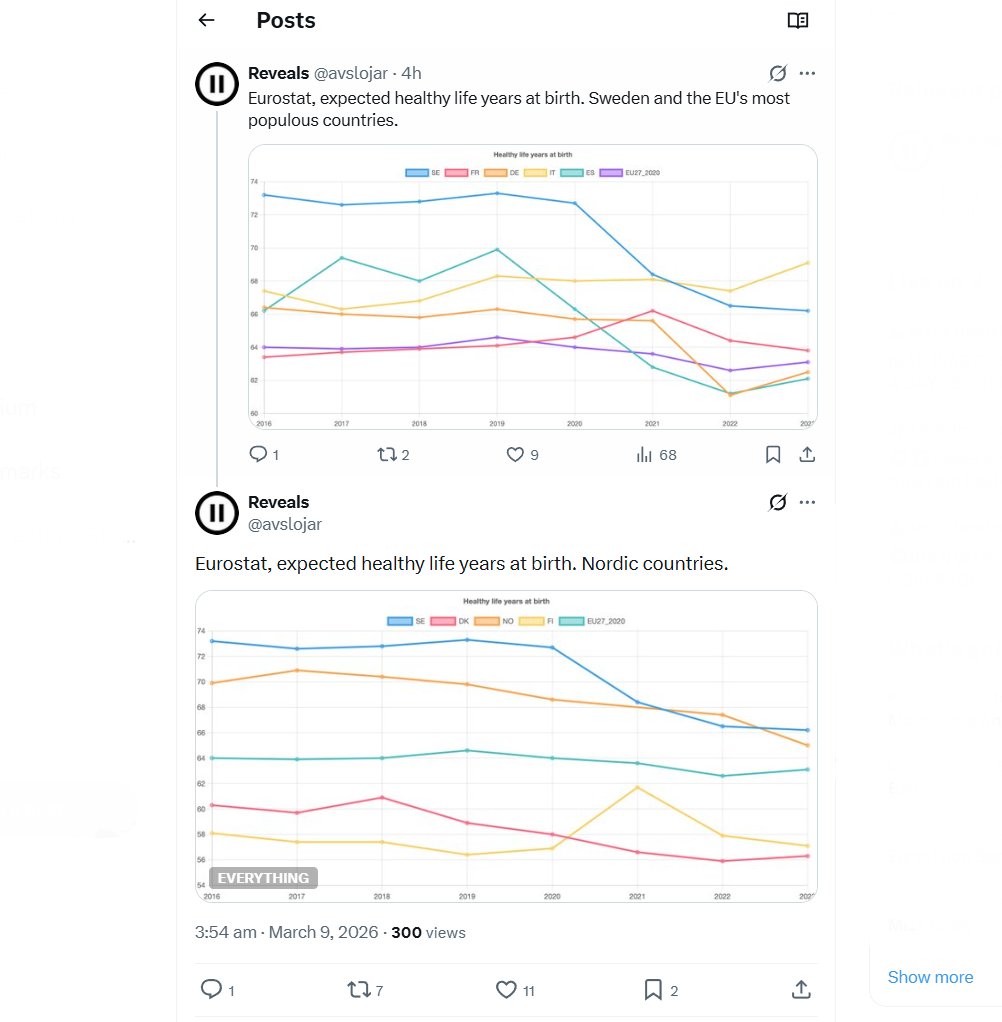
Suomen epidemia 29.6.2021: kasvuvauhti lakkasi nousemasta. Uudellamaalla ja Kymenlaaksossa ilmaantuvuus nousee edelleen, mutta pohjoisempana tilanne näyttää ehkä vähän paremmalta. Kasvu nyt 8.7x kuukaudessa (7.5% päivässä). 1/x
Tänään THL ilmoitti 219 tartuntaa, ei poistanut yhtään, ja tunnettu raportoinnin viive pieneni 46 tartunnan verran. Muuttumattomalla viiveellä laskettu uusien tartuntojen määrä on 219+0-46 = 173 (punainen viiva). 2/x
Myös altistumistapahtumien määrä on ruvennut nousemaan nopeaa vauhtia. Eilen 28.6. uutisoitiin 55 tapahtumasta. Seikkaperäiset tiedot altistumisista: altistumiset.fi . @Tqwerty123a & Tiimi keräävät tietoja. 3/x
Altistuneiden henkilöiden määrät ovat olleet niin suuria, että nyt ollaan kerralla hypätty samalle tasolle kuin missä oltiin vapun jälkeen. Seuraavaksi todennäköisesti rupeaa kasvamaan paikallisten altistumisten määrä. 4/x
17.6. alkanut ilmaantuvuuden nousu ja jalkapallotartunnat eivät toistaiseksi näytä vaikuttaneen testausmääriin. Testien määrä laskee edelleen. 5/x
Luvut kasvoivat vielä illalla, kun Etelä-Savoon ja Itä-Savoon tuli lisää tartuntoja (Etelä-Savo 6 ja Itä-Savo 1). Etelä-Savossa ilmaantuvuus kasvaa, ja Deltaa (eli Intian varianttia) on löydetty sieltäkin. 6/x
Ilmaantuvuus ei kasva Ahvenanmaalla, mutta muualla kasvaa. Varsinais-Suomi, Satakunta ja HUS nopeammin, Pirkanmaa hitaammin. 7/x
Vaasassa tilanne on rauhallinen, Päijät-Hämeessä tilanne on parantunut, mutta Kymenlaaksossa, Etelä-Karjalassa ja Kanta-Hämeessä ilmaantuvuus on nousussa. 8/x
Itä-Savossa tilanne paranee, mutta Etelä-Savossa, Etelä-Pohjanmaalla ilmaantuvuus on nousussa. Lievää nousua myös Pohjois-Karjalassa. 9/x
• • •
Missing some Tweet in this thread? You can try to
force a refresh

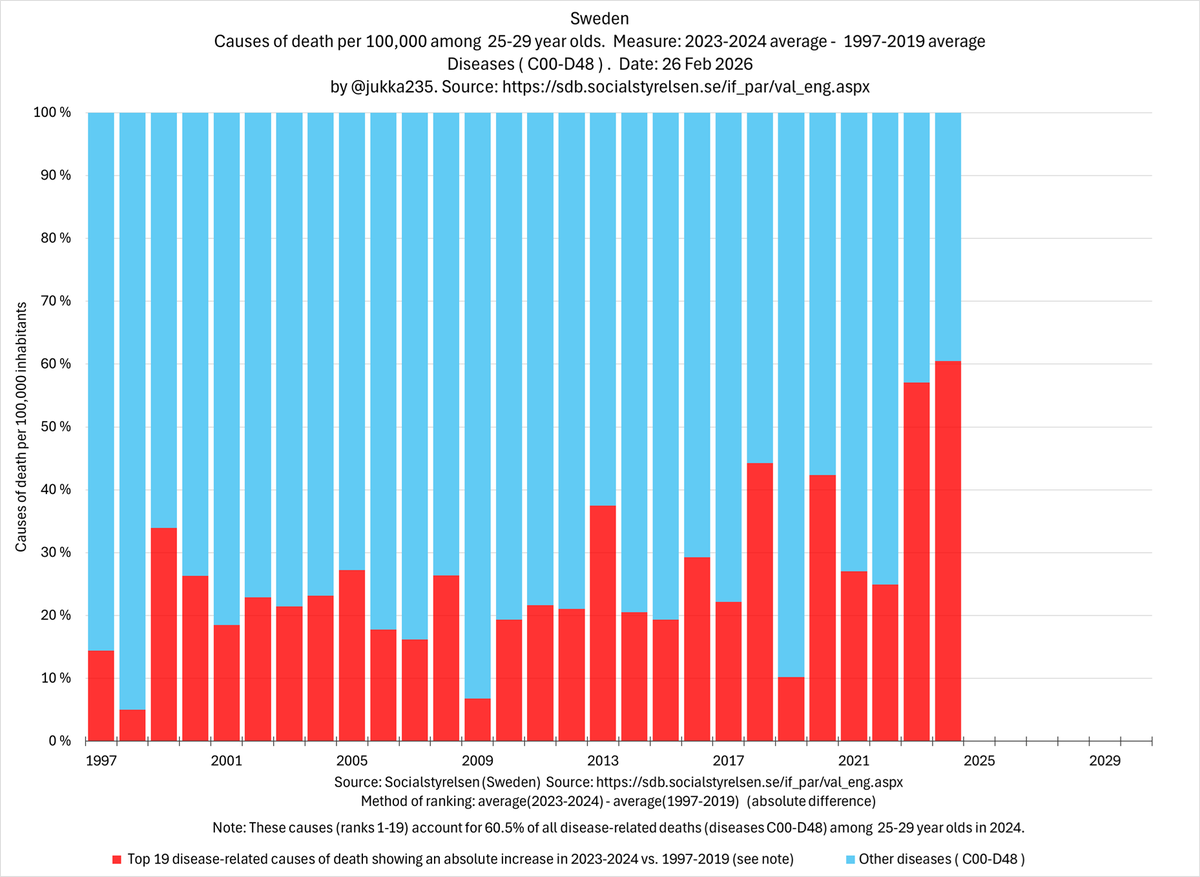
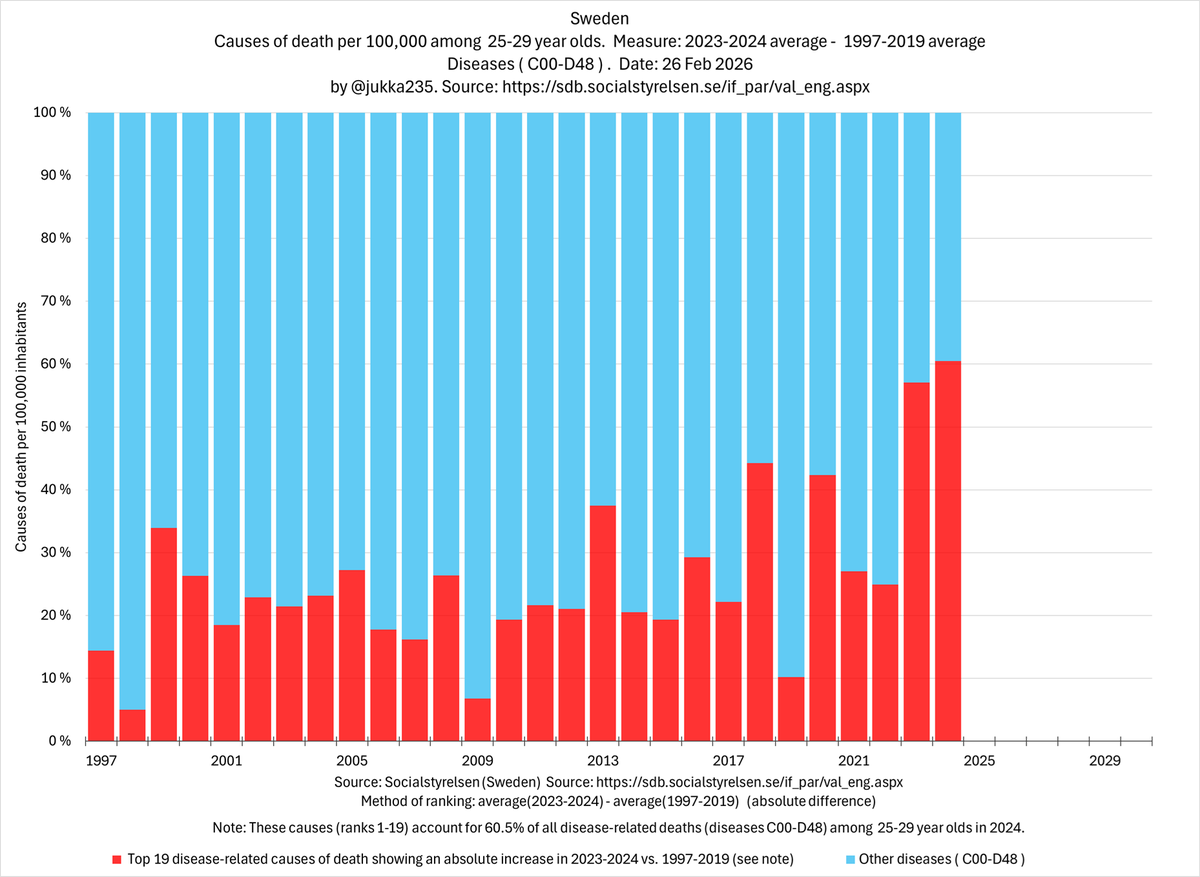
Here are the 19 leading causes of death among 10-14 year olds, ranked by their 2024 incidence compared to the 1997-2019 average. Together, they account for 35% of all deaths in 2024. 2/x
Here are the next 18 diseases. Combined, these causes represent 60% of all deaths in 2024, and have an average growth rate of 33.7% per year between 2019 and 2024 (10 times in 7.9 years). 3/x
After more than five years of silence, mainstream media has begun to acknowledge that C19 can harm T cells, and to discuss the consequences that follow. @fitterhappierAJ was one of the first, if not the first, to talk about this. 1/x
Dr. Leonardi has provided a significant amount of direction for me. In particular, he has been interviewed in some excellent articles that have withstood the test of time. Here is one of them. 2/x
We have seen it all.
- in 2020, they said that our health systems are so robust that this disease wouldn't come here
- then they wanted them infected. C19 was de facto allowed to spread in schools. Only a small fraction of <12 year olds received ... 3/x
Something is causing injuries among young children. 1/x
Something changed in 2022. Before that, the numbers were generally falling. Wonder what it could be. 2/x
After 2022, 1-6 year olds have overtaken a total of three other age groups (50-64, 15-24 and 65-74 year olds), and are now clearly above the total population average. All injuries (S00-S99). 3/x
Between 2020 and 2025e, the number of patients with developmental delay or disorder diagnoses grew at an average annual rate of 21.6% (10x in 11.8 years). The fastest patient growth was seen in pervasive developmental disorders, incl. autism and Asperger syndrome (F84). 2/x
Among total population, number of patients with developmental delay or disorder diagnoses is up 2.6 times since 2020. All disorders are showing continued significant patient growth. 3/x
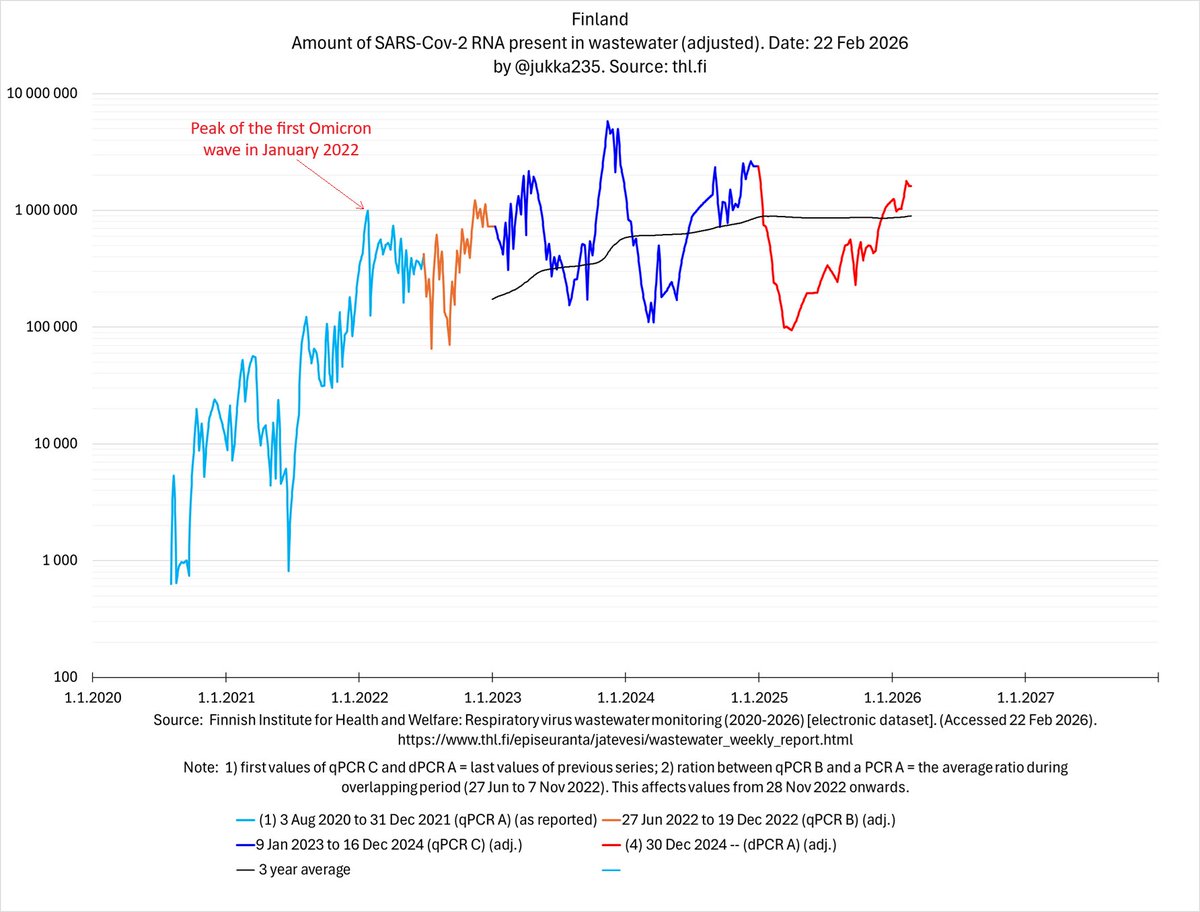
Finland's epidemic 23 Dec 2025: amount of virus in wastewater appears to have risen above the first Omicron wave. Post-Omicron baseline is permanently higher than pre-Omicron; repeated waves are showing no diminishing. 1/x
Post-Omicron baseline is permanently higher than pre-Omicron
- before late 2021, levels were mostly 10³–10⁴.
- from 2022 onward, even troughs sit around 10⁵, or 10-100x higher
- C19 has become endemic
- constant background transmission, even outside waves 2/x
Repeated large waves in 2023–2024, not diminishing. Notable peaks:
- Apr 2023
- Nov 2023 (highest for the entire pandemic)
- Dec 2024
These peaks are:
- comparable to or higher than Omicron 2022
- evidence against a simple “each wave gets smaller” narrative 3/x
Congenital malformations, deformations and chromosomal abnormalities. For 1-6 year olds,
- the condition showing largest increase since 2022 is Down's syndrome (Q90)
- the condition showing fastest growth since 2022 is Congenital malformations of great arteries (Q25) 1/x
1-6 year olds / chromosomal abnormalities (Q90-Q99).
- Down's syndrome (Q90): average patient growth (2022-2025e) 14% per year = 10x in 18 years)
- fastest growing condition: other sex chromosome abnormalities, male phenotype (Q98), up 150% in 2025e 2/x
<1 year olds / chromosomal abnormalities (Q90-Q99):
- Down's syndrome (Q90) is the most frequent diagnosis 3/x