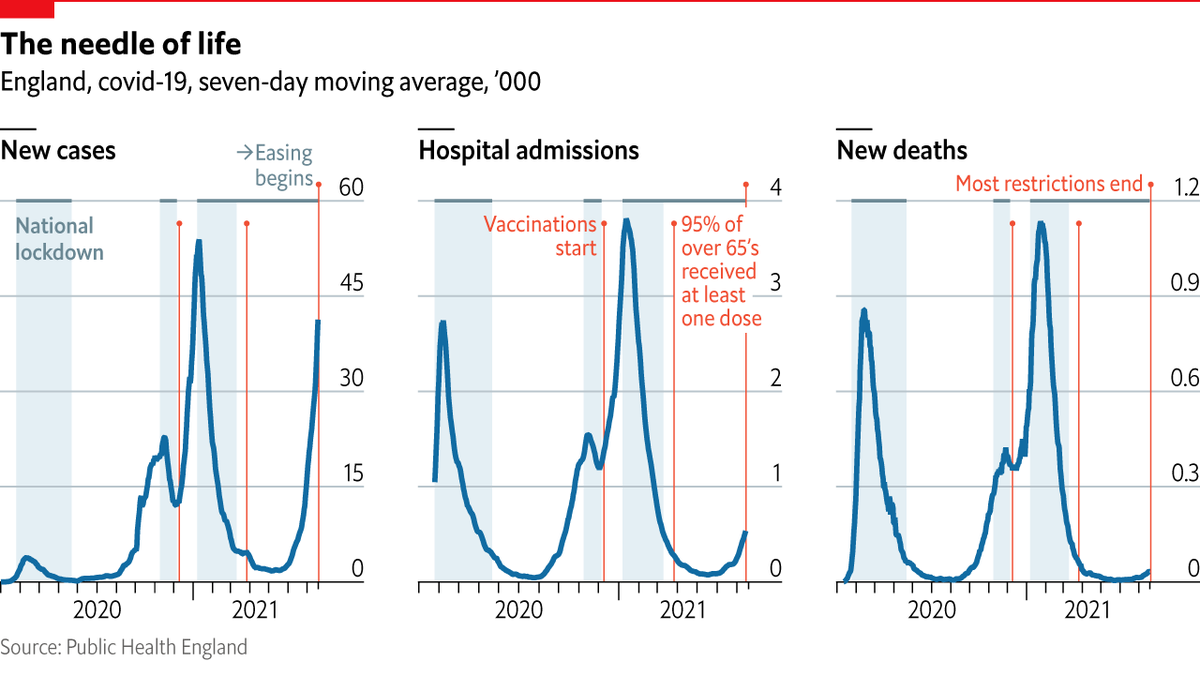
England has ended all social restrictions. But the country is confronted with a large new wave of covid-19 infections. Thread 👇
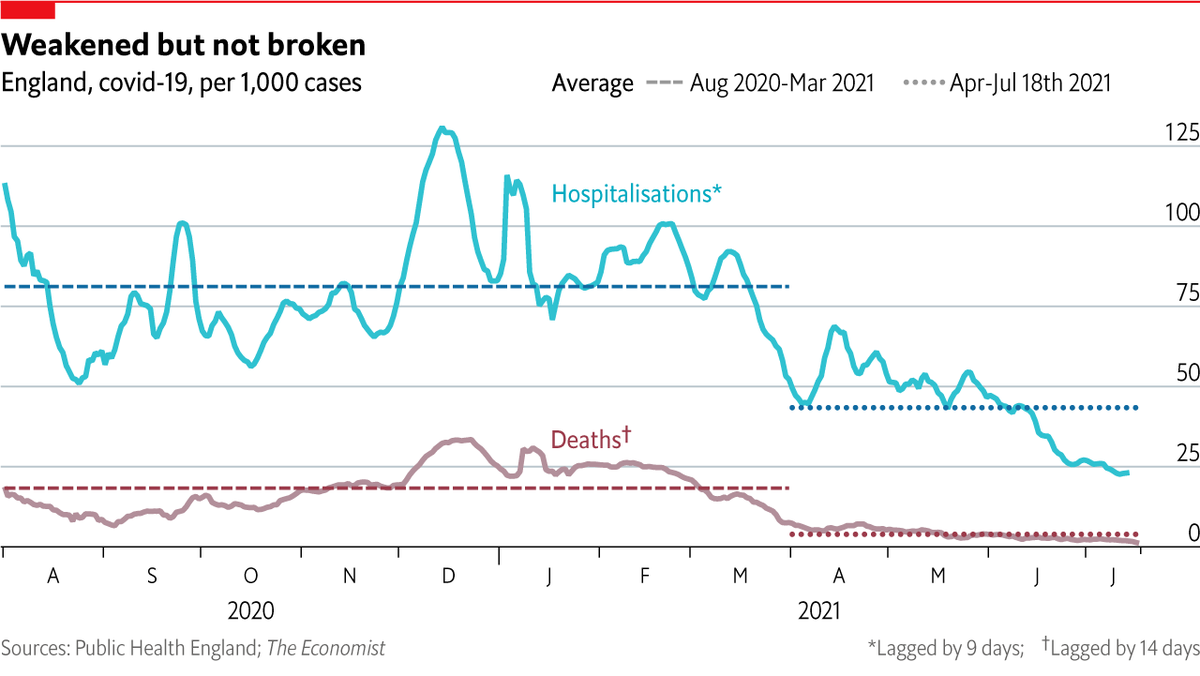
Analysis by The Economist finds that in recent months the link between covid-19 cases and subsequent hospitalisation and death in England has weakened—but not entirely broken econ.st/3zfvpmY
Official cases in England per head of population are the sixth highest in the world and infections are doubling every six days econ.st/3zfvpmY
But restrictions such as mask-wearing and social distancing are no longer mandatory econ.st/3zfvpmY
Face-masks help reduce the spread of SARS-CoV-2, the virus that causes covid-19 econ.st/3x4Txrj
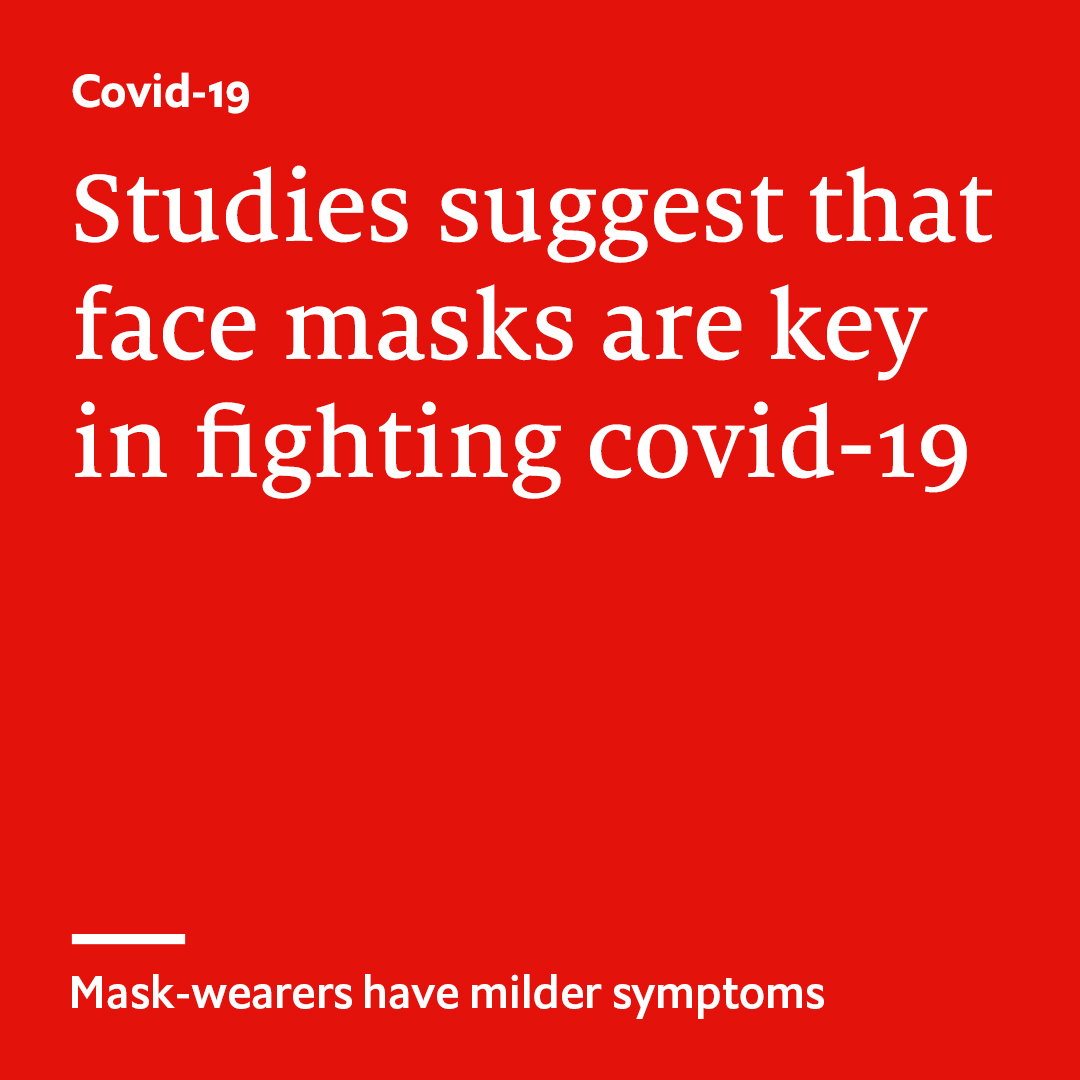
This is because masks cut the number of infectious particles entering the nose and mouth, which helps the clinically vulnerable econ.st/3x4Txrj

“The issue with face masks here is that the government is sending two very different messages.”
@natashaloder tells @kncukier why removing the legal requirement in England for face coverings may be a risky policy. Listen to “Babbage” econ.st/3xUTbo1
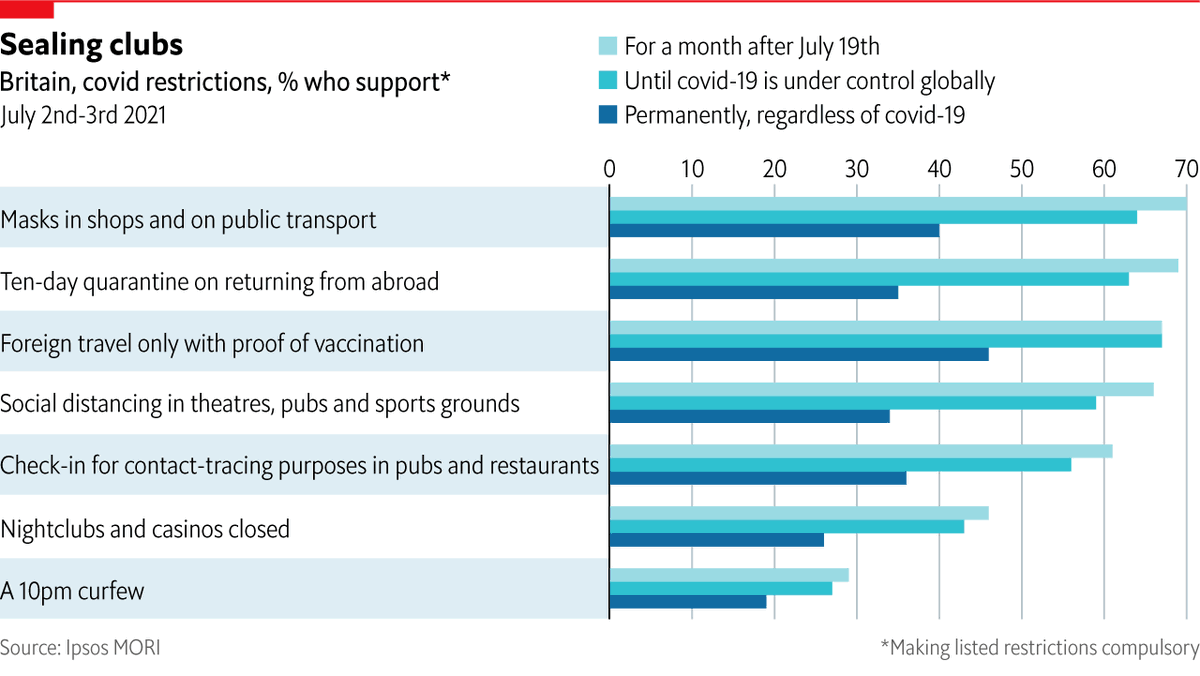
Polling by Ipsos MORI for The Economist suggests two-thirds of British people think masks, social distancing and travel restrictions should continue for another month econ.st/3kC5Rwt
The British government certainly thinks it is possible to relax restrictions without incurring lots more deaths and overwhelming the NHS econ.st/3Bnb8Om
Around 95% of Britons over 65 have been vaccinated, but faced with a wave of the more transmissible Delta variant, the country's vaccination strategy is being put to the test econ.st/3zkIE6a
• • •
Missing some Tweet in this thread? You can try to
force a refresh

Every year EIU, our sister company, produces a cost-of-living index that ranks 173 cities around the world based on the price of more than 200 products and services. Here are some of the highlights of the 2023 survey 👇econ.st/48E8vrd
Tied in first place were Singapore and Zurich. Singapore is no stranger to the top spot: it has ranked as the priciest place to live in nine of the past 11 years econ.st/48E8vrd
The Japanese concept of kakeibo describes the art of saving money. In Asia there are many good places to practise it. Nine of the world’s 20 cheapest cities are there. But Asia is also home to some of the most exorbitant metropolises, too econ.st/3tvVNvX
This week’s episode of “Checks and Balance”, our podcast on American politics, is a bit different. @arynbraun explores a decades-old murder, exposed by climate change. Follow her investigation below 🧵 economist.com/podcasts/2023/…
As the American West dries up, the shoreline of the country’s largest reservoir is retreating. Last May, the shallows revealed a barrel with a body inside. The victim had been shot, entombed in metal and then sunk to the bottom of Lake Mead econ.trib.al/GSigYzp
Police determined that the victim, later dubbed Hemenway Harbor Doe, had been killed in the late 1970s or early 80s. That was when the mob ran several casinos in Las Vegas, just 30 miles from Lake Mead economist.com/podcasts/2023/…
On the outbreak of war, many Russians fled to Turkey. Sania, who has opened a bookshop in Istanbul, is one of many trying to create another Russia beyond its borders econ.st/3ZGk1On
If the country succumbs to Russian chaos, perceptions of Western decline will deepen. But if it thrives, the lesson will reverberate around the world economist.com/briefing/2023/…
“Will we be lucky or not? I’m so tired that I don’t even have the strength to be afraid.” One anonymous Ukrainian soldier shares his diary of life and death with 1843 magazine econ.st/3kls7x0
It’s election day in America. Find out what to expect with our latest midterms coverage👇 econ.st/3FVZcYH
In late summer, Democrats seemed to have a good chance of keeping the Senate—and even, perhaps, the House. But in the lead up to election day, polls and The Economist’s own statistical forecast put the Republicans in a stronger position econ.st/3G0cWl8
The race for the Senate is a dead heat. In battleground states like Pennsylvania, Arizona, Georgia and Nevada the contest is now neck-and-neck econ.st/3NRKpjO
Over the past decade owning a house has meant easy money. But today if your wealth is tied up in bricks and mortar it is time to get nervous ⬇️ econ.st/3MWBmO1
For years more established homeowners took comfort in the thought that, even if real-wage growth was terrible, at least the price of their house was rising. Those days are over econ.st/3VX8Rnq
House prices are now falling in nine rich economies. As inflation and recession stalk the world a deepening correction is likely economist.com/leaders/2022/1…