Happening now: Two Post science reporters are answering your questions about the highly contagious coronavirus variant. washingtonpost.com/health/2021/07…
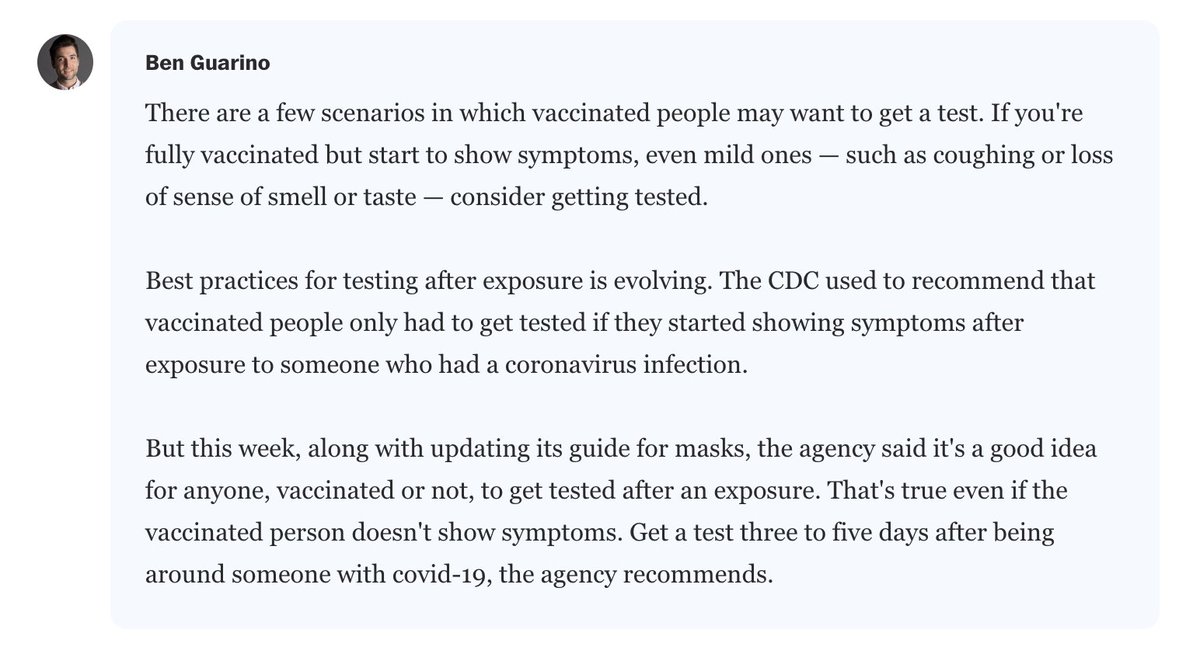
Q: Can a fully vaccinated person spread the delta variant asymptomatically, or only when showing symptoms? Could I spread to my unvaccinated under-12 kids — or others — without knowing it? washingtonpost.com/health/2021/07…
Lyles is a connoisseur of anime and manga, Japan’s popular forms of storytelling.
For the comic book “Chasing Gold,” Washington Post reporters interviewed Lyles and the people around him. wapo.st/3ldKdyY
Noah Lyles was born in Gainesville, Fla., to track star parents: His mother was an All-American and his father medaled at the world championships. wapo.st/3ldKdyY
Delta variant infections are probably more severe, CDC document says, citing data showing vaccinated people can spread coronavirus washingtonpost.com/health/2021/07…
Scientists were so alarmed by the new research cited in the internal document, obtained by The Post, that the agency significantly changed mask guidance for vaccinated people even before making the new data public. washingtonpost.com/health/2021/07…
The document, an internal slide presentation, captures the struggle of the CDC to persuade the public to embrace vaccination and prevention measures as cases surge across the U.S. and new research suggests vaccinated people can spread the virus. wapo.st/3rJMWS4
The journey to earn an Olympic gold medal is rarely achieved without challenges. But for some elite athletes, the lessons learned stretch far beyond the podium.
Billy Mills says the racism he experienced in college, along with the grief of losing his parents, sent him into a deep depression.
Running and the pursuit of his Olympic goals helped to get him through his loneliness. He won gold at the 1964 Tokyo Olympic Games.
Growing up with severe asthma and a number of allergies, Amy Van Dyken-Rouen had to shop around to find the sport that was right for her.
Swimming did not come easy. Her persistence not only got her across the pool but eventually made her an Olympic champion.
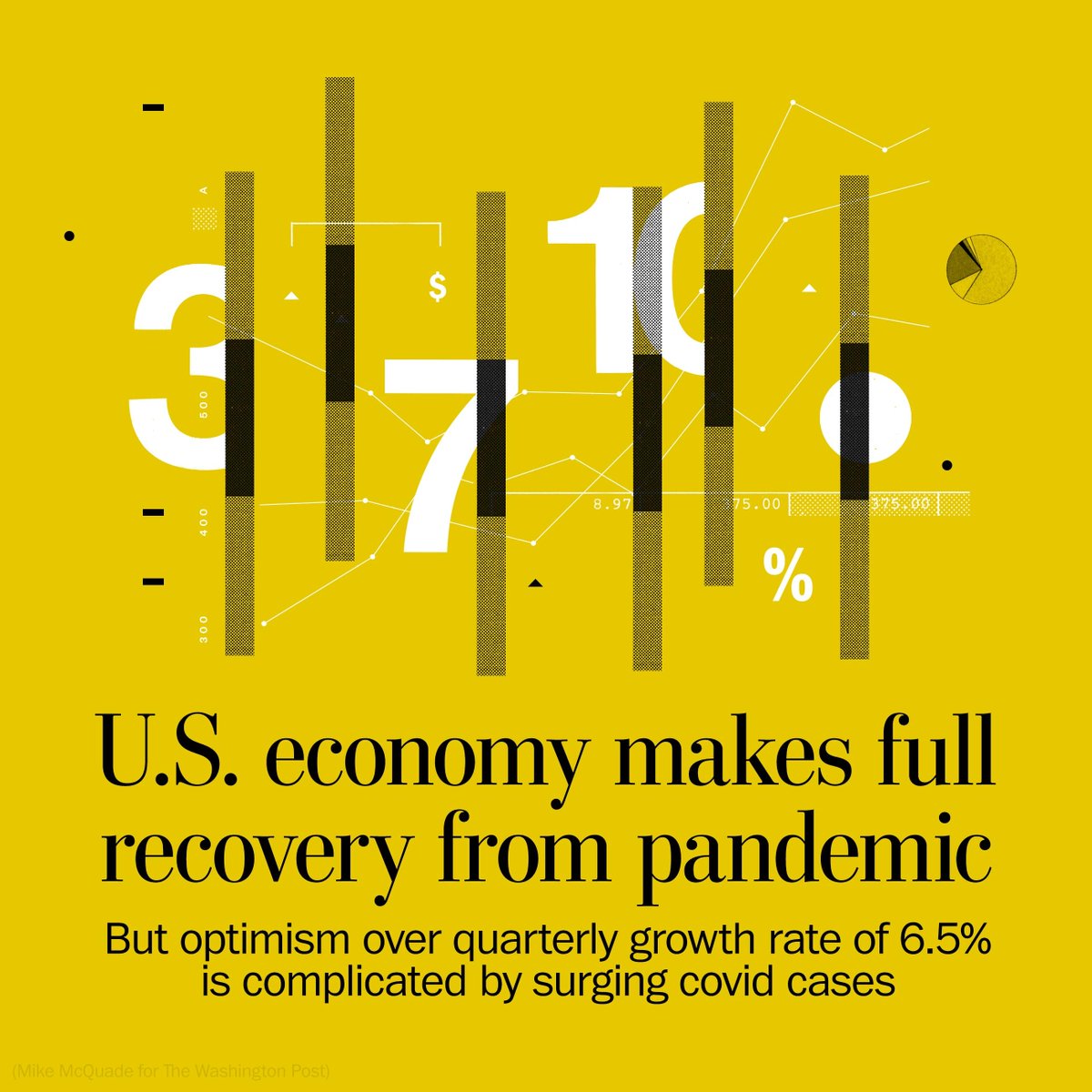
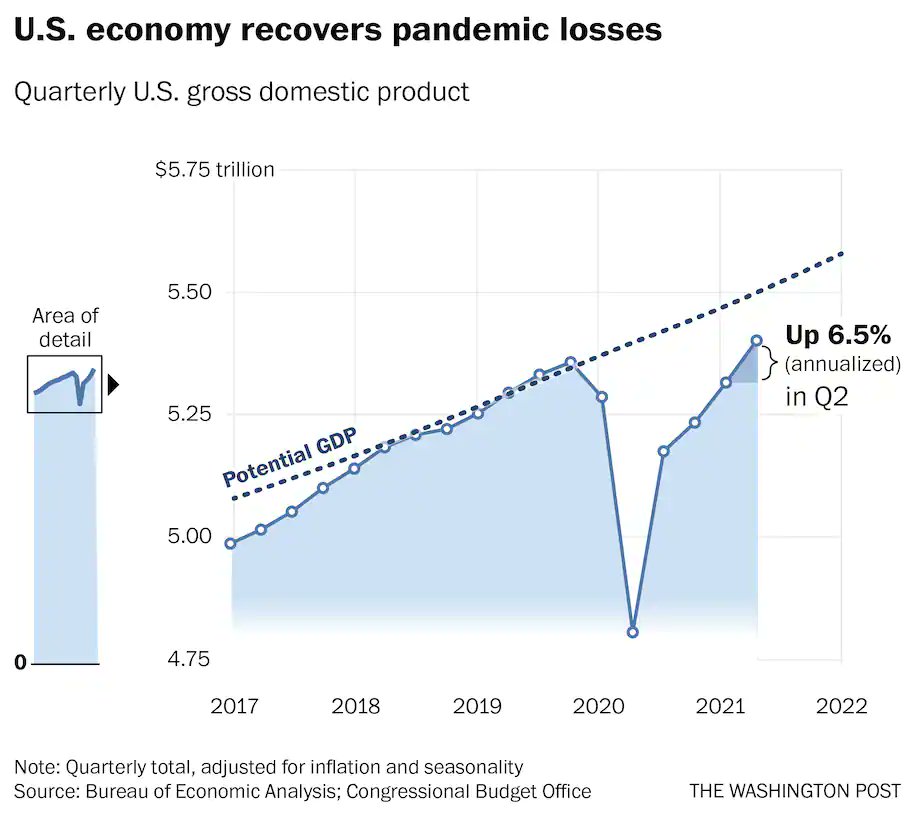
The U.S. economy was officially back and fully recovered from the pandemic as of June, although a recent surge in covid cases could threaten new uncertainty ahead.
The economy grew at an annual rate of 6.5 percent in the quarter ending in June, below expectations, as coronavirus vaccinations and unleashed consumer spending added momentum to the recovery. wapo.st/3BTwEup
For the first time, economic output eclipsed its pre-pandemic high, after adjusting for inflation. But that doesn’t mean the economy is back to the level it would have been at, had the pandemic not happened, because there is roughly a year of continued economic growth missing.
Federal prison officials allowed convicted sex abuser Larry Nassar to spend thousands on himself while paying little to victims washingtonpost.com/national-secur…
Bureau of Prisons officials have only required Nassar to pay about $100 a year, according to court papers, or about $300 since he entered the federal prison system in late 2017 after pleading guilty to receiving and possessing child pornography.
The Post reported last month that the bureau allows inmates to keep unlimited amounts of money in their accounts and effectively shields much of that money from collection by various entities. washingtonpost.com/national-secur…
Deadly heat waves have swept the globe and will continue to because of climate change.
The trends are prompting doomsday questions: Will parts of the world soon become too hot to live in? How will we survive? washingtonpost.com/world/interact…
When it comes to heat, the human body is remarkably resilient — it’s the humidity that makes it harder to cool down.
And humidity, driven in part by climate change, is increasing. wapo.st/3f82hGG
A measurement of the combination of heat and humidity is called a “wet-bulb temperature,” a metric scientists are using to figure out which regions of the world may become too dangerous for humans. washingtonpost.com/weather/2021/0…