Darren Byler's new article just dropped. Let's take a look
(part 1)
(part 1)
https://twitter.com/supchinanews/status/1433512552726597656
"Internal settler colony". Wow, scary stuff.
But what does "masculinity" have anything to do with "dispossession" or "terror capitalism"?
But what does "masculinity" have anything to do with "dispossession" or "terror capitalism"?

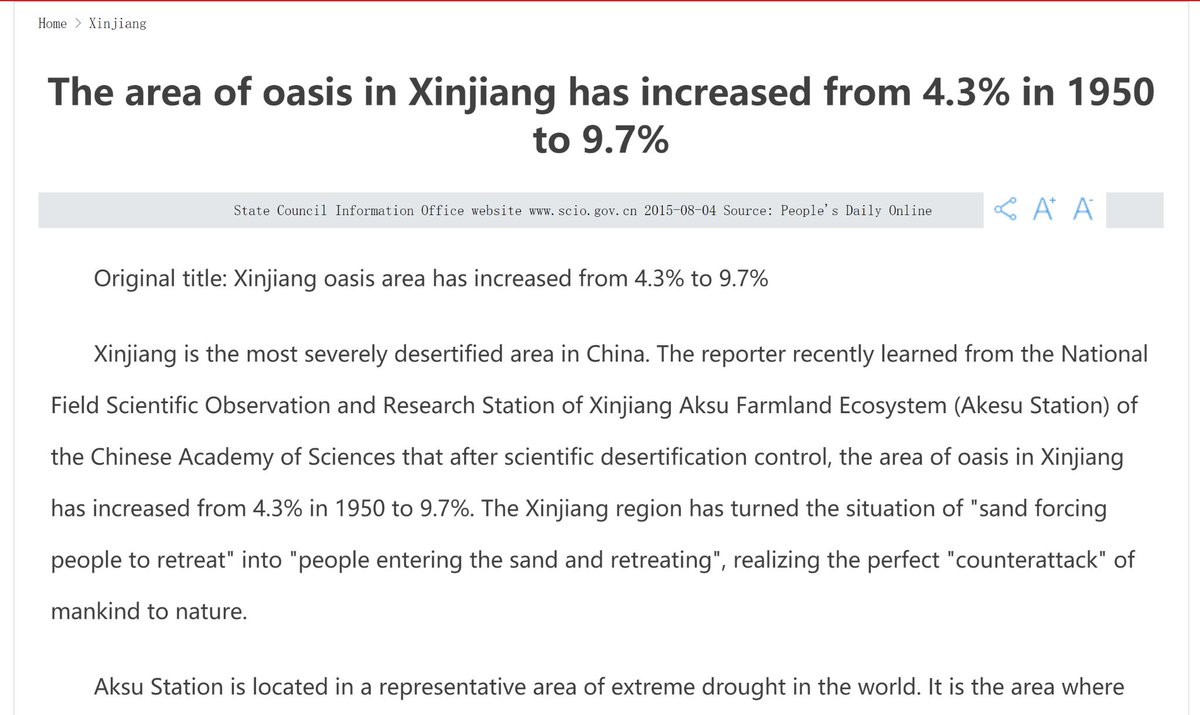
Xinjiang is China's most deserted area, and PRC planted more than half of the trees currently growing in Xinjiang.
But China planting trees bad bc … "the respect for trees" is lost, and trees are not "sacred" anymore?
scio.gov.cn/zhzc/8/2/Docum…
But China planting trees bad bc … "the respect for trees" is lost, and trees are not "sacred" anymore?
scio.gov.cn/zhzc/8/2/Docum…



Byler cites "occupy" as a quote from Stalin.
That’s not what Stalin said. Bad faith translation.
That’s not what Stalin said. Bad faith translation.
https://twitter.com/TimppaKarjalai1/status/1351635484217401346

Railroads and highways in Xinjiang are bad bc … they are "resource extraction infrastructure" and "capitalist infrastructure" that make local farmers ... sell more crops outside?


So I guess Xinjiang local ppl don’t need roads to travel?
And farmers spend months working in the fields every year just so that they can hoard their crops at home?
And farmers spend months working in the fields every year just so that they can hoard their crops at home?
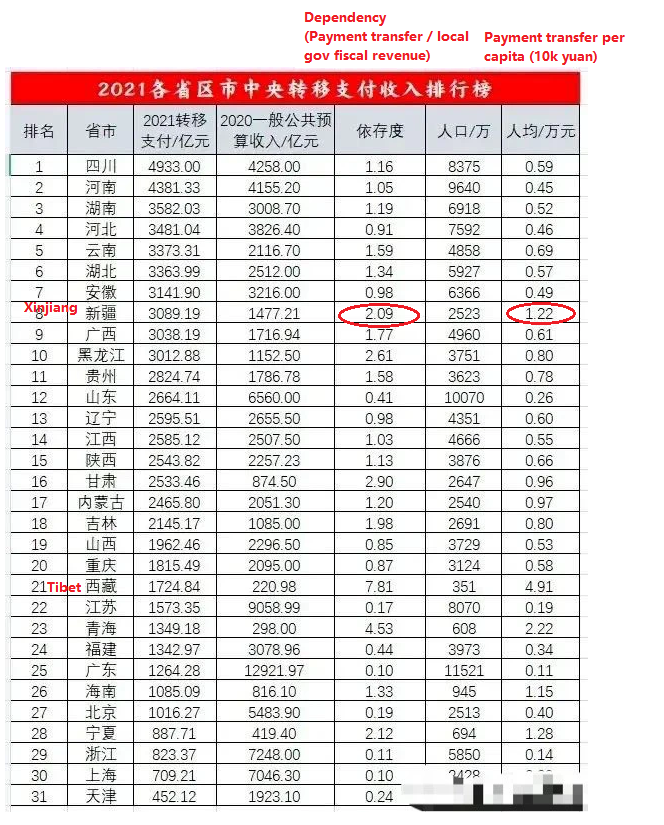
Yes, Byler is right. Xinjiang's local gov expenditure heavily depends on "transfer payment" (支付转移) from central gov.
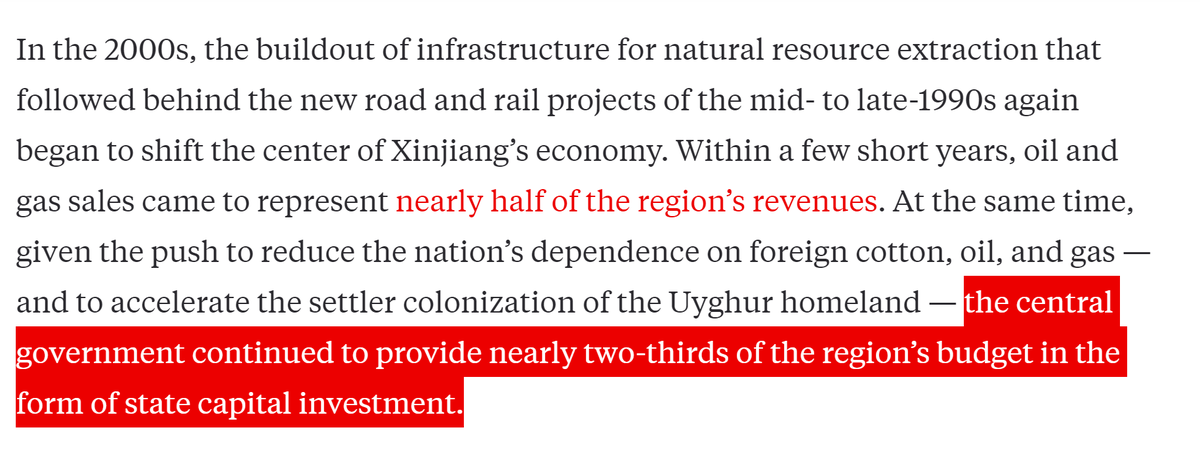
This is China’s long-term fiscal policy of alleviating regional inequality by using tax money collected from more developed provinces to invest and develop poorer regions.
This is proof of the central gov exploiting resources from Xinjiang? by ... pouring money into it?
This is proof of the central gov exploiting resources from Xinjiang? by ... pouring money into it?
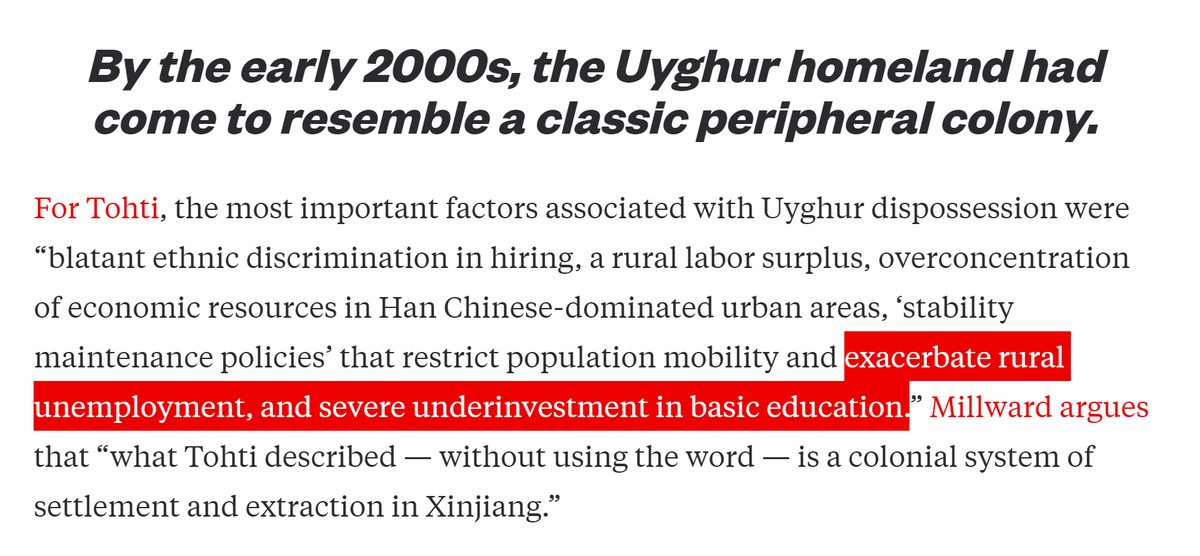
And Byler is here worrying about Uyghur's "exacerbate rural unemployment" and "severe underinvestment in basic education".
But Uyghur workers are "forced labor", and schools are for "replacing Uyghur culture".
But Uyghur workers are "forced labor", and schools are for "replacing Uyghur culture".


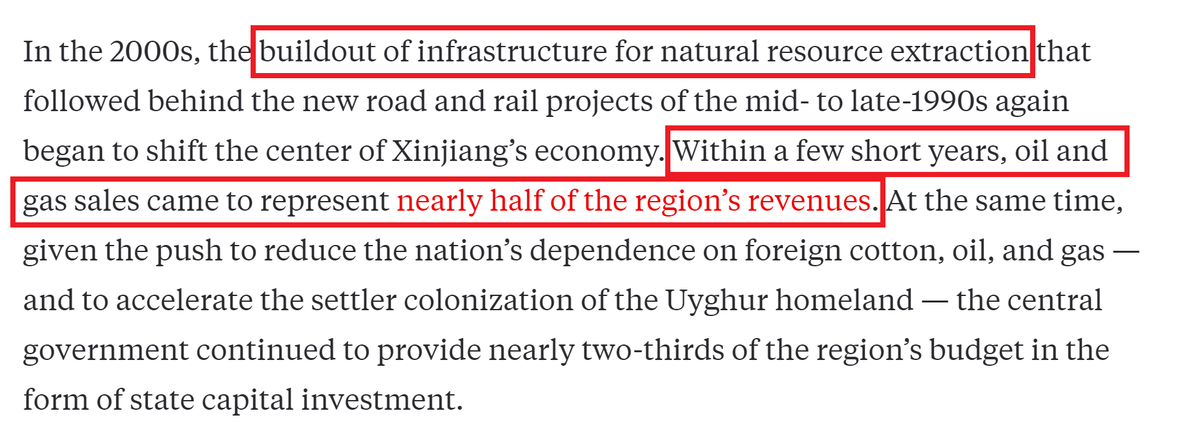
When Xinjiang sells "oil and gas", it’s "resource extraction".
When Xinjiang grows and sells cotton, it’s "capitalist expansion".
When kids go to school, it's "cultural genocide".
When manufacturing investment comes in and ppl work in factories, it's "forced labor"
When Xinjiang grows and sells cotton, it’s "capitalist expansion".
When kids go to school, it's "cultural genocide".
When manufacturing investment comes in and ppl work in factories, it's "forced labor"
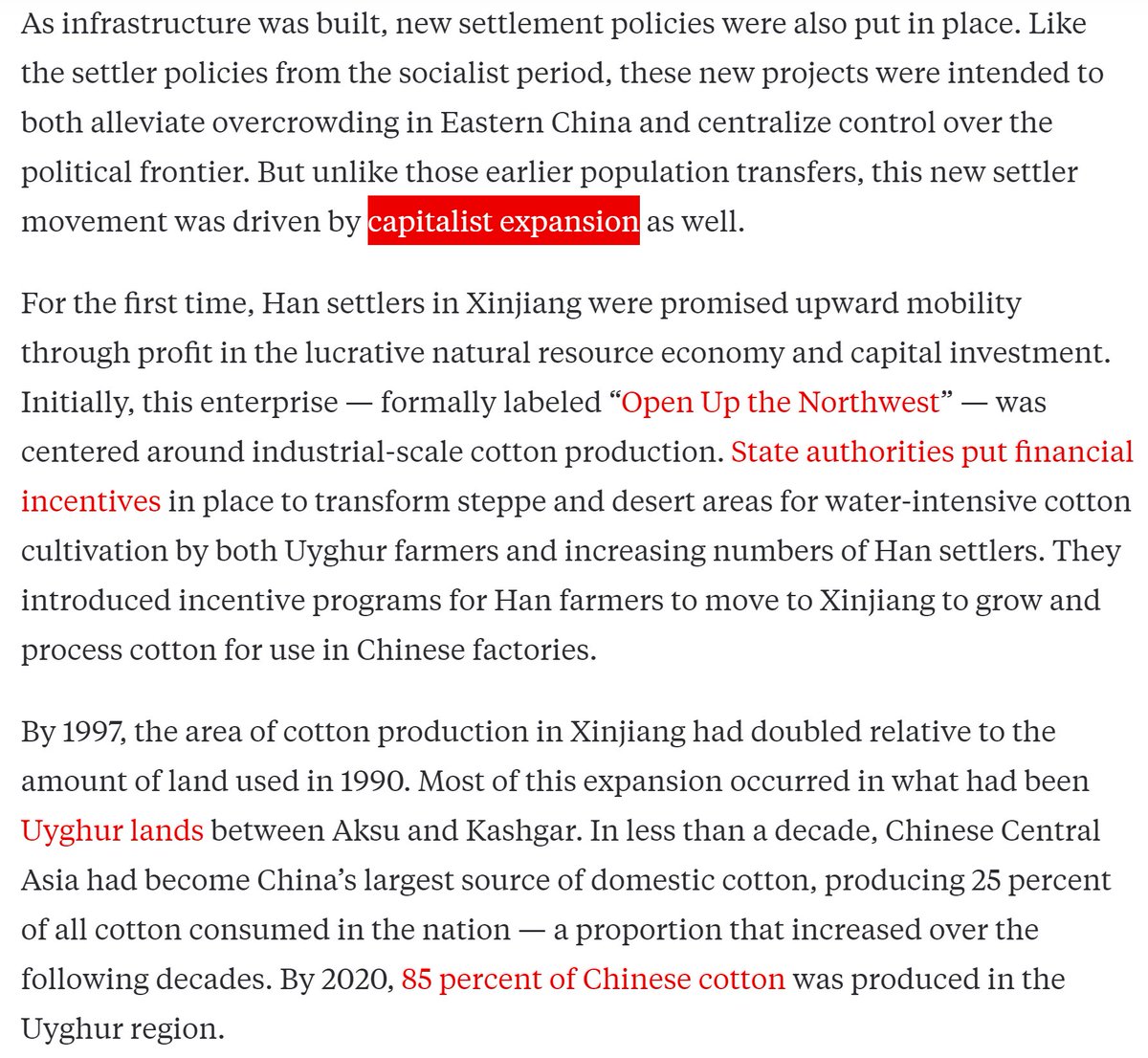
Xinjiang can't plant trees, can't build railroads, highways, or any other infrastructures.
Yet Byler is here worried about "Uyghur rural income [growing] at declining rates".
Yet Byler is here worried about "Uyghur rural income [growing] at declining rates".

Oh, don't forget that Xinjiang ppl can't receive money from the central gov either.
I guess ppl can make money by staying at home doing nothing?
I guess ppl can make money by staying at home doing nothing?
Let’s forget that China is "communist" all of a sudden. When it comes to policies in Xinjiang, it’s all about "capitalist exploitation":
"Han settlers" "profited" from *short-term* seasonal work?
But when it comes to Uyghur migrant workers, they are "forced to look for work".
"Han settlers" "profited" from *short-term* seasonal work?
But when it comes to Uyghur migrant workers, they are "forced to look for work".


And seasonal workers are the main beneficiaries of capitalist exploitation? Not the owners of the farms (in which case would be the Uyghurs)?
That’s a very ideal capitalist world we are living in.
That’s a very ideal capitalist world we are living in.
Byler tries to paint the narrative of "China local authorities exploit Uyghur farmers by forcing them to sell cotton to the state at lower than market price".
Ofc he doesn't provide any proof, bc it's the opposite of reality.
Ofc he doesn't provide any proof, bc it's the opposite of reality.
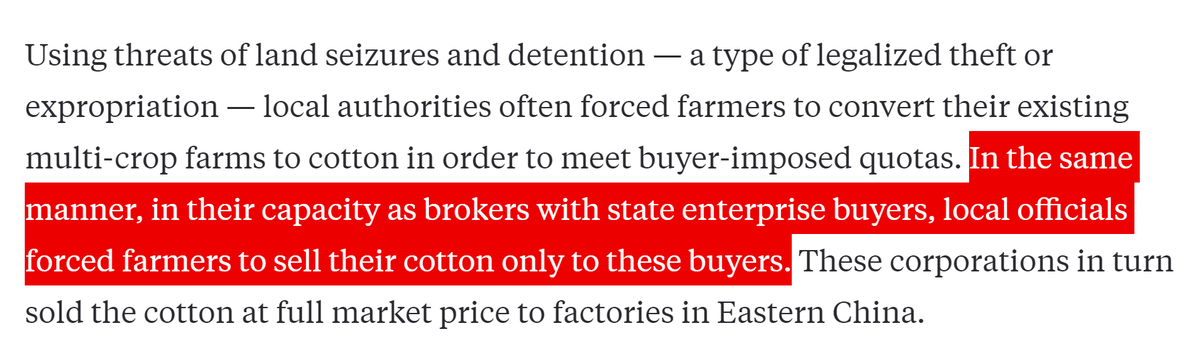
In order to protect farmer’s income, encourage domestic production, stabilize cotton prices and contain speculation, China used to use a "purchase and storage policy" (收储政策) that purchase cotton from farmers at prices significantly higher than international market.


In 2014, it was replaced by the "target price" policy: Xinjiang gov gives subsidies to farmers when the market price is lower than a target price.
This price is re-adjusted every three years.
zfxxgk.ndrc.gov.cn/web/iteminfo.j…
This price is re-adjusted every three years.
zfxxgk.ndrc.gov.cn/web/iteminfo.j…

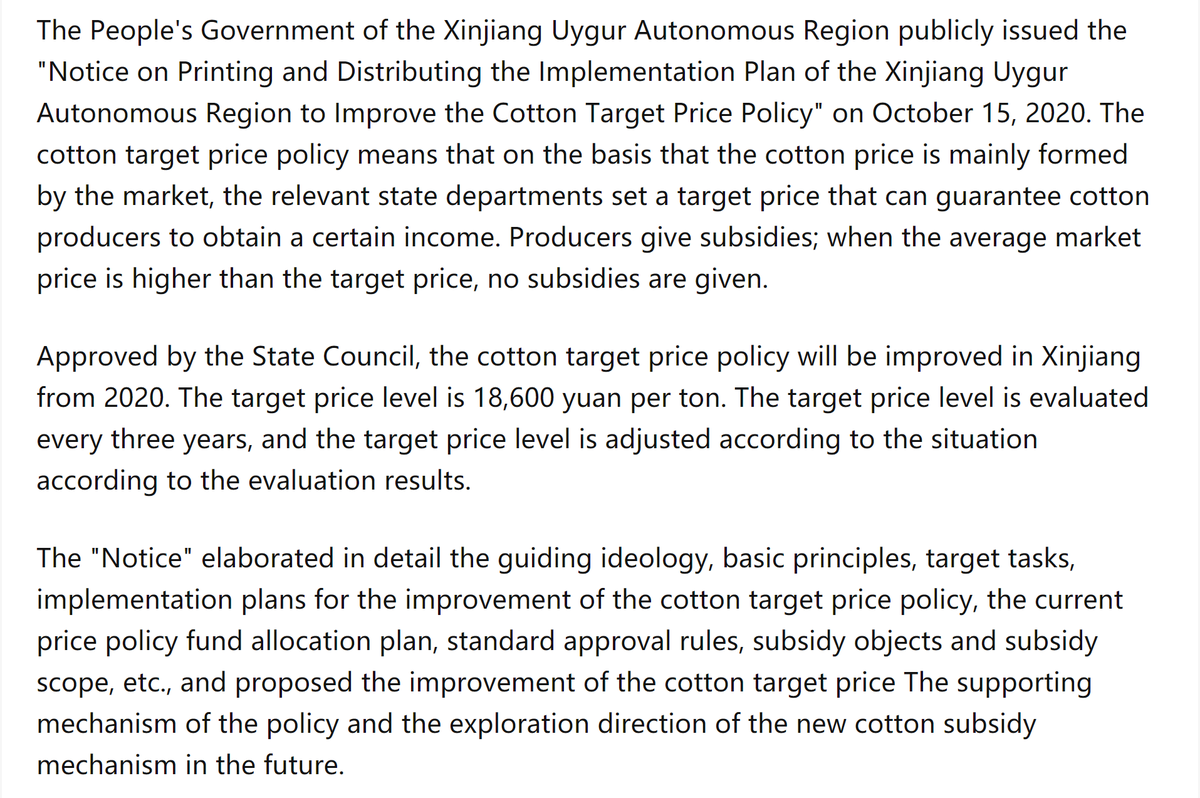
In 2021, the target price was maintained at 18,600 yuan/ton even though the market price has dropped to 11,500 yuan/ton.
new.qq.com/omn/20200401/2…
new.qq.com/omn/20200401/2…


As a result, Xinjiang cotton farmers are getting much higher subsidies than cotton farmers in other regions of China.
reuters.com/article/us-chi…
reuters.com/article/us-chi…

Due to the huge amount of subsidies given, foreign capitals constantly accuse China of price manipulation.
Yet for Byler, this is the Chinese gov exploiting Xinjiang cotton farmers.
reuters.com/article/us-chi…
Yet for Byler, this is the Chinese gov exploiting Xinjiang cotton farmers.
reuters.com/article/us-chi…
• • •
Missing some Tweet in this thread? You can try to
force a refresh