Ultrajaya Milk (ULTJ IJ) elevator pitch (1/x) 
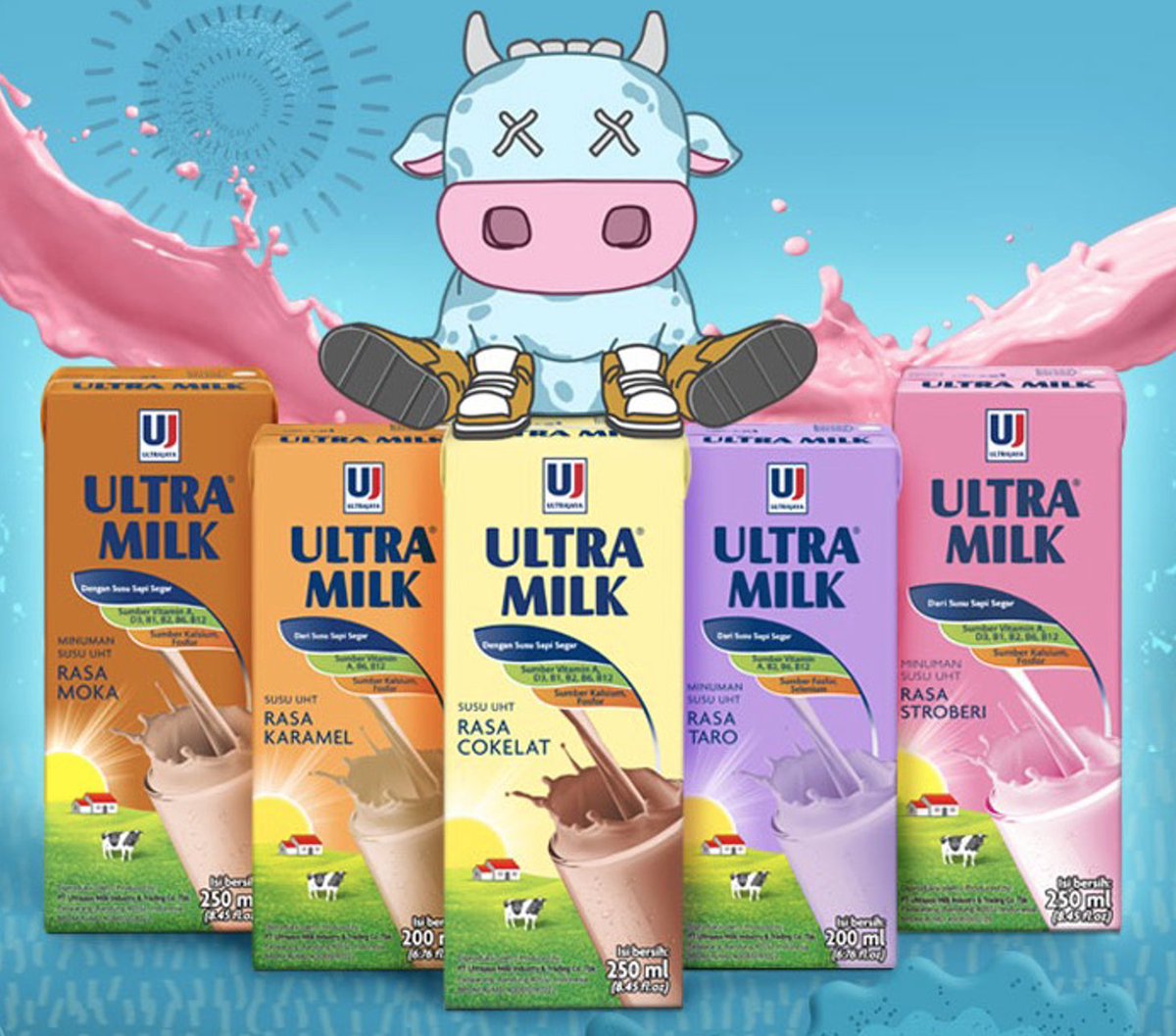
2/ Product portfolio:
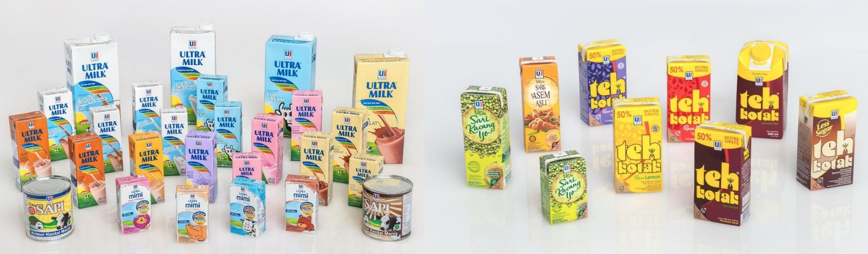
• Liquid milk (72% of sales): Ultra milk, Ultra Mimi (for children), condensed milk
• Tea and health drinks (19% of sales): Jasmine tea, mung bean and tamarind drinks.
• Other (7.4% of sales): Production for 3rd parties such as Unilever
• Liquid milk (72% of sales): Ultra milk, Ultra Mimi (for children), condensed milk
• Tea and health drinks (19% of sales): Jasmine tea, mung bean and tamarind drinks.
• Other (7.4% of sales): Production for 3rd parties such as Unilever
3/ Competitive position:
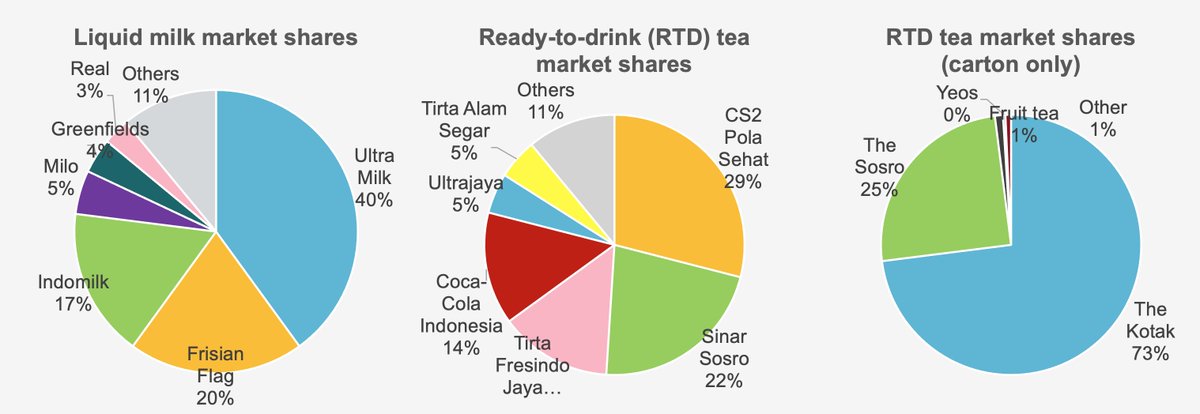
• Indonesia's largest dairy brand ("Ultra Milk") with 40% market share in liquid milk
• Strength in UHT milk, which has shelf life of 6-9 months at room temperatures (convenient)
• Also has a presence in RTD tea with Teh Kotak
• Indonesia's largest dairy brand ("Ultra Milk") with 40% market share in liquid milk
• Strength in UHT milk, which has shelf life of 6-9 months at room temperatures (convenient)
• Also has a presence in RTD tea with Teh Kotak
4/ Market backdrop:
• Excellent demographics with population growth of 1%
• Indonesia's liquid milk consumption only 15 litres vs 56 litres in Malaysia
• Secular growth of ~10% per year, fastest of any FMCG segment in Indonesia
• Excellent demographics with population growth of 1%
• Indonesia's liquid milk consumption only 15 litres vs 56 litres in Malaysia
• Secular growth of ~10% per year, fastest of any FMCG segment in Indonesia

5/ Management:
• Family-run business, with Sabana Prawirawidjaja at the helm
• Under his leadership, revenues have 10x in 15 years
• Conservative communication and balance sheet
• Sabana has been buying shares in the open market recently
• 10% buyback in 2020
• Family-run business, with Sabana Prawirawidjaja at the helm
• Under his leadership, revenues have 10x in 15 years
• Conservative communication and balance sheet
• Sabana has been buying shares in the open market recently
• 10% buyback in 2020

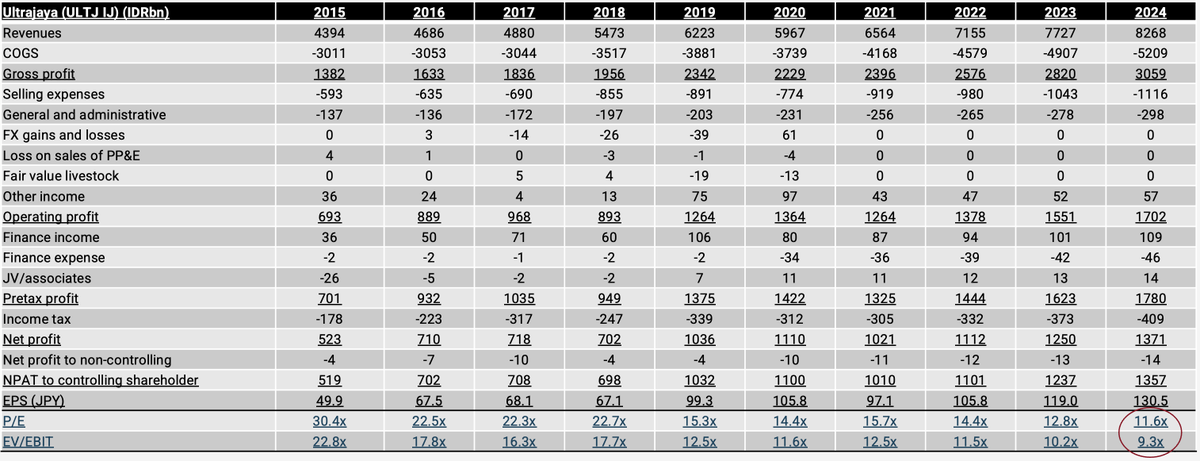
6/ Financials
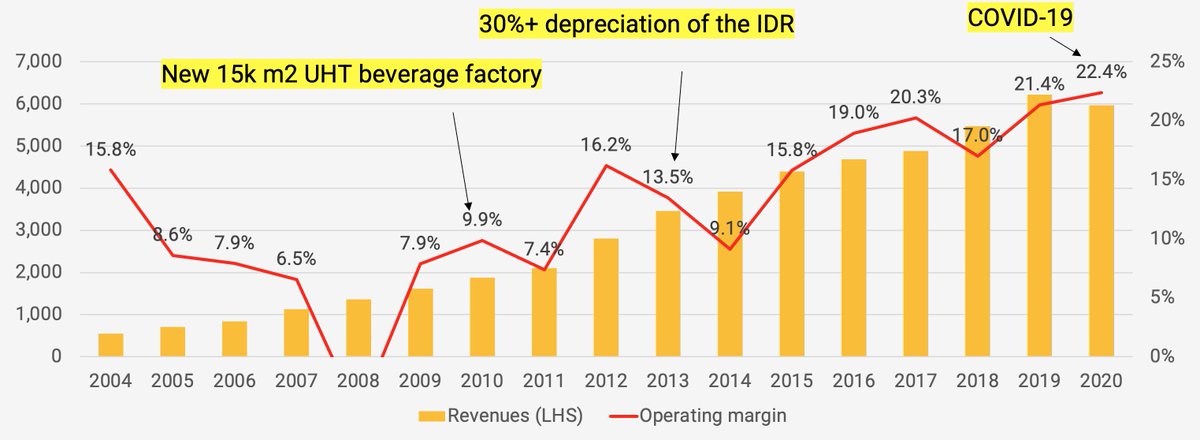
• The long-term track record is excellent
• Management is guiding for 10% growth in 2021
• Also expressing optimism about the market
• Near-term margin pressure due to capacity expansion
• Competition is heating up but Ultrajaya dominates the UHT milk category
• The long-term track record is excellent
• Management is guiding for 10% growth in 2021
• Also expressing optimism about the market
• Near-term margin pressure due to capacity expansion
• Competition is heating up but Ultrajaya dominates the UHT milk category
7/ Share price
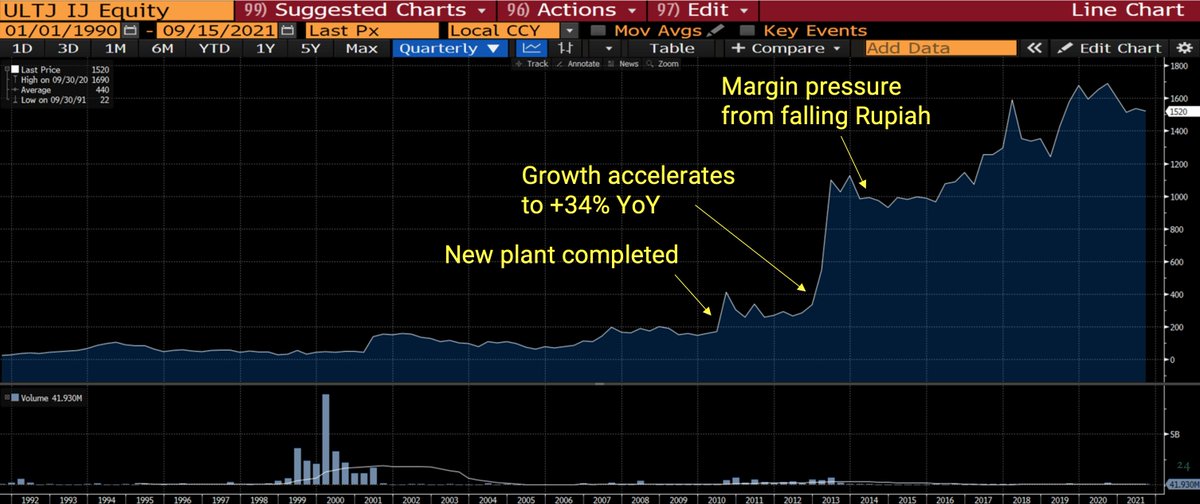
• Historically, growth and share price performance has come in spurts after major capacity expansions
• Note that the Rupiah has been a weak currency with persistent inflation, causing share prices in nominal terms to look impressive
• Historically, growth and share price performance has come in spurts after major capacity expansions
• Note that the Rupiah has been a weak currency with persistent inflation, causing share prices in nominal terms to look impressive
8/ Multiples
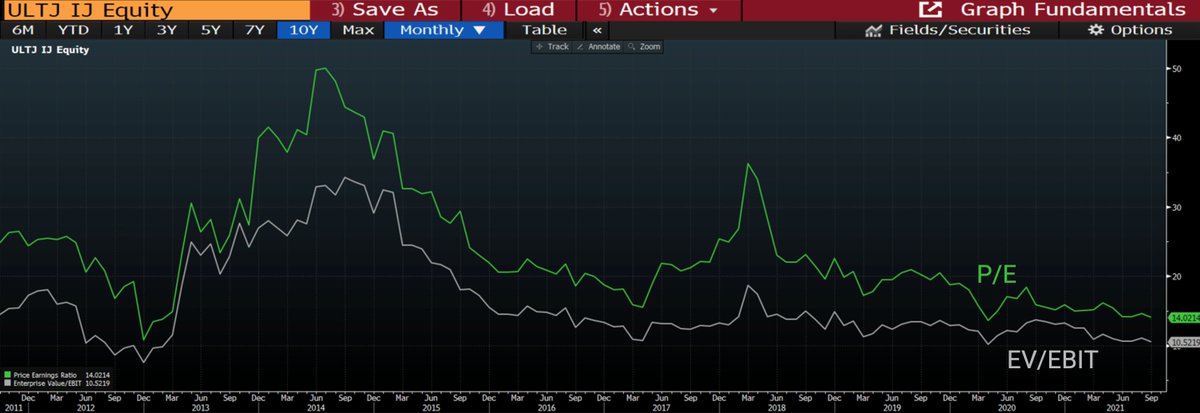
• Current multiples are low compared to historicals
• Peers trade closer to 17-18x
• But developed market peers don't enjoy the same underlying secular market growth. The move towards non-dairy alternatives is also much more prevalent in developed markets.
• Current multiples are low compared to historicals
• Peers trade closer to 17-18x
• But developed market peers don't enjoy the same underlying secular market growth. The move towards non-dairy alternatives is also much more prevalent in developed markets.
8/ Valuation
Assuming:
• 10% initial top-line growth in line with guidance
• Some margin pressure due to the planned construction of new production and distribution facilities
• A 20x P/E on 2024e earnings
Yields an upside of +72%.
Assuming:
• 10% initial top-line growth in line with guidance
• Some margin pressure due to the planned construction of new production and distribution facilities
• A 20x P/E on 2024e earnings
Yields an upside of +72%.
9/ Risks
• Competition from the likes of Greenfields is heating up
• Raw milk price + Rupiah FX rates are volatile
• No-name auditor
• Minority shareholding in certain distributors
• Weak liquidity (~US$50k per day)
• Competition from the likes of Greenfields is heating up
• Raw milk price + Rupiah FX rates are volatile
• No-name auditor
• Minority shareholding in certain distributors
• Weak liquidity (~US$50k per day)
• • •
Missing some Tweet in this thread? You can try to
force a refresh