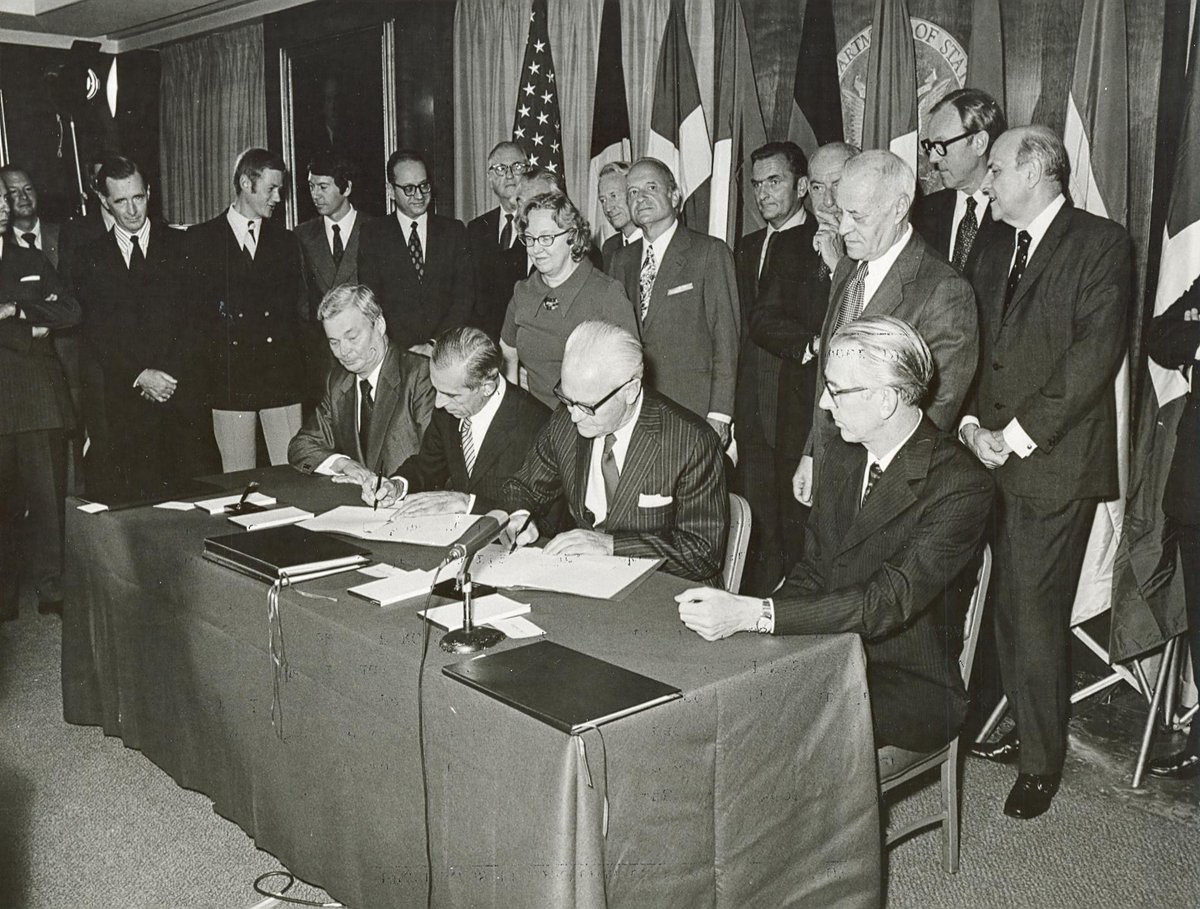
.@ESA initiated its first astronaut selection process on 28 March 1977. The effort was the result of an agreement made with @NASA 4 years earlier that would see European astronauts join space shuttle missions in exchange for ESA supplying the Spacelab reusable science lab.
The astronauts would assume what was then a brand new role board a spacecraft, payload specialist. They would have some generic astronaut training but mostly they would be familiarising themselves with the experiments that would be flown aboard their mission.
ESA's selection criteria required applicants to be no older than 47 years, 150-190cm in height, in good health, emotionally stable, and of high scientific/engineering ability. They stressed that they were looking for normally-fit scientists rather than super-fit astronauts.
More than 2,000 applicants applied to be a part of ESA's first astronaut class. For context, the latest call for new astronauts in 2021 attracted more than 23,000. Once applications were received, each Member State went through its own selection procedure selecting no more than 5
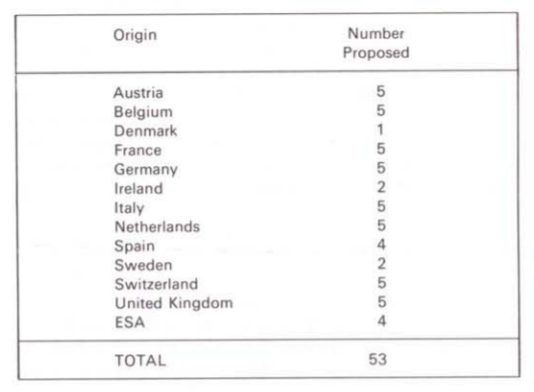
Of the 2,000+ applicants, 53 were nominated by Member States and ESA itself. The applicants were then put through a series of technical, physical, and psychological tests reducing their numbers to 26, 12, 11, and finally to just four candidates.
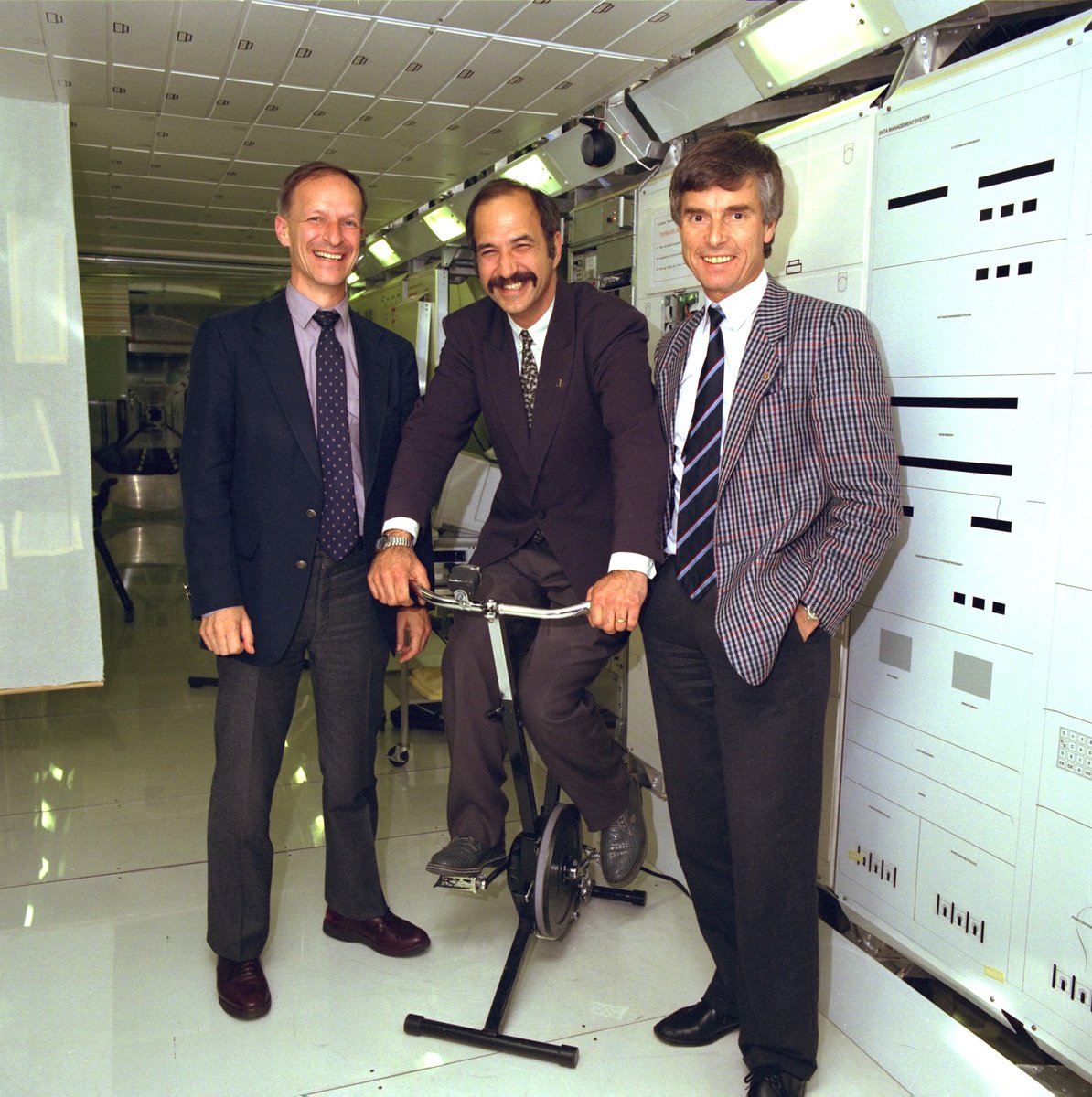
.@Astroclaude from Switzerland, @Ockels from the Netherlands, Franco Malerba from Italy, and Ulf Merbold from Germany were introduced as the four finalists at a press conference in Paris on 22 December 1977. Can we take a second to appreciate Ockels' fantastic mustache?
The four finalists were then put through another battery of testing at NASA's Johnson Space Center. All four candidates were accepted by NASA as suitable for flight aboard the Space Shuttle.
In May 1978, Ulf Merbold, Wubbo Ockels, and Claude Nicollier became the first @ESA astronaut class. According to @ESA_History, the decision had been so tough that Malerba was offered a temporary technical position until more flight opportunities came up (more on that soon).
A huge thank you to @astro_carl and @ESA_History! I can't tell you how amazing they were. I now have stacks of amazing reading material. Next thread will cover the first ESA astronaut in space. I'm going to try to do one of these weekly. Check back this time next week.
• • •
Missing some Tweet in this thread? You can try to
force a refresh

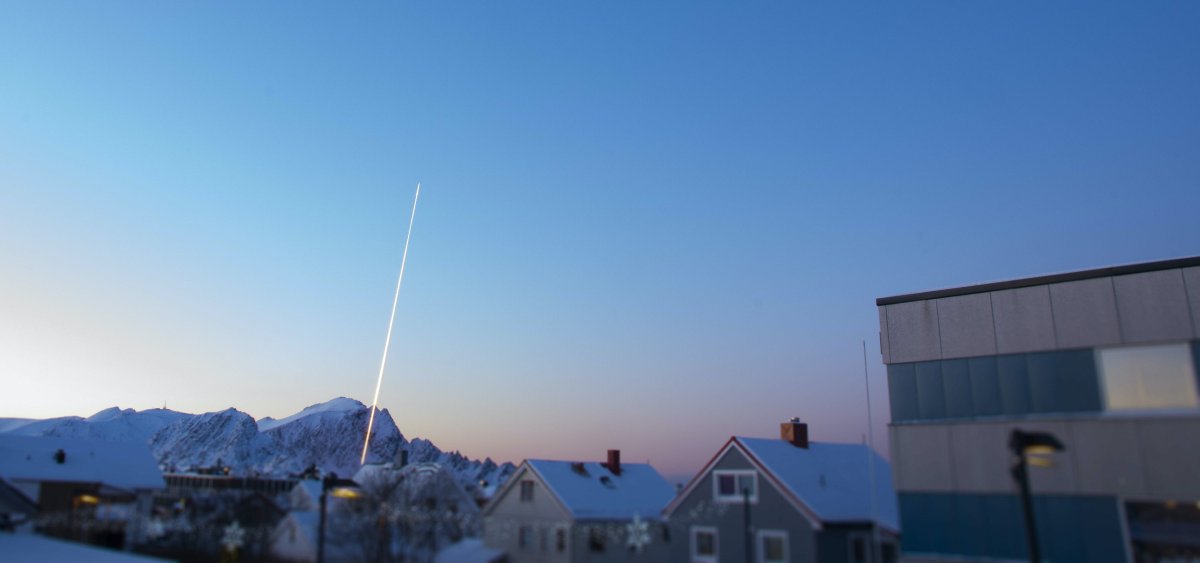
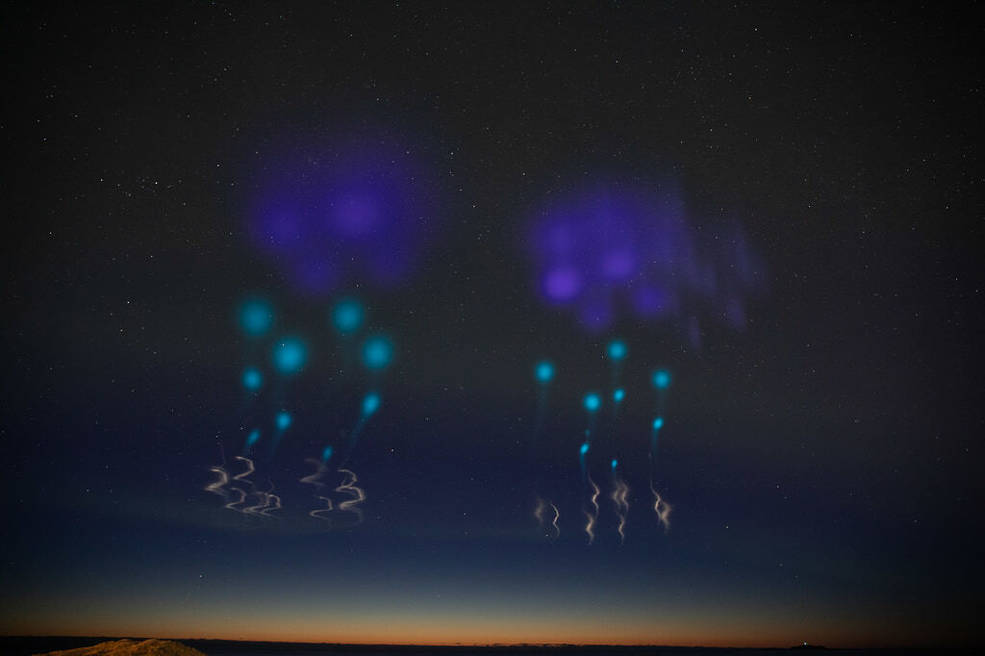
The CREX-2 sounding rocket mission was successfully launched from @AndoyaSpace in Norway on 1 December as part of the Grand Challenge Initiative, a collaborative international effort to understand specific, fundamental issues in space and earth science.
The NASA-built four-stage Oriole IV sounding rocket carried the payload to an apogee of 630kms. The missions sought to better understand a funnel-shaped gap in our planet’s magnetic field, called the polar cusp, that gives solar wind a direct line of access to Earth's atmosphere.
The payload consisted of a set of 20 canisters of vapor tracers, each with its own small rocket motor. The canisters were deployed in four directions and preprogrammed to rupture at different altitudes. Scientists observed how the dispersed vapor reacted at different altitudes.
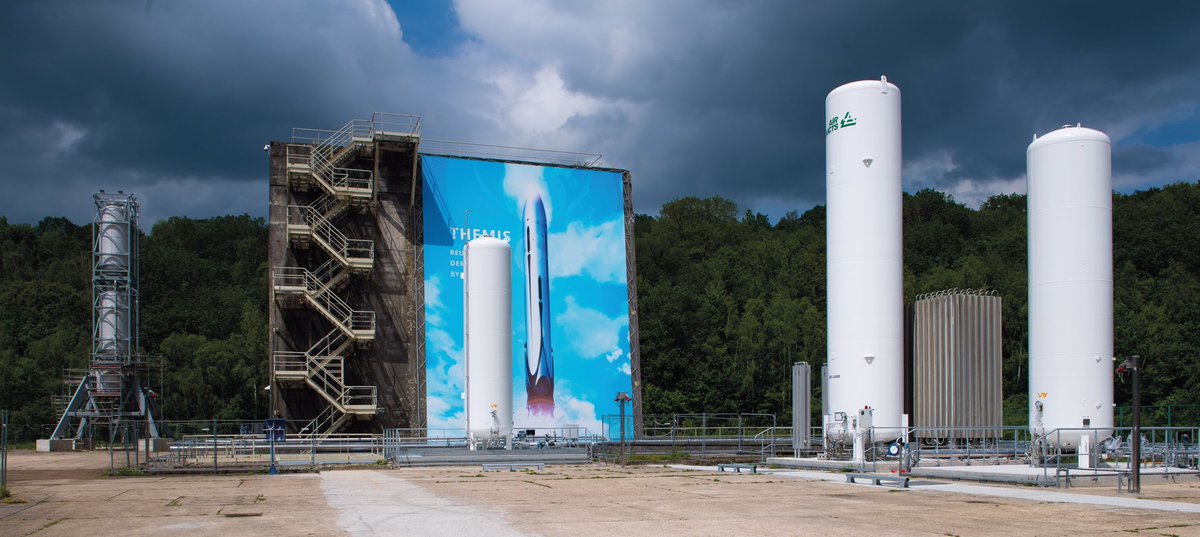
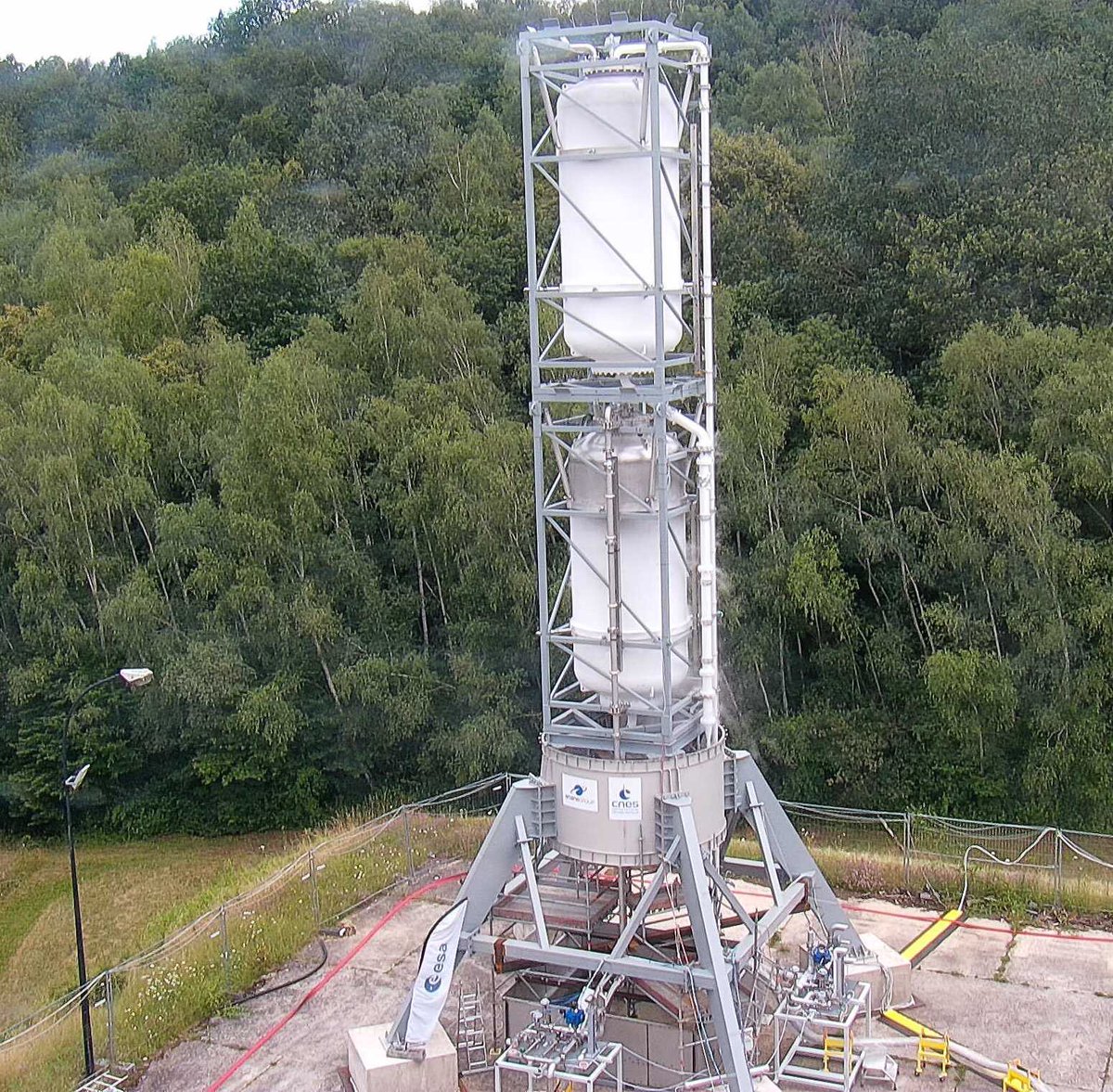
.@ArianeGroup and has completed a series of six tests on a pair of propellant tanks at the company's facility in Vernon, France. The tests are the first technological milestone in the development of the reusable Themis rocket booster demonstrator.
During these tests, the tanks were filled and then drained of cryogenic propellants. According to @esa, the tests were performed to "validate the fluidic and electrical processes and sequences for the correct operation" of the tanks.
The Themis program was developed by @ArianeWorks, a joint initiative from @ArianeGroup and the French space agency @CNES founded in Feburary to accelerate the development of future European launchers.
No, that's not Starship. It's Themis! I don't think I've seen that rendering before - it's great! For those of you not in the know, Themis is a technology demonstration programme initiated by @ESA to develop a reusable rocket first stage.
The initiative is part of the agency's Future Launchers Preparatory Programme (FLPP) which, according to ESA, is focused on "system studies and research activities to foster new technologies capable of delivering performance and reliability coupled with reduced operational costs"
The rocket stage demonstrator will be powered by the agency's Prometheus engines, another of @ESA's FLPP initiatives. It will be launched from the Guiana Space Centre's former Diamant launch facility, which is being refurbished for this purpose.
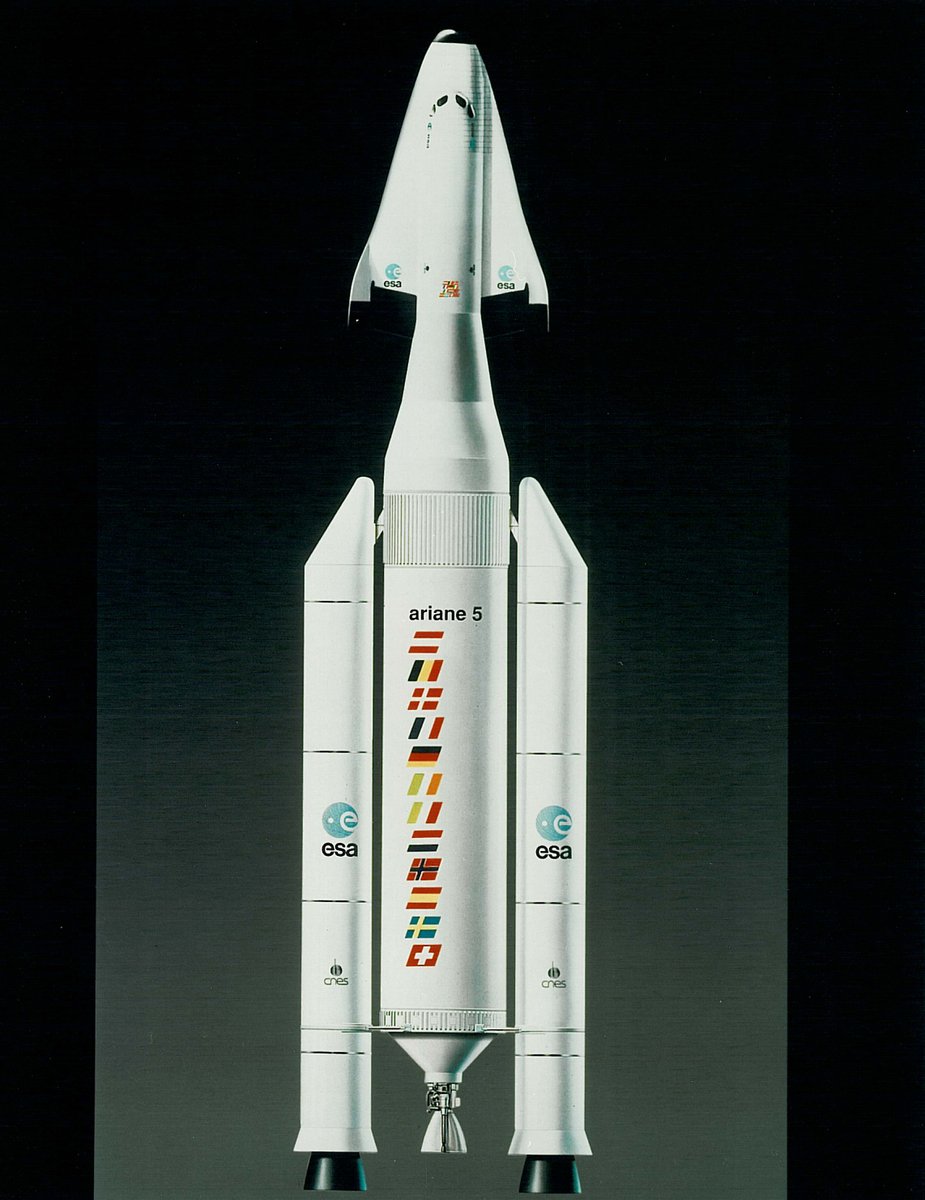
What the @Arianespace Ariane 5 would have looked like in its @esa Hermes configuration. I would have loved to have seen this thing fly. Credit: ESA
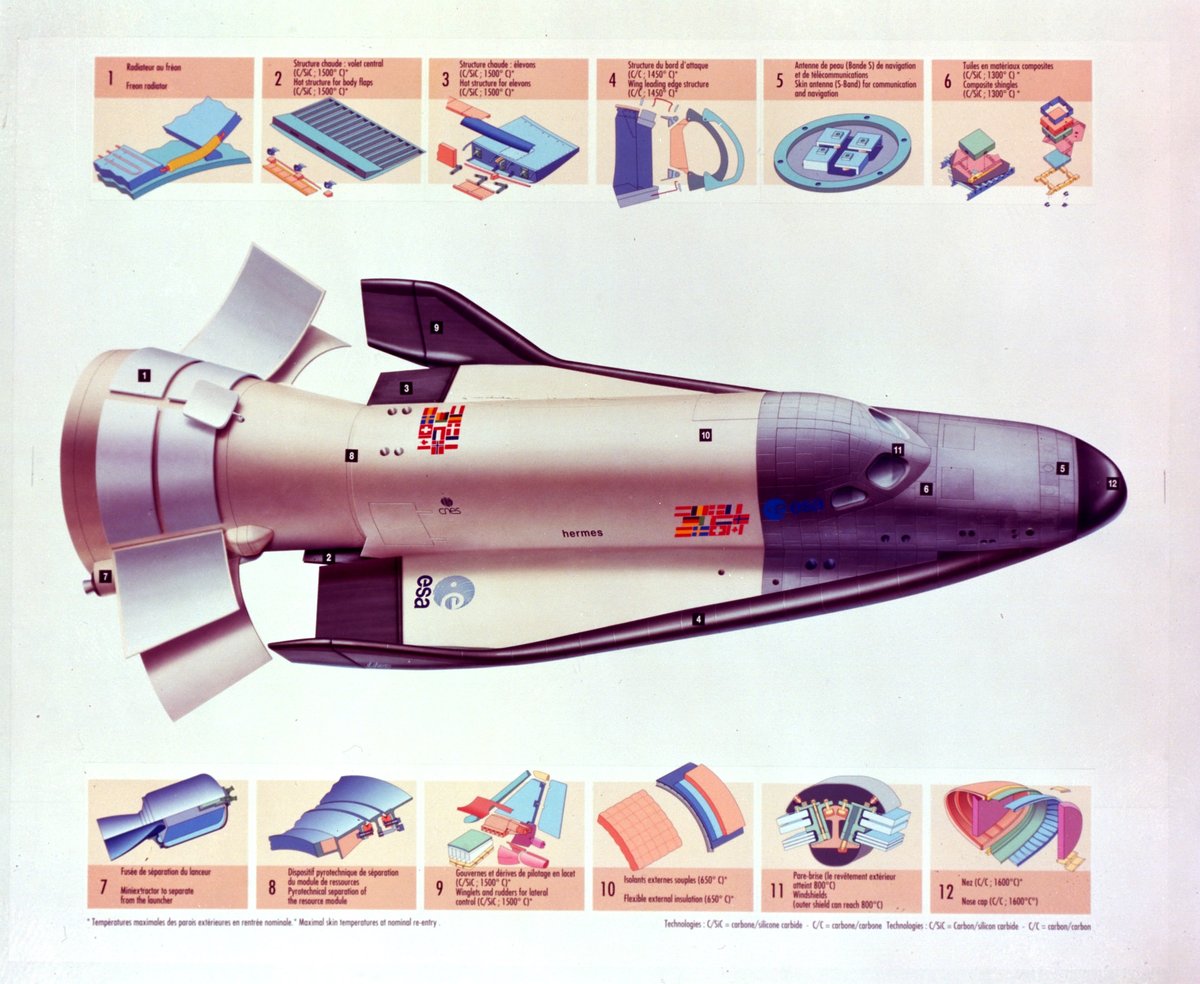
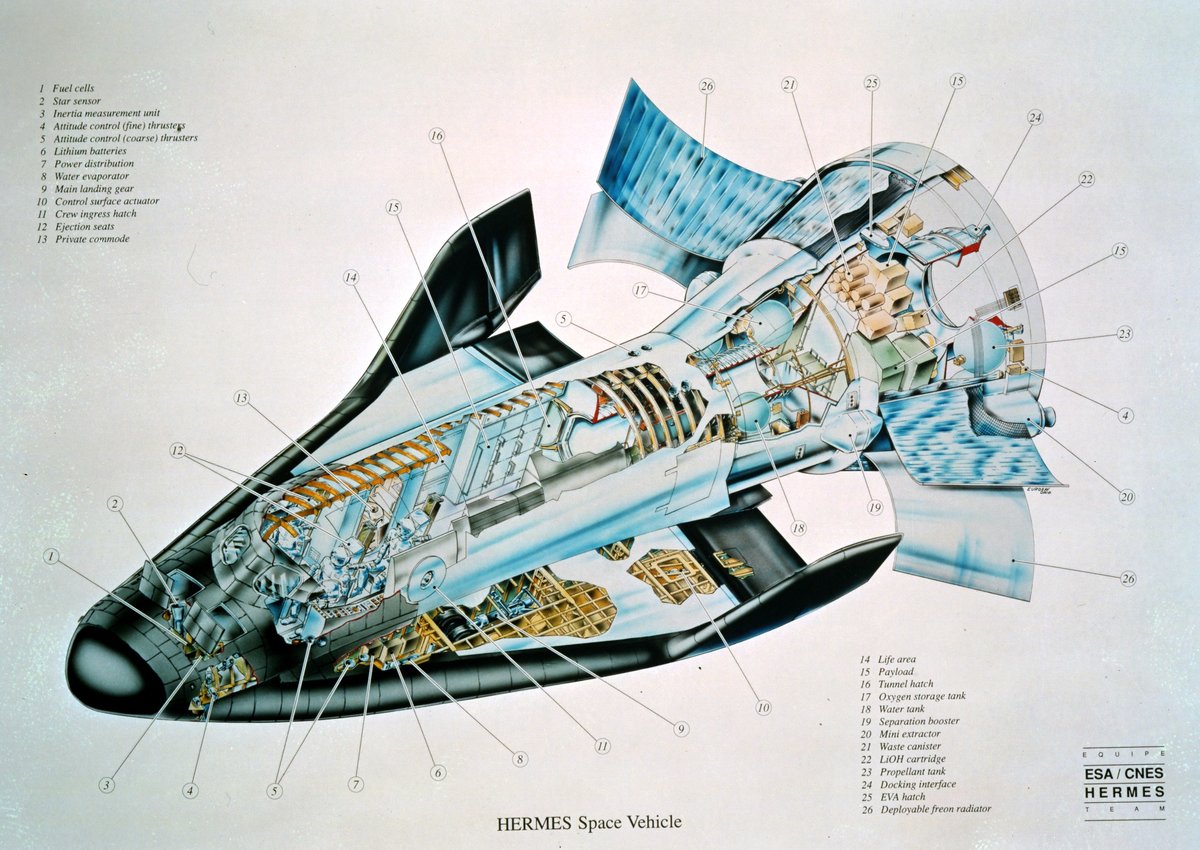
For context, Hermes was an ambitious crewed spaceflight program created by @CNES in 1985 and later adopted by ESA. The program was canceled in 1992 because of its projected cost and some geopolitical developments with Russia that enabled ESA to utilize Soyuz.
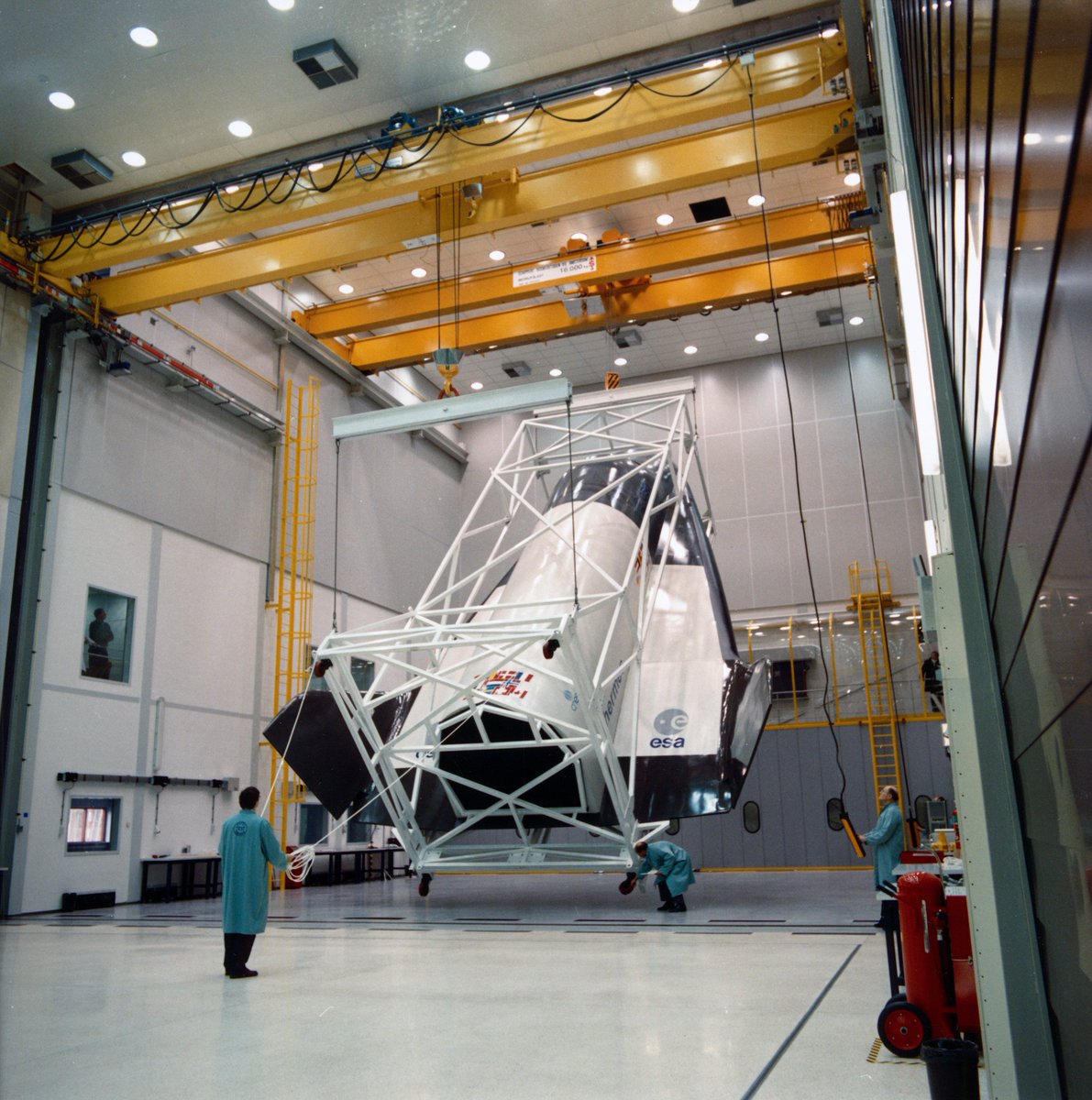
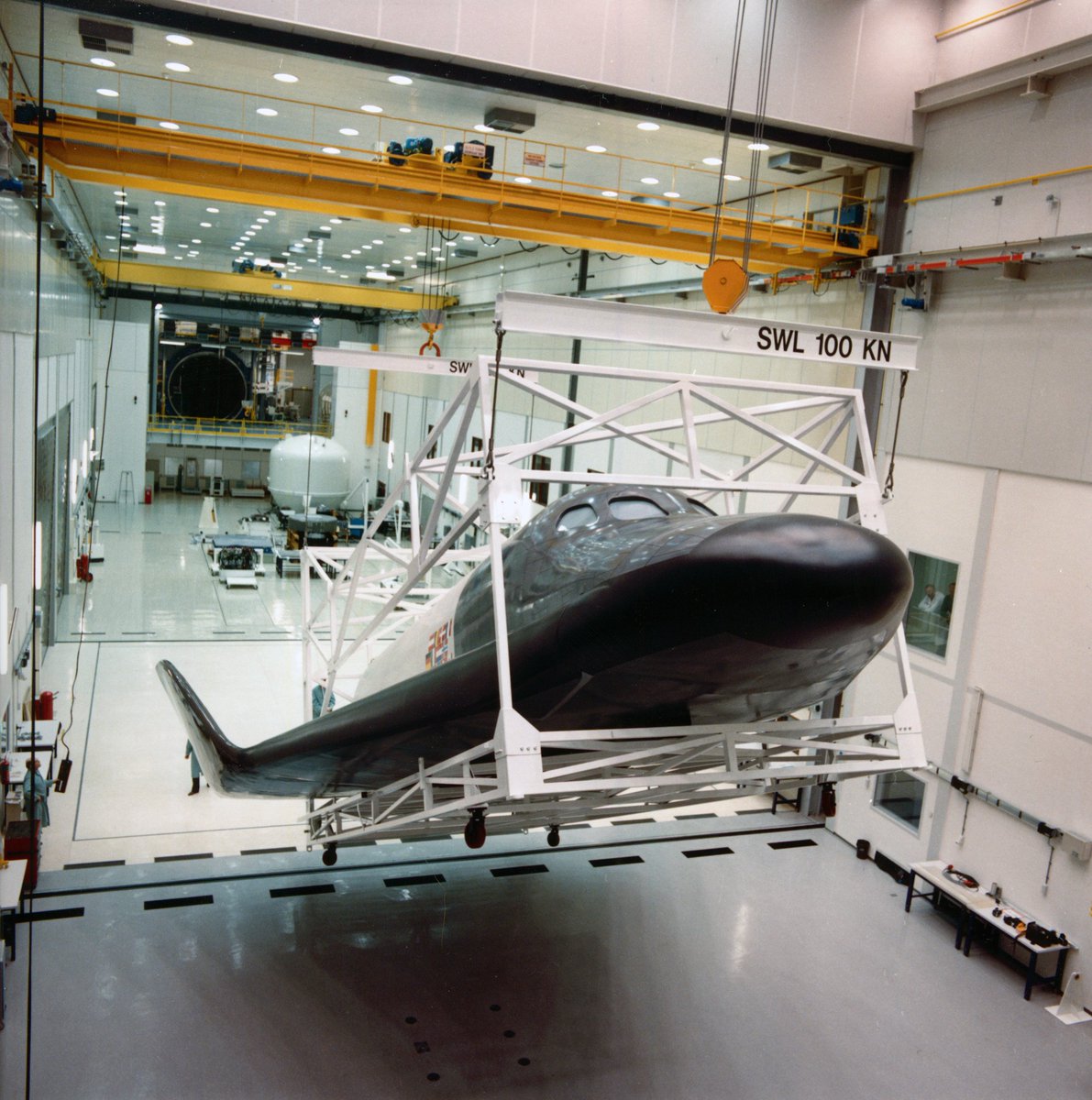
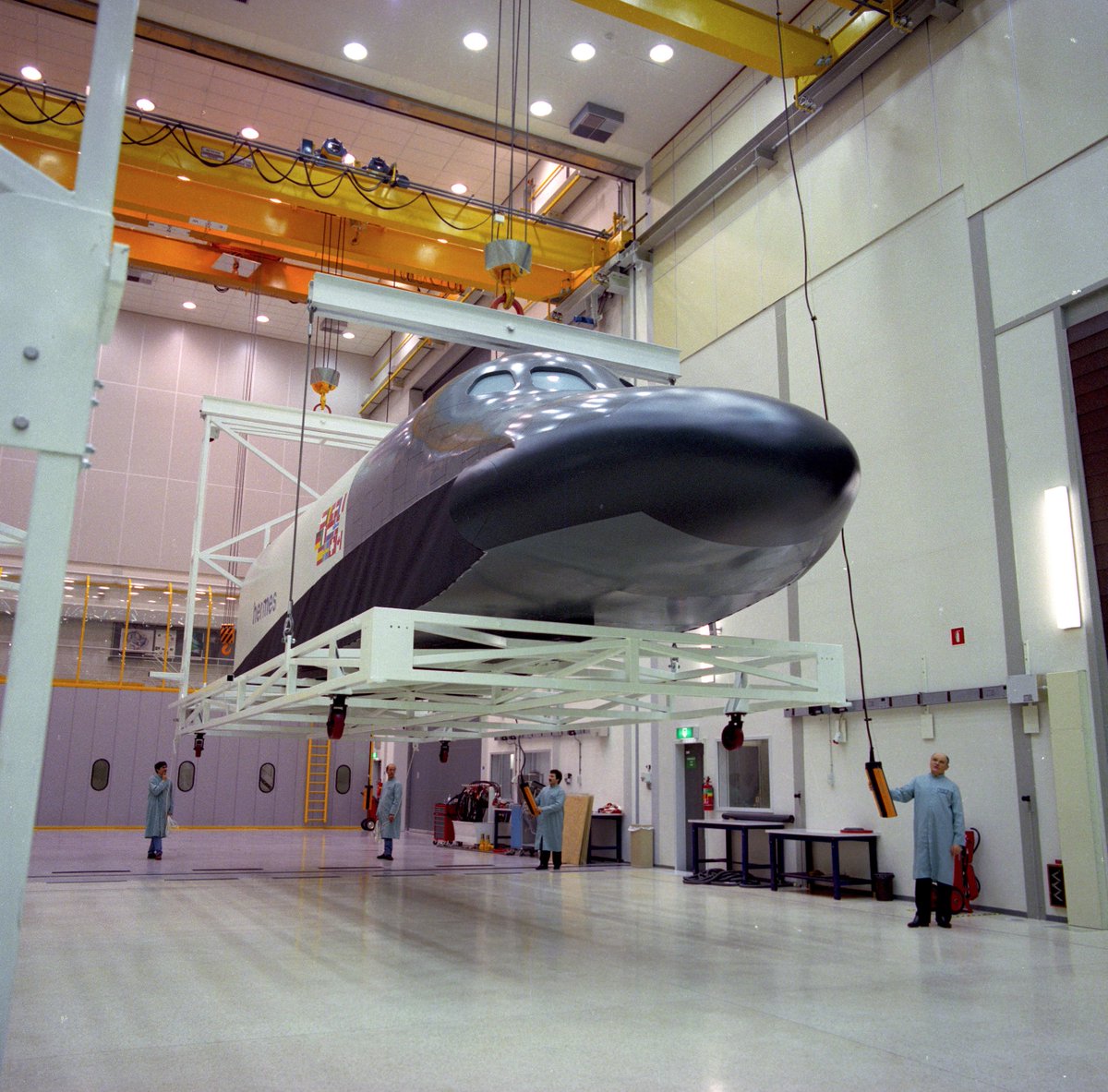
Although no Hermes spacecraft were ever built, a mockup was created for the Paris Air Show. According to @ESA_History, it was then used to demonstrate the European Space Research and Technology Centre's (ESTEC) capacity to accommodate large-scale spacecraft.