1/ Michael Burry made the argument that VIEs are fine because Mainland Chinese invest in them as well
I think there's more nuance to it than that
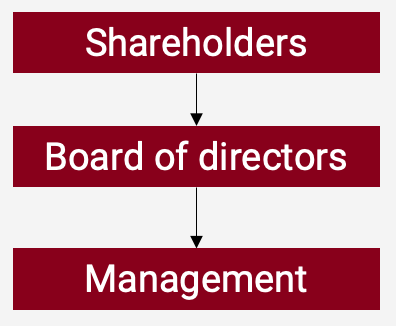
2/ In Anglo-Saxon countries, shareholders exercise their rights through a board of director, i.e. a single layer.
There is a legitimate chance of replacing underperforming, or straight-up corrupt management teams.
3/ In a VIE structure, you technically own a contract. You are not a shareholder at all.
You're a minority in a Cayman entity with limited voting rights. Who has contracts with an onshore entity that has a separate board. Controlled by a shadow board, i.e. a CCP committee.
1/ The market is convinced that AI will kill SaaS. That seems overly simplistic.
There's been carnage in Japan's SaaS sector, with babies clearly thrown out of the bathwater. That could signal opportunity.
2/ Citrini and others argue that AI agents will replace jobs, that coding will be commoditized and that traditional software will be rendered obsolete.
But in reality, software is more than just code. It's UX design, sales, support, maintenance and security.
3/ Even the disruptors aren't disrupting yet.
OpenAI still relies on Slack and Salesforce to run its business. If the creator of ChatGPT hasn't vibe-coded its way out of a subscription yet, it's unlikely that other enterprises will.
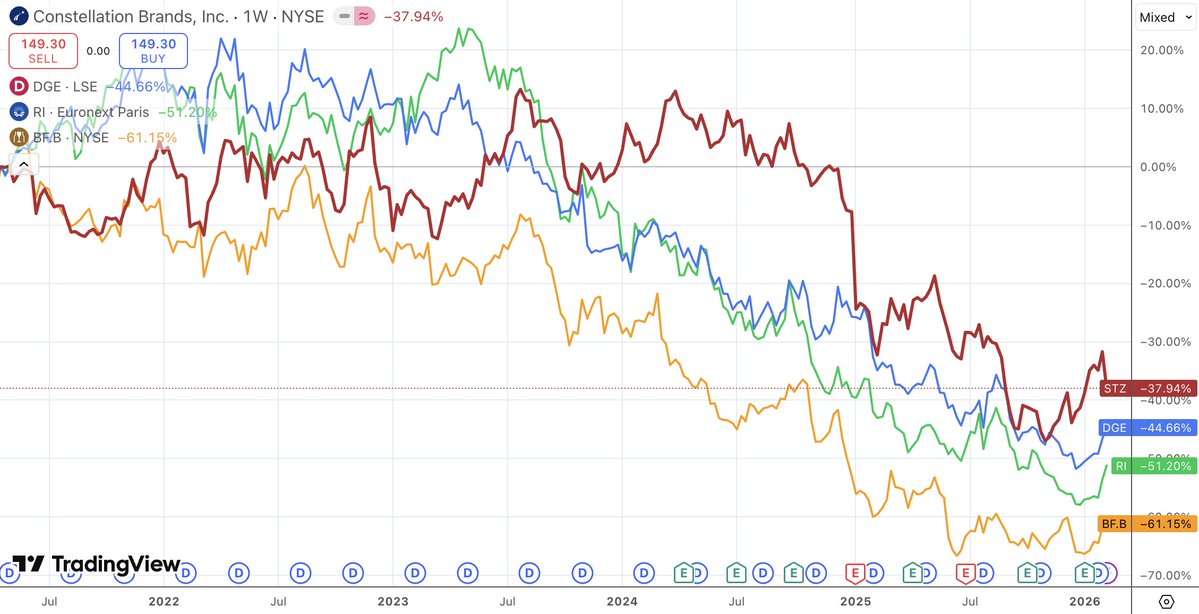
2/ High-profile names like Diageo, Pernod Ricard and Brown Forman are finally starting to show signs of life.
It could be due to hedge funds degrossing, but also signs of industry inventories peaking.
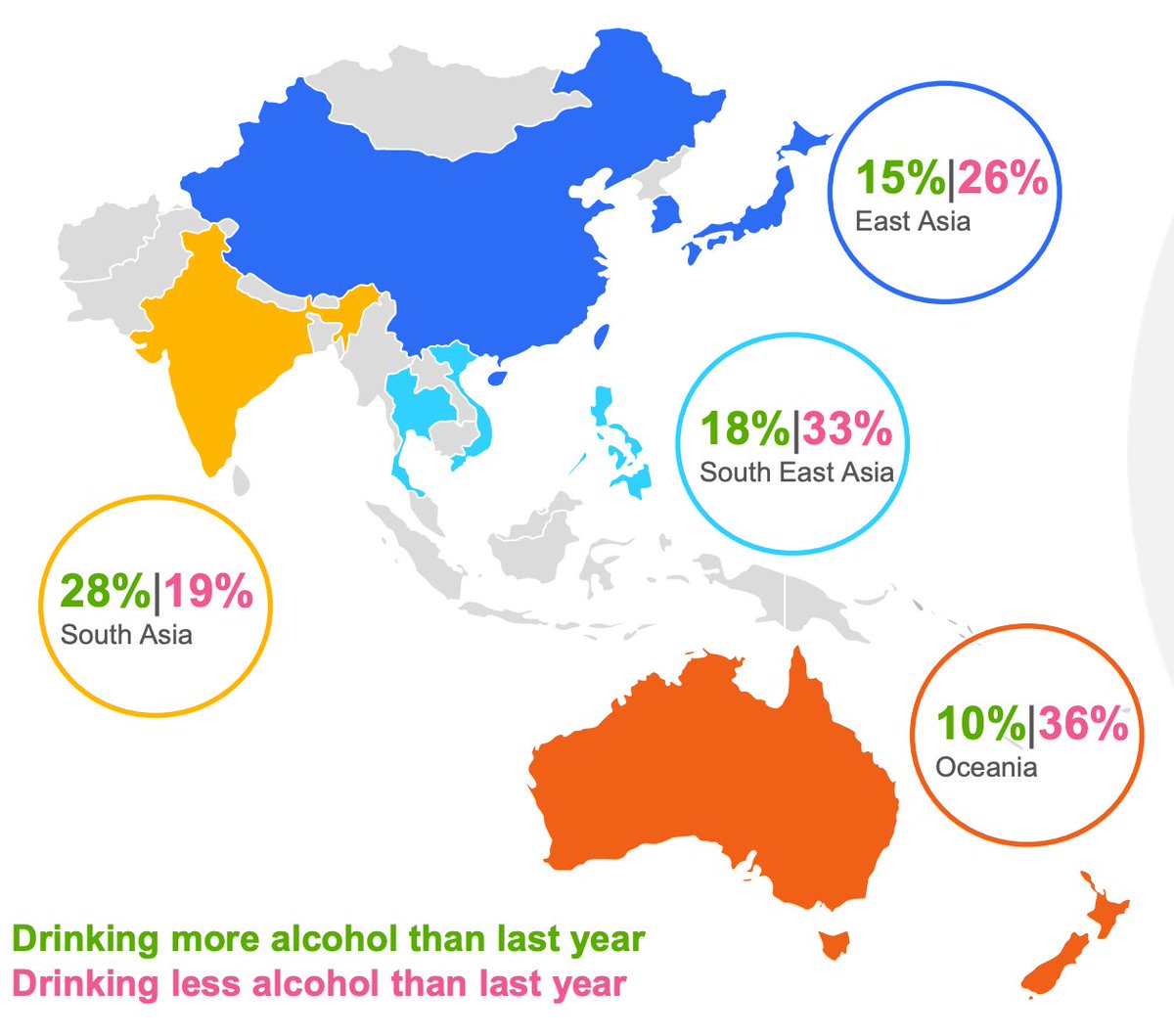
3/ The overall picture hasn't been great: in the Asia-Pacific, 30% of people report drinking less, while only 15% are drinking more. India being the only exception.
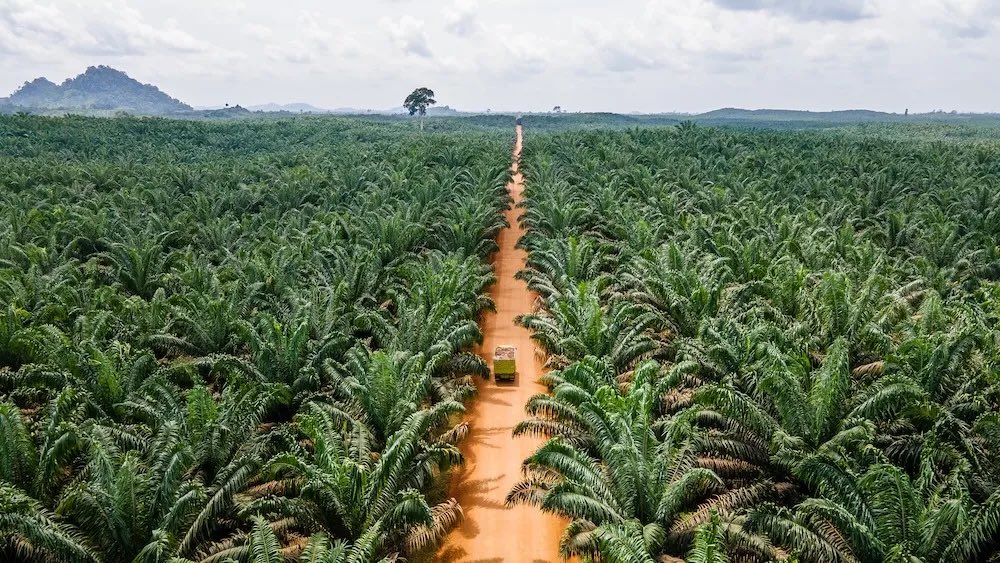
1/ Indonesia is conducting one of the largest land grabs in modern history.
Since March 2025, the government has seized over 4 million hectares of oil palm plantations. That’s an area the size of Switzerland, or roughly 30% of Indonesia’s total palm oil acreage.
2/ The justification? The government claims these plantations are in protected "forest zones."
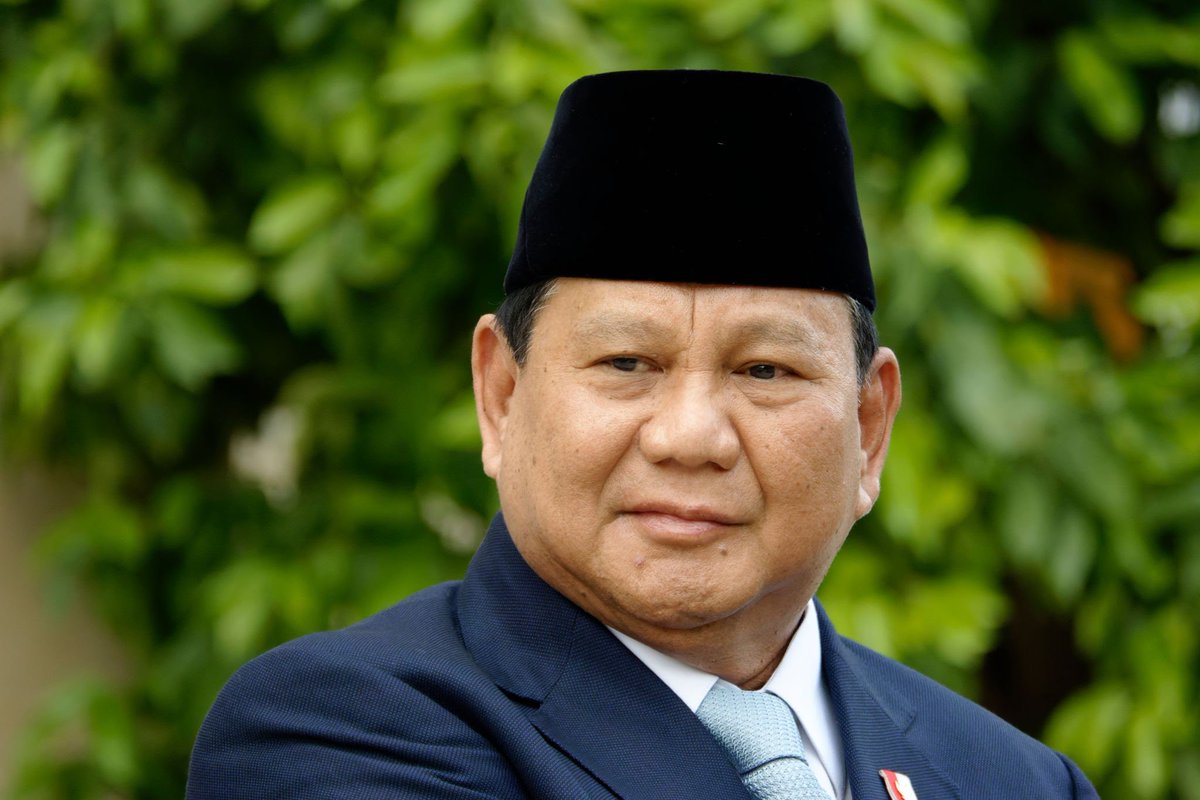
But it looks more like outright nationalization. Assets are being transferred to a new SOE, "Agrinas Palma Nusantara," led by retired generals tied to President Prabowo.
3/ This will have broad ramifications. Indonesia produces 58% of the world’s palm oil.
With 30% of the country’s supply now under state control, palm oil prices are likely headed higher. Supply chains for everything from snacks to cosmetics will be affected.