
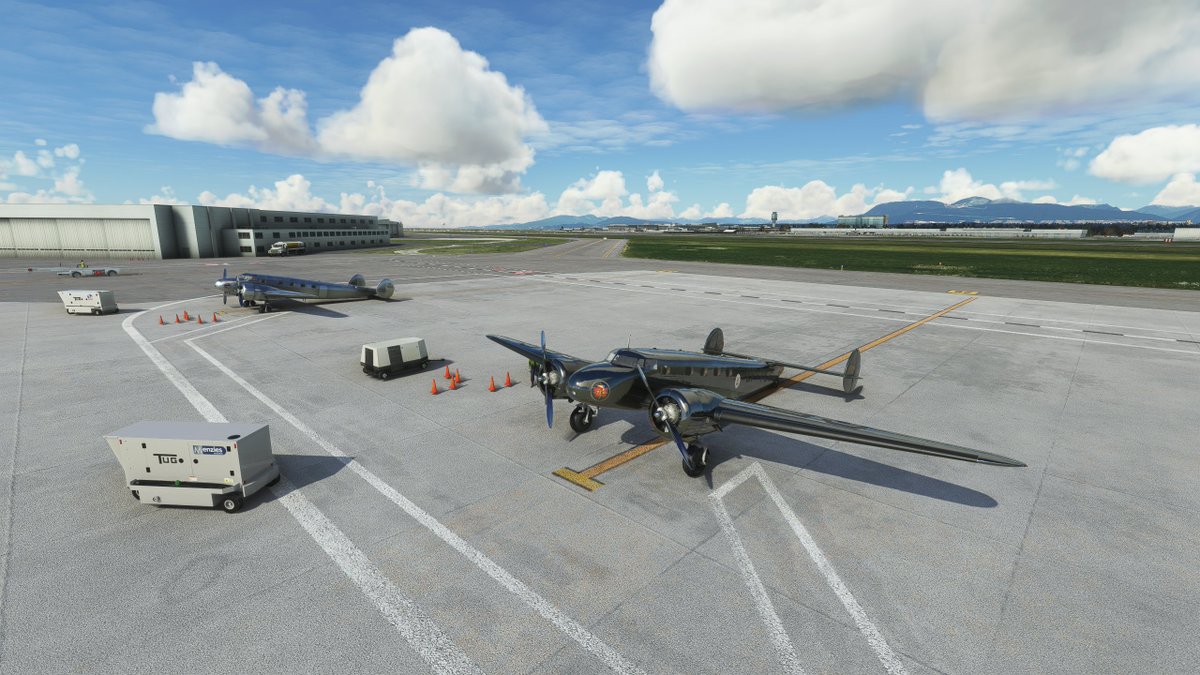
Welcome to Vancouver, British Columbia, where today in Microsoft Flight Sim I'll be flying the Lockheed L-10 Electra, an early all-metal airliner from the 1930s. 
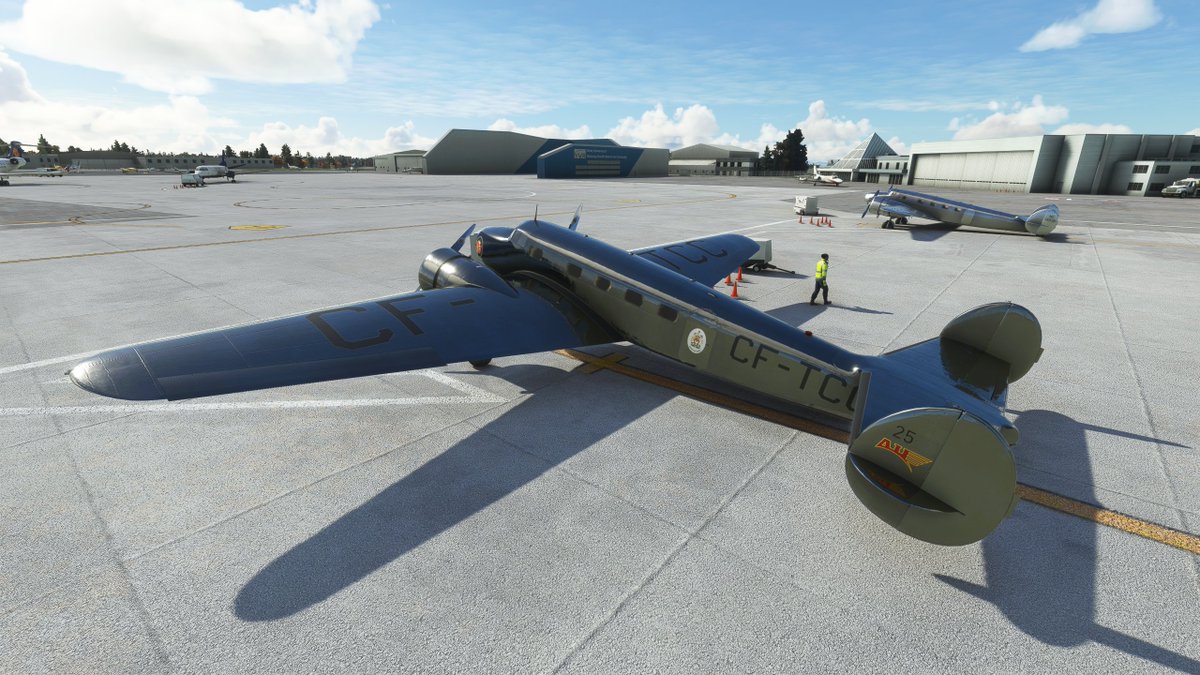
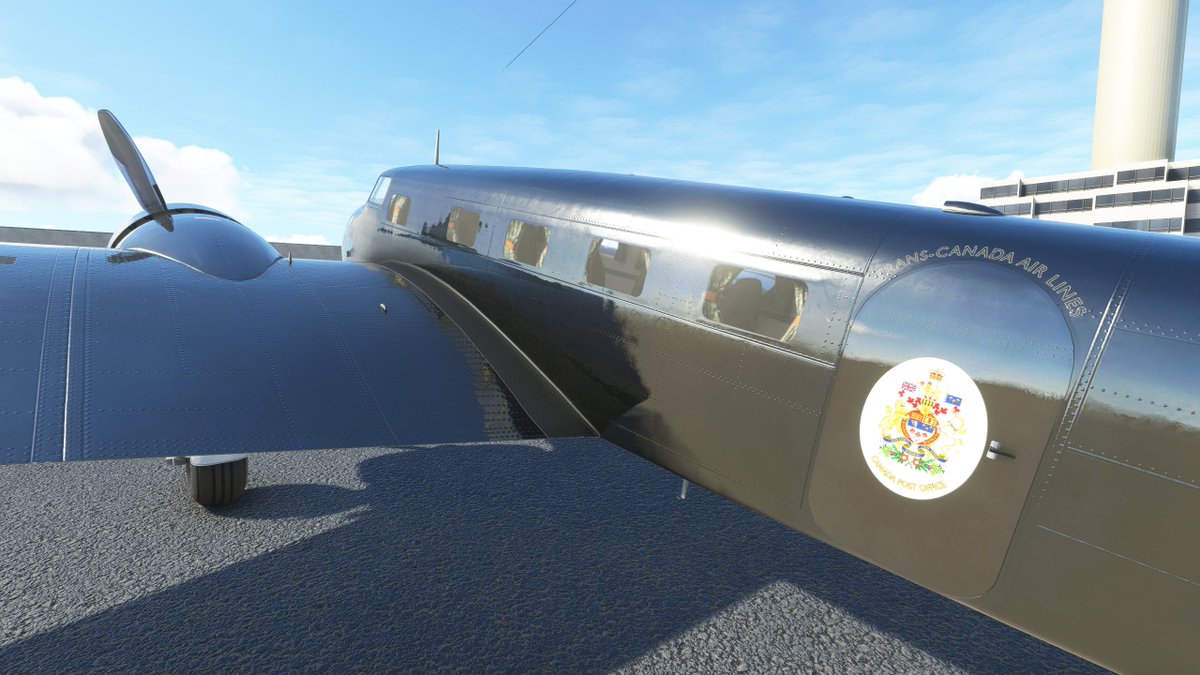
The reason I'm in Vancouver is that this is based on a real airplane, the very first purchased by Trans-Canada Air Lines (which later became Air Canada) in 1937.
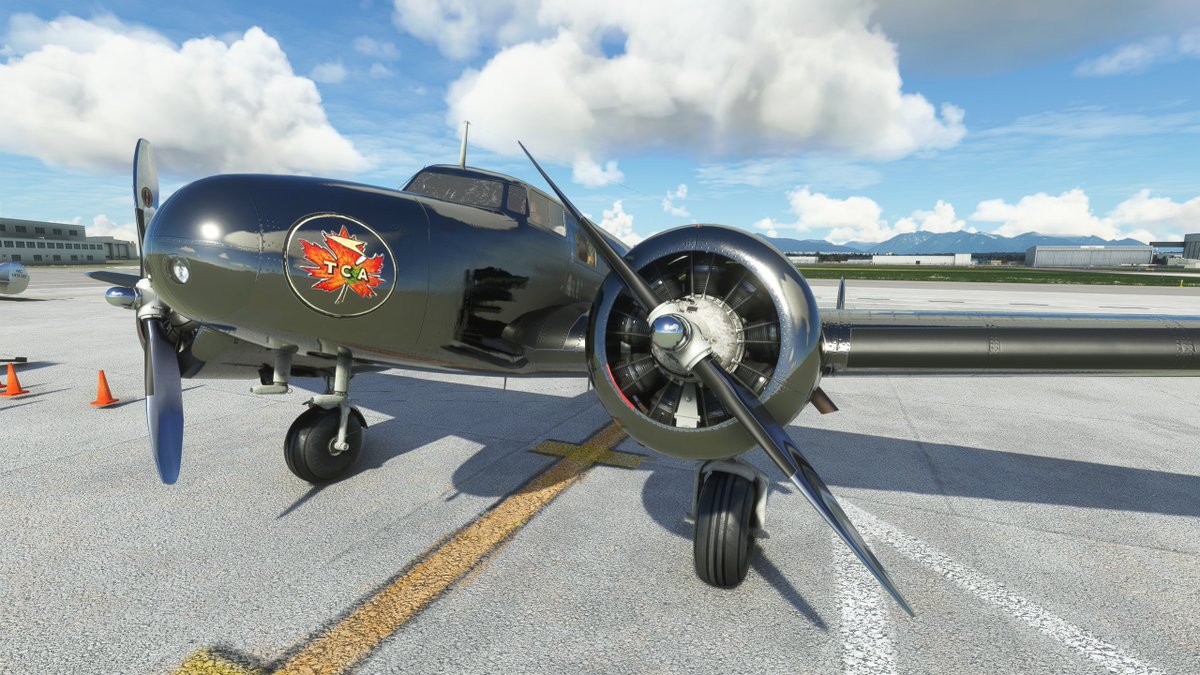
This airplane still exists and is airworthy. You can watch a video about it here:
I had a chance to see another real-life L-10 Electra, which is also still airworthy, at the TWA Museum in Kansas City this summer.
https://twitter.com/prchovanec/status/1425627704490143746?s=20
The all-metal Lockheed Model 10 Electra was introduced in 1934, to compete with the Boeing 247 and Douglas DC-2.
This was the same year that the US government banned single-engine aircraft from flying commercial passengers, which opened a major market for these new (and presumably safer) twin-engine airplanes.
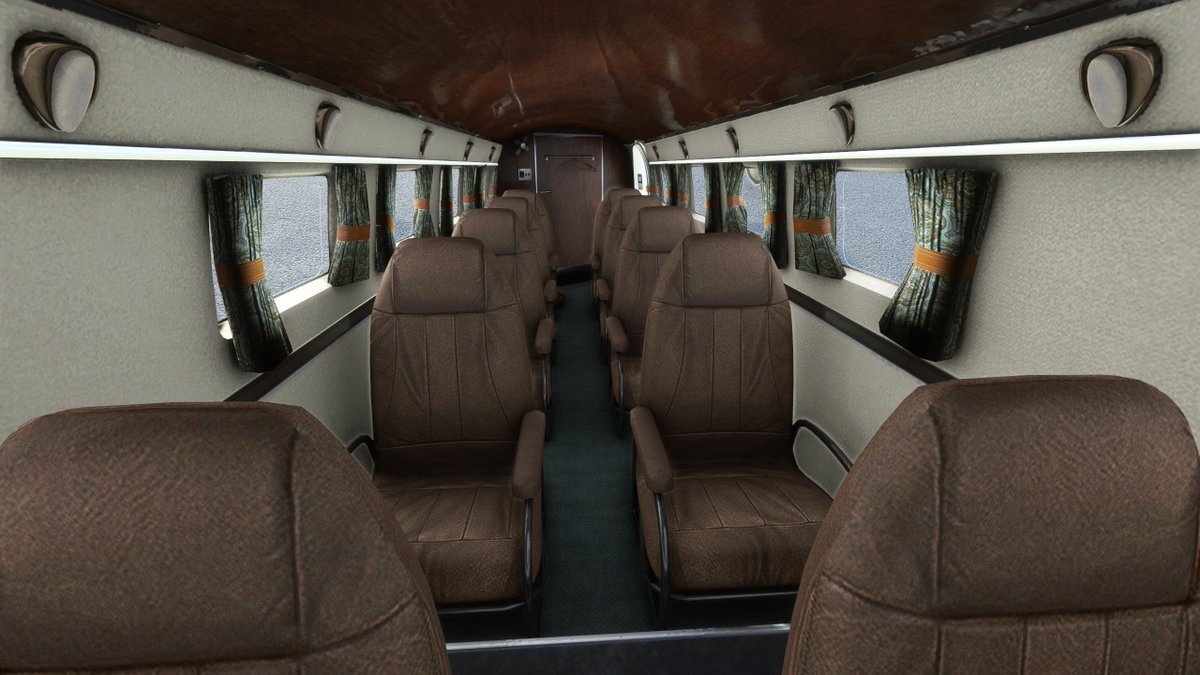
The Electra carried 10 passengers plus 670 lbs of baggage, including mail, an important source of revenue for the early airlines.
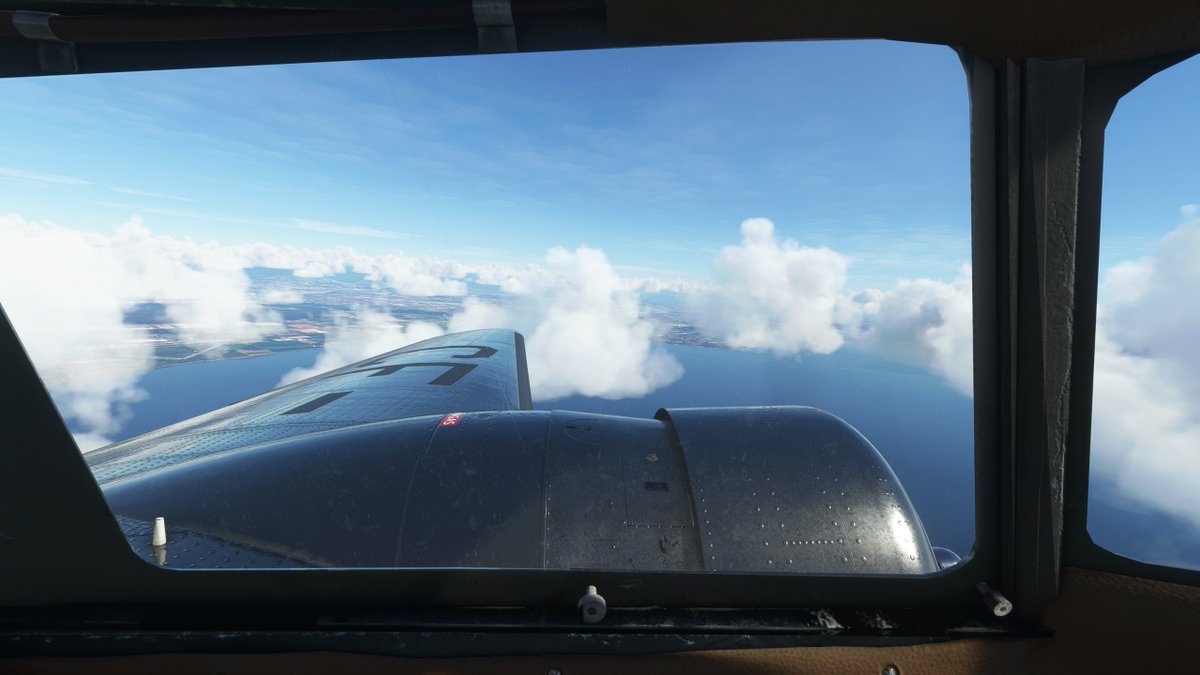
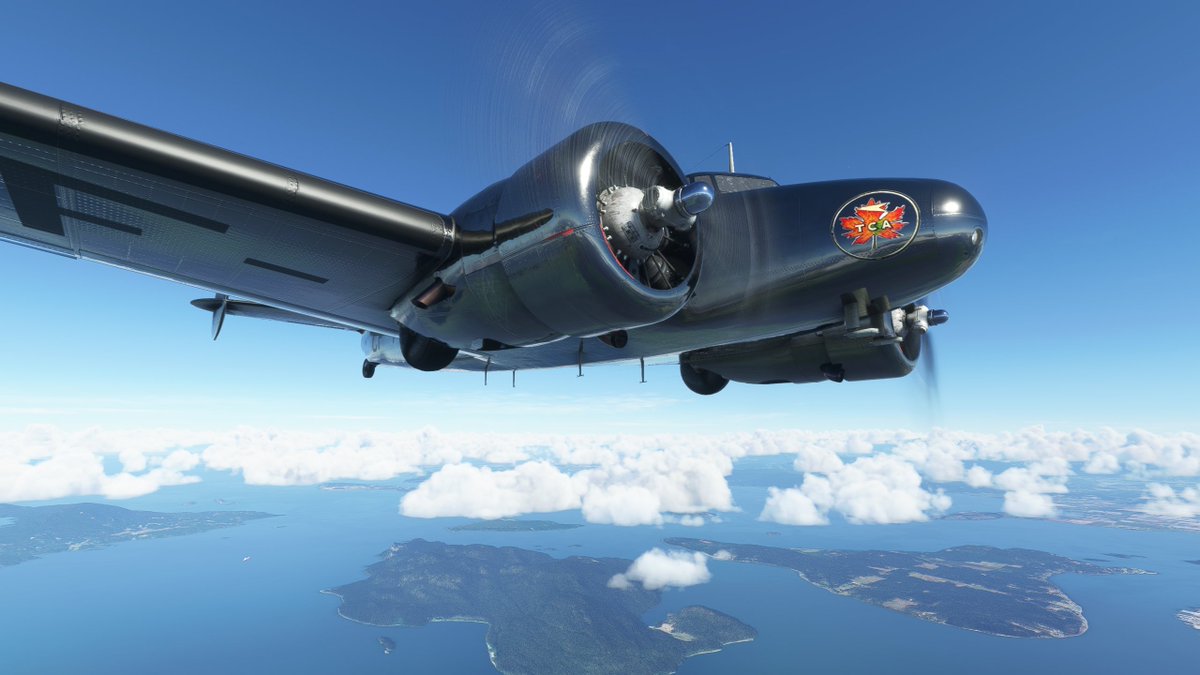
It was powered by two Pratt & Whitney R-985 Wasp Junior SB 9-cylinder air-cooled radial piston engines, capable of producing 450 horsepower each.
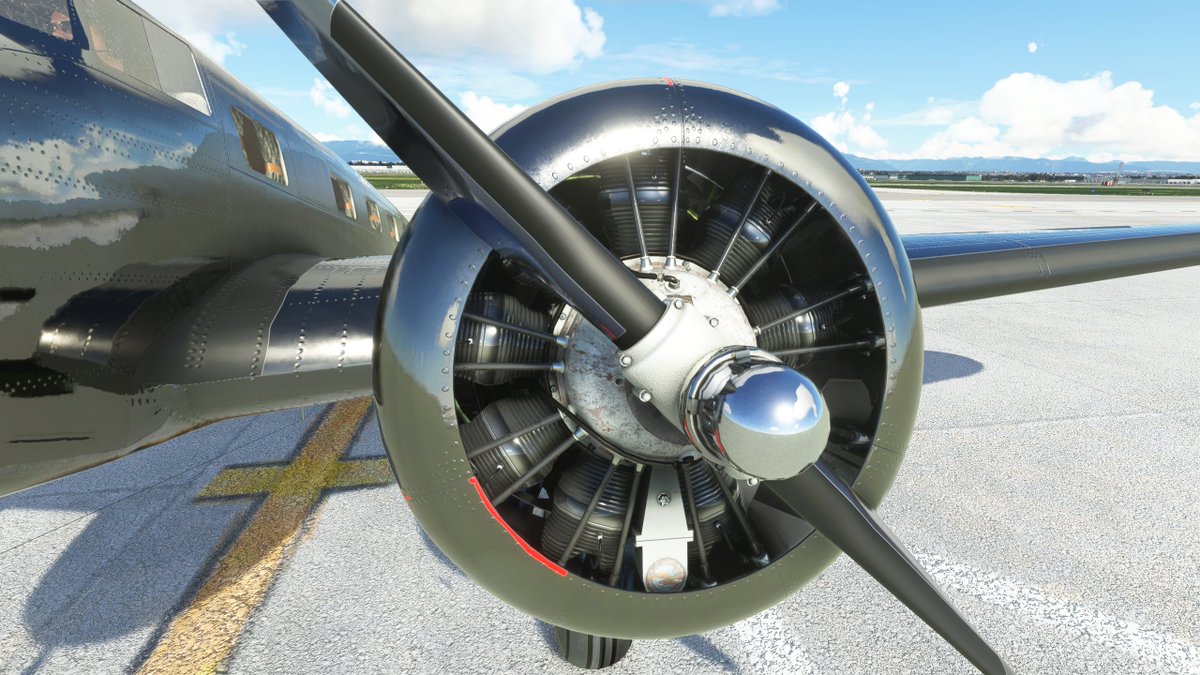
These two screenshots show the adjustable pitch propeller in action, from fine (for takeoff and landing, left) to fully feathered (in case of a disabled engine, right).


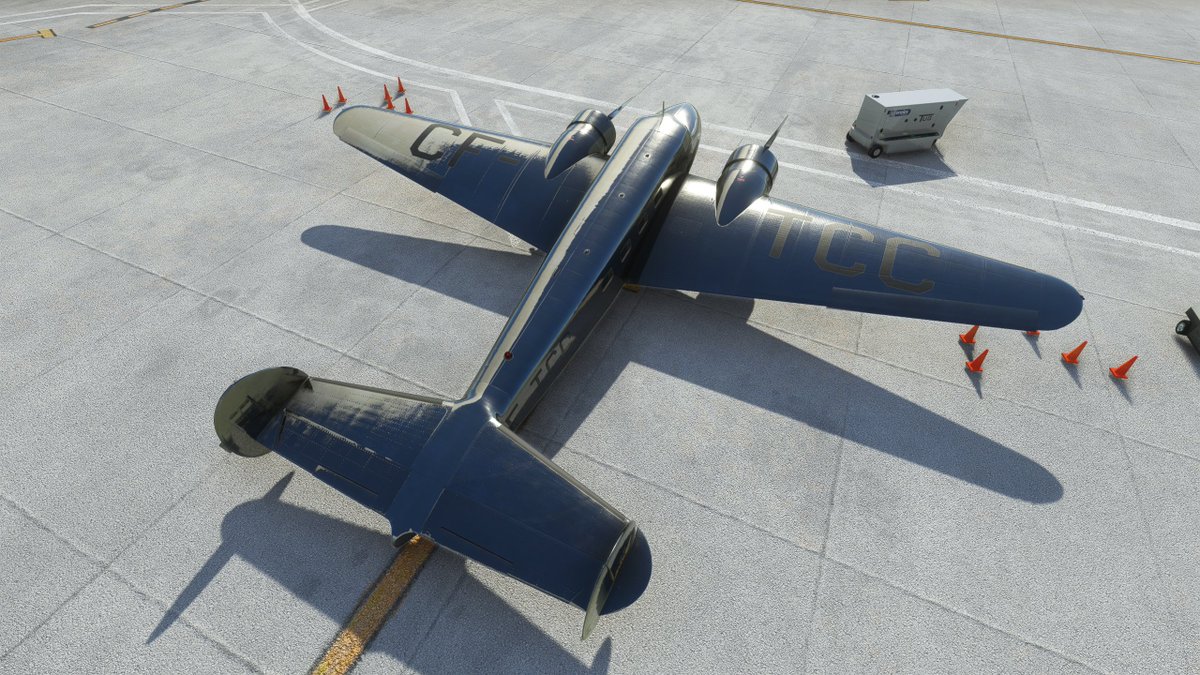
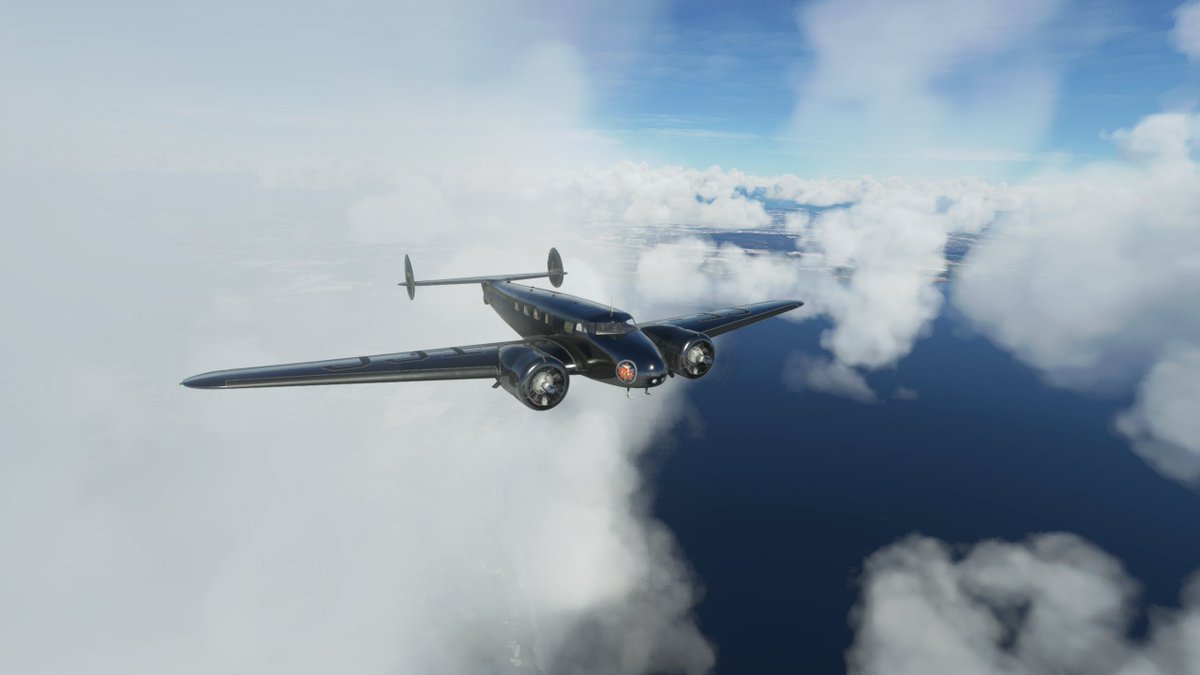
Distinct from the DC-2 and Boeing 247, the Electra had a double tailfin, which I'll talk more about after takeoff.

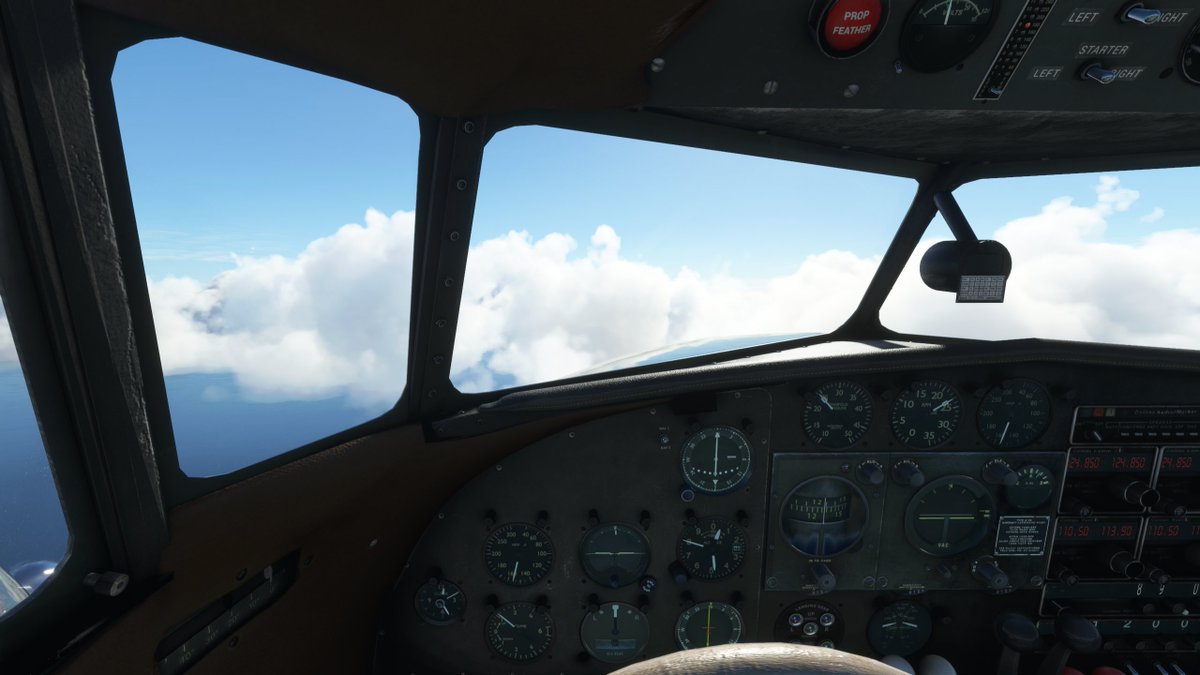
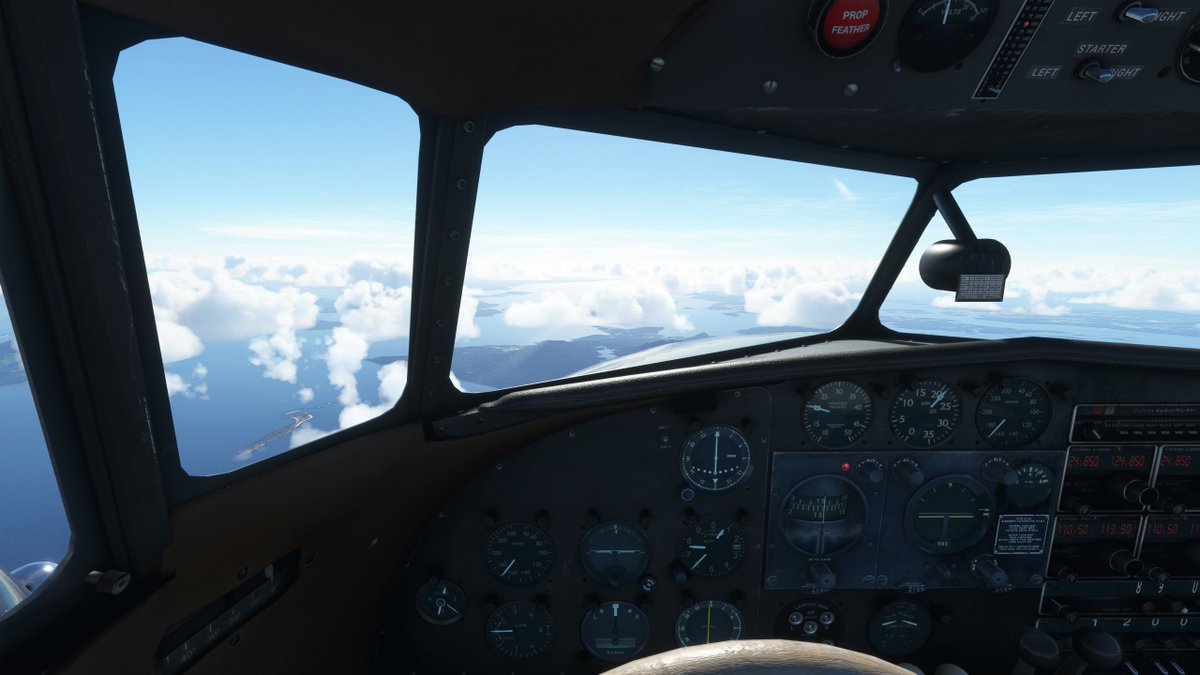
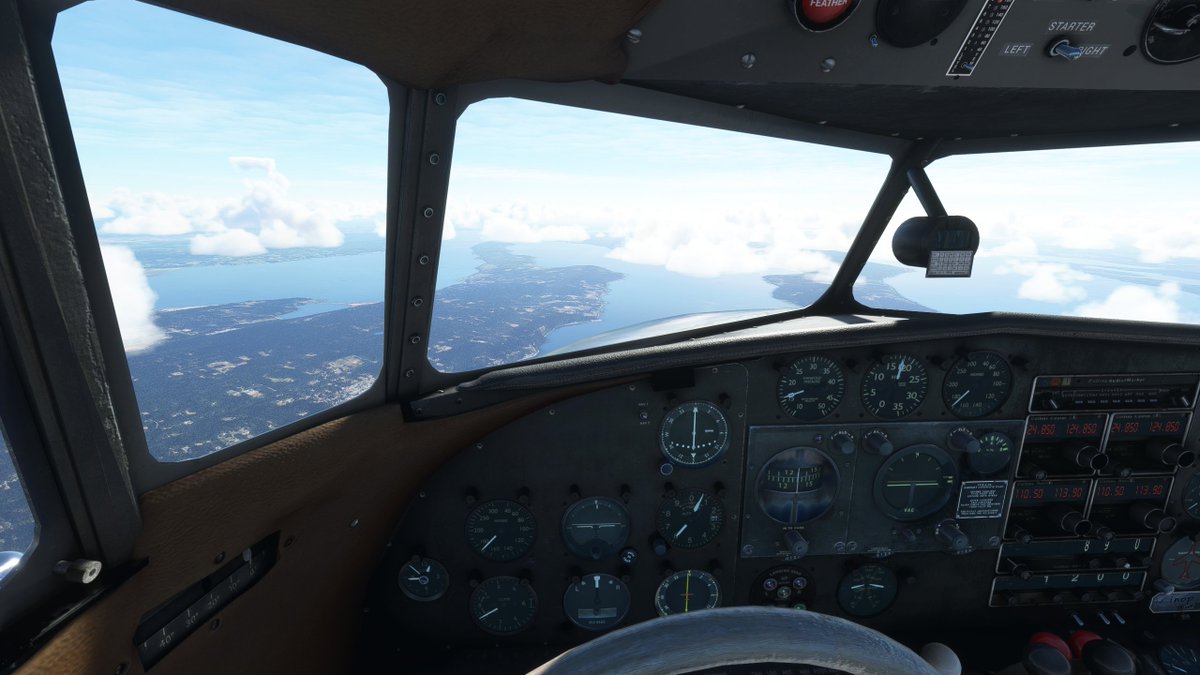
Peeking into the cockpit of the Lockheed Model 10 Electra, from the cabin.
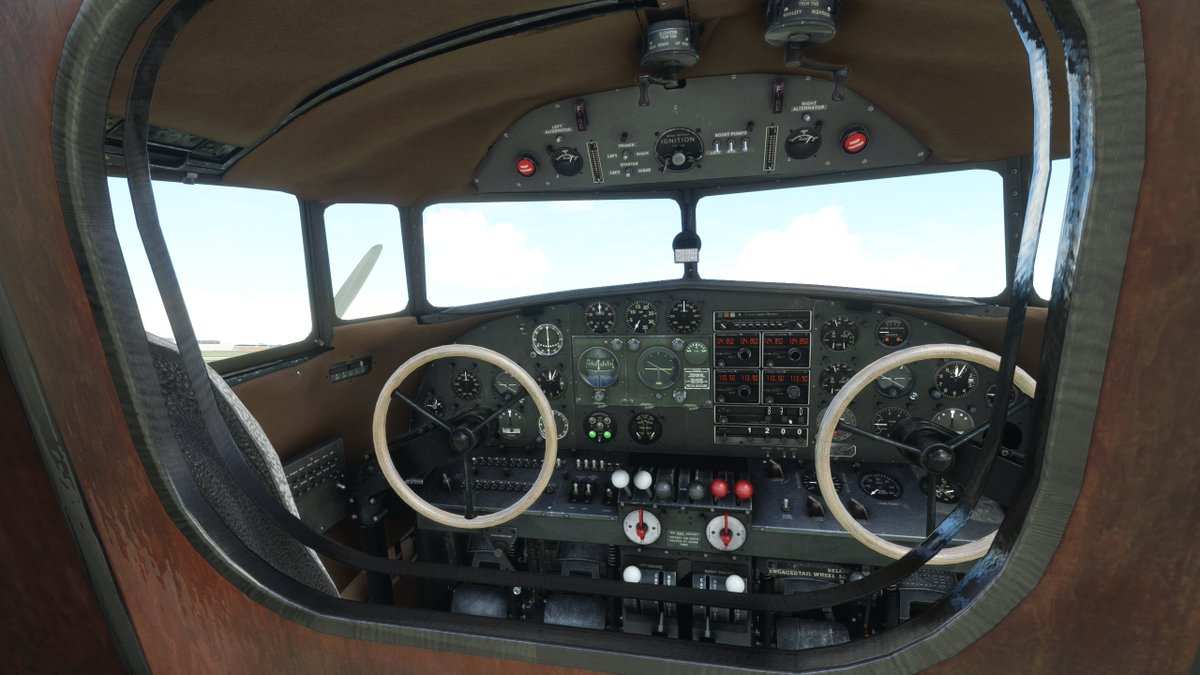
In the metal square just to the right of the standard instruments (arranged almost the same as in a Cessna 172) is a Sperry autopilot, which I'll use during the flight today.
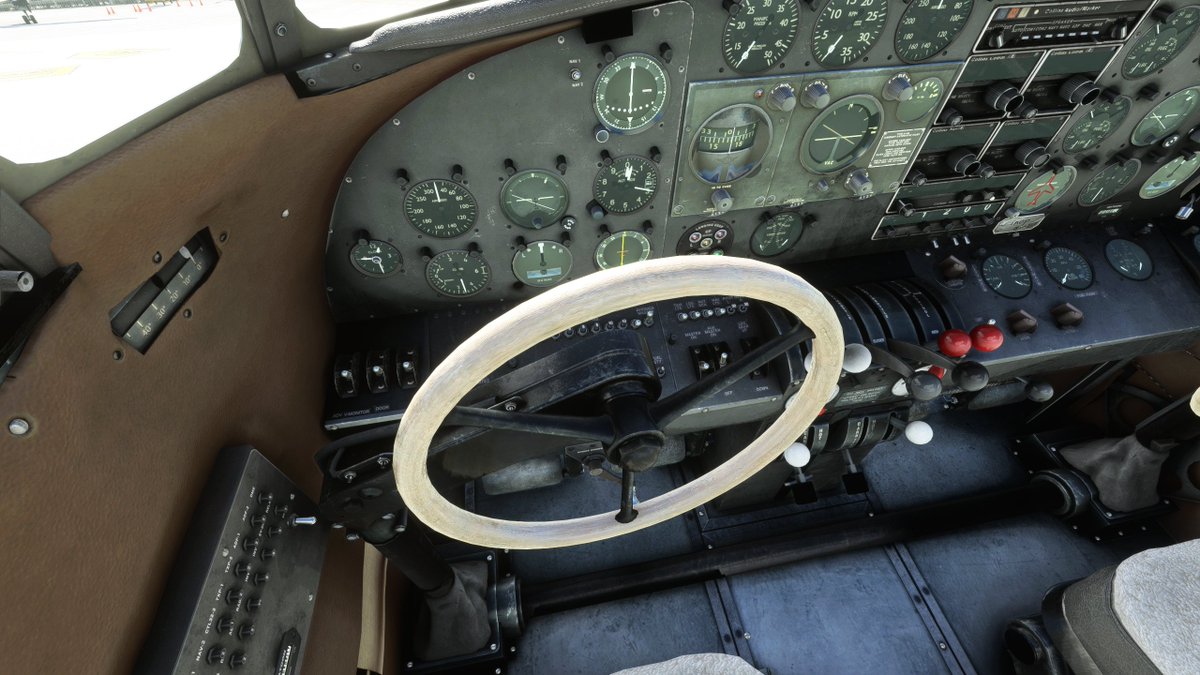
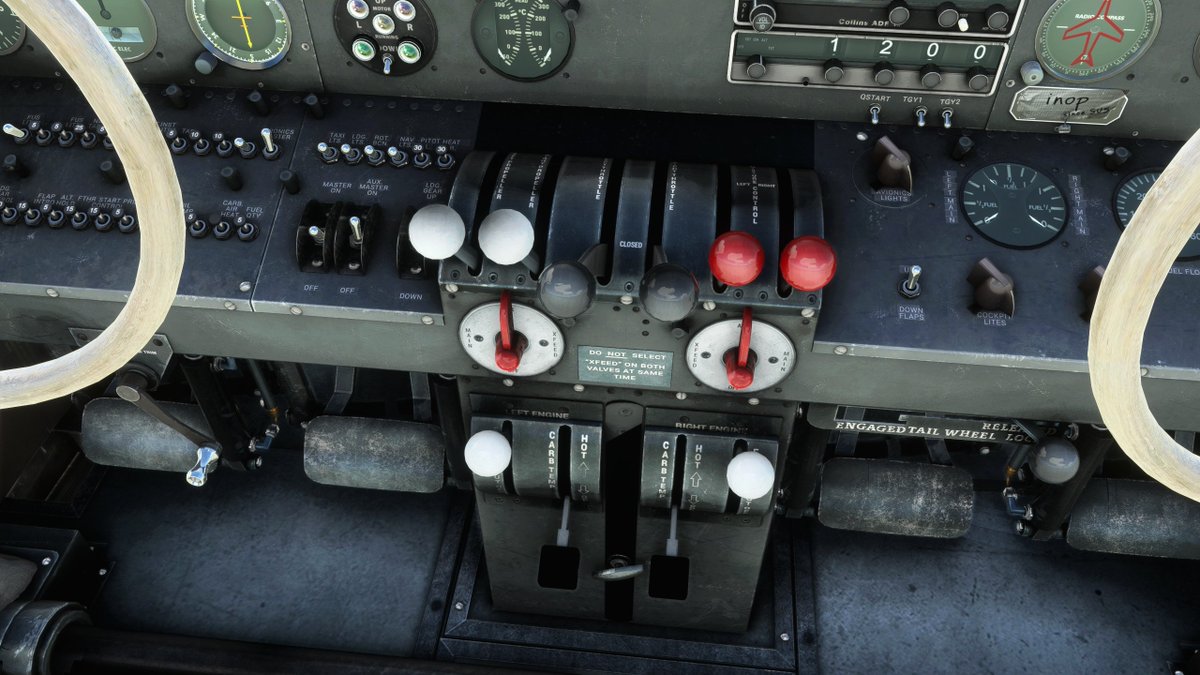
Between the pilot and co-pilot are the main power controls for both engines: (white) propeller RPM, (black) throttle, and (red) fuel mixture, as well as (red and white) fuel cut-off dials for both.
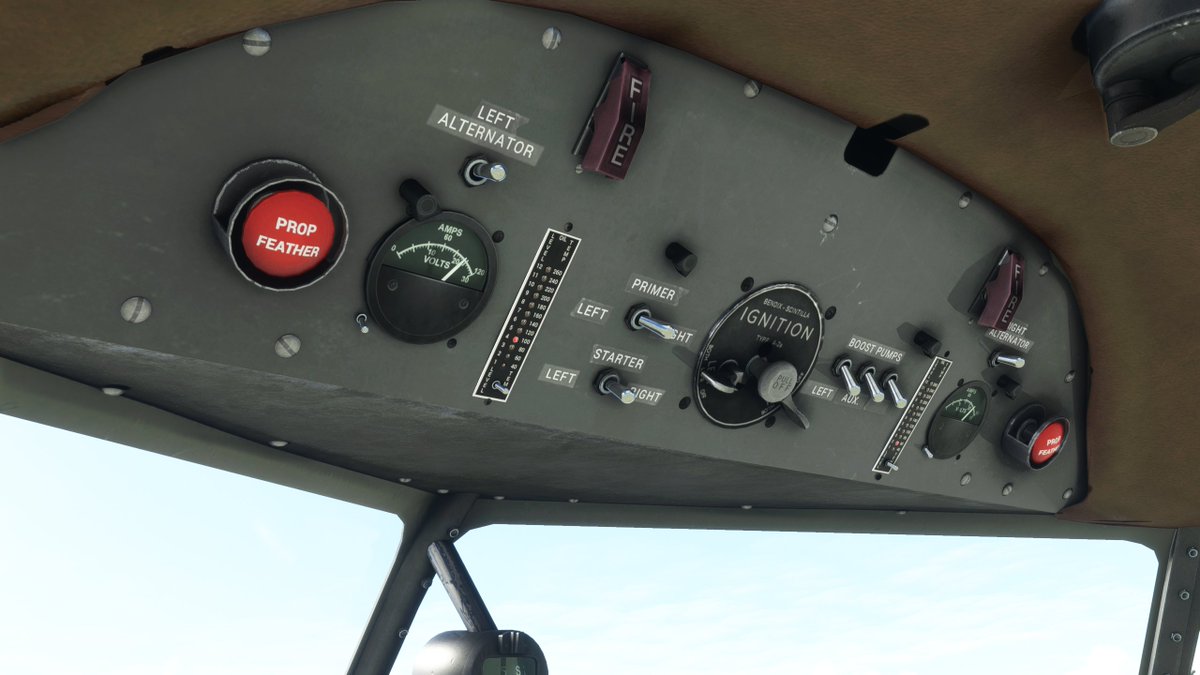
Overhead are the main magneto and ignition switches to turn on the engines.
With the parking brake on, getting the left engine going, then the right.
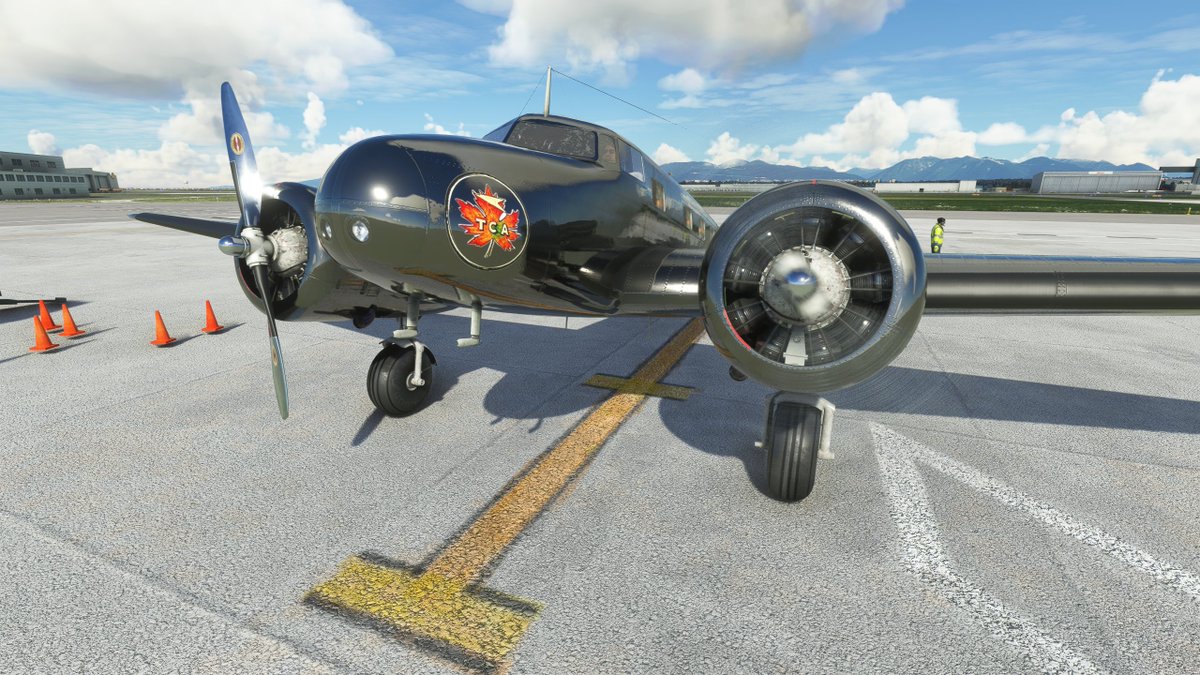
And peering out over the nose to taxi. This is a tailwheel aircraft, with all the challenges that involves (hard to see forward on the ground, easy to tip over if you brake too hard).

Vancouver's present-day international airport on Sea Island, south of the city, was first opened in 1931, and I'm departing from the old original South Terminal.
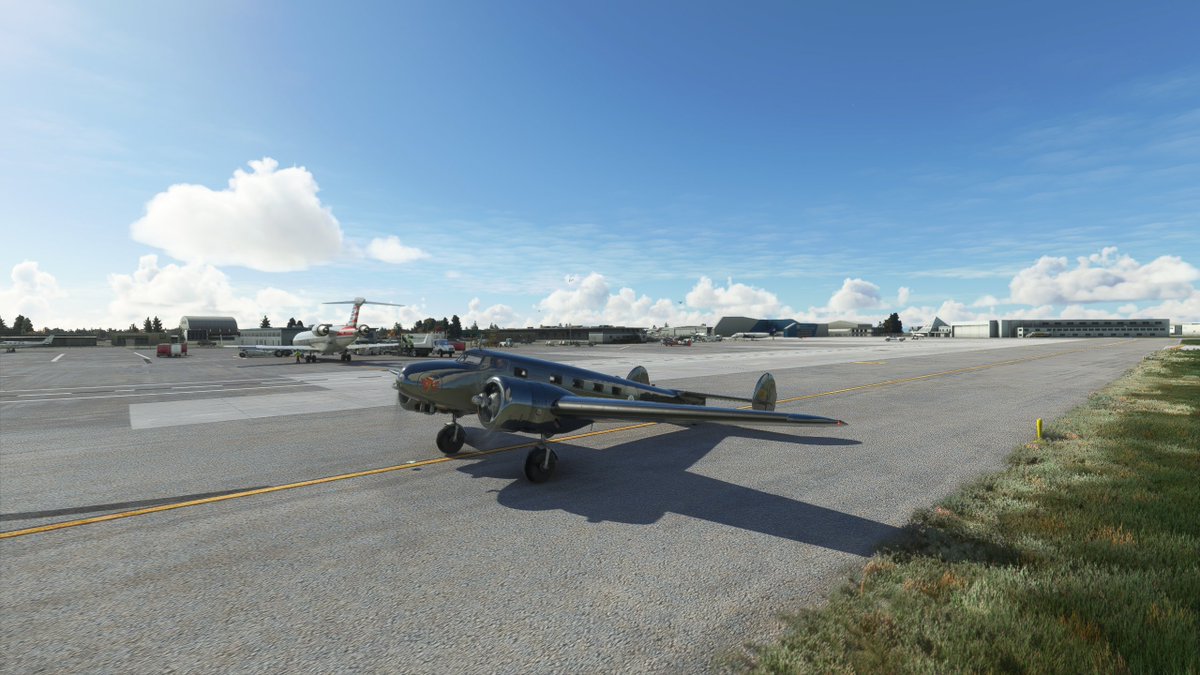
I'm going to be retracing Trans-Canada Air Lines' very first commercial flight, from Vancouver to Seattle, on September 1, 1937.
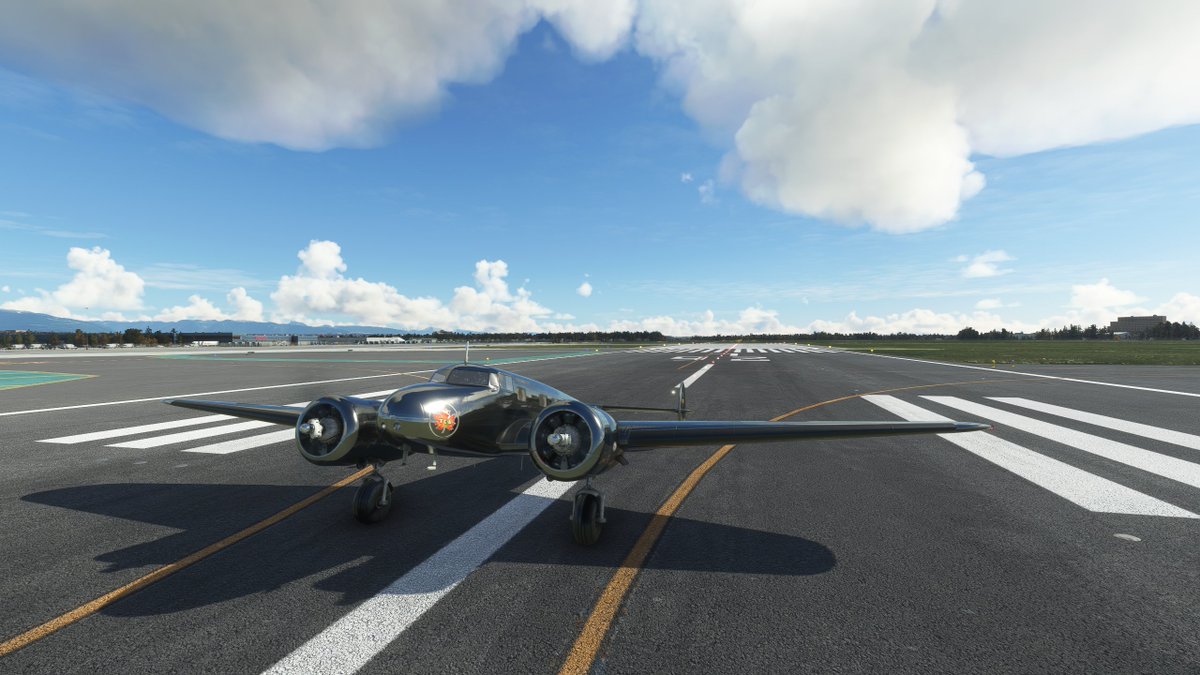
The airline, which eventually became Air Canada, was established by the Canadian National Railway (CNR), with the government's encouragement and a air-mail contract with Canada Post to support it.
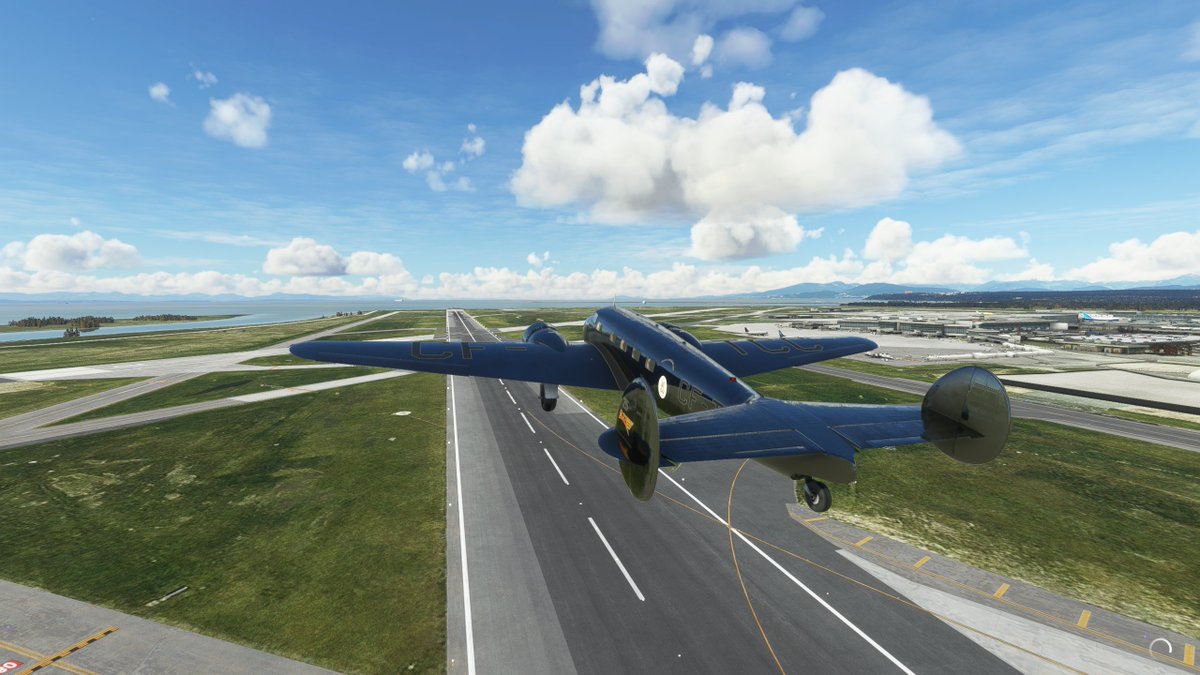
Unlike the contemporary Junkers Ju 52, the German trimotor airliner I flew the other day, the Electra had retractable landing gear.
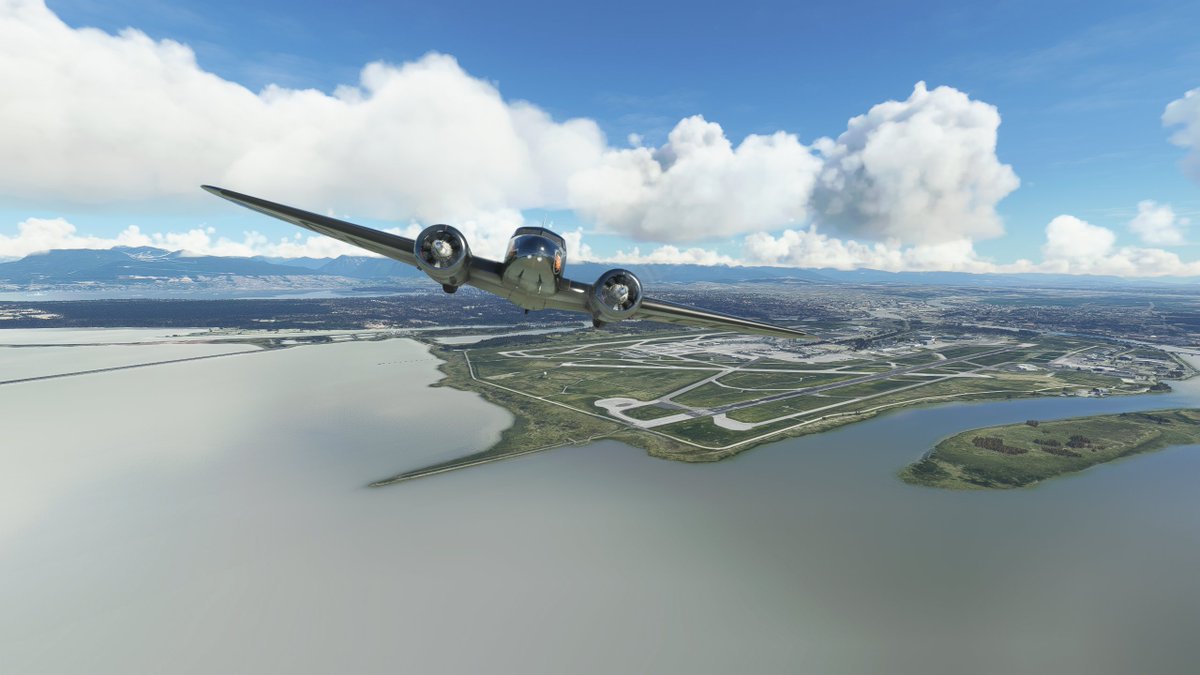
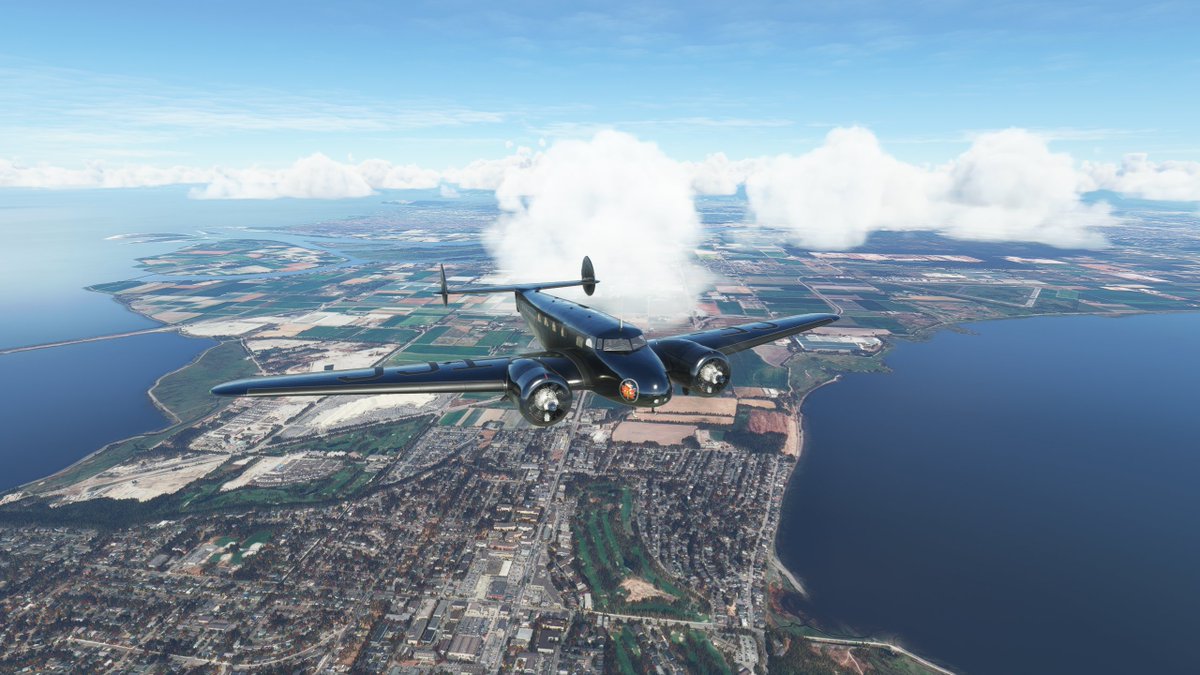
Flying over Richmond, with Vancouver to the distance in the north.
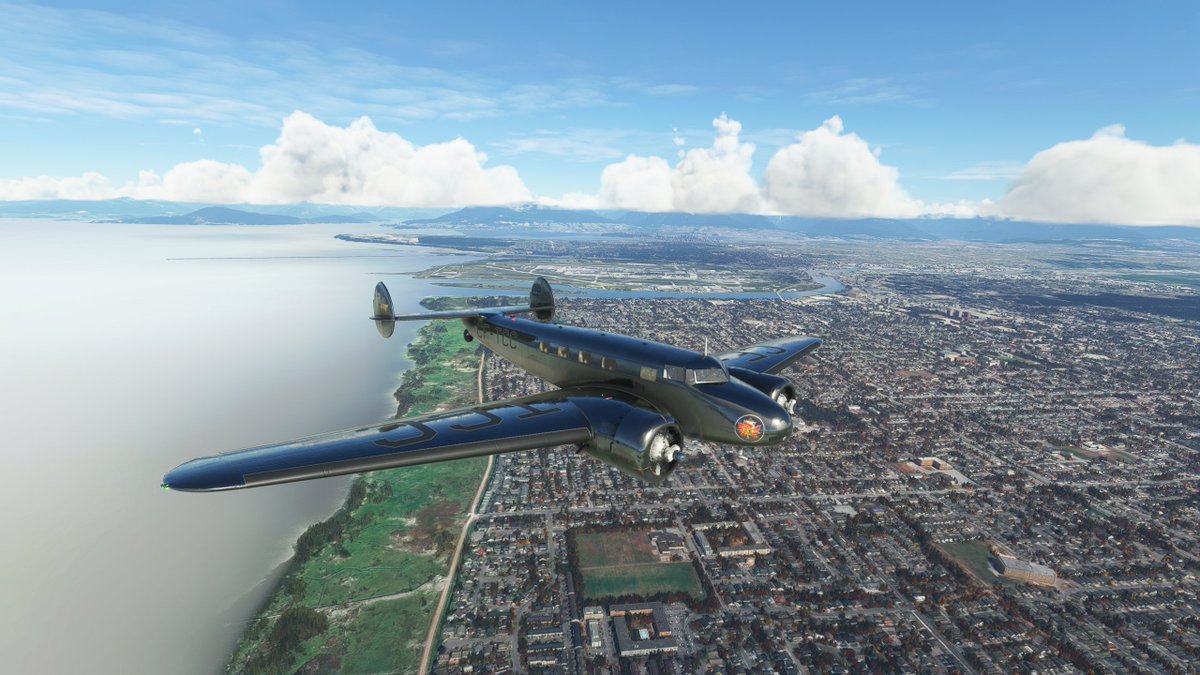
The US-Canada border cuts across the tip of that peninsula just ahead.

Lockheed traces its origins to two California-based brothers and aviation enthusiasts, Allan and Malcolm Loughead (pronounced Lockheed). It was one of many small, somewhat amateur makers of primitive, experimental airplanes in the years immediately following the Wright Brothers.

Their first hire was a draftsman named Jack Northrop, who later went on to found his own hugely successful aircraft company.
However, none of the early aircraft they designed found much of a market, especially with markets flooded with post-WWI military surplus planes, and their first company folded in 1921.
In 1926, however, Allan Lockheed, John Northrop, and two other partners got money from Hollywood to reboot the company. (Allen had gotten his name legally changed to avoid mispronunciation, telling the judge he was tired being called "log head".)
The new company achieved success with the Vega (an aircraft that hopefully will come out on MSFS soon), but was again wiped out by the Great Depression, after being sold to Detroit Aircraft Corporation.
Finally, another group of investors led by businessman Robert Gross bought the Lockheed company out of receivership in 1932 for just $40,000.
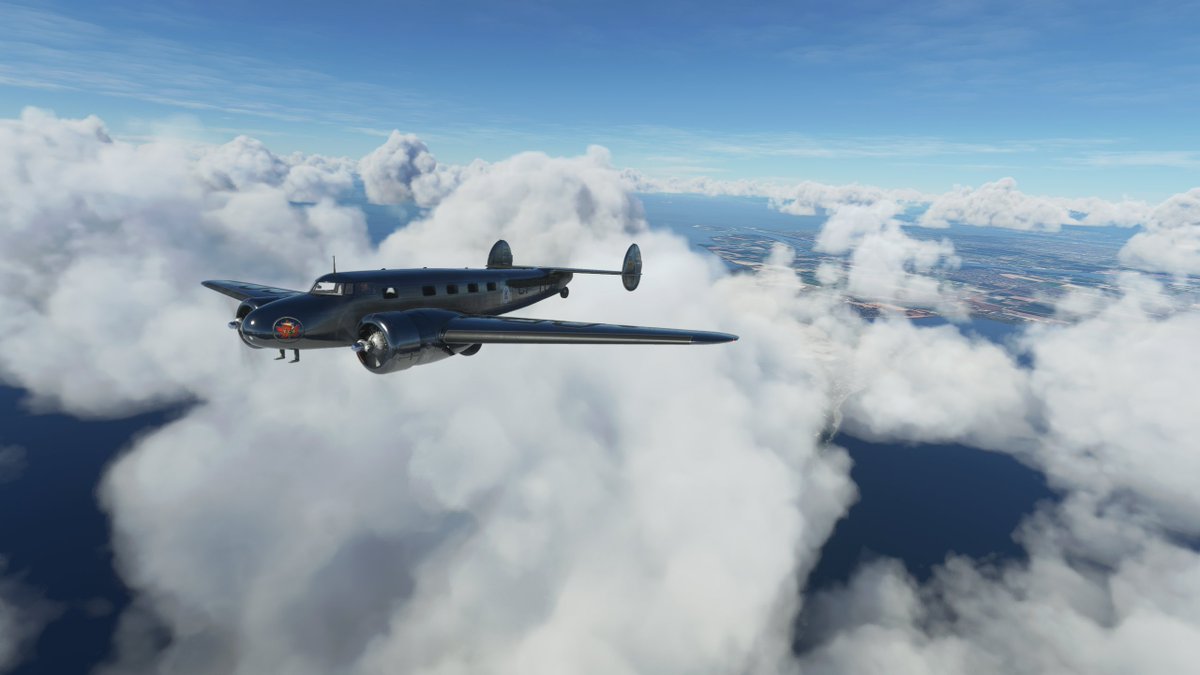
Gross bet the company - now headquartered in Burbank, California - on developing a new all-metal, twin-engine airliner: the Model 10 Electra.
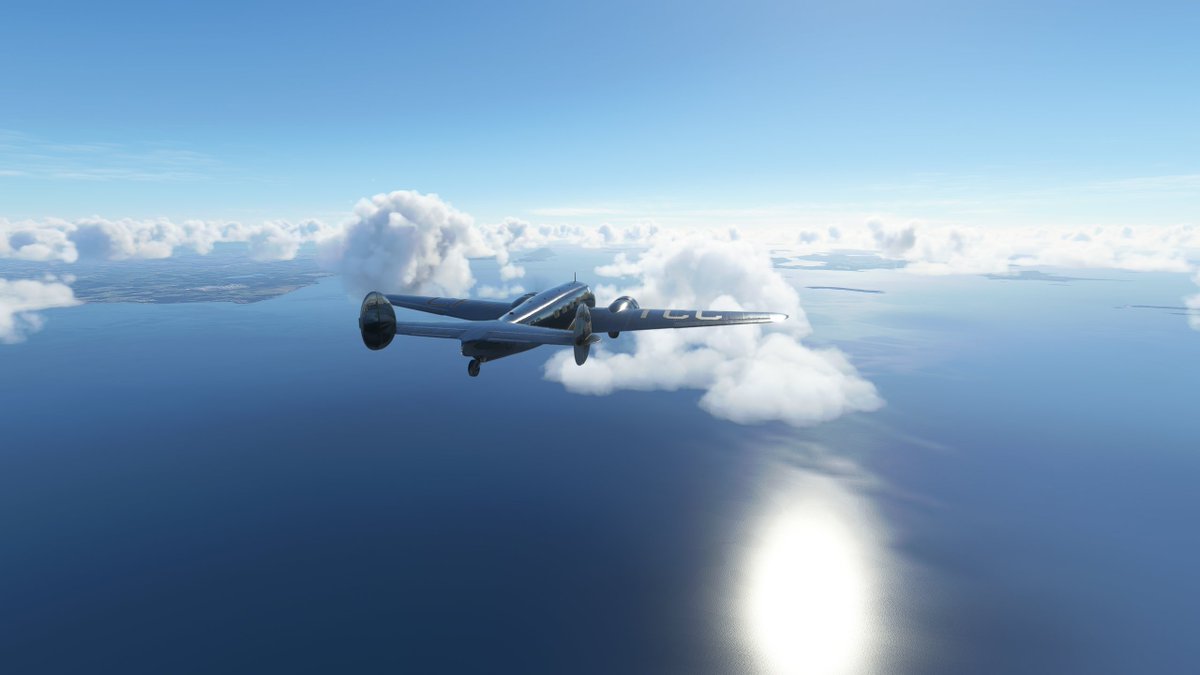
The red light shows I have the Sperry autopilot activated. It has the ability to maintain current altitude and heading, though I still must set appropriate power.
The Model 10 Electra was designed by Lloyd Stearman and Hall Hibbard. Stearman had once partnered with Walter Beech and Clyde Cessna (both familiar names to any aviation buff) to form the Travel Air Manufacturing Company, back in the 1920s.
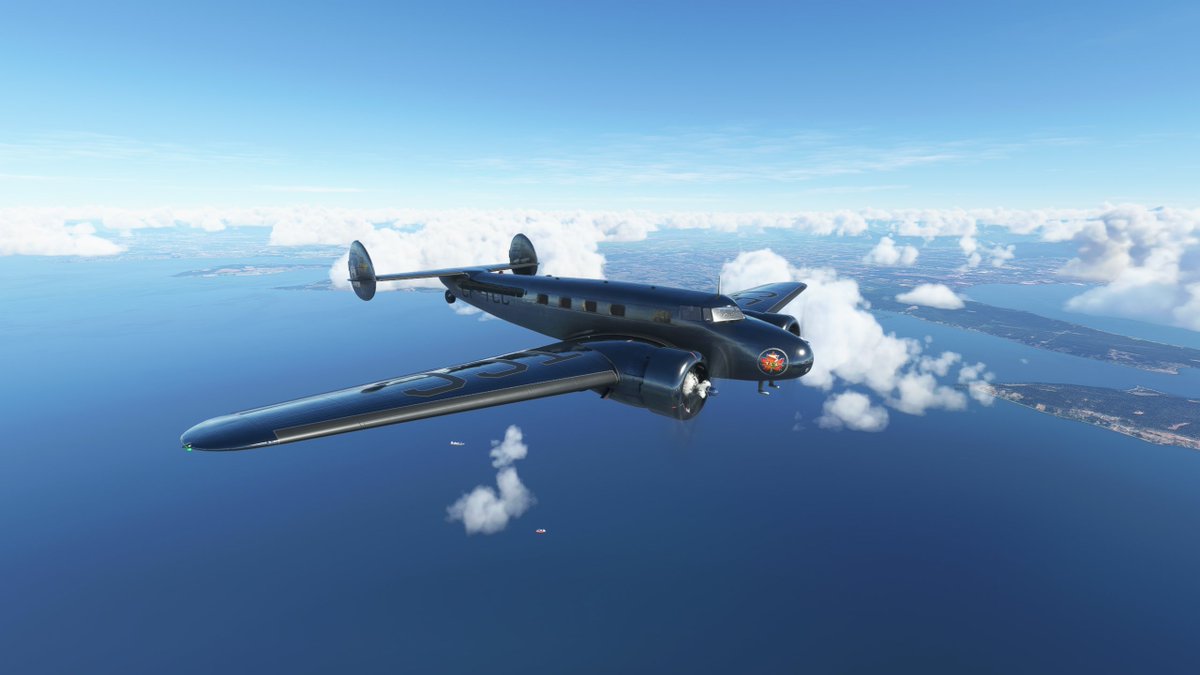
Stearman had later gone off on his own to design the legendary Stearman biplane, which served as a military trainer in World War II.
https://twitter.com/prchovanec/status/1389045565585956866?s=20
Stearman joined Lockheed after he sold his own company to Boeing. One of his first projects was to design the Model 10 Electra.
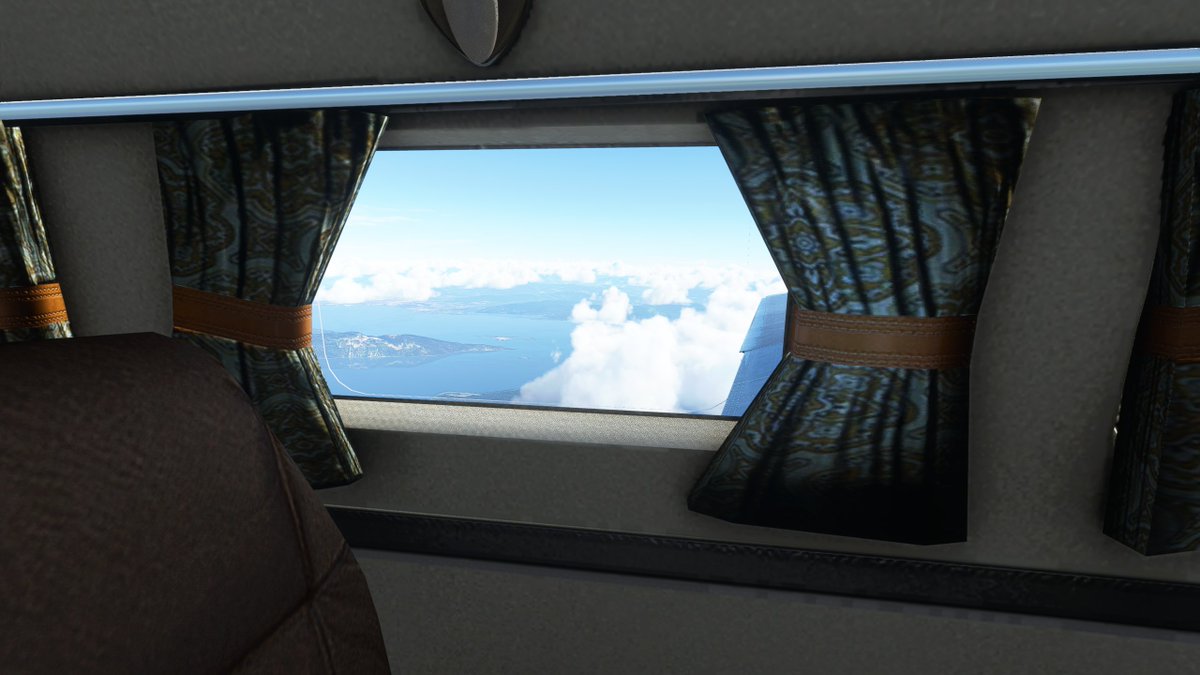
One of the people Lockheed hired to do wind tunnel work on the Electra at the University of Michigan was a young student assistant named Clarence Johnson.
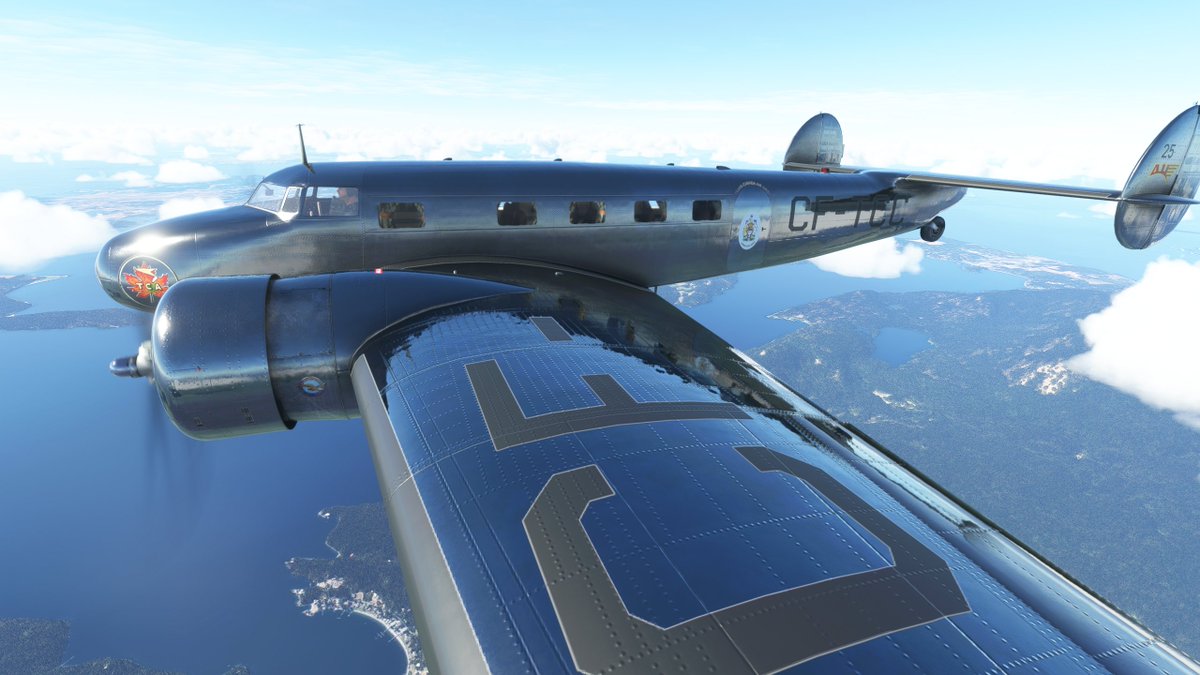
"Kelly" Johnson suggested changing the Electra's planned single-fin tail to a double fin, a change that was adopted.
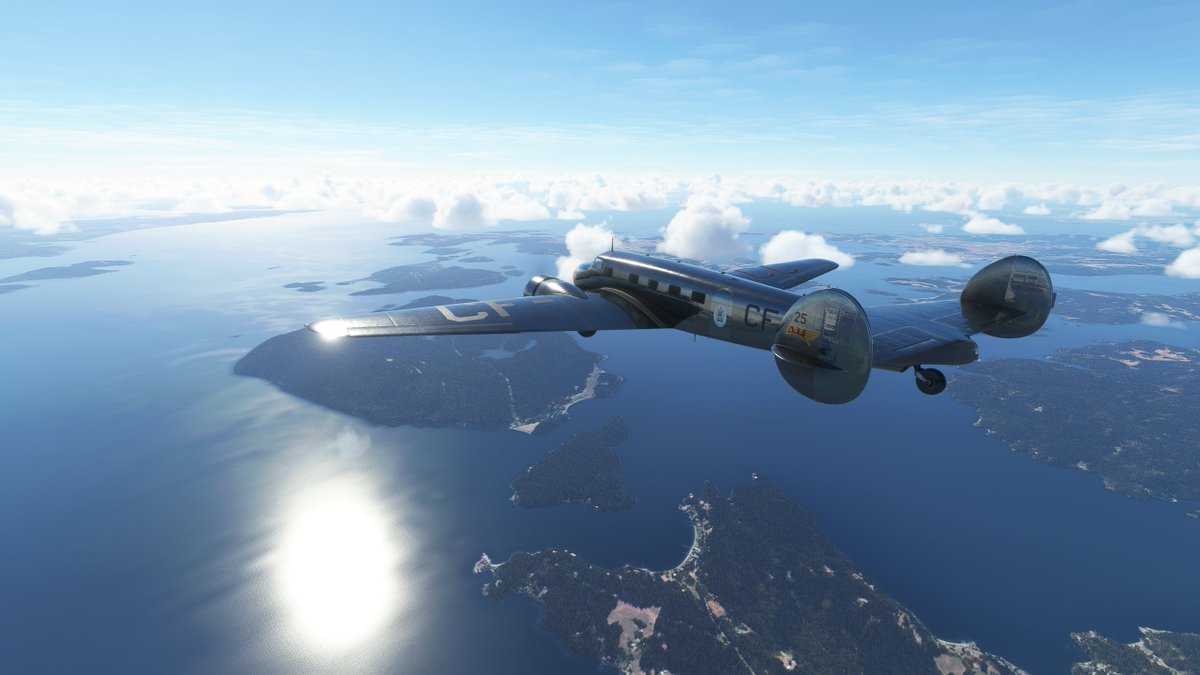
After getting his masters degree, Kelly Johnson joined Lockheed and became their star designer, heading up "Skunk Works" which produced the P-38 Lightning, P-80 jet fighter, U-2 spy plane, and SR-71 Blackbird.
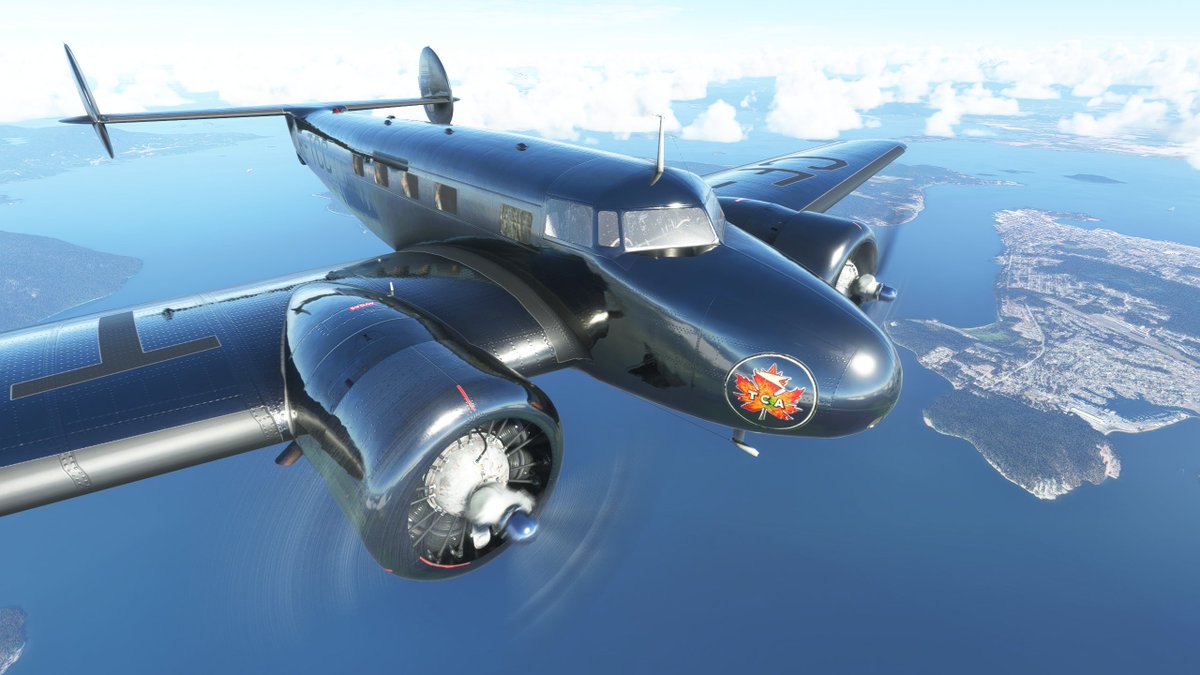
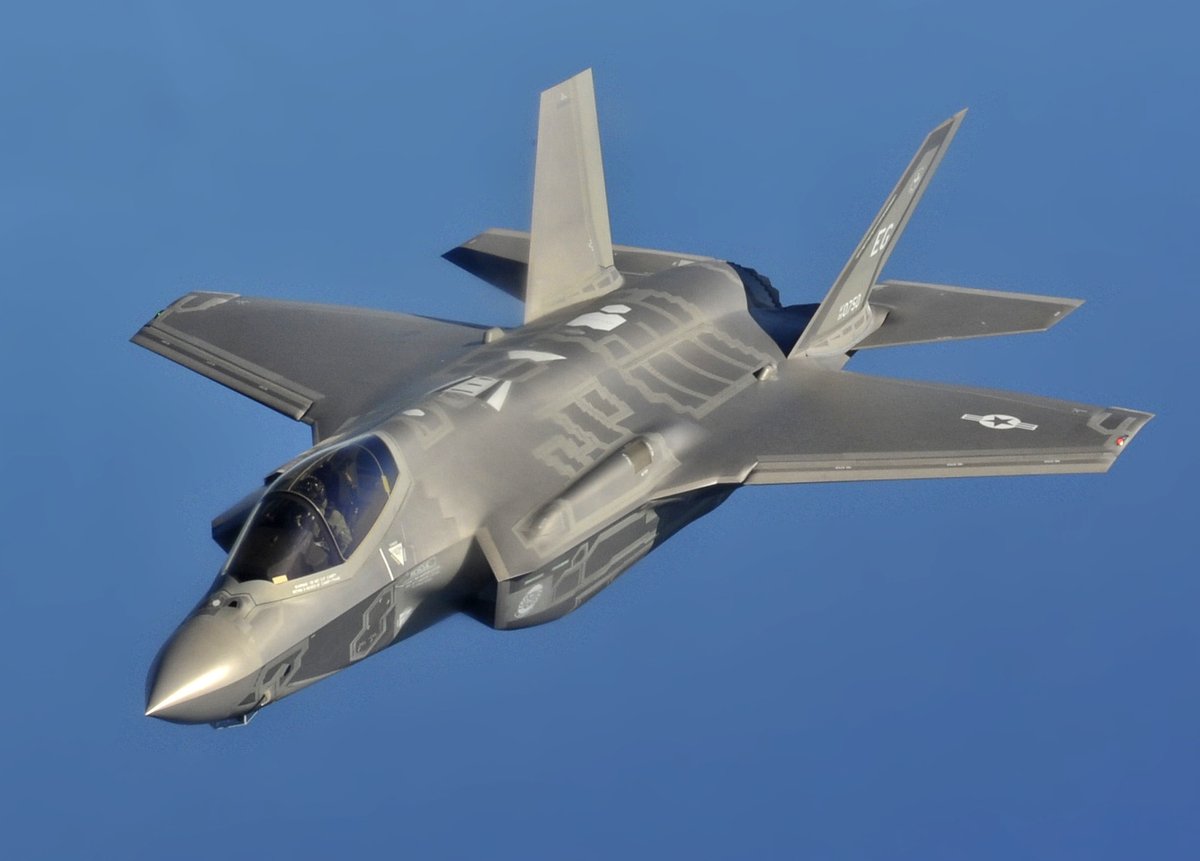
The twin-tail design, starting with the Electra, became a regular feature of Kelly's design work well into the jet age - a legacy that continues in today's Lockheed-produced F-35.
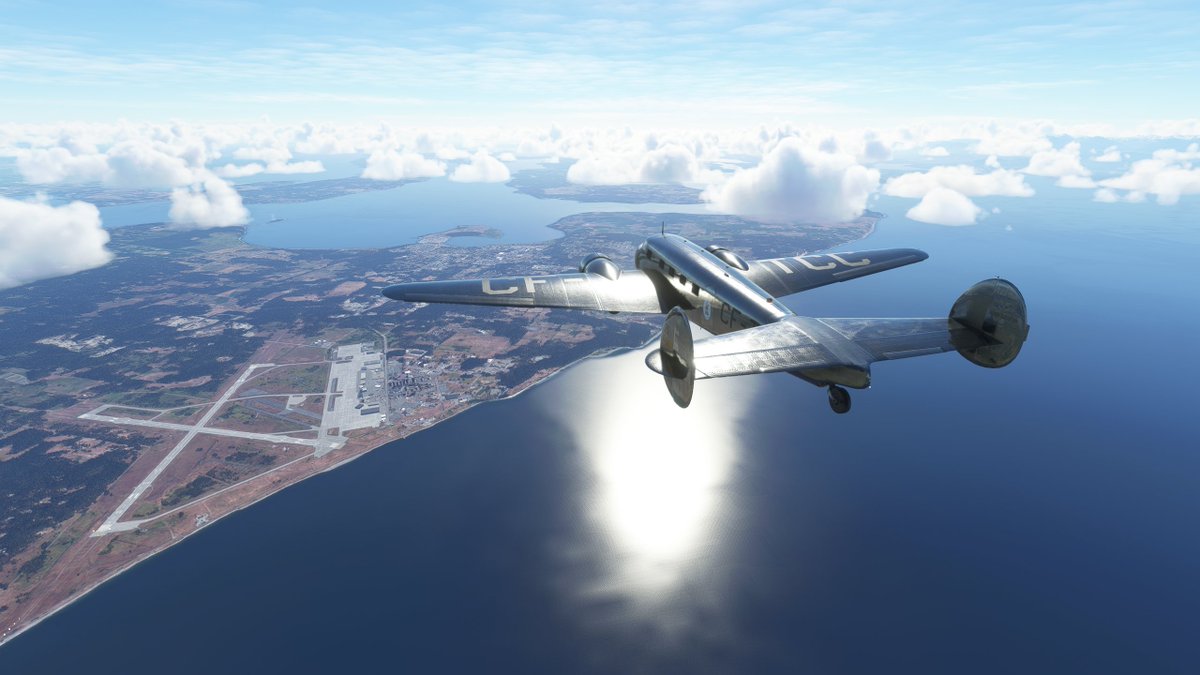
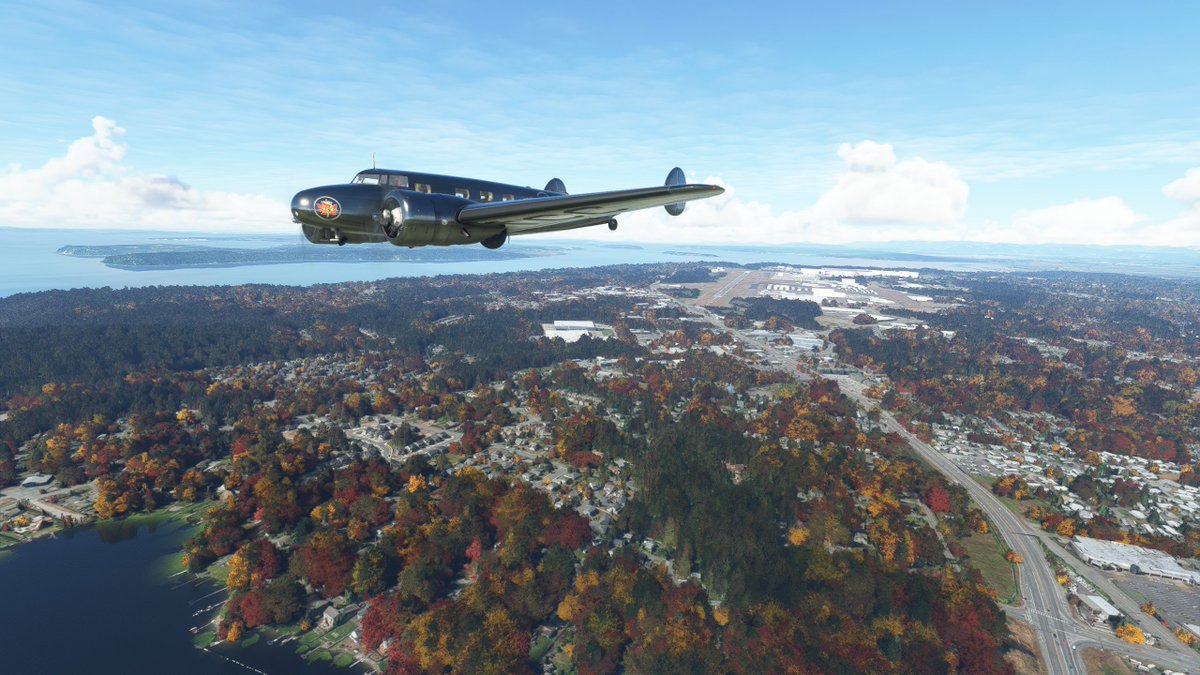
Flying over Whidbey Island Naval Air Station, in the Puget Sound, at about 7,500 feet, traveling at a cruising speed of 170 knots.
One of the most famous - and ill-fated - pilots of a Lockheed Model 10 Electra was Amelia Earhart, who disappeared in one over the South Pacific near the end of her voyage to circle the globe.
Beginning a steady 500 feet per minute descent towards Everett, Washington.
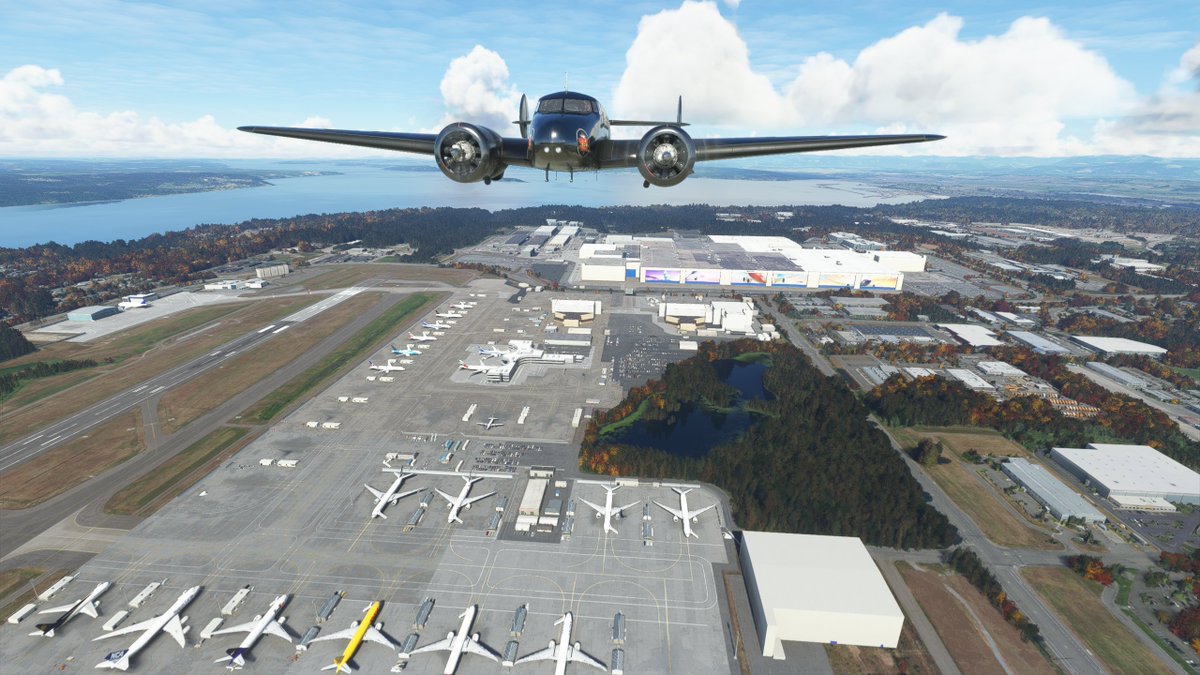
Because it's only rudely appropriate that I should buzz the huge Boeing factory at Everett at 1,000 feet.

It's also beautiful to see all those new airliners lined up outside the Boeing factory.
The Model 10 Electra later gave rise to the (smaller) Model 12 Electra Junior and (larger) Model 14 Super Electra, based on the same design.
Howard Hughes flew a Model 14 Super Electra in a record-setting around-the-world journey in 1938, taking 3 days, 19 hours, 17 minutes to fly 14,672 miles.
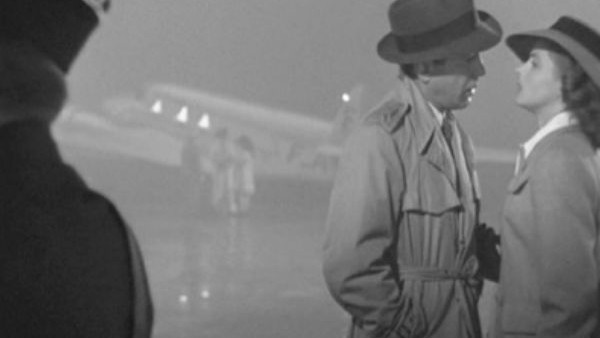
You might also recognize the Lockheed Model 10 Electra from the closing scene of the film "Casablanca".
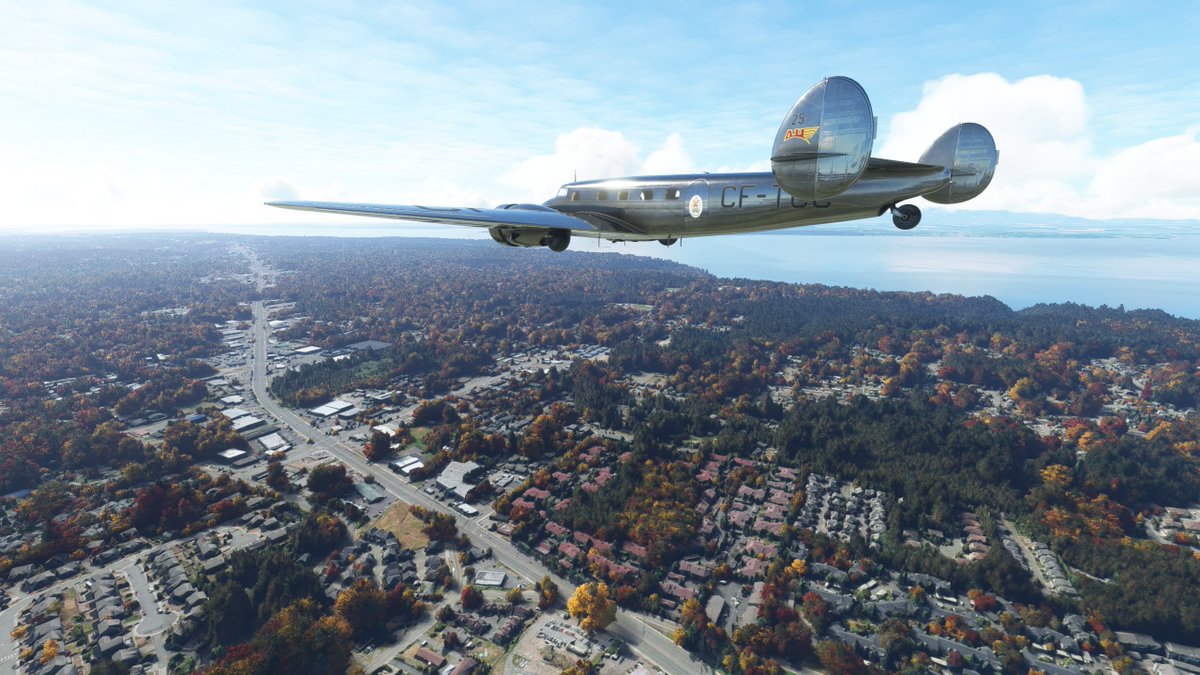
We've nearly complete our own journey to Seattle. It's taken less than an hour.
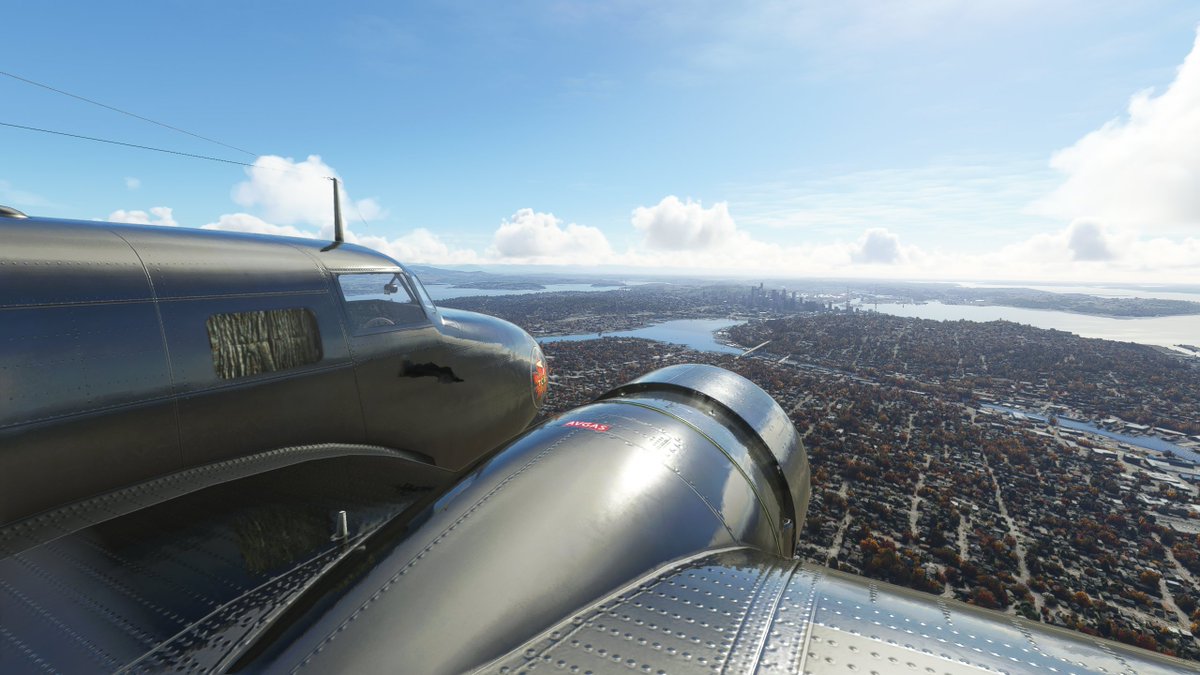
Now this is why you don't fly at 1,000 feet without closely examining your intended route. Those three radio masts, just north of downtown Seattle, are over 1,000 feet tall. Good thing I was looking.
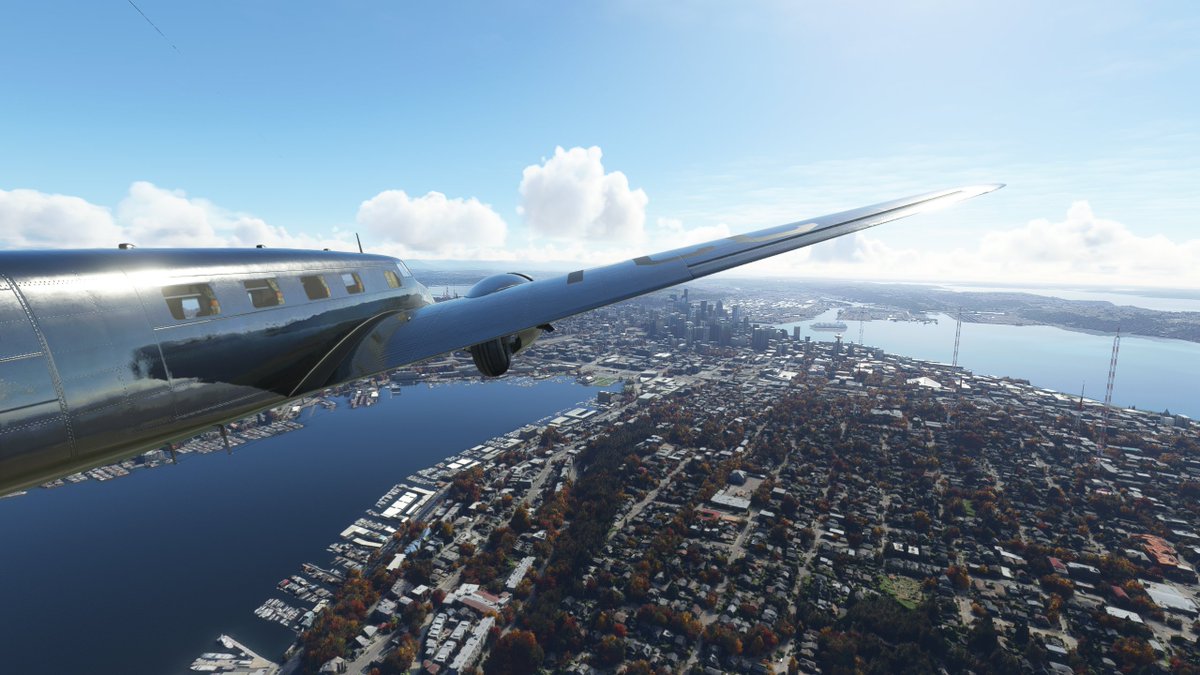
There's the Space Needle to my right.
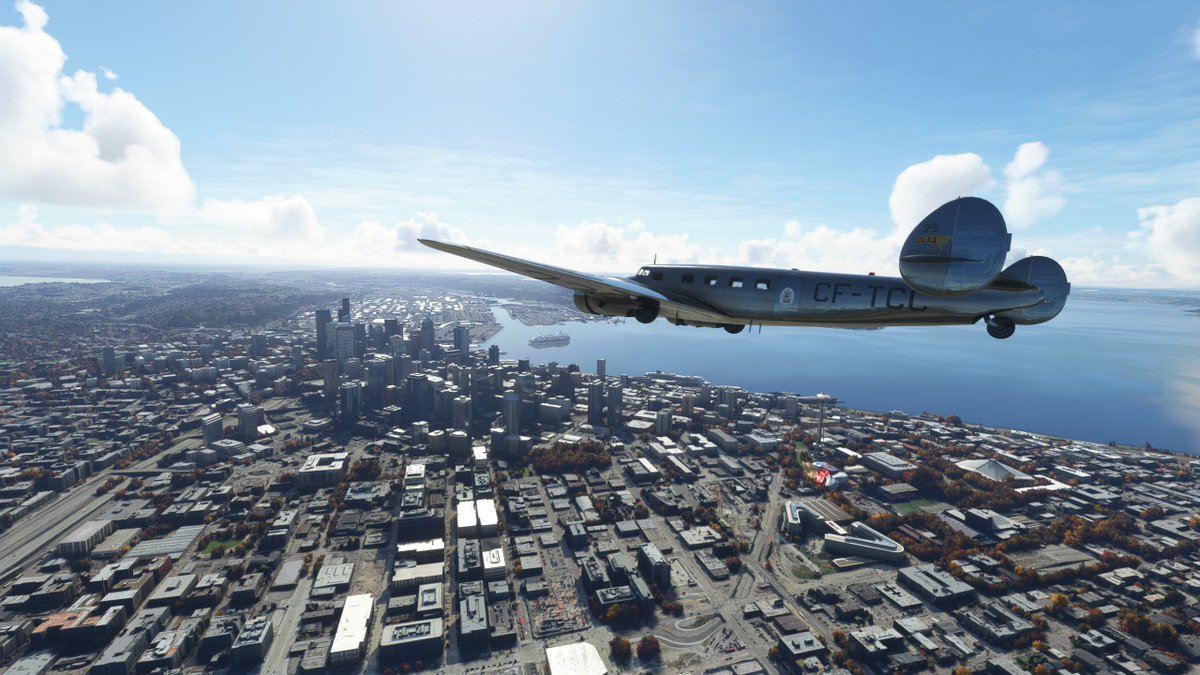
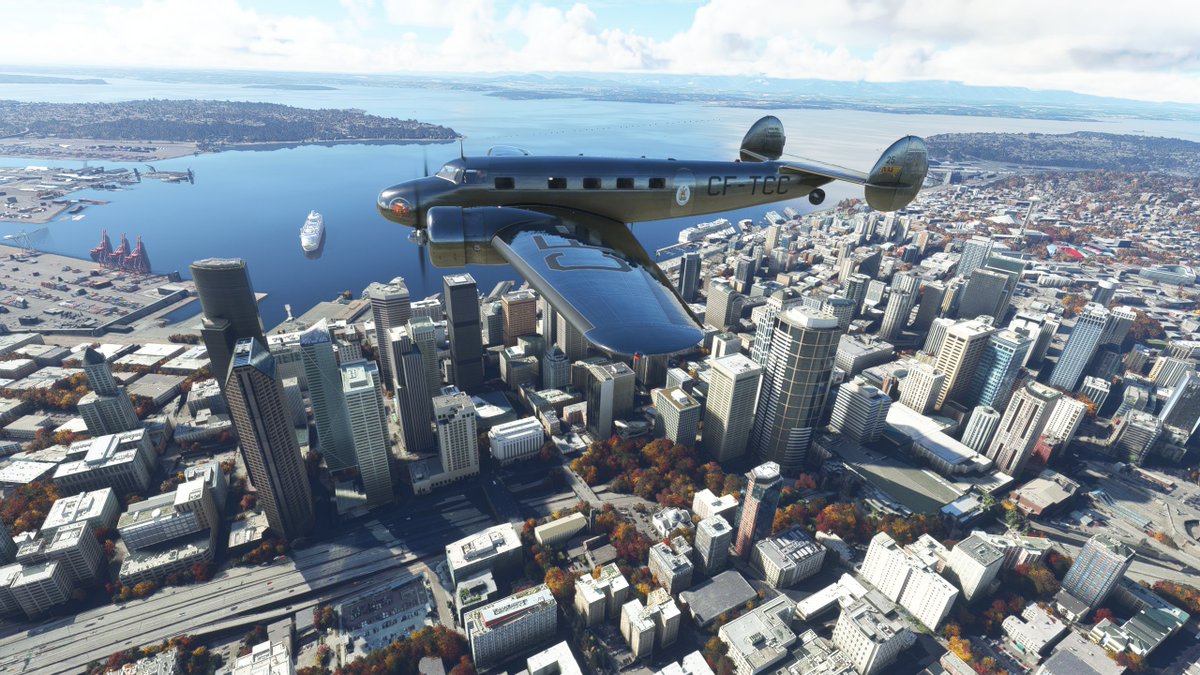
Flying low over downtown Seattle.
The original TCA flight from Vancouver almost certainly landed at Boeing Field, now King's County Int'l Airport, which opened in 1928. Seattle-Tacoma In'tl, visible a bit farther in the distance, didn't open until 1944.
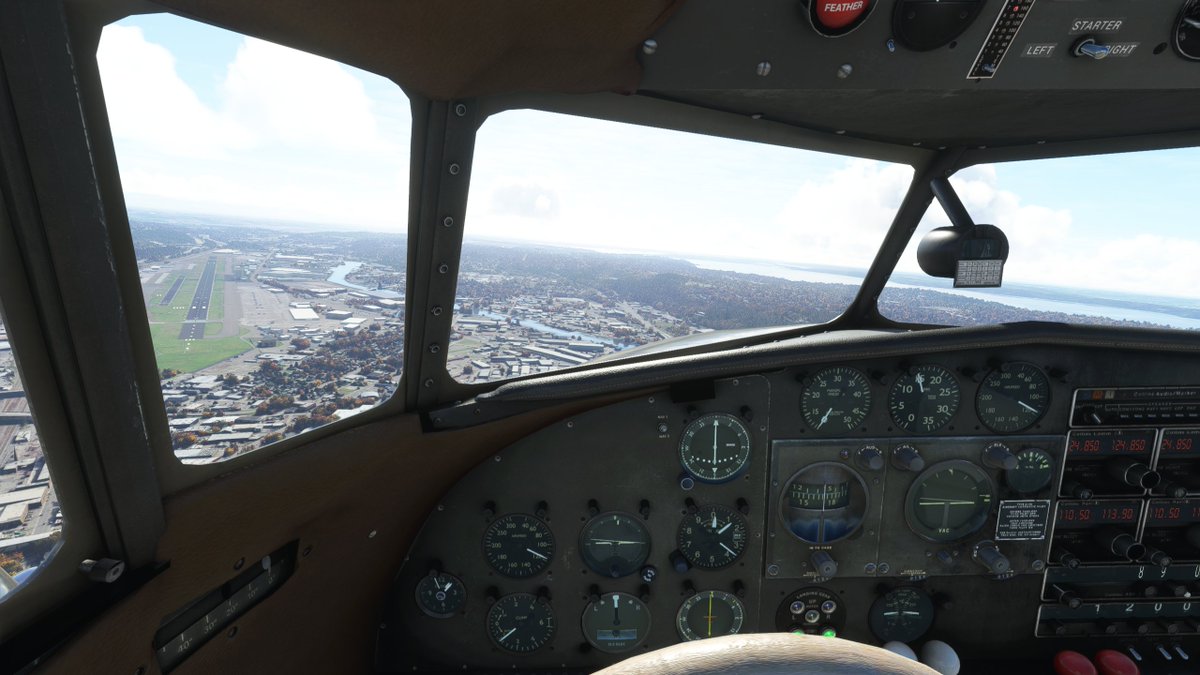
Gear down and entering the downwind leg of the traffic pattern for Boeing Field.

Turning and slowing onto base. The ideal touchdown speed is around 75-85 knots.
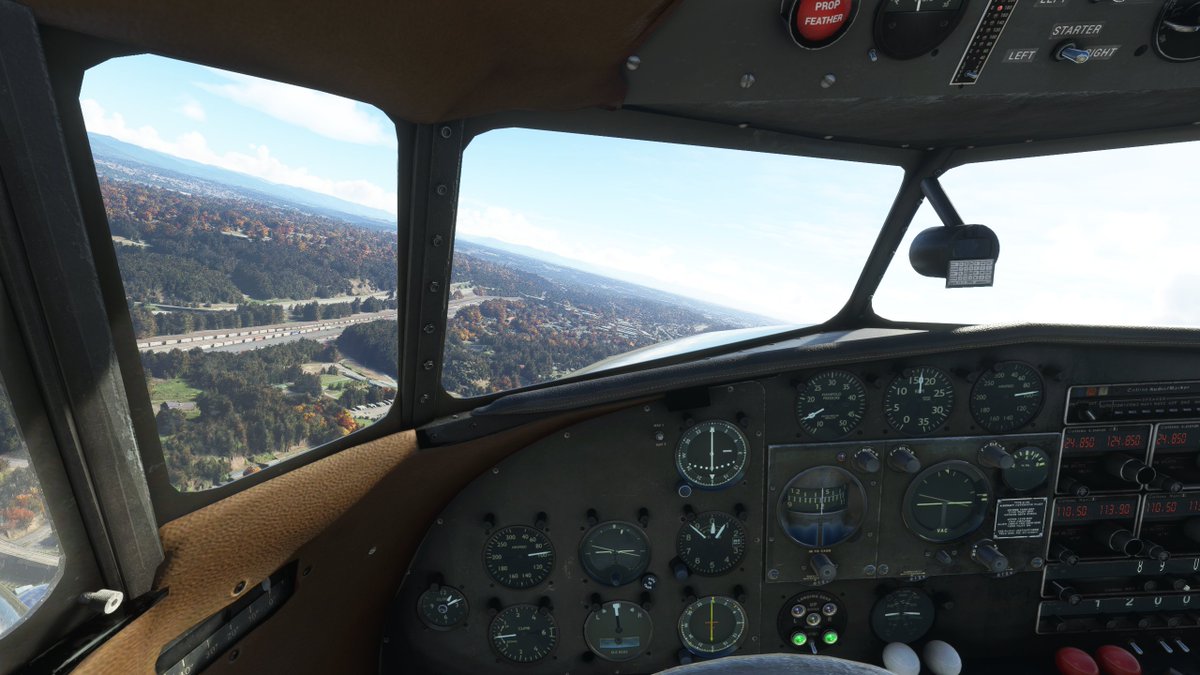
Last checks on final: gear down, flaps full down, prop full, mixture full rich, speed 80 knots.
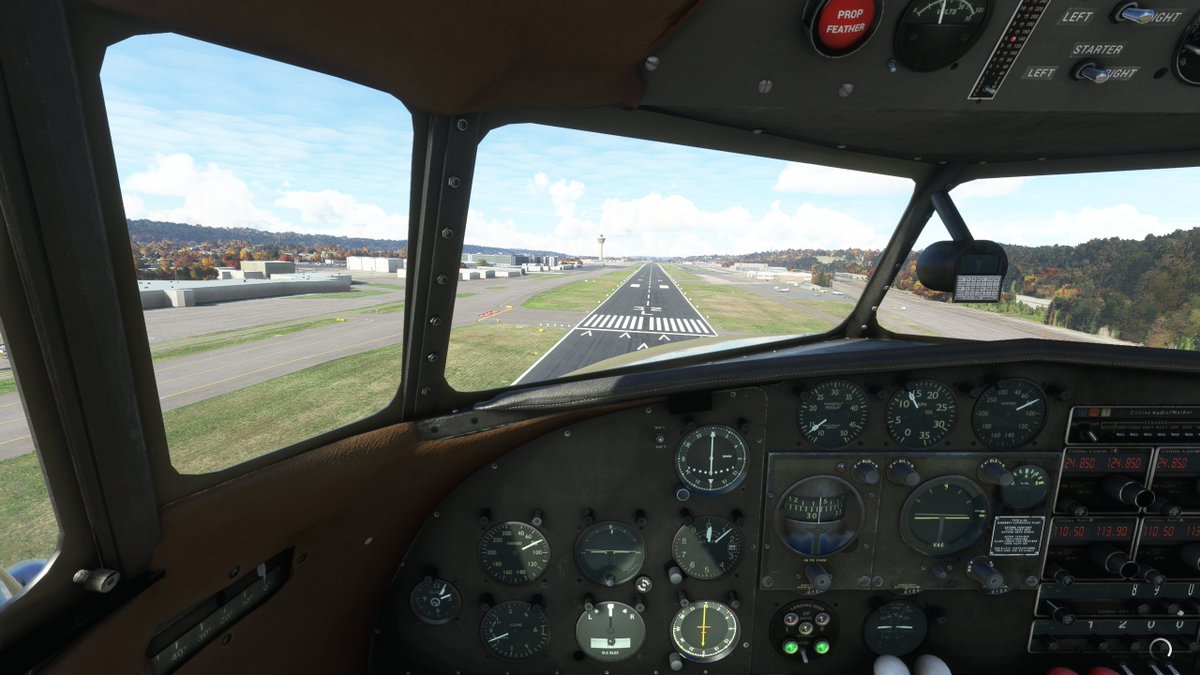
Hope you enjoyed this history of the Lockheed Model 10 Electra. I also have the Lockheed P-38 Lightning (a twin-engine, twin-tail fighter from WW2) which I'll be doing soon, when I get a chance.
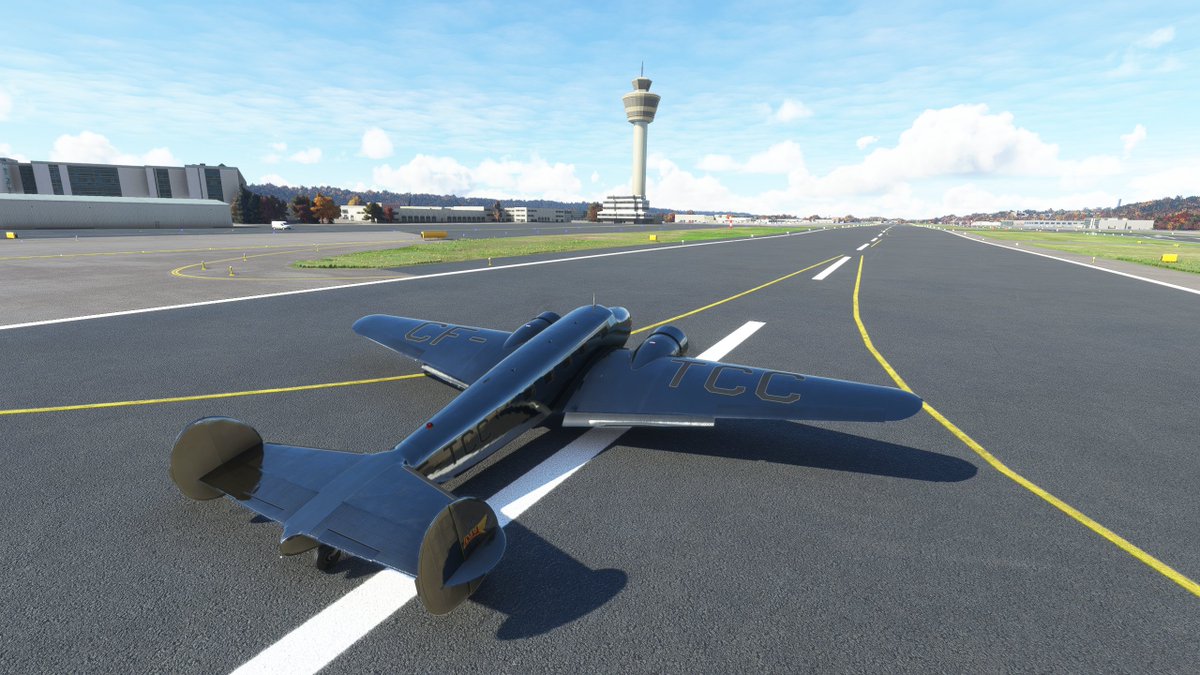
Ladies and gentlemen, welcome to Seattle's Boeing Field. We hope you enjoyed this trip with Trans-Canada Air Lines. Please be careful stepping down from the aircraft exit, and make sure not leave any of your belongings behind.
• • •
Missing some Tweet in this thread? You can try to
force a refresh




