African World History Profile picture
Oct 8, 2021 16 tweets 7 min read Read on X
Neolithic Kiffian
Reconstruction of Ancient Saharan Skeletal remains from Gobero, Niger 7500 BC.

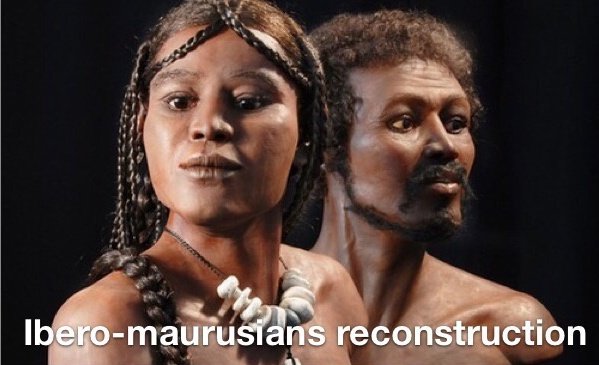
They were 6 feet tall and Craniometric analysis indicates that they were closely related to the Late Pleistocene Iberomaurusians and early Holocene Capsians of the Maghreb.
Image
Image
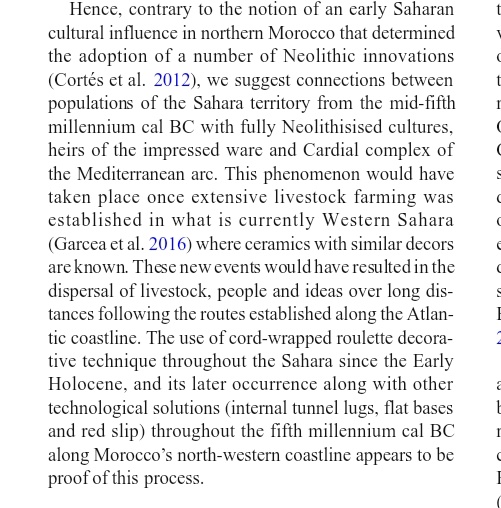
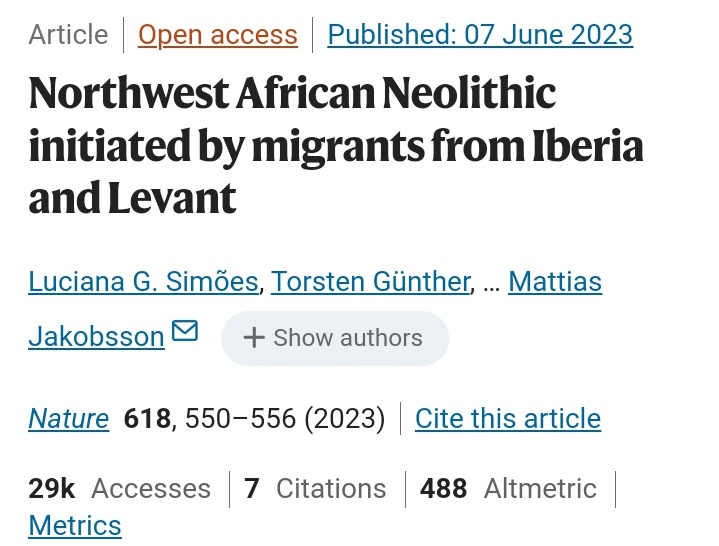
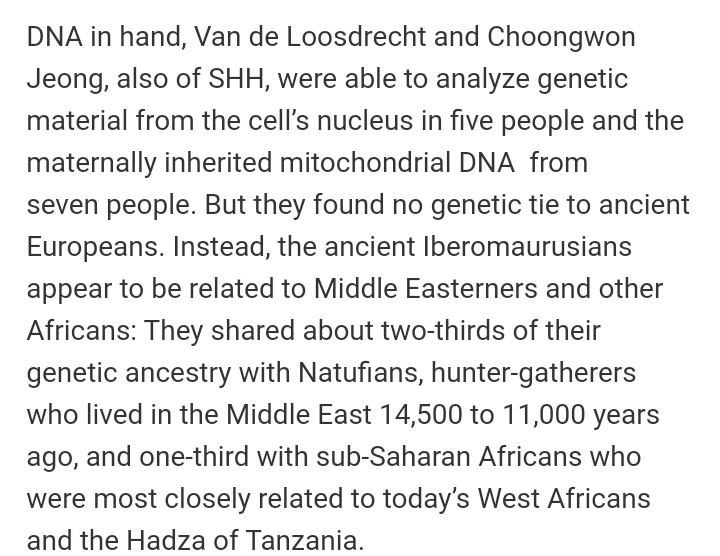
"sub-Saharan DNA in the Iberomaurusian genome, Iberomaurusians may have gotten it from migrants from the south who were their contemporaries. Or they may have inherited the DNA from much more ancient ancestors" - Oldest DNA from Africa offers clues to mysterious ancient culture
Image
Image
Image
"Bantu-speaking populations living throughout sub-Saharan Africa are relative new-comers to this vast area....their origins lie to the northwest. Specifically, ca. 8,000 BP the desiccating Western Sahara"

- Professor Joel D Irish
"One small sample from Niger (ca. 7600 BC) was used to explore the purported proto-Bantu Saharan origins. The remaining samples, dating to the Iron Age and historic periods, are from west, west-central (i.e., western Bantu), and central (eastern Bantu) Africa"
"The Niger sample’s affinity to west Africans supports the possibility that it is representative of proto-Bantu ancestors...... All told, these results seem supportive of the hypothesized migrations."
- Professor Joel D Irish Image
Skeletal remains and possibly rock art from the pre historic southern Sahara reveal the practice of skull deformation.

Dr. Jitka Soukopova found them to be similar to neolithic Nigerian skulls, which can also be seen among cultures of the Congo.
Image
Image
"The Tin Hanakaten shelter in the lower part of the Tassili-n-Ajjer.......Another skeleton of a child dating to 7,900-120 BP (cal BP 8,771+168), was laying on a bed of wild plants in a chamber made of big flat stones, covered with a pile of stone blocks"

- Dr. Jitka Soukopova
"Remains of the skin confirmed that the child was dark-skinned. This individual had an abnormally shaped skull with a narrow face and a long nape of the neck, which possibly resulted from an illness. However, similar deformation has been noted amongst Nigerian Neolithic people" Image
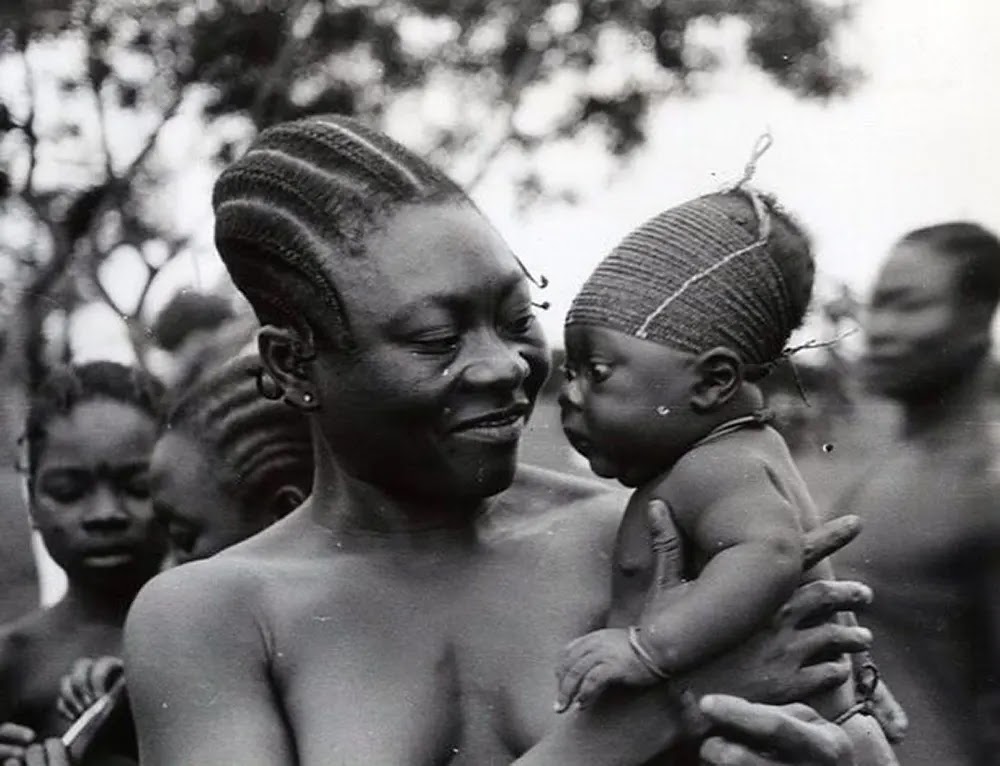
"Which suggests a deformation deliberately inflicted for cultural reasons, for example from the application of bandages or other compressive material to the head"
- Dr. Jitka Soukopova Image
"Ceramics emerged in sub-Saharan Africa and seem to have spread toward the central Sahara during the early Holocene at the end of the 10th and the beginning of the 9th millennium cal BC, while the desert zone became increasingly greener."

- Professor Eric Huysecom Image
"In the sub-Saharan Africa where we find impressive affinities between the still used masks and those represented in the Round Head art. Such similarities cannot be accidental since we never find them in the modern culture north of the Central Sahara"

- Dr Jitka Soukopova

Image
Image
Image
"Comparative studies of the Round Head motifs with the art in the regions south of the Tassili, mainly Chad, Niger and Mali, may find similarities rooted possibly in the same artistic tradition"

- Dr. Jitka Soukopova

Image
Image
Image
"The large majority of nodes joining northern and sub-Saharan patrilineages date back to the Green Sahara period."

- Dr. Eugenia D’Atanasio Image
"These data suggest that the presence in northern Africa of sub-Saharan patrilineages was not due to
recent contacts but probably occurred in more ancient times, possibly during the Green Sahara period considering the coalescence ages of the clades"

- Dr. Eugenia D’Atanasio Image
"The multifurcated structure of the E-M2 is suggestive of a first demographic expansion, which occurred about 10.5 kya, at the beginning of the last Green Sahara"

- Dr. Eugenia D’Atanasio
"Very likely, the Round Head paintings are the work of the same hunter- gatherers who produced the early Saharan ceramics and who were responsible for the first manipulations and management of animal and plant species"

- Professor Barbara E. Barich Image

• • •

Missing some Tweet in this thread? You can try to force a refresh

 

Keep Current with African World History

African World History Profile picture

Stay in touch and get notified when new unrolls are available from this author!

Read all threads

This Thread may be Removed Anytime!

PDF

Twitter may remove this content at anytime! Save it as PDF for later use!

Try unrolling a thread yourself!

how to unroll video
  1. Follow @ThreadReaderApp to mention us!

  2. From a Twitter thread mention us with a keyword "unroll"
@threadreaderapp unroll

Practice here first or read more on our help page!

More from @AfricanWorldH

Aug 25, 2025
From Ounjougou to Amekni and Tessalit, tracing the origin of ancient West African agriculture
10th millennium BCE - 4th Millennium BCE
(Thread) Image
Image
Since the African paleolithic (200,000 -100,000 ka) plants had been collected and used for food, medicinal purposes, anti pest control, as well as bedding, etc. Image
Image
By the 10th millennium BCE, foragers in Ounjougou, Mali were manufacturing ceramics and pots to store and cook collected wild grains.

By the 9th millennium BCE, they had spread North into the southern - central green Sahara, associated with the emergence of round head rock art. Image
Image
Image
Image
Read 17 tweets
Apr 19, 2024
Ancient Nigerians in Nsukka started smelting iron some time between 2631 - 2458 BCE, long before the arrival of Nok people

The dufuna canoe, Nok canoe art and Atlantic seashell terracotta may be evidence of Nok long distance trade with iron metallurgists, down the Niger River Image
"Some very early iron dates include 1895–1370 BCE at Tchire Ouma 147 in the Termit Massif region of Niger; 2631–2458 BCE at Lejja in Nsukka region, Nigeria"
- Foreman Bandama Image
"The beginning of iron production sometime between 750 and 550 BC"
- Louis Champion

"In Taruga he recovered terracotta fragments in context with iron-smelting furnaces. Radiocarbon measurements dated the site to the mid-first millennium BC"
- Dr. Nicole Rupp Image
Read 7 tweets
Apr 9, 2024
The Saharo-Sudanese industry, ancestors of Niger-Congo speakers constructed stone foundations to huts and stone enclosures 10,000 years ago, corralling Barbary sheep in caves during the green Sahara. This taming took place 2,000 years before the spread of pastoralism. Image
Dr. Jitka Soukupova speaking of the stone architecture of the green Sahara Image
"Early Holocene sheltered sites in the Tadrart Acacus massif offer impressive evidence of sophisticated forms of wild animal management and force us to reconsider the nature of human-animal relations prior to the introduction of domesticates to the region"
- Dr. Rocco Rotunno
Read 11 tweets
Mar 20, 2024
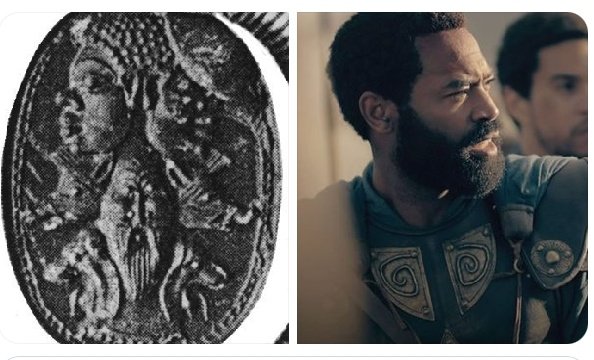
Saharo-Sudanese culture in Morocco and the ivory trade with ancient Iberia, during the Late Holocene, 4th-2nd Millennium BCE
(THREAD) Image
Image
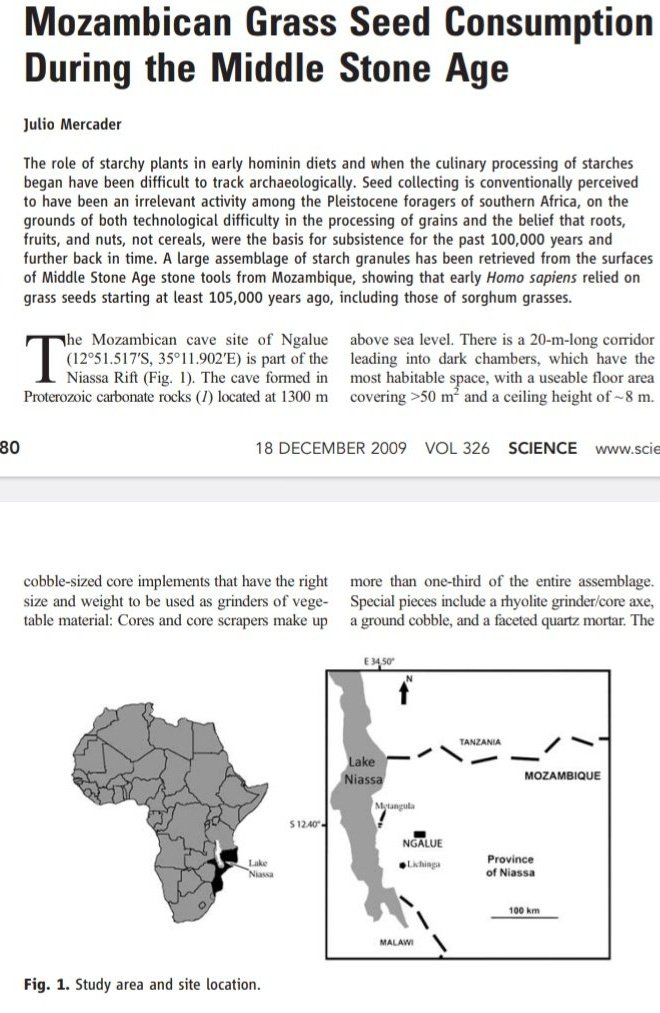
The oldest grass seed collection in the world was found in ancient South East Africa, dating back 100,000 years, long pre-dating some of the first signs of early Saharan farming in Mali and Takarkori, Libya.
science.org/doi/10.1126/sc…Image
Image
Image
Image
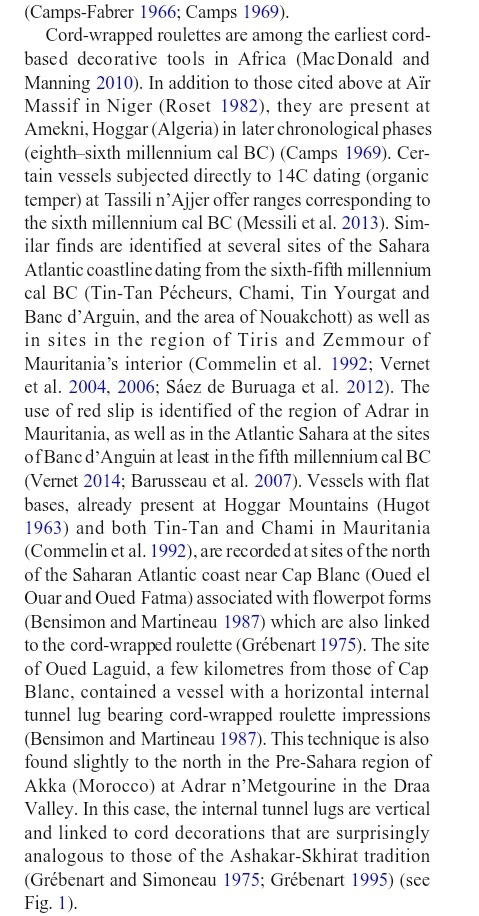
West African ceramics associated with proto-farming originated in Mali, 9,400 BCE and spread as far North as Morocco, where SSA roulette cord ceramics were found, along with Mediterranean derived ceramics from Iberia, 7,000 ka. Image
Image
Image
Image
Read 26 tweets
Feb 25, 2024
Diy-Gid-Biy/DGB stone ruins in the Mandara Mountains of northern Cameroon, were built between the 13th - 16th Century AD

Oral tradition, similar style stone architecture and pottery from the modern Chadic speakers of Gwoza hills, Nigeria links them to the builders of DGB sites Image
"archaeological considerations place the period of creation and use of the Diy-gid-biy between the 13th and 16th centuries . AD."
- Dr. Jean-Marie Datouang
"Known as Diy-Gi’d-Biy...... While varying greatly in size, they constitute the most impressive set of indigenous stone-built structures in sub-Saharan Africa out-side the Horn and the complex of ruins in Zimbabwe and Mozambique"
- Nicholas David Image
Image
Read 11 tweets
Feb 19, 2024
The Gangara Stone Ruins believed to be post neolithic, pre Islamic architecture

Built by Wangara/Soninke people called "Gangara" by medieval Arabs during the Ghana empire. The ceramics discovered are said to be similar to one's still being made by moden Black Mauritanians. Image
"Al-Bakrî mentions the Gangara as a group of Blacks in the neighborhood of the Senhaja town of Banklabîn.........Gangara, or Guangara, on the other hand, corresponds phonetically better to our group, whom al-Bakrî characterizes as black non-Muslims"
- Andreas W. Massing Image
Image
"Traditions are agreed that
these 'post-neolithic, pre-Islamic' villages belonged to black people called 'Gangara', ancestors of the present-day Soninke (Sarracolet)"
- E. Ann McDOUGALL Image
Read 18 tweets

Did Thread Reader help you today?

Support us! We are indie developers!


This site is made by just two indie developers on a laptop doing marketing, support and development! Read more about the story.

Become a Premium Member ($3/month or $30/year) and get exclusive features!

Become Premium

Don't want to be a Premium member but still want to support us?

Make a small donation by buying us coffee ($5) or help with server cost ($10)

Donate via Paypal

Or Donate anonymously using crypto!

Ethereum

0xfe58350B80634f60Fa6Dc149a72b4DFbc17D341E copy

Bitcoin

3ATGMxNzCUFzxpMCHL5sWSt4DVtS8UqXpi copy

Thank you for your support!

Follow Us!

:(