Making money in markets 101 - This thread will focus on two types of investing that are fundamentally different and when blurred create great confusion. 1. Is Alpha. 2. Is collecting risk premium paid to savers by those who need cash. Let's call that Beta.
Alpha is the incredibly hard task of buying something before everyone else buys it and selling it when everyone else has bought. Alpha is active market timing. It includes stock picking, macro, and, RV and liquidity providing investing (tho these imho blurs alpha vs beta)
Beta is reaping the return over time of providing those who need cash with your savings in return for a risk premium paid to you. It is PASSIVE. It includes investing styles such as long only. Single asset long only. Multi asset long only. Global multi asset long only
Alpha is very hard as it zero sum. In order to generate alpha you have to beat others in the market and their loss is your gain. With one caveat. There are a few players in the market who are not driven by their investment returns. But operate in markets for social or political
Reasons. I am sure you can guess who these net payers of alpha are. Hint hint - CB's, currency manipulating governments, fiscal policy makers. Their actions move prices often against their direct profit and loss benefit. Regardless Alpha is very hard.
No matter how hard you work or how smart you are or how well your algos are programmed you almost certainly do not have alpha. It's that hard. As a side note. There are many legendary alpha collectors. With ten year track records of flipping a coin heads every year
Remember that if 1000 people randomly flip a coin for 10 years one of them will be an investor legend. Doesn't mean that he has alpha
Beta is ez. It's free money. Give someone your savings and they will pay you a positive return above cash over time.
Three things to worry about with beta 1. Transaction costs and fees 2. Balance which if not achieved hides alpha bets. The first one is easily remedied. When allocating your savings focus on minimize transaction costs and fees. That means PASSIVE investing.
If you are choosing a mutual fund or etf as part of your beta choose the low cost version. If someone is charging high fees for passive exposure to an asset class one has to ask why? Are they hiding active behavior in order to outperform? If so see hidden alpha
Beta returns are small and steady. Don't chew them up with asset manager fees, commissions, and or transaction costs.
Balance in most environments is not hard to get. Your goal is to avoid making a hidden bet. The 60/40 portfolio has a hidden bet. It is pro growth. If growth underperforms expectations over the long term holding of your investment you may piss away all your risk premium return
Most macro investors believe that asset prices are driven long term by growth and inflation. You can get a long way to having no hidden bets if you invest in a portfolio of assets that are balanced to these shifts.
There are many fund managers who have great products that attempt to provide this balance at a low fee with low transaction costs. They are great products which I fully expected endorse
But you can do it yourself as well. The easiest and best way is to buy low fee passive mutual funds in each asset class and weight those to generate balance.
The problem for investors today however makes balance trickier than ever before. Finding asset that do well when growth outperforms expectations is ez. Stocks give you that. Higher inflation also ez. Stocks, commodities and gold for example
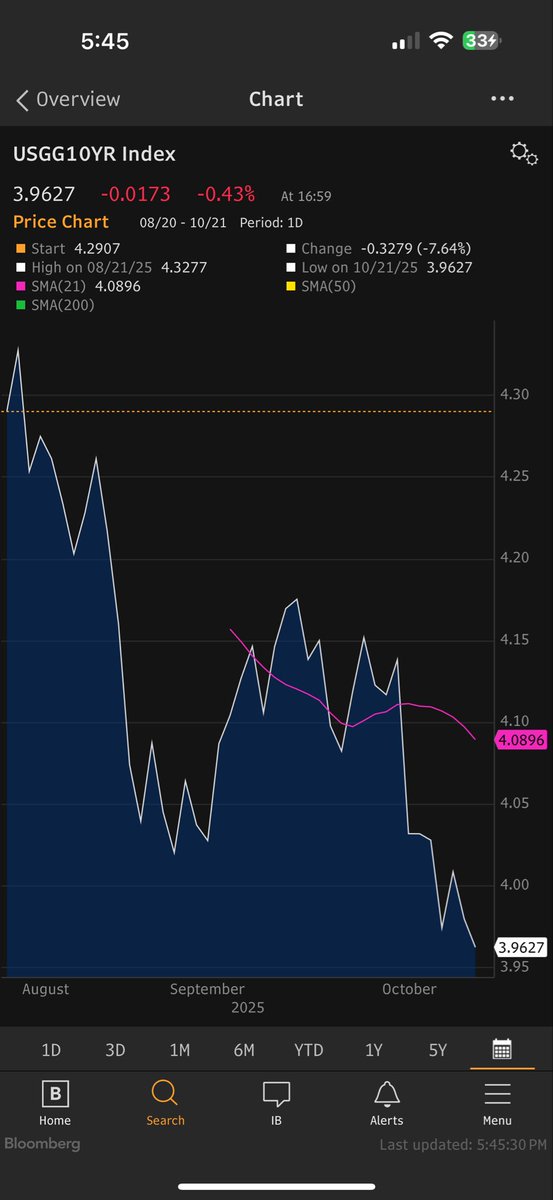
Lower growth and lower inflation are super hard. This is because nominal bonds which are precisely the asset needed to provide that exposure already have extremely low yields. That makes bonds highly asymmetric in return.
Nominal bonds will rally in falling growth and/or inflation environment but their upside is limited by their already low or negative yield. ONTH they will fall without limit when growth and/or inflation are higher than expected.
Finding good bonds with low default risk and high coupons is the most important thing any investor can do for their balanced portfolio. I strongly encourage looking at your portfolio and always seizing on opportunities to BTD in bonds as I am sure you are underweight
That said today isn't about alpha suggesting that bonds across the board are cheap. It's about seeking balance. If you can't buy enough bonds in case a disinflationary below trend growth environment occurs perhaps you may want to recognize your hidden pro growth bet and size down
Because the world is as it is and existing assets at their current prices add up to an unbalanced pro growth pro inflation portfolio recognize that the world will feel more pain in low growth low inflation worlds and more greed in rosy times. This isn't about alpha
Alpha may suggests short term plays. This is about what the worlds savers currently own. You have a choice what to own and don't have to own the market basket.
Balance and low cost. End of tweet
*two things
• • •
Missing some Tweet in this thread? You can try to
force a refresh