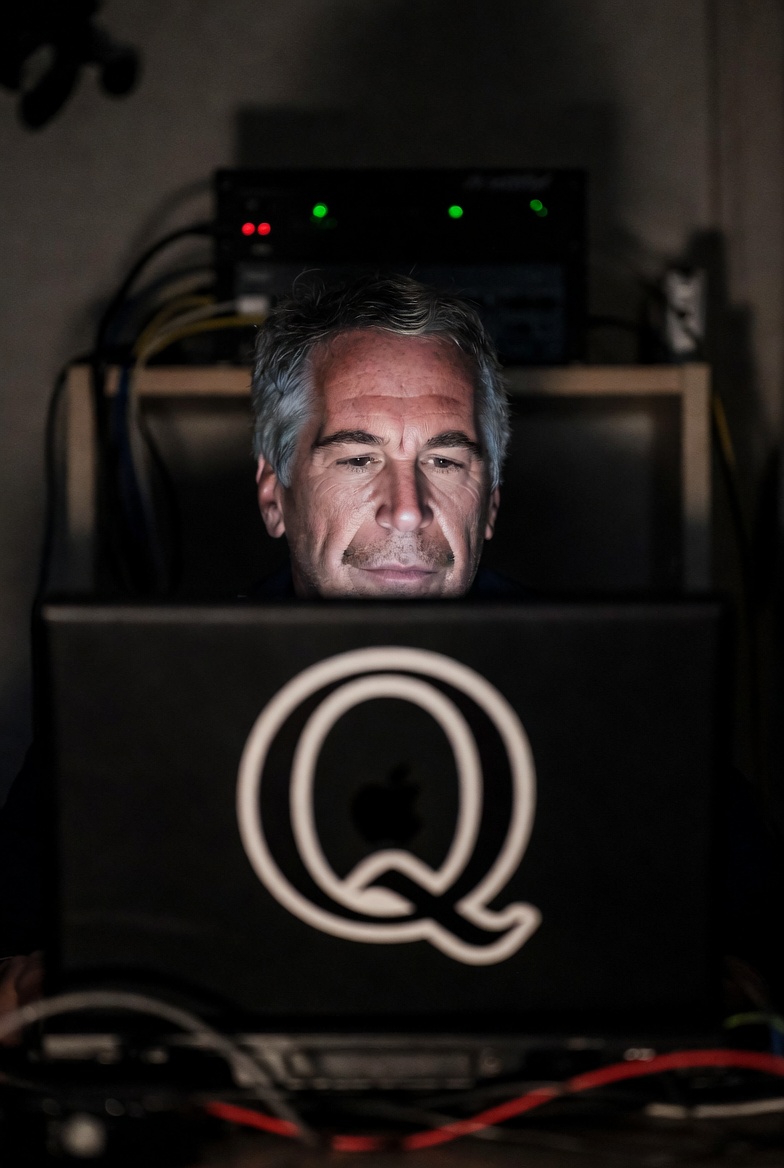
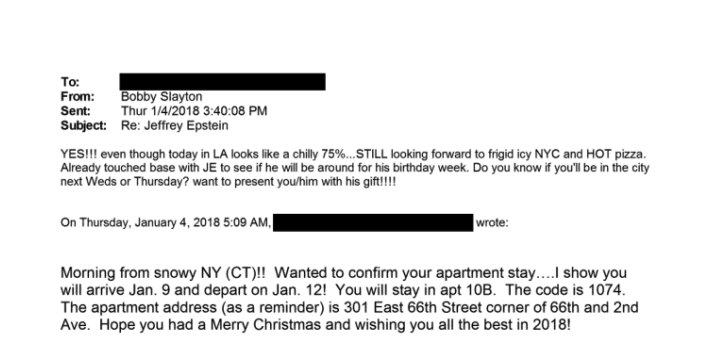
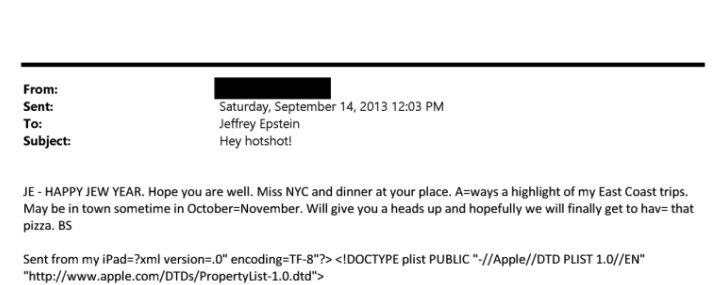
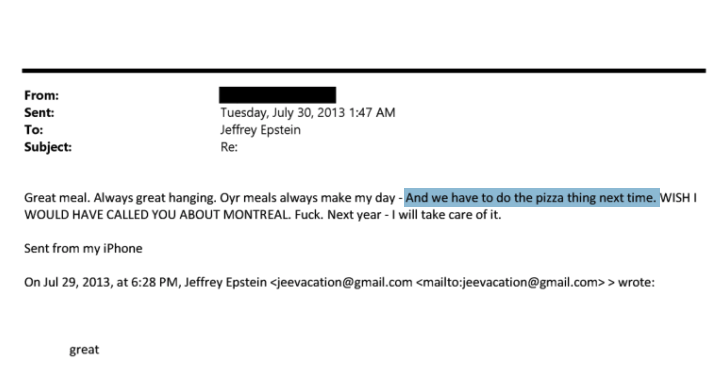
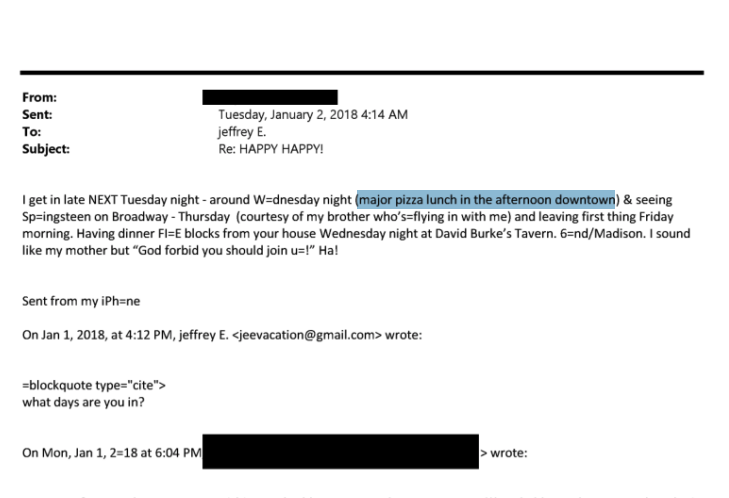
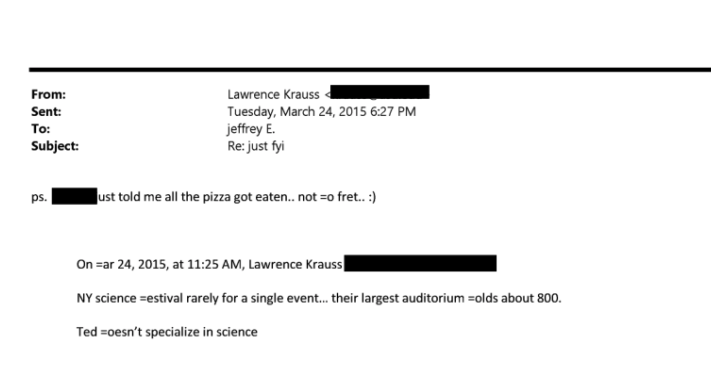
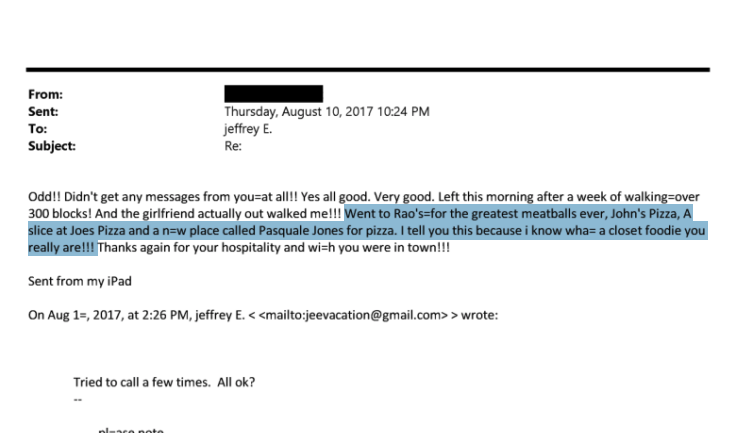
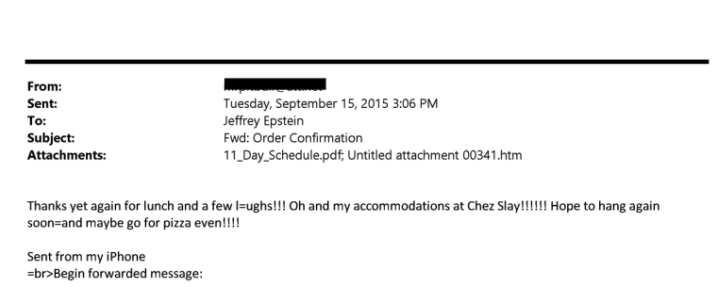
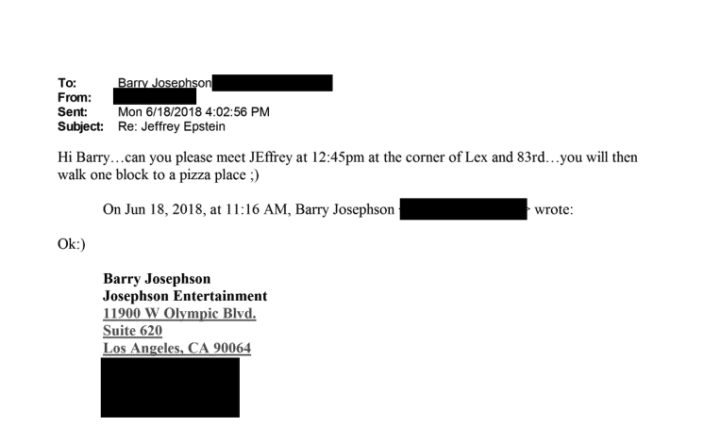
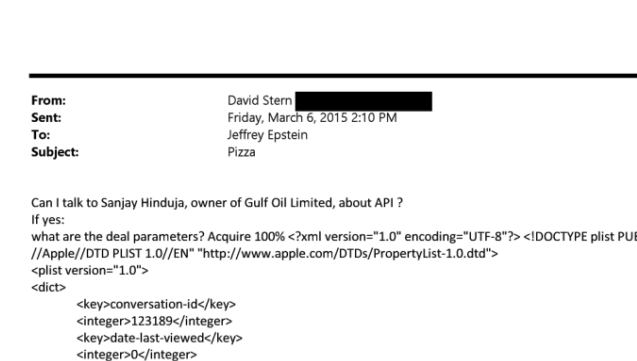
Wouldn't it be wild if we find out Qanon was ... Jeffrey Epstein?
And that the whole thing was a plot designed to make the idea of an elite child sex trafficking ring so ludicrous, so dangerous, that we must purge the internet of such "fake news," lest we want more Pizzagate tragedies?
Hear me out.
In 2013, Epstein meets with the 4chan founder the day before the platform drops its infamous /pol board, which became a hive for "far right" memes and eventually Qanon. (Of note, 4chan's founder says the timing is a coincidence and he regrets his relationship w/ Epstein.)
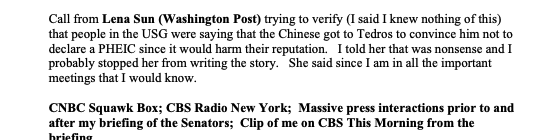
The meeting came via Bill Gates' adviser/Epstein's friend, Boris Nikolic, who marveled of these platforms' exploitability to Epstein: "the potential for manipulation is huge." Nikolic linked a WaPo article discussing how 4Chan had been exploited to launch cyberattacks and fuel a “hive mind” mentality. justice.gov/epstein/files/…
Later in 2013, Epstein emails Joi Ito, Martin Nowak, and Joscha Bach on the importance of narratives people can emotionally invest in: "the deception of the individual is necessary for the survivability of the group... A nation needs heroes. A hero is someone who is dead, for the benefit of the group. deception between different hierarchies... work hard to become successful, benefit for the org, not you" justice.gov/epstein/files/…
We also see in these files Epstein spending a fortune manipulating online perceptions of his operations.
In 2012, he hired Reputation Changer LLC for a comprehensive "Reputation Clearing Action Plan.™" The proposal explicitly states the goal was to "suppress negative listings that can render them nearly invisible" and achieve "full control and maintenance of Jeffrey Epstein's major search engine results to avoid permanent public embarrassment." justice.gov/epstein/files/…
Reputation Changer used a "proprietary Reputation Management and Real-Time Linking System™" designed to "push negative content about you or your brand off of the first page of the major search engines and out of general public view" [Page 7]. Their analysis showed that 95% of web users don't search past page 1, making first-page dominance crucial.
The firm identified specific "negative keywords" including "Jeffrey Epstein" and monitored search results showing problematic content like:"Jeffrey Epstein kept a diary of his under-aged victims - Telegraph""Jeffrey Epstein: How the Hedge Fund Mogul Pedophile Got Off Easy""Jeffrey Epstein: This Isn't A Sex Offender, It's An Offender!" [Page 6]2016: Wikileaks begins DNC drops. This is the first time the public encounters the kind of depraved behavior we've since learned overlaps with the Epstein files.
Soon thereafter, Epstein is emailing his lawyer with the idea of mixing fake, extreme emails into the real ones: "What a trick could be played," he writes. justice.gov/epstein/files/…
2017: Feds turn up heat (supposedly) on Epstein, around which time the Qanon drops begin. The conspiracy theory's focus on elite child trafficking networks directly mirrored the allegations against Epstein.
Also of note: News of Epstein's death was posted to 4chan more than half an hour before it became public, leading the NYCFD to investigate if someone leaked. This indicates the platform's potential use for seeding narratives as part of larger psyops.
The Epstein files also include an email from a redacted source (although I can see it's his friend, the late author Edward Jay Epstein) with CIA Document #1035-960 from April 1967 marked "PSYCH" for Psychological Warfare Operations, which provided instructions for "media assets" on how to label critics as "conspiracy theorists." Epstein responded: "great, i would frame it and highlight the words our ploy" (emph. added). (I also can't help but note: Edward Jay Epstein was a published author whose most famous book skeptically examined the Warren Commission report; he would have been well experienced to help manufacture fake Qanon posts, but THIS IS PURE SPECULATION.) justice.gov/epstein/files/…
Also of significance is Ghsillane Maxwell's prominent role in Reddit. Maxwell's Reddit account The account "accumulated 14,993,132 Karma since March 11, 2016," per the FBI, and "served as an influential moderator for many subreddits. This is an extraordinary amount of karma indicating either highly popular content, or more likely, systematic posting. justice.gov/epstein/files/…
The FBI noted "gaps in posting surrounding the death of Ghislaine Maxwell's mother (Elisabeth Maxwell), suggesting the account's activity correlated with real-world events in Maxwell's life. Unsurprisingly, Maxwell used the account to try persuading people toward more lenient attitudes on child sex trafficking, posting links like:
"Falkvinge: Three strong reasons child porn must be re-legalized in the coming decade"
"Girl steps in front of man's car. He grabs her arm and lectures her about traffic safety. Result? He is now a convicted sex offender"
Finally, the Qanon craziness ended up playing a role in Maxwell's trial. During one of the proceedings, "Qanon activists" began interrupting proceedings, and her lawyers used the apparent risk of Pizzagate/Qanon violence to insist she be granted bail.
OF COURSE, I have identified NO SMOKING GUN that Jeffrey Epstein was surreptitiously running the Qanon psyop. But there is certainly a lot of circumstantial evidence that overlaps with his own strategic interests.
Ultimately, in the Qanon conspiracy, Trump was the hero who was secretly arranging to have pedos lined up & arrested. In reality, he doesn't seem particularly interested in us pulling this thread any harder. Opinions as to why will surely differ.
Btw I found the emails showing Epstein’s interest in psychological operations via @IanCarrollShow’s ridiculously clutch @Thewebb_io (which btw seems to be shadowbanned as it doesn’t appear in X searches)
@IanCarrollShow @Thewebb_io Another curiosity: Did you know the Pizzagate shooter was recently killed in a police shooting? cbsnews.com/news/pizzagate…
Flashback: In 2013 @AmbJohnBolton said @Snowden "ought to swing from a tall oak tree"
In 2017, John Bolton, commented on Hillary's illegal server, saying if he used a private email server, he'd be prosecuted.
Varney: “You were ambassador to the United Nations. You dealt in secret material. I’m sure you did. If you played fast and loose with it, what happened to you?”
BOLTON: “Look if I tried to set up my own separate email communications system it would have been leaked to ‘The Washington Post’ and ‘The New York Times’ simultaneously with my asking for it. If I’d going ahead and set it up I think I would be liable to prosecution."
@AmbJohnBolton @Snowden In 2023, Bolton commented on Trump: "He was kind of a collector of things that he thought were of interest to him for some reason or another, clippings, mementos, classified documents. And it was very disturbing."
Thread: Democrats have recently been agitating for increased violence against conservatives.
1) @ChrisMurphyCT: "We're in a war right now ... you have to be willing to do whatever is necessary in order to save the country.”
2) Ali Velshi uses his MSNBC platform to stir up political violence, telling Democratic leaders it’s time to “fight with both hands” & “fight a bit dirty”
3) Tim Walz tells fans to remain hopeful that Trump will die soon
To settle the debate over birthright citizenship and the 14th Amendment once & for all, I'm hereby posting the vast majority of the Senate's ratifying debate from May 30, 1866. (Thanks for ChatGPT for spending the last few hours helping me transcribe dozens of screenshots from the original congressional record.)
The transcript runs around 22 pages & it's possible there are some typos, but I'll summarize it briefly: The amendment's author, Sen. Jacob M. Howard, said his purpose in crafting the birthright citizenship clause was to create a standard policy across the United States, premised largely on some states' resistance to enabling newly freed blacks to become fully active members of the body politic.
Noting the provision's specific application to freed blacks, Delaware's Sen. Willard Saulsbury said: "I do not presume that any one will pretend to disguise the fact that the object of this first section is simply to declare that negroes shall be citizens of the United States. There can be no other object in it, I presume, than a further extension of the legislative kindness and beneficence of Congress toward that class of people."
Sen. Howard emphasized from the beginning that birthright citizenship would not apply to anyone born in the United States whose parents were not entirely under American jurisdiction:
"[E]very person born within the limits of the United States, and subject to their jurisdiction, is by virtue of natural law and national law a citizen of the United States. This will not, of course, include persons born in the United States who are foreigners, aliens, who belong to the families of ambassadors or foreign ministers accredited to the government of the United States, but will include every other class of person."
Note here that he's listing various classes of people the provision would not apply to — foreigners, aliens, children of ambassadors or foreign ministers; the word "or" clearly indicates he's listing various groups, not grouping them all into the ambassador category, as some have falsely claimed online.
Maryland Sen. Reverdy Johnson likewise emphasized the provision would not apply to children whose parents were still subject to another country.
"Now, all this amendment provides is, that all persons born in the United States and not subject to some foreign Power—for that, no doubt, is the meaning of the committee who have brought the matter before us—shall be considered as citizens of the United States ... If there are to be citizens of the United States entitled everywhere to the character of citizens of the United States, there should be some certain definition of what citizenship is, what has created the character of citizen as between himself and the United States, and the amendment says citizenship may depend upon birth, and I know of no better way to give rise to citizenship than the fact of birth within the territory of the United States, born of parents who at the time were subject to the authority of the United States"
After this assurance, the debate moved to Gypsies and Chinese people in California, and concern they may game the system to overtake the domestic population. These groups were singled out as examples of peoples not automatically entitled to citizenship merely for being born within the territorial United States, and modern progressives are officially trigger warned upon reading this section.
The debate then moved to Indians, and once again there you'll see agreement that Indians that owed allegiance to a tribe would not be American citizens simply by virtue of being born in U.S. soil. However, the senators did say "civilized" Indians — i.e., those trying to become Americans — could.
Sen. Howard: "Indians born within the limits of the United States, and who maintain their tribal relations, are not, in the sense of this amendment, born subject to the jurisdiction of the United States. They are regarded, and always have been in our legislation and jurisprudence, as being quasi foreign nations."
Illinois' Senator Lyman Trumbull concurred:
"I have already replied to the suggestion as to the Indians being subject to our jurisdiction. They are not subject to our jurisdiction in the sense of owing allegiance solely to the United States; and the Senator from Maryland, if he will look into our statutes, will search in vain for any means of trying these wild Indians. A person can only be tried for a criminal offense in pursuance of laws, and he must be tried in a district which must have been fixed by law before the crime was committed. We have had in this country, and have today, a large region of country within the territorial limits of the United States, unorganized, over which we do not pretend to exercise any civil or criminal jurisdiction, where wild tribes of Indians roam at pleasure, subject to their own laws and regulations, and we do not pretend to interfere with them. They would not be embraced by this provision. For these reasons I think this language is better than the language employed by the civil rights bill [which had recently been passed]."
Sen. Howard repeatedly emphasized the importance of birthright citizenship only applying when BOTH parents were fully under American jurisdiction, not owing loyalty to any other country/tribe/etc.:
"If there are to be citizens of the United States entitled everywhere to the character of citizens of the United States, there should be some certain definition of what citizenship is, what has created the character of citizen as between himself and the United States, and the amendment says that citizenship may depend upon birth, and I know of no better way to give rise to citizenship than the fact of birth within the territory of the United States, born of parents who at the time were subject to the authority of the United States.
"I am, however, by no means prepared to say, as I think I have intimated before, that being born within the United States, independent of any new constitutional provision on the subject, creates the relation of citizen to the United States."
Oregon's Senator George Henry Williams echoed this key point that the provision applies to children whose parents are under the jurisdiction of the United States and the United States only:
"In one sense, all persons born within the geographical limits of the United States are subject to the jurisdiction of the United States, but they are not subject to the jurisdiction of the United States in every sense. Take the child of an ambassador. In one sense, that child born in the United States is subject to the jurisdiction of the United States, because if that child commits the crime of murder, or commits any other crime against the laws of the country, to a certain extent he is subject to the jurisdiction of the United States, but not in every respect; and so with these Indians. All persons living within a judicial district may be said, in one sense, to be subject to the jurisdiction of the court in that district, but they are not in every sense subject to the jurisdiction of the court until they are brought, by proper process, within the reach of the power of the court. I understand the words here, "subject to the jurisdiction of the United States," to mean fully and completely subject to the jurisdiction of the United States."
Read through the whole debate. You won't find anyone arguing that this birthright citizenship provision would apply to anyone born within the territorial United States automatically. Before I paste the text, here's a link to the original source: babel.hathitrust.org/cgi/pt?id=osu.…
Mr. HOWARD. I now move to take up House joint resolution No. 127.
The motion was agreed to; and the Senate, as in Committee of the Whole, resumed the consideration of the joint resolution (H. R. No. 127) proposing an amendment to the Constitution of the United States.
The PRESIDENT pro tempore. The question is on the amendments proposed by the Senator from Michigan, [Mr. HOWARD.]
Mr. HOWARD. The first amendment is to section one, declaring that “all persons born in the United States, and subject to the jurisdiction thereof, are citizens of the United States and of the States wherein they reside.”
I do not propose to say anything on that subject except that the question of citizenship has been so fully discussed in this body as not to need any further elucidation, in my opinion.
This amendment which I have offered is simply declaratory of what I regard as the law of the land already, that every person born within the limits of the United States, and subject to their jurisdiction, is by virtue of natural law and national law a citizen of the United States.
This will not, of course, include persons born in the United States who are foreigners, aliens, who belong to the families of ambassadors or foreign ministers accredited to the Government of the United States, but will include every other class of persons. It settles the great question of citizenship and removes all doubt as to what persons are or are not citizens of the United States. This has long been a great desideratum in the jurisprudence and legislation of this country.
The PRESIDENT pro tempore. The first amendment proposed by the Senator from Michigan will be read.
The Secretary read the amendment, which was in line nine, after the words “section one,” to insert:
All persons born in the United States, and subject to the jurisdiction thereof, are citizens of the United States and of the States wherein they reside.
So that the section will read:
Sec. 1. All persons born in the United States, and subject to the jurisdiction thereof, are citizens of the United States and of the States wherein they reside.
No State shall make or enforce any law which shall abridge the privileges or immunities of citizens of the United States, nor shall any State deprive any person of life, liberty, or property, without due process of law, nor deny to any person within its jurisdiction the equal protection of the laws.
Mr. DOOLITTLE. I presume the honorable Senator from Michigan does not intend by this amendment to include the Indians. I move, therefore, to amend the amendment—I presume he will have no objection to it—by inserting after the word “thereof” the words “excluding Indians not taxed.” The amendment would then read:
All persons born in the United States, and subject to the jurisdiction thereof, excluding Indians not taxed, are citizens of the United States and of the States wherein they reside.
Mr. HOWARD. I hope that amendment to the amendment will not be adopted. Indians born within the limits of the United States, and who maintain their tribal relations, are not, in the sense of this amendment, born subject to the jurisdiction of the United States. They are regarded, and always have been in our legislation and jurisprudence, as being quasi foreign nations.
Mr. COWAN. The honorable Senator from Michigan has given this subject, I have no doubt, a good deal of his attention, and I am really desirous to have a legal definition of “citizenship of the United States.” What does it mean? What is its length and breadth?
I would be glad if the honorable Senator in good earnest would favor us with some such definition. Is the child of the Chinese immigrant in California a citizen? Is the child of a Gypsy born in Pennsylvania a citizen? If so, what rights have they? Have they any more rights than a sojourner in the United States? If a traveler comes here from Ethiopia, from Australia, or from Great Britain, he is entitled, to a certain extent, to the protection of the laws. You cannot murder him with impunity. It is murder to kill him, the same as it is to kill another man. You cannot commit an assault and battery on him, I apprehend. He has a right to the protection of the laws; but he is not a citizen in the ordinary acceptation of the word.
It is perfectly clear that the mere fact that a man is born in the country has not heretofore entitled him to the right to exercise political power. He is not entitled, by virtue of that, to be an elector. An elector is one who is chosen by the people to perform that function, just the same as an officer is one chosen by the people to exercise the franchises of an office.
Now, I should like to know, because really I have been puzzled for a long while and have been unable to determine exactly, either from conversation with those who ought to know, who have given this subject their attention, or from the decisions of the Supreme Court, the lines and boundaries which circumscribe that phrase, “citizen of the United States.” What is it?
So far as the courts and the administration of the laws are concerned, I have supposed that every human being within their jurisdiction was in one sense of the word a citizen, that is, a person entitled to protection; but in so far as the right to hold property, particularly the right to acquire title to real estate, was concerned, that was a subject entirely within the control of the States.
It has been so considered in the State of Pennsylvania; and aliens and others who acknowledge no allegiance, either to the State or to the General Government, may be limited and circumscribed in that particular.
I have supposed, further, that it was essential to the existence of society itself, and particularly essential to the existence of a free State, that it should have the power, not only of declaring who should exercise political power within its boundaries, but that if it were overrun by another and a different race, it would have the right to absolutely expel them.
I do not know that there is any danger to many of the States in this Union; but is it proposed that the people of California are to remain quiescent while they are overrun by a flood of immigration of the Mongol race? Are they to be immigrated out of house and home by Chinese? I should think not. It is not supposed that the people of California, in a broad and general sense, have any higher rights than the people of China; but they are in possession of the country of California, and if another people of a different race, of different religion, of different manners, of different traditions, different tastes and sympathies are to come there and have the free right to locate there and settle among them, and if they have an opportunity of pouring in such an immigration as in a short time will double or treble the population of California, I ask, are the people of California powerless to protect themselves? I do not know that the contingency will ever happen, but it may be well to consider it while we are on this point.
As I understand the rights of the States under the Constitution at present, California has the right, if she deems it proper, to forbid the entrance into her territory of any person she chooses who is not a citizen of some one of the United States. She cannot forbid his entrance; but unquestionably, if she was likely to be invaded by a flood of Australians or people from Borneo, man-eaters or cannibals if you please, she would have the right to say that those people should not come there. It depends upon the inherent character of the men. Why, sir, there are nations of people with whom theft is a virtue and falsehood a merit. There are people to whom polygamy is as natural as monogamy is with us. It is utterly impossible that these people can meet together and enjoy their several rights and privileges which they suppose to be natural in the same society; and it is necessary, a part of the nature of things, that society shall be more or less exclusive. It is utterly and totally impossible to mingle all the various families of men, from the lowest form of the Hottentot up to the highest Caucasian, in the same society.
It must be evident to every man intrusted with the power and duty of legislation, and qualified to exercise it in a wise and temperate manner, that these things cannot be; and in my judgment there should be some limitation, some definition to this term "citizen of the United States." What is it? Is it simply to put a man in a condition that he may be an elector in one of the States? Is it to put him in a condition to have the right to enter the United States courts and sue? Or is it only that he is entitled as a sojourner to the protection of the laws while he is within and under the jurisdiction of the courts? Or is it to set him upon some pedestal, some position, to put him out of the reach of State legislation and State power?
Sir, I trust I am as liberal as anybody toward the rights of all people, but I am unwilling, on the part of my State, to give up the right that she claims, and that she may exercise, and exercise before very long, of expelling a certain number of people who invade her borders; who owe to her no allegiance; who pretend to owe none; who recognize no authority in her government; who have a distinct, independent government of their own—an imperium in imperio; who pay no taxes; who never perform military service; who do nothing, in fact, which becomes the citizen, and perform none of the duties which devolve upon him, but, on the other hand, have no homes, pretend to own no land, live nowhere, settle as trespassers wherever they go, and whose sole merit is a universal swindle; who delight in it, who boast of it, and whose adroitness and cunning is of such a transcendent character that no skill can serve to correct it or punish it; I mean the Gypsies.
They wander in gangs in my State. They follow no ostensible pursuit for a livelihood. They trade horses, tell fortunes, and things disappear mysteriously. Where they came from nobody knows. Their very origin is lost in mystery. No man to-day can tell from whence the Zingara come or whither they go, but it is understood that they are a distinct people. They never intermingle with any other. They never intermarry with any other. I believe there is no instance on record where a Zingara woman has mated with a man of any other race, although it is true that sometimes the males of that race may mate with the females of others; but I think there is no case in history where it can be found that a woman of that race, so exclusive are they, and so strong are their sectional antipathies, has been known to mate with a man of another race.
These people live in the country and are born in the country. They infest society. They impose upon the simple and the weak everywhere. Are those people, by a constitutional amendment, to be put out of the reach of the State in which they live? I mean as a class. If the mere fact of being born in the country confers that right, then they will have it; and I think it will be mischievous.
I think the honorable Senator from Michigan would not admit the right that the Indians of his neighborhood would have to come in upon Michigan and settle in the midst of that society and obtain the political power of the State, and wield it, perhaps, to his exclusion. I do not know that anybody would agree to that. It is true that our race are not subjected to dangers from that quarter, because we are the strongest, perhaps; but there is a race in contact with this country which, in all characteristics except that of simply making fierce war, is not only our equal, but perhaps our superior. I mean the yellow race; the Mongol race.
They outnumber us largely. Of their industry, their skill, and their pertinacity in all worldly affairs, nobody can doubt. They are our neighbors. Recent improvement, the age of fire, has brought their coasts almost in immediate contact with our own. Distance is almost annihilated. They may pour in their millions upon our Pacific coast in a very short time. Are the States to lose control over this immigration? Is the United States to determine immigration? Is the United States to determine that they are to be citizens? I wish to be understood that I consider those people to have rights just the same as we have, but not rights in connection with our Government. If I desire the exercise of my rights I ought to go to my own people, the people of my own blood and lineage, people of the same religion, people of the same beliefs and traditions, and not thrust myself in upon a society of other men entirely different in all those respects from myself. I would not claim that right. Therefore I think, before we assert broadly that everybody who shall be born in the United States shall be taken to be a citizen of the United States, we ought to exclude others besides Indians not taxed, because I look upon Indians not taxed as being much less dangerous and much less pestiferous to society than I look upon Gypsies.
I do not know how my honorable friend from California looks upon Chinese, but I do know how some of his fellow-citizens regard them. I have no doubt that now they are useful, and I have no doubt that within proper restraints, allowing that State and the other Pacific States to manage them as they may see fit, they may be useful; but I would not tie their hands by the Constitution of the United States so as to prevent them hereafter from dealing with them as in their wisdom they see fit.
Mr. CONNESS. Mr. President, I have failed to learn, from what the Senator has said, what relation what he has said has to the first section of the constitutional amendment before us; but that part of the question I propose leaving to the honorable gentleman who has charge of this resolution. As, however, the State of California has been so carefully guarded from time to time by the Senator from Pennsylvania and others, and the passage, not only of this amendment, but of the so-called civil rights bill, has been deprecated because of its pernicious influence upon society in California, owing to the contiguity of the…
Chinese and Mongolians to that favored land, I may be excused for saying a few words on the subject.
If my friend from Pennsylvania, who professes to know all about Gypsies and little about Chinese, knew as much of the Chinese and their habits as he professes to do of the Gypsies (and which I concede to him, for I know nothing to the contrary), he would not be alarmed in our behalf because of the operation of the proposition before the Senate, or even the proposition contained in the civil rights bill, so far as it involves the Chinese and us.
The proposition before us, I will say, Mr. President, relates simply in that respect to the children begotten of Chinese parents in California, and it is proposed to declare that they shall be citizens. We have declared that by law; now it is proposed to incorporate the same provision in the fundamental instrument of the nation. I am in favor of doing so. I voted for the proposition to declare that the children of all parentage whatever, born in California, should be regarded and treated as citizens of the United States, entitled to equal civil rights with other citizens of the United States.
Now, I will say, for the benefit of my friend, that he may know something about the Chinese in future, that this portion of our population, namely, the children of Mongolian parentage, born in California, is very small indeed, and never promises to be large, notwithstanding our near neighborhood to the Celestial land. The habits of those people, and their religion, appear to demand that they all return to their own country at some time or other, either alive or dead. There are, perhaps, in California today about forty thousand Chinese—from forty to forty-five thousand. Those persons return invariably, while others take their places, and, as I before observed, if they do not return alive their bones are carefully gathered up and sent back to the Flowery Land. It is not an unusual circumstance that the clipper ships trading between San Francisco and China carry at a time three or four hundred human remains of these Chinese. When interred in our State they are not interred deep in the earth, but laid very near the surface, and then mounds of earth are laid over them, so that the process of disinterment is very easy. That is their habit and custom; and as soon as they are fit for transmission to their own country they are taken up with great regularity and sent there. None of their bones are allowed to remain. They will return, then, either living or dead.
Another feature connected with them is, that they do not bring their females to our country but in very limited numbers, and rarely ever in connection with families; so that their progeny in California is very small indeed. From the description we have had from the honorable Senator from Pennsylvania of the Gypsies, the progeny of all Mongolians in California is not so formidable in numbers as that of the Gypsies in Pennsylvania. We are not troubled with them at all. Indeed, it is only in exceptional cases that they have children in our State; and therefore the alarming aspect of the application of this provision to California, or any other land to which the Chinese may come as immigrants, is simply a fiction in the brain of persons who deprecate it, and that alone.
I wish now to address a few words to what the Senator from Pennsylvania has said as to the rights that California may claim as against the incursion of objectionable population from other States and countries. The State of California at various times has passed laws restrictive of Chinese immigration. It will be remembered that the Chinese came to our State, as others did from all parts of the world, to gather gold in large quantities, it being found there. The interference with our own people in the mines by them was deprecated by and generally objectionable to the miners in California. The Chinese are re—
Mr. DOOLITTLE. I moved this amendment because it seems to me very clear that there is a large mass of the Indian population who are clearly subject to the jurisdiction of the United States who ought not to be included as citizens of the United States. All the Indians upon reservations within the several States are most clearly subject to our jurisdiction, both civil and military. We appoint civil agents who have control over them in behalf of the Government. We have our military commanders in the neighborhood of the reservations, who have complete control. For instance, there are seven or eight thousand Navajoes at this moment under the control of General Carlton, in New Mexico, upon the Indian reservations, managed, controlled, fed at the expense of the United States, and fed by the War Department, managed by the War Department, and at a cost to this Government of almost a million and a half dollars every year.
Because it is managed by the War Department, paid out of the commissary fund and out of the appropriations for quartermasters’ stores, the people do not realize the enormous expense which is upon their hands. Are these six or seven thousand Navajoes to be made citizens of the United States? Go into the State of Kansas, and you find there any number of reservations, Indians in all stages, from the wild Indian of the plains, who lives on nothing but the meat of the buffalo, to those Indians who are partially civilized and have partially adopted the habits of civilized life. So it is in other States.
In my own State there are the Chippewas, the remnants of the Winnebagos, and the Pottawatomies. There are tribes in the State of Minnesota and other States of the Union. Are these persons to be regarded as citizens of the United States, and by a constitutional amendment declared to be such, because they are born within the United States and subject to our jurisdiction?
Mr. President, the word “citizen,” if applied to them, would bring in all the Digger Indians of California. Perhaps they have mostly disappeared; the people of California, perhaps, have put them out of the way; but there are the Indians of Oregon and the Indians of the Territories. Take Colorado; there are more Indian citizens of Colorado than there are white citizens this moment if you admit it as a State. And yet by a constitutional amendment you propose to declare the Utes, the Tabahuaches, and all those wild Indians to be citizens of the United States, the great Republic of the world, whose citizenship should be a title as proud as that of king, and whose danger is that you may degrade that citizenship.
Mr. President, citizenship, if conferred, carries with it a number, of course, the rights, the responsibilities, the duties, the immunities, the privileges of citizenship, for that is the very object of this constitutional amendment—to extend. I do not intend to address the Senate at length on this question tonight. I have simply raised the question. I think that it would be exceedingly unwise now to adopt this amendment and to put in the Constitution of the United States broad language proposed. Our fathers certainly did not act in this way; for in the Constitution as they adopted it they excluded the Indians who are not taxed; did not enumerate them, indeed, as a part of the population upon which they based representation. Our ancestors said that until they took the first step toward civilization, until they broke off the tribal character of the Indians and they subjected them to the laws of the United States, they were not citizens.
Mr. TRUMBULL. Of course my opinion is not any better than that of any other member of the Senate; but it is very clear to me that there is nothing whatever in the suggestions of the Senator from Wisconsin. The provision is, that "all persons born in the United States, and subject to the jurisdiction thereof, are citizens." That means "subject to the complete jurisdiction thereof." Now, does the Senator from Wisconsin pretend to say that the Navajoe Indians are subject to the complete jurisdiction of the United States? What do we mean by "subject to the jurisdiction of the United States?" Not owing allegiance to anybody else. That is what it means.
Can you sue a Navajoe Indian in court? Are they in any sense subject to the complete jurisdiction of the United States? By no means. We make treaties with them, and therefore they are not subject to our jurisdiction. If they were, we would not make treaties with them. If we want to control the Navajoes, or any other Indians of which the Senator from Wisconsin has spoken, how do we do it? Do we pass a law to control them? Are they subject to our jurisdiction in that sense? Is it not understood that if we want to make arrangements with the Indians to whom he refers we do it by means of a treaty?
The Senator himself has brought before us a great many treaties this session in order to get control of those people.
If you introduce the words "not taxed," that is a very indefinite expression. What does "excluding Indians not taxed" mean? You will have just as much difficulty in regard to those Indians that you say are in Colorado, where there are more Indians than there are whites. Suppose they have property there, and it is taxed: then they are citizens.
Mr. WADE. And ought to be.
Mr. TRUMBULL. The Senator from Ohio says they ought to be. If they are there and within the jurisdiction of Colorado, and subject to the laws of Colorado, they ought to be citizens; and that is all that is proposed.
It cannot be said of any Indian who owes allegiance, partial allegiance if you please, to some other Government that he is "subject to the jurisdiction of the United States." Would the Senator from Wisconsin think for a moment of bringing a bill into Congress to subject these wild Indians with whom we have no treaty to the laws and regulations of civilized life? Would he think of punishing them for instituting among themselves their own tribal regulations? Does the Government of the United States pretend to take jurisdiction of murders and robberies and other crimes committed by one Indian upon another? Are they subject to our jurisdiction in any just sense? They are not subject to our jurisdiction. We do not exercise jurisdiction over them.
It is only those persons who come completely within our jurisdiction, who are subject to our laws, that we think of making citizens; and there can be no objection to the proposition that such persons should be citizens.
It seems to me, sir, that to introduce the words suggested by the Senator from Wisconsin would not make the proposition any clearer than it is, and that it by no means embraces, or by any fair construction—by any construction, I may say—could embrace the wild Indians of the plains or any with whom we have treaty relations, for the very fact that we have treaty relations with them shows that they are not subject to our jurisdiction. We cannot make a treaty with ourselves; it would be absurd.
I think that the proposition is clear and safe as it is.
Mr. JOHNSON. Mr. President, the particular question before the Senate is whether the amendment proposed by the Senator from Wisconsin shall be adopted. But while I am up, and before I proceed to consider the necessity for that amendment, I will say a word or two upon the proposition itself; I mean that part of section one which is recommended as an amendment to the old proposition as it originally stood.
The Senate are not to be informed that very serious questions have arisen, and some of them have given rise to embarrassments, as to who are citizens of the United States, and what are the rights which belong to them as such; and the object of this amendment is to settle that question. I think, therefore, with the committee to whom the matter was referred, and by whom the report has been made, that it is very advisable in some form or other to define what citizenship is; and I know no better way of accomplishing that than the way adopted by the committee.
The Constitution as it now stands recognizes a citizenship of the United States. It provides that no person shall be eligible to the Presidency of the United States except a natural-born citizen of the United States or one who was in the United States at the time of the adoption of the Constitution; it provides that no person shall be eligible to the office of Senator who has not been a citizen of the United States for nine years; but there is no definition in the Constitution as it now stands as to citizenship.
Who is a citizen of the United States is an open question. The decision of the courts and the doctrine of the commentators is, that every man who is a citizen of a State becomes ipso facto a citizen of the United States; but there is no definition as to how citizenship can exist in the United States except through the medium of a citizenship in a State.
Now, all that this amendment provides is, that all persons born in the United States and not subject to some foreign Power—for that, no doubt, is the meaning of the committee who have brought the matter before us—shall be considered as citizens of the United States. That would seem to be not only a wise but a necessary provision.
If there are to be citizens of the United States entitled everywhere to the character of citizens of the United States, there should be some certain definition of what citizenship is, what has created the character of citizen as between himself and the United States, and the amendment says that citizenship may depend upon birth, and I know of no better way to give rise to citizenship than the fact of birth within the territory of the United States, born of parents who at the time were subject to the authority of the United States.
I am, however, by no means prepared to say, as I think I have intimated before, that being born within the United States, independent of any new constitutional provision on the subject, creates the relation of citizen to the United States.
The amendment proposed by my friend from Wisconsin I think, and I submit it to the Senate, should be adopted. The honorable member from Illinois seems to think it unnecessary, because, according to his interpretation of the amendment as it stands, it excludes those who are proposed to be excluded by the amendment of the Senator from Wisconsin, and he thinks that that is done by saying that those only who are born in the United States are to become citizens thereof, who at the time of birth are “subject to the jurisdiction thereof,” and he supposes and states very positively that the Indians are not subject to the jurisdiction of the United States.
With due deference to my friend from Illinois, I think he is in error. They are within the territorial limits of the United States. If they were not, the provision would be altogether inapplicable to them. In one sense, therefore, they are a part of the people of the United States, and independent of the manner in which we have been dealing with them it would seem to follow necessarily that they are subject to the jurisdiction of the United States, as is anybody else who may be born within the limits of the United States.
But when the United States took possession—England for us in the beginning, and our limits have been extended since—of the territory which was originally peopled exclusively by the Indians, we found it necessary to recognize some kind of a national existence on the part of the aboriginal settlers of the United States; but we were under no obligation to do so, and we are under no constitutional obligation to do so now, for although we have been in the habit of making treaties with these several tribes, we have also, from time to time, legislated in relation to the Indian tribes.
We punish murder committed within the territorial limits in which the tribes are to be found. I think we punish the crime of murder committed by one Indian upon another Indian. I think my friend from Illinois is wrong in supposing that that is not done.
Mr. TRUMBULL. Not except where it is done under special provision—not with the wild Indians of the plains.
Mr. JOHNSON. By special provision of legislation. That I understand. I am referring to that.
Mr. TRUMBULL. We propose to make citizens of those brought under our jurisdiction in that way. Nobody objects to that, I reckon.
Mr. JOHNSON. Yes, I do. I am not objecting at all to their being citizens now; what I mean to say is, that over all the Indian tribes within the limits of the United States, the United States may—that is the test—exercise jurisdiction. Whether they exercise it in point of fact is another question; whether they propose to govern them under the treaty-making power is quite another question; but the question as to the authority to legislate is one, I think, about which, if we were to exercise it, the courts would have no doubt; and when, therefore, the courts come to consider the meaning of this provision, that all persons born within the limits of the United States and subject to the jurisdiction thereof are citizens, and are called upon to decide whether Indians born within the United States, with whom we are now making treaties, are citizens, I think they will decide that they have become citizens by virtue of this amendment.
But at any rate, without expressing any decided opinion to that effect, as I would not do when the honorable member from Illinois is so decided in the opposite opinion, when the honorable member from Wisconsin, to say nothing of myself, entertains a reasonable doubt that Indians would be embraced within the provision, what possible harm can there be in guarding against it?
It does not affect the constitutional amendment in any way. That is not my purpose, and I presume is not the purpose of my friend from Wisconsin.
The honorable member from Illinois says that the terms which the member from Wisconsin proposes to insert would leave it very uncertain. I suppose that my friend from Illinois agreed to the second section of this constitutional amendment, and these terms are used in that section. In apportioning the representation, as you propose to do by virtue of the second section, you exclude from the basis “Indians not taxed.” What does that mean?
The honorable member from Illinois says that is very uncertain. What does it mean? It means, or would mean if inserted in the first section, nothing, according to the honorable member from Illinois. Well, if it means nothing inserted in the first section it means nothing where it is proposed to insert it in the second section.
But I think my friend from Illinois will find that these words are clearly understood and have always been understood; they are now almost technical terms. They are found, I think, in nearly all the statutes upon the subject; and if I am not mistaken, the particular statute upon which my friend from Illinois so much relied as one necessary to the peace of the country, the civil rights bill, has the same provision in it, and that bill I believe was prepared altogether, or certainly principally, by my friend from Illinois.
I read now from the civil rights bill as it passed:
"That all persons born in the United States and not subject to any foreign Power, excluding Indians not taxed, are hereby declared to be citizens."
What did these words mean? They meant something; and their meaning as they are inserted in that act is the same meaning which will be given to them if they are inserted in the first section of this constitutional amendment.
But I conclude by saying that when we are trying to settle this, among other questions, for all time, it is advisable—and if my friend will permit me to say so, our clear duty—to put every provision which we adopt in such plain language as not to be capable of two interpretations, if we can. When Senators upon the floor maintain the opinion that as it now stands it is capable of an interpretation different from that which the committee mean, and the amendment proposed gets clear of that interpretation which the committee do not mean, why should we not adopt it?
I hope, therefore, that the friends—and I am the friend of this provision as far as we have gone in it—that the friends of this constitutional amendment will accept the suggestion of the honorable member from Wisconsin.
Mr. TRUMBULL. The Senator from Maryland certainly perceives a distinction between the use of the words “excluding Indians not taxed” in the second section and in the first. The second section is confined to the States; it does not embrace the Indians of the plains at all. That is a provision in regard to the apportionment of representation among the several States.
Mr. JOHNSON. The honorable member did not understand me. I did not say it meant the same thing.
A bill in the Senate that would offload some of the central government’s land holdings is stirring up a lot of talk online, and I think it’s time for conservatives to remember two quick important points:
1) If you care about the preservation of land, getting it out of the control of the feds is the priority, not the risk.
2) Teddy Roosevelt is hands down one of the top 5 worst presidents in American history.
Let's start with the latter and then segue into the former.
Before I quickly address Roosevelt as a politician, I’ll note that as a man he was indeed very brave. He was beset with all kinds of health issues as a child but largely overcame them through sheer determination. He also overcame tragedy; his wife and mother died on the same day, Valentine’s Day 1884. Most of us already know of his affinity for exploration, travel, hunting — he was an ubermensch who relished overcoming the hardest challenges life offers. He declined running for re-election in 1908 so he could instead go on a 2-year African safari. Toward the end of his life he organized a trip through the Amazon from which he barely escaped alive.
And yes, once while en route to a speech, he was shot, but still attended & delivered the speech, only seeking medical attention afterward. (Roosevelt's 50 page speech and steel glasses case saved his life, but the bullet remained lodged in his ribs for the rest of his life.)
However, some of this bravery is probably better classified as bravado, and he had a tendency toward violence even as a child. (When his girlfriend broke up with him as a youth, he was so angry he shot & killed his neighbor’s dog.) After helping engineer the start of the Spanish-American War — he once wrote, "I should welcome almost any war, for this country needs one” — Roosevelt created his own unit, “The Rough Riders,” made up largely of privileged Ivy Leaguers who sought glory. In his book glamorizing the experience, he recounted how once when he saw one of his fellow soldiers dodging gunfire, he felt it cowardly & badgered him into charging into the gunfire, which of course led to his immediate death. TR was amused.
Nonetheless, Americans hear his stories of bravery and automatically assume someone so valiant could have only been a great president. And that's true, if you dislike freedom, the Constitution, and a humble foreign policy. As a politician, Roosevelt regulated railroads, regulated curriculums, regulated what we can eat and drink, & ultimately tried to turn the United States into the British Empire, conquering distant lands merely to expand the supposed American Empire.
J.P. Morgan, desperate to create a central bank that would help consolidate his power while phasing out smaller local banks, played Teddy Roosevelt like a puppet. Despite Roosevelt branding himself as an anti-capitalist "trust buster" who helped create the Progressive Era, his second run for the presidency, via the Bull Moose Party, was actually a Wall Street endeavor. (Roosevelt only realized he'd been played after suffering a humiliating defeat to Woodrow Wilson, perhaps another Top 5 terrible president.) Although maybe this wasn't entirely necessary since Teddy Roosevelt himself supported the creation of a central bank.
Roosevelt’s faith in the state, after all, was absolute: "I have always believed that it would be necessary to give the National Government complete power over the organization and capitalization of all business concerns in inter-state commerce."