Before and during COP 26, I have claimed that it is not a scientific conference but a pseudoscientific, anti-human conference that is pursuing mass-genocide.
The COP 26 Agreement has proven me right. Here are the top 5 reasons the Agreement is pseudoscientific and anti-human.
👇
Reason 1 the COP 26 Agreement is pseudoscientific and anti-human: It calls for the rapid elimination of fossil fuels—the source of 80% of the world’s energy—without addressing the *cost* of doing so. In fact, the word “cost” is not mentioned once in the Agreement!
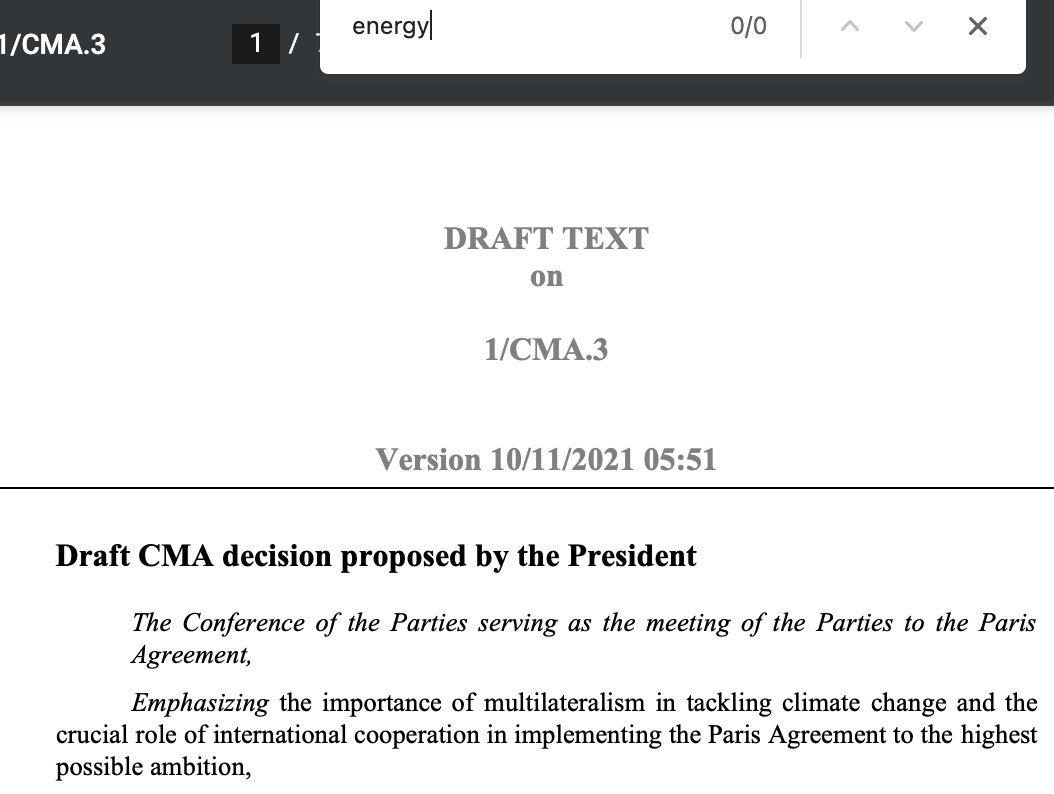
Reason 2 the COP 26 Agreement is pseudoscientific and anti-human: It totally ignores the benefits of low-cost, reliable energy in general and fossil fuels in particular. The word “energy” is not mentioned once, even though COP 26 is trying to eliminate 80% of the world’s energy!
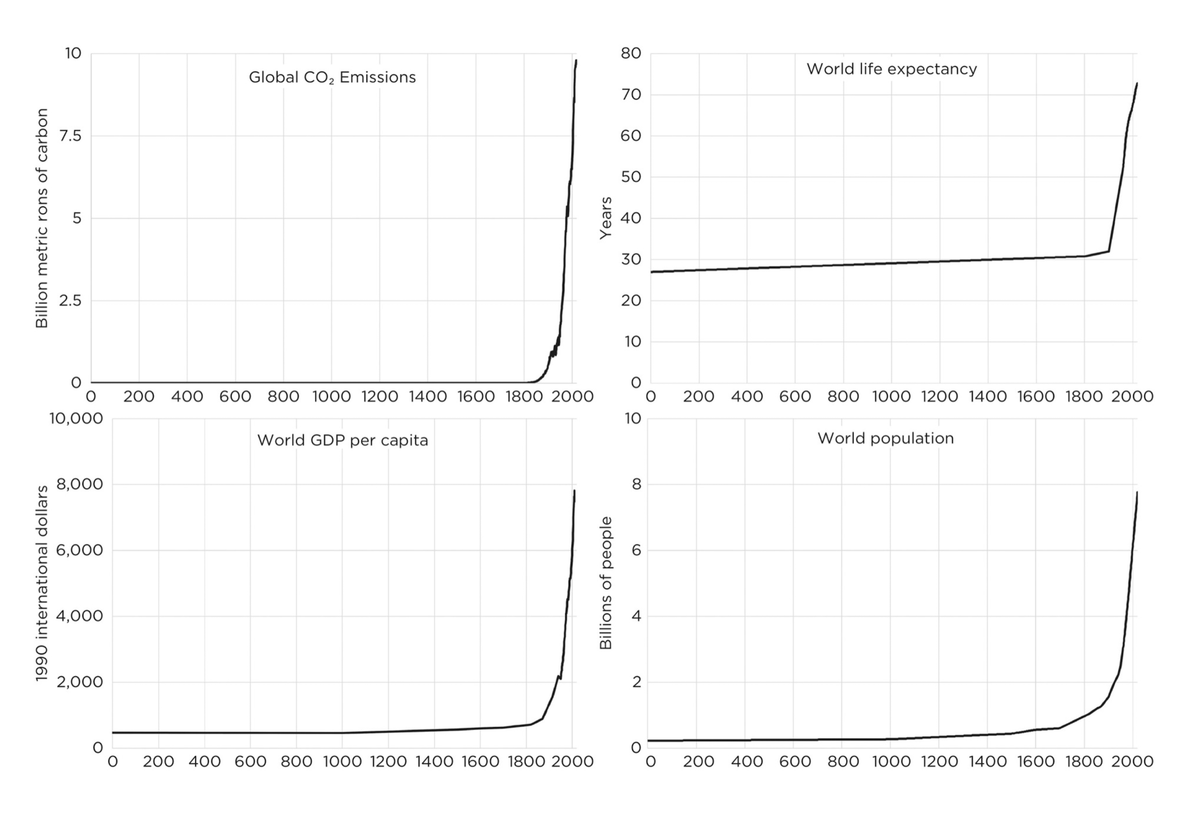
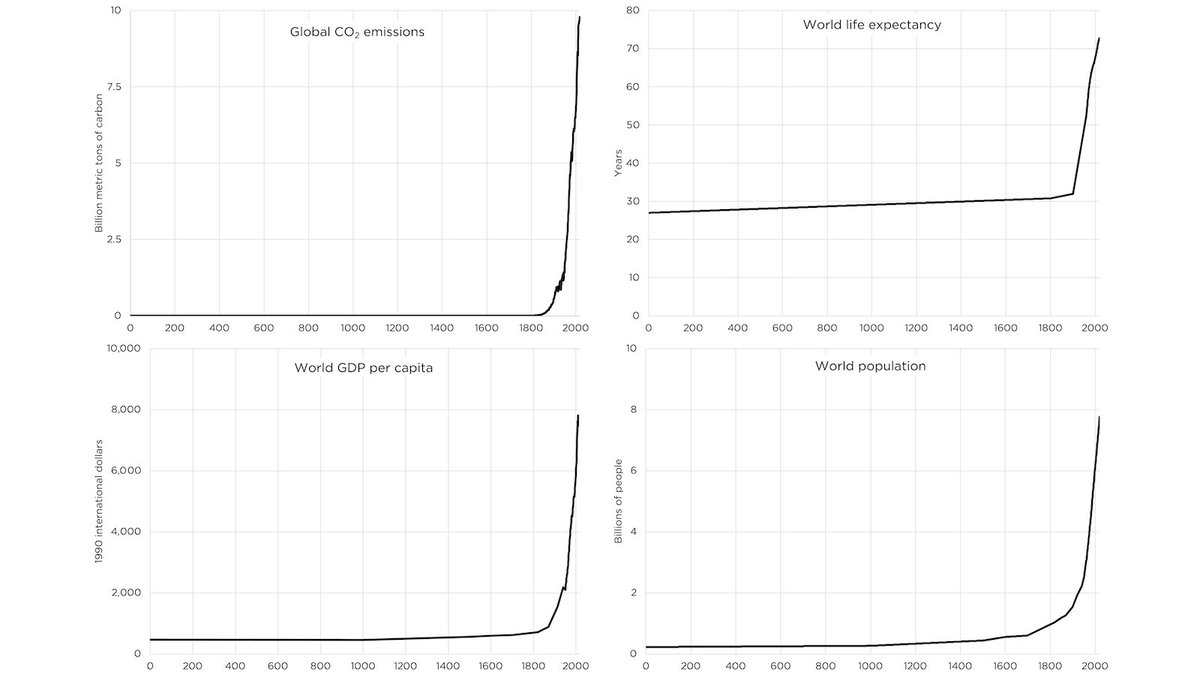
Reason 3 the COP 26 Agreement is pseudoscientific and anti-human: It portrays the world as destroyed by human impact, even though by the standard of human flourishing today’s world is the best ever. Why? Because COP 26 is based on the anti-human dogma that human impact is evil.
Reason 4 the COP 26 Agreement is pseudoscientific and anti-human: It totally ignores any positives of CO2 emissions, treating emissions as all-negative. But this is clearly untrue given that our emissions contribute to “global greening” and prevent cold-related deaths.
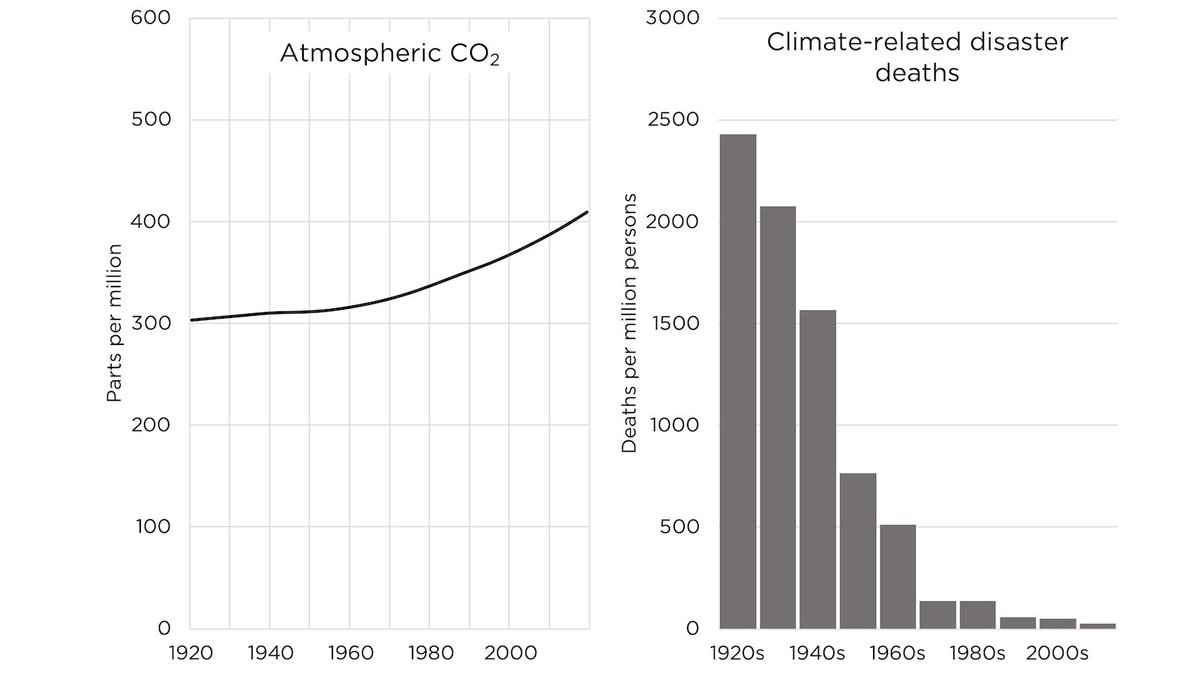
Reason 5 the COP 26 Agreement is pseudoscientific and anti-human: It totally denies the fact that adaptation and mastery have made us far safer from climate than we've ever been. No mention of the fact that climate-related disaster deaths are down 98% over the last century!
Here's what I said about COP 26 on the 2nd day of the conference. I was ridiculed, yet the COP 26 Agreement did exactly what I predicted: called for the mass-genocidal policy of fossil fuel elimination, invoking pseudoscience and driven by anti-humanism.
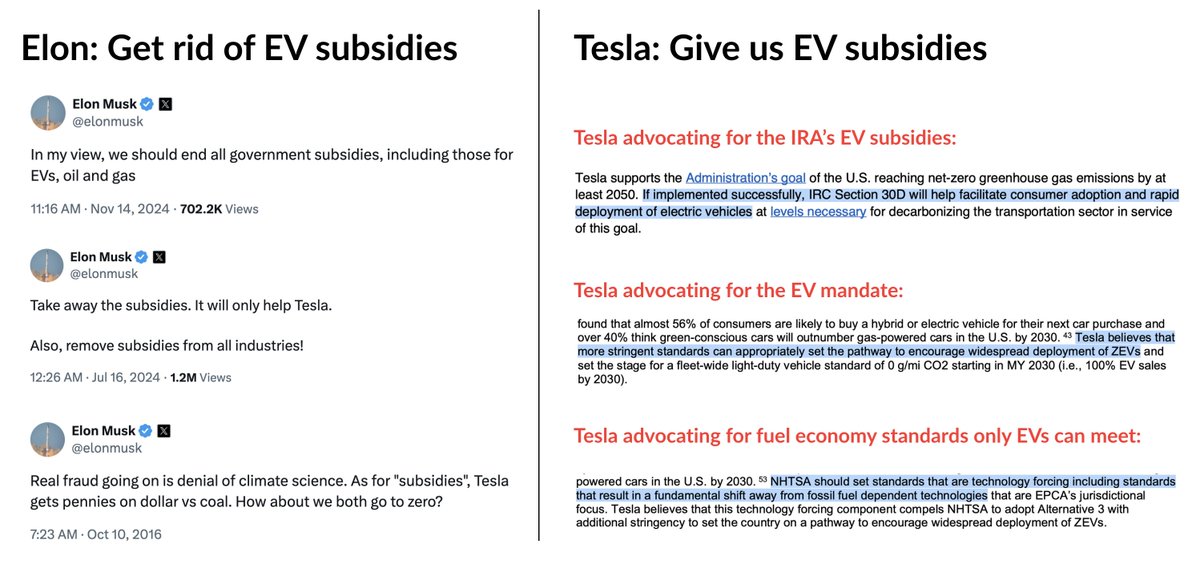
Truth: Elon, through Tesla, has been one of America's biggest advocates of direct and indirect EV subsidies—and of punishments for Tesla's competitors.
🧵👇
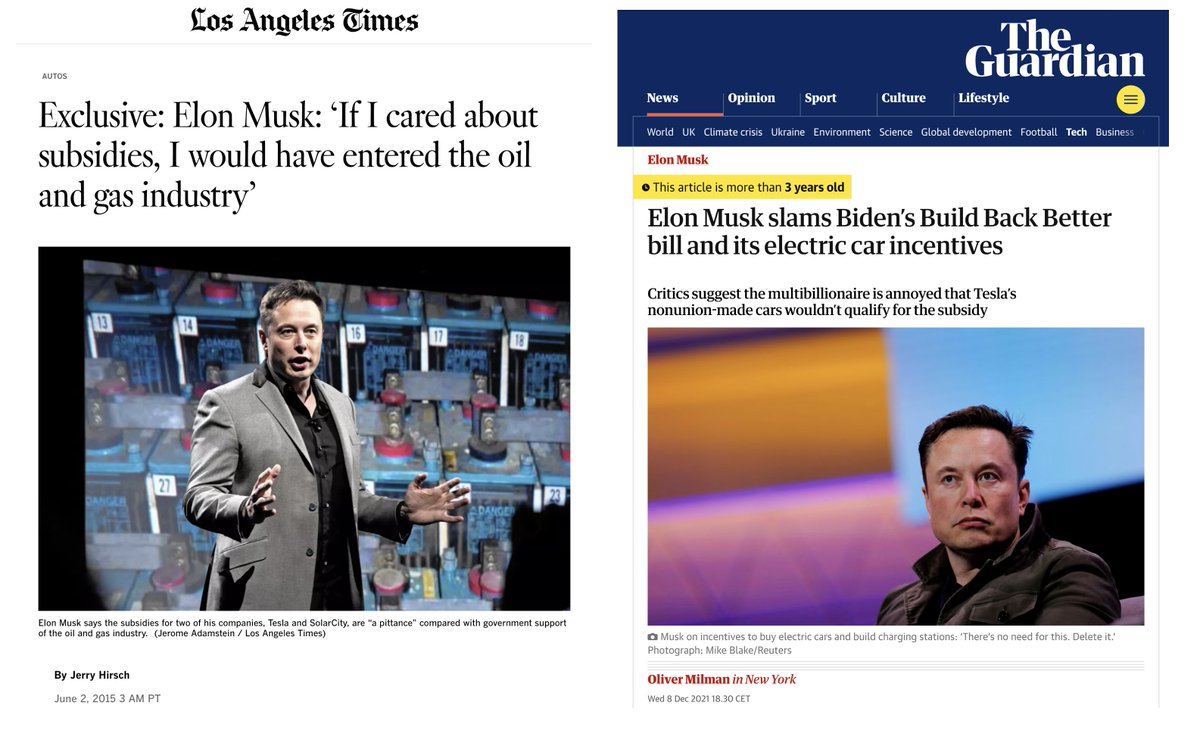
Elon Musk likes to tell us that he is against all energy subsidies, including EV subsidies.
Yet the company he runs is one of America's biggest and most successful advocates of EV subsidies.
What gives?
Tesla under Elon Musk's leadership has consistently advocated for EV subsidies in various forms, including:
1) Biden's EV mandate (the most extreme form of subsidy) 2) Biden's EV subsidies (a direct EV subsidy) 3) Biden's heightened "CAFE" standards (an indirect EV subsidy)
Why are leading institutions so biased against fossil fuels?
Because their operating “anti-impact framework” causes them to view fossil fuels, which are inherently high impact, as intrinsically immoral and inevitably self-destructive.
A summary of Fossil Future, Chapter 3 🧵👇
An Anti-Human Moral Goal and Standard
Our knowledge system’s opposition to fossil fuels while ignoring their enormous benefits can only be explained by it operating on an anti-human moral goal and standard of evaluation that regards benefits to human life as morally unimportant.
Outside the realm of energy, an example of an anti-human moral goal at work is the scientists who, operating on the anti-human moral goal of animal equality, oppose animal testing for medical research and disregard its life-saving benefits to humans.
If you ever hear anyone favorably compare solar and wind to coal, gas, or nuclear by citing a low LCOE—"Levelized Cost of Energy"—you are being scammed.
LCOE explicitly ignores "reliability-related considerations" and is therefore a garbage metric. 🧵👇
You've heard it over and over: "Solar and wind are now cheaper than fossil fuels."
You might suspect something is wrong here, because if solar/wind were so cheap their developers wouldn't always be asking for subsidies, or claim the sky is falling when subsidies are taken away.
The suspicious claim that "Solar and wind are now cheaper than fossil fuels" is usually justified using an intimidating-sounding metric called LCOE: "Levelized Cost of Energy."
LCOE is used all the time in prestigious publications and in government.
Our “knowledge system”—the people and institutions we rely upon to research, synthesize, disseminate, and evaluate expert knowledge—consistently ignores the massive, life-or-death benefits of fossil fuels.
A summary of Fossil Future, Chapter 1 🧵👇
Save the World With…Fossil Fuels?
I am going to try to persuade you of something that might seem impossible: that one of the best things you can do to make the world a better place is to fight for more fossil fuel use—more use of oil, coal, and natural gas.
Questioning the “Expert” Moral Case for Eliminating Fossil Fuels
We're told rapidly eliminating fossil fuels is the expert consensus, but consider: 1) sometimes the alleged “expert” view is wrong, and 2) eliminating fossil fuels is a radical and potentially disastrous change.