*Thread*
The Battle of Arfderydd may be known to some of you already, here we will take a look for those that don't and in the process find out about some of the historical figures surrounding the Arthurian period in Britain.
The Battle of Arfderydd may be known to some of you already, here we will take a look for those that don't and in the process find out about some of the historical figures surrounding the Arthurian period in Britain.
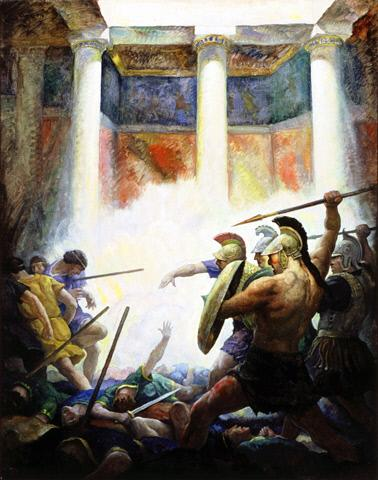
The Battle of Arfderydd happened in 573 according to the Annales Cambriae, and involved many figures that will sound familiar to not only those who have followed my other threads, but to those who are familiar with Arthurian legend as well.
Remembered in the Welsh Triads as "Three Futile Battles of the Island of Britain", along with the Battle of Camlann and the Battle of the Trees, it seems a number of armies from different kingdoms participated in the battle.
On one side you have Gwenddoleu ap Ceidio, King of Arderydd, a grandson of Arthwys ap Mar, and his advisor Myrddin. On the other the famed Rhydderch Hael of Alt Clut, fighting alongside the brothers Peredur and Gwrgi ap Eliffer, also grandsons of Arthwys ap Mar
These two are remembered in the poem Ymddiddan Myrddin a Thaliesin, as "sons of Eliffer" and having "not avoided spears in the heat of battle"
So what do we know of these men behind the battle?
So what do we know of these men behind the battle?
We'll start with the three cousins, Gwenddoleu first, then Peredur and Gwrgi.
Gwenddoleu seems to have ruled from his for Caer Gwenddoleu (possibly Carwinley) north of Carlilse in his kingdom of Arfderydd. Born likely between 530 and 550 to Ceidio ap Arthwys.
Gwenddoleu seems to have ruled from his for Caer Gwenddoleu (possibly Carwinley) north of Carlilse in his kingdom of Arfderydd. Born likely between 530 and 550 to Ceidio ap Arthwys.
In greater welsh legend he was said to own one of the Thirteen Treasure of Britain, a magical gwyddbwyll board, made of gold, with silver pieces that would play themselves.
I have briefly touched on Peredur ap Eliffer as the inspiration for the main character in the Romance
Peredur son of Efrawg. Efrawg meaning York is actually the kingdom that Peredur ap Eliffer seems to have ruled.
Peredur son of Efrawg. Efrawg meaning York is actually the kingdom that Peredur ap Eliffer seems to have ruled.
He and his brother Gwrgi likely were both born around the same time as their cousin Gwenddoleu. Peredur likely ruled Ebrauc from his fathers death between 560-570 to 580 the year which the Annales Cambriae states that both Gwrgi and Peredur died.
This leaves us with the famed Rhydderch Hael who I will save for a later thread.
This leaves us with the battle itself. a "Futile Battle of the Island of Britain"
Futile battle indeed, not only being Coelings (descendants of Coel Hen) but even closer kin being first cousins!
This leaves us with the battle itself. a "Futile Battle of the Island of Britain"
Futile battle indeed, not only being Coelings (descendants of Coel Hen) but even closer kin being first cousins!
Curiously attributed sometimes to starting from a quarrel over a Lark's nest between Rhydderch and Aedan (likely a reference to Áedán mac Gabráin of Dál Riata, though he was likely not yet king at this time) in which Aedan sought Gwenddoleu for help as Rhydderch was too powerful.
More than likely it was a coalition of kings fighting over territory, with Gwenddoleu being on fairly alone as most accounts do not list any other significant figures with him.
The battle itself likely happened near Gwenddoleu's stronghold of Caer Gwenddoleu
The battle itself likely happened near Gwenddoleu's stronghold of Caer Gwenddoleu
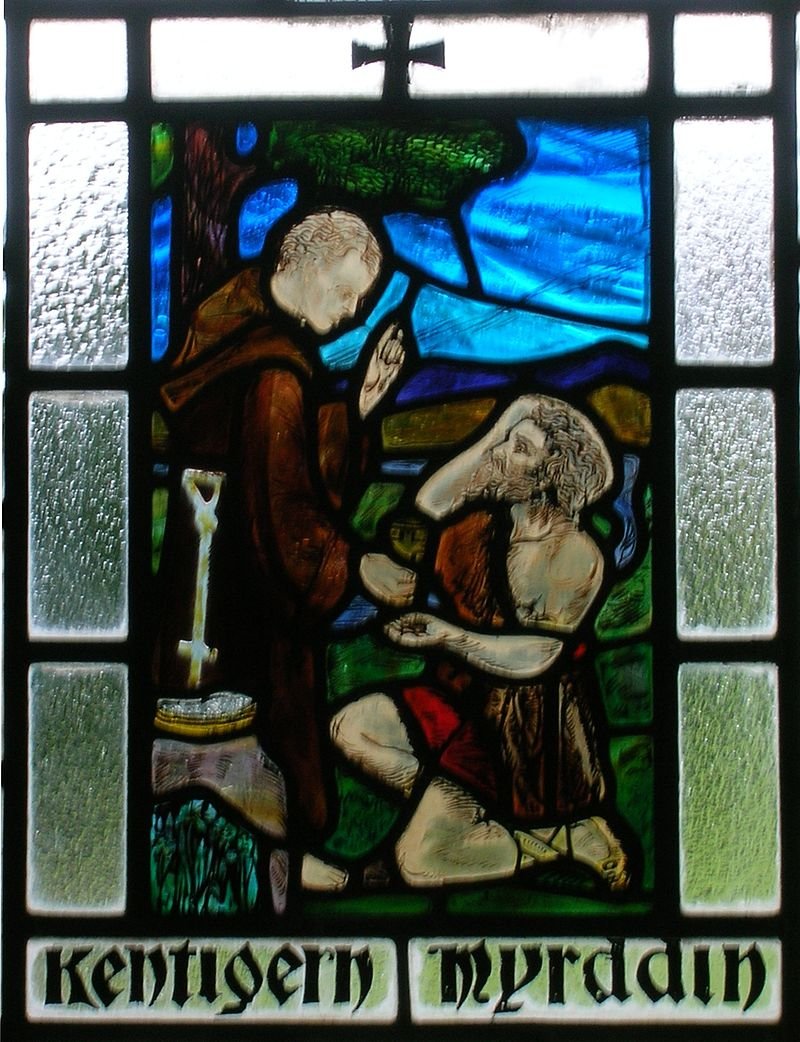
Gwenddoleu was slain in the battle, and his advisor or Bard (both are attested) Myrddin went mad and fled into the forests of Caledonia where he lived as a wild man. Myrddin as I have outlined in an earlier thread is likely the kernel of history of the Merlin legend
The welsh triads record Gwenddoleu's warband as one of the "Three Faithful Warbands of the Island of Britain" fighting for a fortnight and a month after their lord was killed.
The poem Ymddiddan Myrddin a Thaliesin mentions numerous warriors said to be present, notably Dywel fab Erbin, who is also present in one of the earliest Arthurian tales Culhwch and Olwen.
Interestingly some accounts actually have Myrddin fighting on Peredur and Gwrgi's side, instead of Gwenddoleu's. This wouldn't be that interesting other than the possibility that Peredur is in fact the same as Pedr in Dyfed's genealogies. This would make Arthwys ap Pedr
Peredur's son, and make "an" Arthur potentially present at the battle, in the same context as Myrddin. There are some interesting links between the pedigrees of Dyfed and the Coelings but that is really just speculation without further evidence, but it is fun to think about!
• • •
Missing some Tweet in this thread? You can try to
force a refresh