* THREAD OF THREADS! *

Following is my series of threads on the figure I believe is the inspiration for King Arthur. I may add on to this if I feel like I want to expand upon a specific topic at any point. Image
Candidates for Arthur who don't fit the timeline.
Candidates for Arthur who do fit the timeline
*Bonus*
Brief overview of the book "King Arthur's Wars"

• • •

Missing some Tweet in this thread? You can try to force a refresh

 

Keep Current with Aurochs

Aurochs Profile picture

Stay in touch and get notified when new unrolls are available from this author!

Read all threads

This Thread may be Removed Anytime!

PDF

Twitter may remove this content at anytime! Save it as PDF for later use!

Try unrolling a thread yourself!

how to unroll video
  1. Follow @ThreadReaderApp to mention us!

  2. From a Twitter thread mention us with a keyword "unroll"
@threadreaderapp unroll

Practice here first or read more on our help page!

More from @ActualAurochs

16 Sep
In my conclusion to my historical Arthur threads I will put forward my "Arthur of Badon". Was he a warlord of southern Wales? Was he a prince of Powys? Or maybe a son of Yr Hen Ogledd?
@Paracelsus1092
@AncientDays1
@0starkafterdark Image
1. Here are some hard facts we know. There are no references directly to Arthur from the period of his life, excluding the reference to "The Bear" (Welsh Arth) by Gildas. The Artognou stone found at Tintagel is contemporary to him.
2. A commander at Hadrian's wall was named Lucius Artorius Castus. Gildas mentions Badon taking place around the year of his birth (as mentioned earlier anywhere between 490-510 roughly). Nennius and The Welsh Annals depict Arthur as the victor of Badon.
Read 15 tweets
24 Aug
@Paracelsus1092
@AncientDays1
@0starkafterdark
So far we have outlined some historical candidates for Arthur who probably contributed to the composite Arthur, but not contemporaries to the Battle of Badon, who could be our Arthur of Badon.
Primer and Premise for this series for any that haven’t read it.


Pt 1. Outlining possible inspiration for candidates that couldn’t have been at Badon
1. Owain Ddantgwyn - Often put forward as Arthur. Contemporary with Badon, only real link is he is the father of the Cuneglasus of Gildas' laments. Gildas describe Cuneglasus as "You bear, you rider and ruler of many, and guider of the chariot which is the receptacle of the bear"
Read 24 tweets
16 Aug
Historical Arthur Candidates PT. 1
In our first installment we outline potential inspirations for King Arthur that might not be in the right time or place. This is by no means an exhaustive list, but ten candidates I find the interesting. There is no particular order here. Image
1. Magnus Maximus (Macsen Wledig) - Negotiated with Theodosius I to usurp Emperor Gratian. Magnus supposedly married a british woman, Saint Elen or Helen (not to be confused with St. Helena, mother of Constantine The Great). Many Medieval Welsh Kings traced their ancestry to him.
Magnus’ european campaigns may have been the inspiration for the stories of Arthur’s Roman Campaign.
Read 17 tweets
13 Aug
@AncientDays1 @Paracelsus1092
1. King Arthur is often put forward as a purely legendary figure or a completely composite figure these days. I do believe he is as we know it a composite figure, but there is there a single person at the core that inspired this legend? Image
2. First we have to get a rough idea of when this figure would have lived and I think the place to start is Arthur's two most well known battles, The Battle of Badon (Baden Hill, Mons Badonicus, Badonici Montis, Mynydd Baddon) and The Battle of Camlann in which Arthur falls.
3. Using primary sources from the period is sometimes a daunting task when it come to dates. When we see a date like 500 A.D. we think of the actual year 500 A.D. as we know it, but at the time of say Gildas the year 500 may have meant 500 years from Christ's birth or 500 years
Read 16 tweets
12 Aug
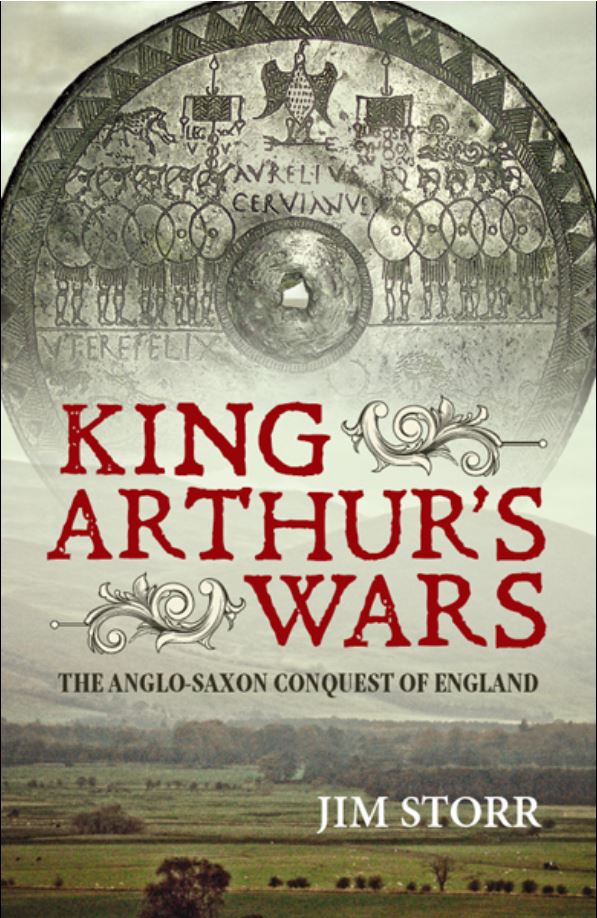
@AncientDays1 post on the Wanderer got me in the mood to talk about a book I've really enjoyed about the Anglo-Saxon invasion of England, Jim Storr's King Arthur's Wars. Image
Jim Storr presents an analysis of the British countryside from the eyes of a former infantry officer, finding earthen fortifications long forgotten from the early Anglo-Saxon invasions. Combining expertise in topography as well as linguistics he makes some interesting conclusions
A large part of the book concerns the West Saxons and their origins. Starting with the fact that Cerdic's name is of British Origin, and posits that while the South Saxons are a pretty clear example of migrant rebellion, the West Saxon origin seems to lie in civil war/ rebellion.
Read 14 tweets

Did Thread Reader help you today?

Support us! We are indie developers!


This site is made by just two indie developers on a laptop doing marketing, support and development! Read more about the story.

Become a Premium Member ($3/month or $30/year) and get exclusive features!

Become Premium

Too expensive? Make a small donation by buying us coffee ($5) or help with server cost ($10)

Donate via Paypal Become our Patreon

Thank you for your support!

Follow Us on Twitter!

:(