

Quick little thread to get your Thursday going.
So on 24 July 1991 the New York Times put out an edition consisting of 84 pages and costing 40 cents. The main story was about Soviet plans to sell a stake in a PSU car maker.
So on 24 July 1991 the New York Times put out an edition consisting of 84 pages and costing 40 cents. The main story was about Soviet plans to sell a stake in a PSU car maker.

Around the same time, in May 1991, the day after Rajiv Gandhi was assassinated, the Times of India in Bombay put out an edition of 28 pages costing INR 2.

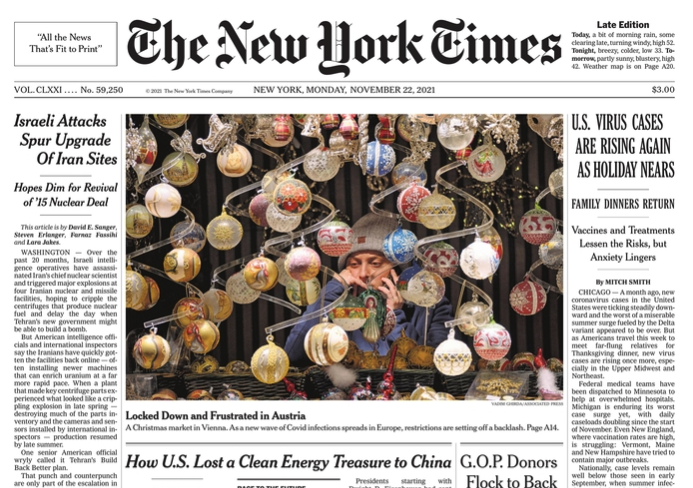
With me so far? Keep those two sets of numbers in mind. Pages and price. Ok. Great. Now, earlier this week, on November 22, 2021, the NY Times put out an edition of approx. 100 pages. And it cost 3 dollars.
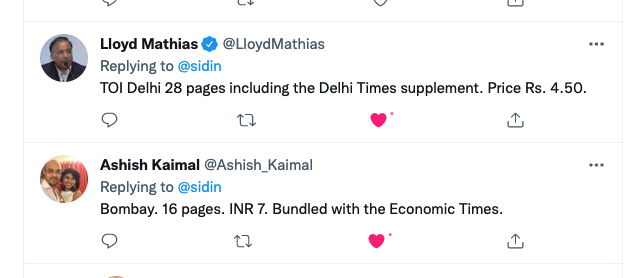
What about the Times of India on the same day? It is a much... thinner newspaper. And the price for the standalone daily is Rs. 4.50.
Now, let's do a little adjusting for currency inflation. (Ceteris paribus etc.)
New York Times in 1994: 40 cents.
New York Times in 2021 adjusted for 1994 dollars: 80 cents.
Actual New York Times price: 3 dollars.
The newspaper is four times as expensive today than 1994.
New York Times in 1994: 40 cents.
New York Times in 2021 adjusted for 1994 dollars: 80 cents.
Actual New York Times price: 3 dollars.
The newspaper is four times as expensive today than 1994.
Times of India in 1994: INR 2
Times of India in 2021 adjusted for 1994 rupees: INR 16
Actual TOI price in 2021: Rs. 4.5
The TOI is around 1/4th as expensive today as it was in 1994.
(inflationtool.com)
Why?
Times of India in 2021 adjusted for 1994 rupees: INR 16
Actual TOI price in 2021: Rs. 4.5
The TOI is around 1/4th as expensive today as it was in 1994.
(inflationtool.com)
Why?
Much of the answer has to do with the date in my first tweet. 24 July 1991. That is the day Manmohan Singh presented the famous liberalization budget. It was a big moment for all kinds of things. But especially for Indian newspaper companies. They had to make a choice!
They could bet on the people getting wealthier and wait on subscription revenues growing, or they could bet on the Indian consumer market booming and wait on advertising revenues.
And they all bet on the second: advertising. This had some curious effects on the product itself.
And they all bet on the second: advertising. This had some curious effects on the product itself.
Firstly it kept prices low. Because that is how you get and retain more readers -> sell more ads. Secondly, and slowly, it actually reduced the amount of news you get from the papers. Because the moment ads drop, titles now drop pages to save on costs.
Because listen it is truly ridiculous that the main english language newspaper of a country of a billion plus people puts out a paper of 30 pages including ads. Adjust for opinion pages, columns and syndication and the actual reporting you are getting is... mmmm.
Secondly it made entry barriers impossible for new titles. The newspaper industry in India remains one of the least disrupted since liberalization. Why? Because if you are a new paper you have to burn through cash to get enough readers before you'll get enough ads...
... because brands absolutely don't care for the quality of the news itself. They care for quantity of exposure. So if you are a new title, brands are going to turn around and say: "Nice content. Come back when you have nice circulation."
Thirdly...
Thirdly...
... it created a new cultural sense for how much news content should cost: nearly nothing. Because you are selling ads no? Then why should I pay? Which was fine...
Until the internet came along, circulation crashed, and consumers looked at paywalls and...
Until the internet came along, circulation crashed, and consumers looked at paywalls and...
Oh also this meant that the business is obsessed with making sure NOBODY knows how many copies of anything are actually bought and sold. Newspaper circulation data in India is literally the worst data in the history of India. Newspapers keep it that way. Brands don't care.
So: after 30 years of liberalization, higher incomes and so on, Indian newspapers cost far less than they should, publish little real news, are completely subservient to advertisers and thrive on a weird form of subterfuge and protectionism. And governments are happy to help.
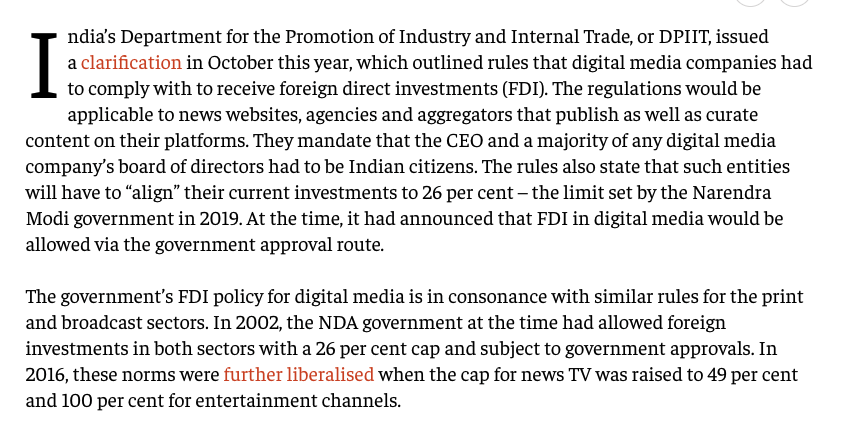
In fact you could argue that the news business in India is really just a slightly less-fictional subsidiary of the entertainment business in India.
So if you ever stop to wonder why the premier newspaper in the premier city in India is little more than a pamphlet. Now you know.
So if you ever stop to wonder why the premier newspaper in the premier city in India is little more than a pamphlet. Now you know.
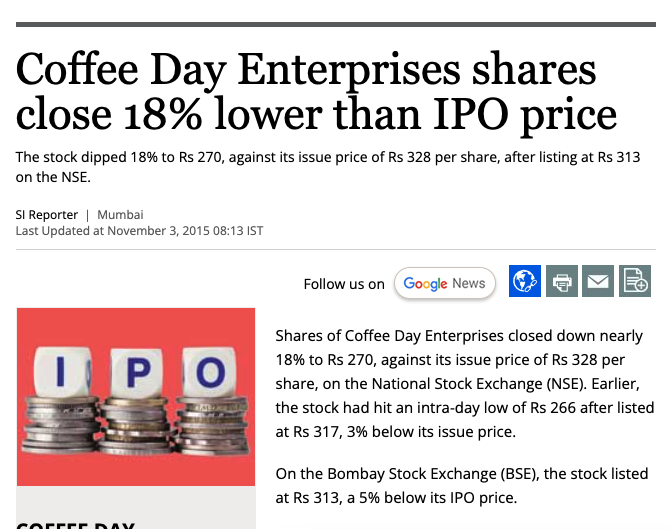
This has many other ramifications of course. For instance how are you going to get investigative business journalism into a new IPO when the company is spending millions of dollars on advertising and the journalism itself will get you not a single new reader? Who would risk it?
Did it have to be this way? One of the fascinating things is the timing of liberalization, internet, cheap data etc. For instance most of India went from mobile phones with FM to smartphones with streaming video and skipped stages in-between that other countries witnessed.
Anyway. All this is still panning out. And thirty years later we are still seeing the consequences of how and when India liberalized panning out in so many ways.
Many thanks and have a nice day.
Many thanks and have a nice day.
• • •
Missing some Tweet in this thread? You can try to
force a refresh



