

Given all the hopium/copium I'm sure I'll be subject to attacks for saying this- but I'm extremely concerned about the threat posed by omicron. Yes, there is uncertainty, but there's enough we know to suggest very strongly this will be a game changer, and not in a good way. 🧵
So, first to recap- this is a new variant- very divergent from the original variant, and from delta that has rapidly grown to dominance in Gauteng Province, South Africa over a period of 2 wks. This rise has been associated with v. rapid growth in cases:
https://twitter.com/rid1tweets/status/1467597356061401089?s=20
This spread has occurred in a population estimated to have high levels of immunity from previous infection + vaccination. Exposure to previous infection is thought to be 60-80% in the region based on serological evidence. And 25% of the population in SA has received 2 doses.
This suggests a highly fit variant that is spreading in a population with potentially high levels of background immunity. It's high fitness (relative to delta) may come from two factors:
-increased transmissibility
-greater ability to evade previous immunity
-increased transmissibility
-greater ability to evade previous immunity
The contribution of each factor here is important. Increased transmissibility means that it would be able to spread efficiently even in a fully susceptible population (this growth rate is called R0).
More escape means it can spread more efficiently in an immune population.
More escape means it can spread more efficiently in an immune population.
So, it's not necessary for example that it is more transmissible than delta, even if it is fitter, if for example the advantage is mostly explained by escape. But it could also be that it is more transmissible *and* more able to escape. Explained here:
https://twitter.com/trvrb/status/1466076797670363140?s=20
For example, just to illustrate, if the variant has full escape from previous immunity (unlikely), then the whole pop would be susceptible. The current R of the variant is ~3.5-4 or so. If it had full escape, this would then represent its growth rate in a non immune population.
But if escape is not full (the far more likely scenario), one would expect effective R to be even higher in a fully susceptible population, but the extent to which this would be higher would depend on how much immunity is able to suppress growth of this variant.
Omicron may not necessarily be more transmissible than delta in a non-immune population, but may have considerable advantage in a mostly immune population. So understanding the relative contribution of each is important to understand impact in different settings.
Of course, it is entirely possible that omicron is more transmissible and more able to escape immunity, and the rate of spread across SA is deeply concerning. Understanding the contribution of each of these to fitness will be key to understanding impact.
There is good recent evidence from SA that re-infections are far more common with omicron than with previous variants suggesting higher escape from previous immunity to other variants. To what extent this translates to vaccine escape is not known yet.
The current doubling time of cases in Gauteng is ~3 days. Unfortunately, hospitalisations also appear to be rising rapidly - more than doubling every week.

https://twitter.com/chrischirp/status/1467794792105062401?s=20

What do we know about these hospitalisations?
1. They are much more in young people compared to previous waves. 2/3rds of admissions are currently under 40 yrs of age compared to 2/3rds being in above 60s in the third wave.
1. They are much more in young people compared to previous waves. 2/3rds of admissions are currently under 40 yrs of age compared to 2/3rds being in above 60s in the third wave.
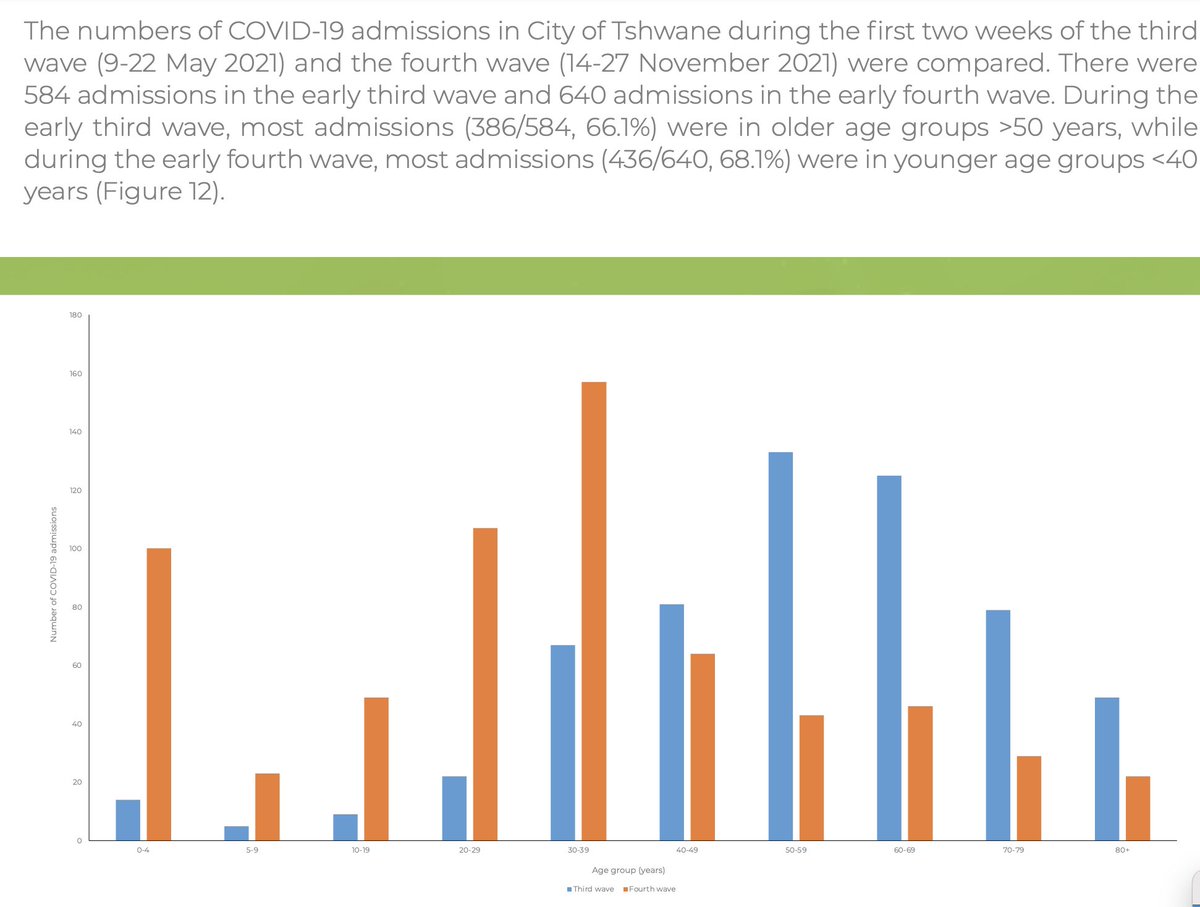
Whether this is because of earlier spread in younger people, or a level of protection from infection afforded by vaccines where uptake may be higher in older groups is unclear. Watching this pattern over time should provide more clarity.
While the severity of cases admitted currently appears to be lower in older groups, it's much higher in young people, including in children. This is worrying.

While on the face of it some might suggest this is good because admissions are milder, the reality is v. concerning. 1st, so far mostly young people have been affected. 2nd, even if the no. of patients needing O2 is lower, numbers are rising v. quickly.
https://twitter.com/jburnmurdoch/status/1467270468558372868?s=20
So this ultimately means that the number of patients needing oxygen are rising much faster than they did with the delta wave. So although requirements may be lower now, it looks like the potential to overwhelm health services is high:
https://twitter.com/jburnmurdoch/status/1467270474384265222?s=20
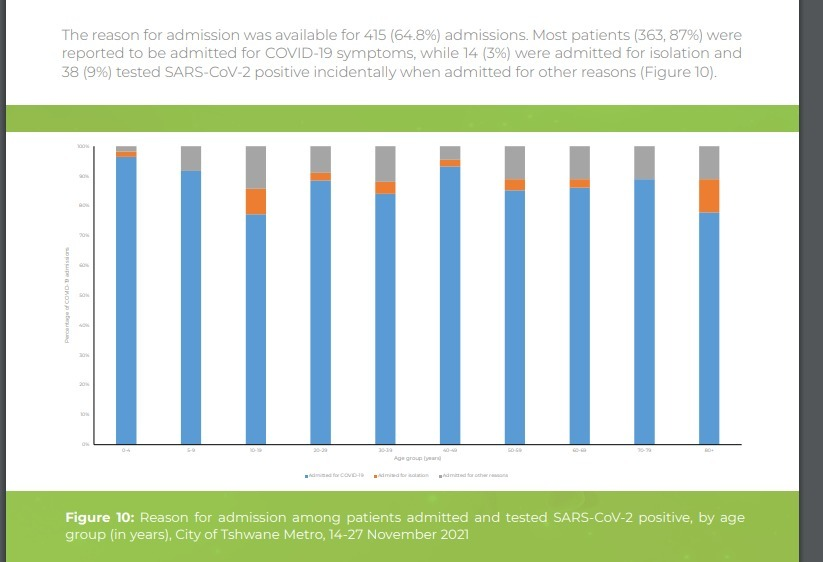
And contrary to some recent reports, it does look like the vast majority of admissions are *due to* COVID-19, and not incidental.
What about deaths?
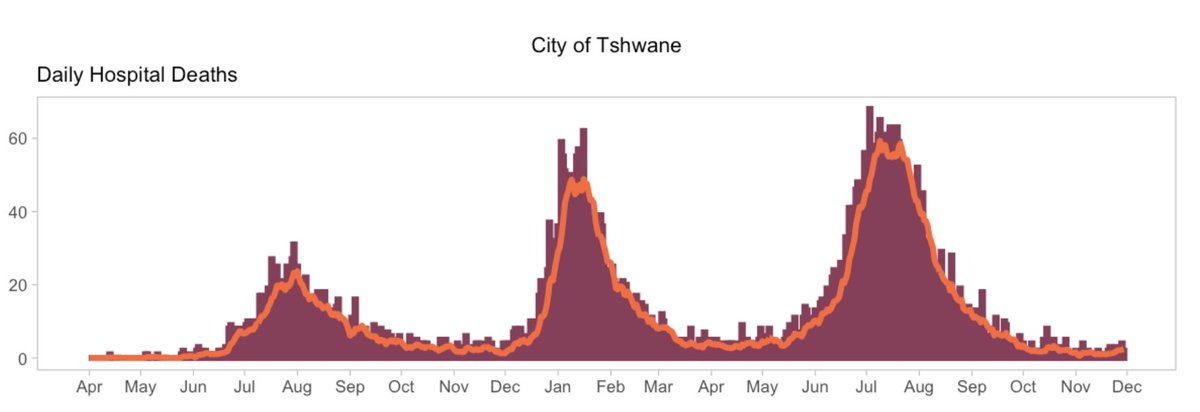
It's early days, because there is always a lag between hospitalisations and deaths. But early indicators from Tshwane, which is the epicentre of the outbreak suggests that deaths are beginning to rise too, although still low numbers.
It's early days, because there is always a lag between hospitalisations and deaths. But early indicators from Tshwane, which is the epicentre of the outbreak suggests that deaths are beginning to rise too, although still low numbers.
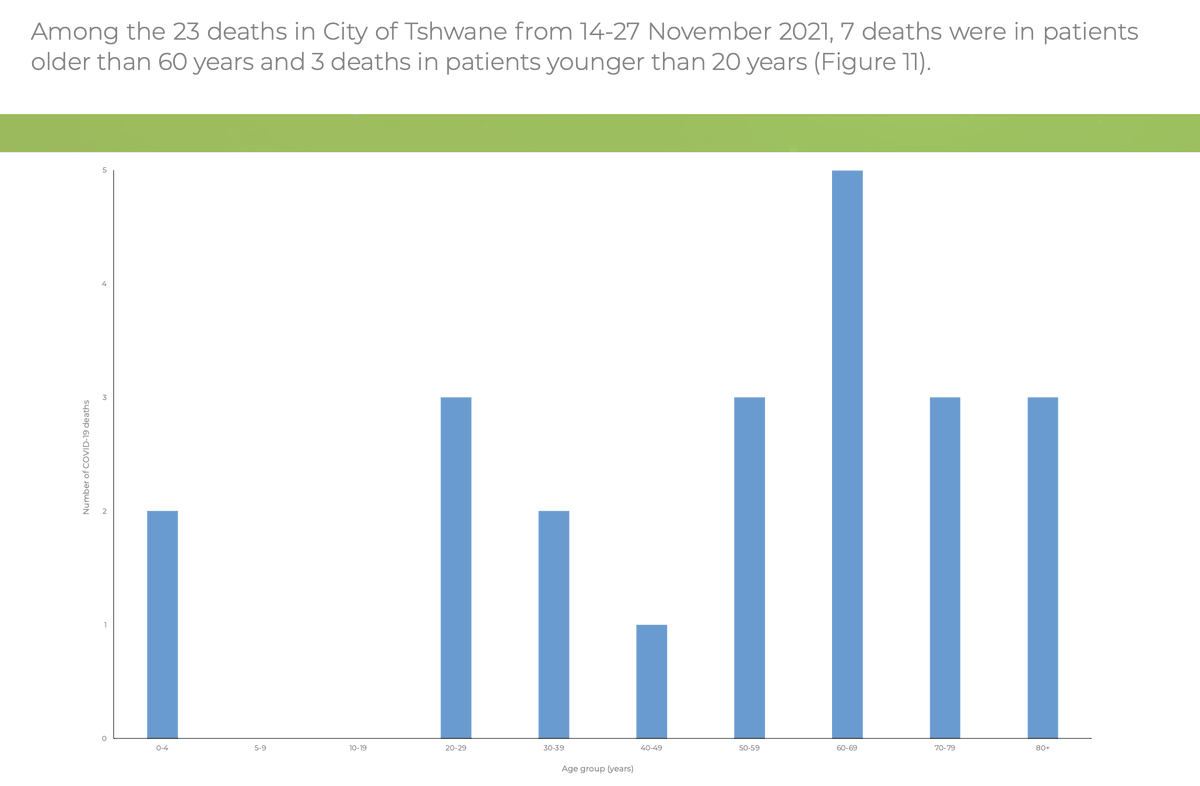
The pattern of deaths is concerning. In line with admissions being disproportionately in young people, and young children, although numbers are low to detect a clear pattern, they do seem to be occurring across all ages, including young children.
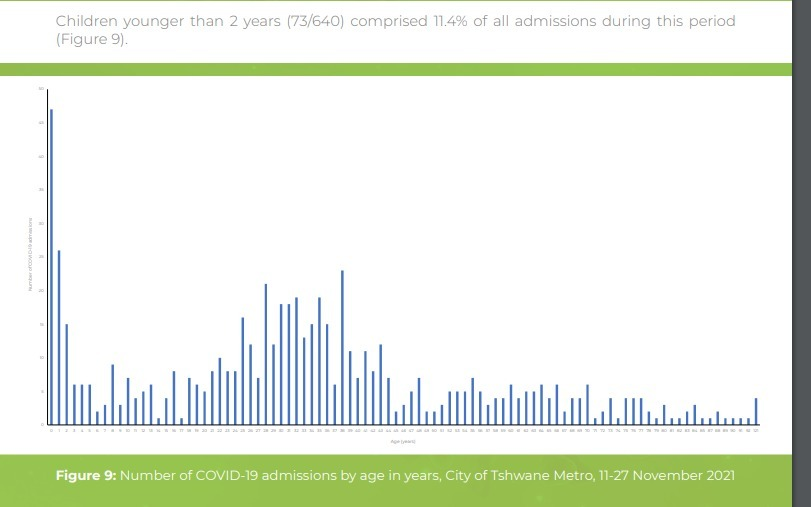
This seems to align with what we're hearing from frontline staff in hospitals in SA- and in keeping with the ministry of health moving to increase paeds ICU capacity:
So, what does this mean overall, and for the UK- this is a highly fit variant which has rapidly gained dominance in Guateng, and spread across the globe, with higher levels of escape from prior immunity from infection (at least), and potentially higher transmissibility (unknown)
There have been multiple reports of massive superspreading events, including in Norway, and Denmark, where people with 2 or three doses of vaccines getting infected. This is very worrying.
Unfortunately, the UK doesn't look like it's going to be an exception here. Early days, but data suggests omicron is rapidly growing here. Although numbers are small, so high uncertainty, growth seems to be 4x increase/wk.
https://twitter.com/SarahDRasmussen/status/1467225556701913092?s=20
Given cases in England are already rising, and we're already in crisis mode with delta, omicron on top of this is very bad news.
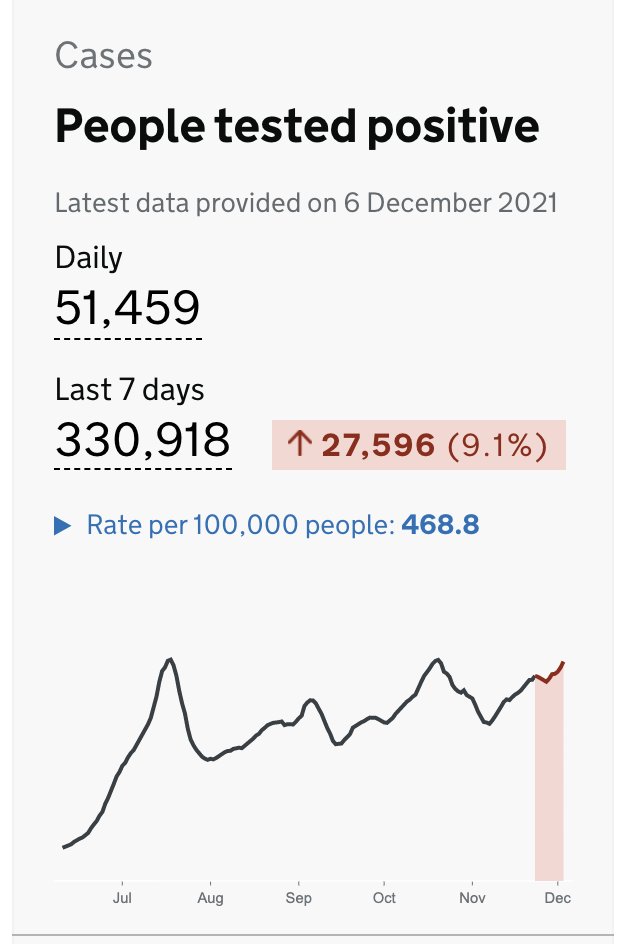
Also early suggestions (I've not seen this UKHSA report, but quoted here) that perhaps the generation may be shorter, and people maybe infectious earlier. This is important, because it could mean more rapid growth & make contact tracing less effective:
news.sky.com/story/covid-19…
news.sky.com/story/covid-19…
There are many questions - including protection from vaccines, and boosters, which many are hopeful will confer some protection against severe disease, but this is clearly a rapidly spreading variant that has the capacity to overwhelm healthcare systems, regardless of severity.
I'm not at all convinced of lower severity, but remember that even if it were less severe the speed of growth (exponential) could far overwhelm any reduction in individual severity (which is on a linear scale)
https://twitter.com/YouAreLobbyLud/status/1467077019645067265?s=20
In light of all these worrying signals, I'm absolutely flummoxed by the complacency around this in the UK. This grew to dominance rapidly across Guateng, and is rising rapidly here, albeit from low levels. Shouldn't we be using this time to prepare more?
yes, I know we are boosting people rapidly, but relying solely on this seems very risky to me, given the rate of rise. Shouldn't we be putting stronger mitigations in place to reduce the burden on hospitals, and prepare of the coming wave (on top of the current wave)?
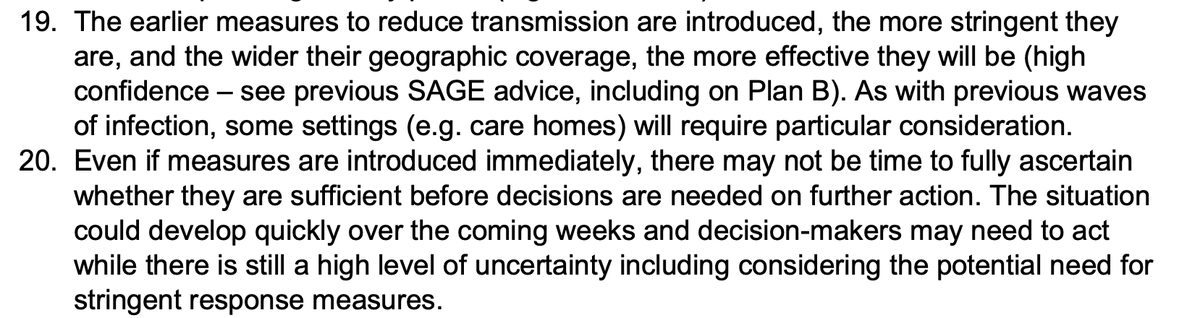
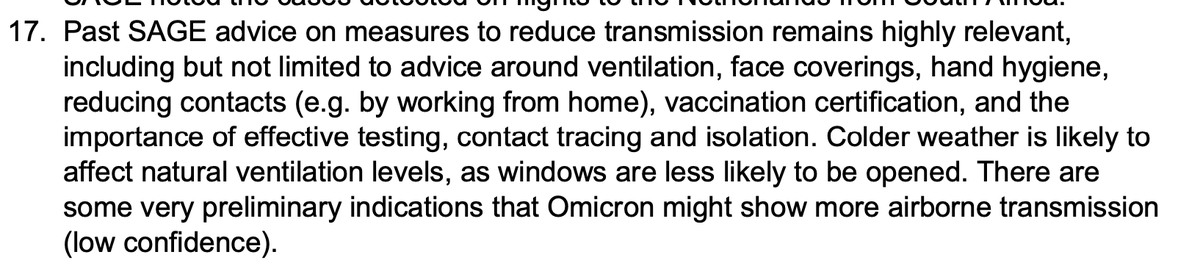
Will leave you with this advice from SAGE once again urging an early strong pre-emptive response, given risk. Advice that is being ignored:
Links here:
SA hosp and deaths data analysis:
nicd.ac.za/wp-content/upl…
Deaths data:
sacmcepidemicexplorer.co.za
SA hosp and deaths data analysis:
nicd.ac.za/wp-content/upl…
Deaths data:
sacmcepidemicexplorer.co.za
• • •
Missing some Tweet in this thread? You can try to
force a refresh




