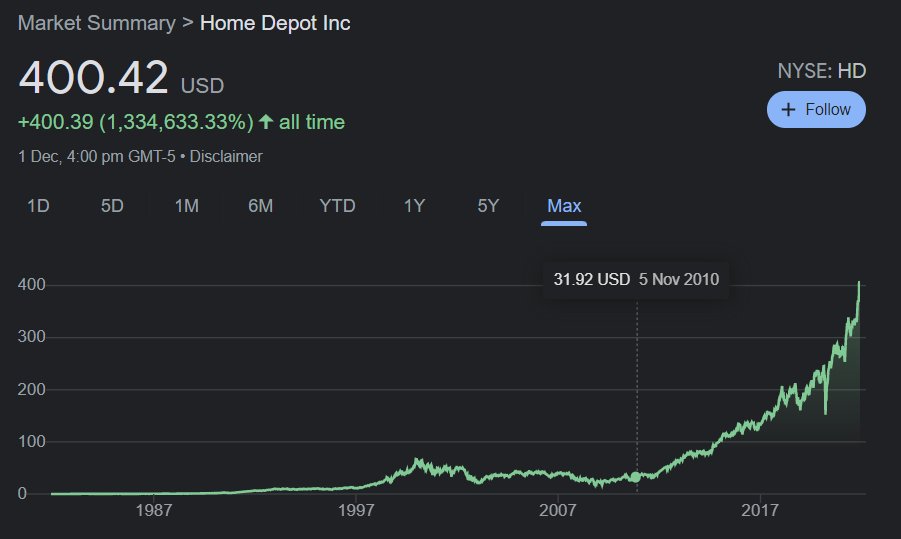
Over 627,000 businesses start each year.
But 90% of them will fail.
Only a handful will survive the competition and generate wealth for its shareholders.
Here's 7 POWERS by @hamiltonhelmer on identifying successful businesses:
But 90% of them will fail.
Only a handful will survive the competition and generate wealth for its shareholders.
Here's 7 POWERS by @hamiltonhelmer on identifying successful businesses:

1. Scale Economies
Per unit costs decrease as volume increases.
Netflix content production costs remain fixed despite growing its user base.
Cost per sub decreases as subs increase.
Smaller competitors must pay a higher cost per user price to compete.
Per unit costs decrease as volume increases.
Netflix content production costs remain fixed despite growing its user base.
Cost per sub decreases as subs increase.
Smaller competitors must pay a higher cost per user price to compete.
Other scale economies include:
-Volume/area relationships (Amazon fulfillment centers)
-Distribution network density (UPS)
-Purchasing economies (Walmart)
-Learning economies
-Volume/area relationships (Amazon fulfillment centers)
-Distribution network density (UPS)
-Purchasing economies (Walmart)
-Learning economies
2. Network Economies
A product's value increases as the number of users increases.
Market leaders can charge higher prices because their network is more valuable.
Apple's app store large user base attracts developers to create more apps, which in turn attract even more users.
A product's value increases as the number of users increases.
Market leaders can charge higher prices because their network is more valuable.
Apple's app store large user base attracts developers to create more apps, which in turn attract even more users.
3. Counter Positioning
A newcomer adopts a superior business model which the incumbent fail to respond or copy.
Examples:
-Netflix vs Blockbuster
-Posh Burgers (Five Guys) vs McDonalds
New model is superior because of lower costs or ability to charge higher prices.
A newcomer adopts a superior business model which the incumbent fail to respond or copy.
Examples:
-Netflix vs Blockbuster
-Posh Burgers (Five Guys) vs McDonalds
New model is superior because of lower costs or ability to charge higher prices.
Why would incumbents not copy new business model?
-Cannibalizes existing business
-Agency issue where management is incentivized to retain the current structure
-Cognitive bias about the value of the new model
-Cannibalizes existing business
-Agency issue where management is incentivized to retain the current structure
-Cognitive bias about the value of the new model
4. Switching Costs
Customer loses value when switching to an alternative supplier for additional purchase.
Able to charge higher prices for the same product.
Competitors must incur huge costs to compensate customers for switch costs.
Customer loses value when switching to an alternative supplier for additional purchase.
Able to charge higher prices for the same product.
Competitors must incur huge costs to compensate customers for switch costs.
5. Branding
Ability to charge higher prices due to either higher perceived quality or reduce uncertainty.
Strong branding takes a long period of reinforcing actions.
Ability to charge higher prices due to either higher perceived quality or reduce uncertainty.
Strong branding takes a long period of reinforcing actions.
6. Cornered Resource
Ability to charge higher prices or reduce costs due to access to the cornered resource
Examples:
- Pixar's talent pool
-Patents
Ability to charge higher prices or reduce costs due to access to the cornered resource
Examples:
- Pixar's talent pool
-Patents
7. Process Power
Improved product attributes and/or lower costs due to superior process.
Example: Apple's production process. From design to supply chain to distribution.
Improved product attributes and/or lower costs due to superior process.
Example: Apple's production process. From design to supply chain to distribution.
Recap:
1. Scale Economies
2. Network Economies
3. Counter Positioning
4. Switching Costs
5. Branding
6. Cornered Resource
7. Process Power
1. Scale Economies
2. Network Economies
3. Counter Positioning
4. Switching Costs
5. Branding
6. Cornered Resource
7. Process Power
If you like this, follow me here @steadycompound
I write about investment concepts, business breakdowns and growth philosophies.
I write about investment concepts, business breakdowns and growth philosophies.
If you have enjoyed this thread, you're gonna love my newsletter where I curate 3 ideas on investing and growth philosophies.
Every week.
steadycompounding.substack.com
Every week.
steadycompounding.substack.com
• • •
Missing some Tweet in this thread? You can try to
force a refresh