

Why parties on Crown property were not exempt from the Covid regs: a response to @SBarrettBar's blog for the Spectator.
1/22
https://twitter.com/SBarrettBar/status/1468599516521713673
1/22
We start with the general principle that a statutory provision does not bind ‘the Crown’, i.e. ministers and those who work for the govt, unless it is expressly stated to do so or it is necessary for it to do so. The principle is well explained here:
blog.6kbw.com/posts/legally-…
2/22
blog.6kbw.com/posts/legally-…
2/22
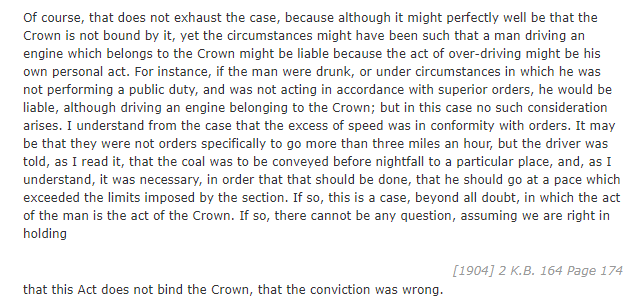
NB the reference to Cooper v Hawkins (excerpt below). It must be right that the principle only protects those working for the government while they are executing their duties. A minister who commits an assault cannot be exempt from the Offences Against the Persons Act 1861.
3/22
3/22
Section 73 of the Public Health (Control of Disease) Act 1984 derives from the Public Health Act 1936, so it is there that we must start. The first provision to consider, appropriately enough, is section 1:
4/22
4/22
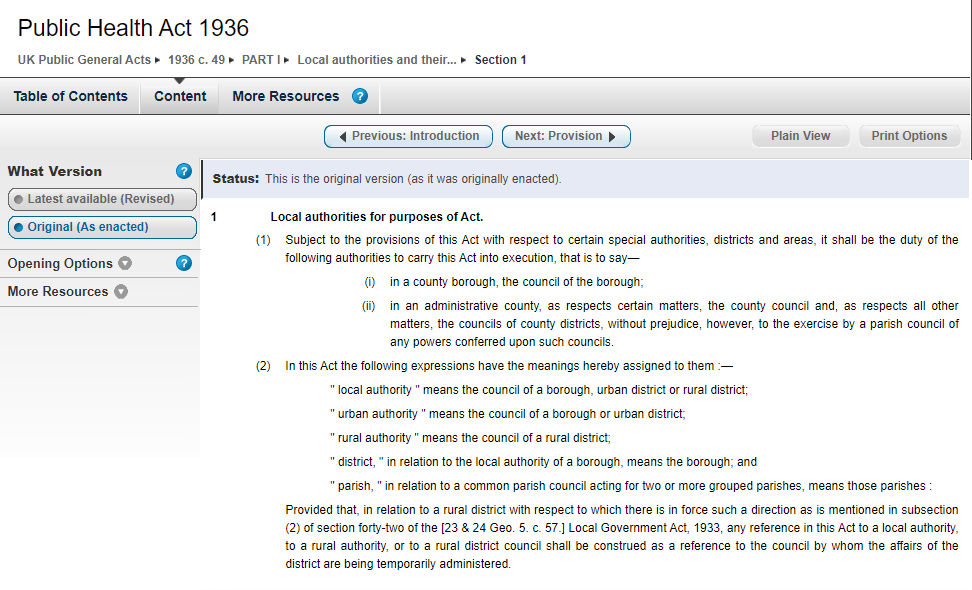
In the 1936 Act, as in the 1848 and 1875 Acts before it, the key powers and duties lay with local authorities. Local authorities were authorised to construct sewers, require buildings to be altered or demolished, build hospitals… the list is a long one.
5/22
5/22
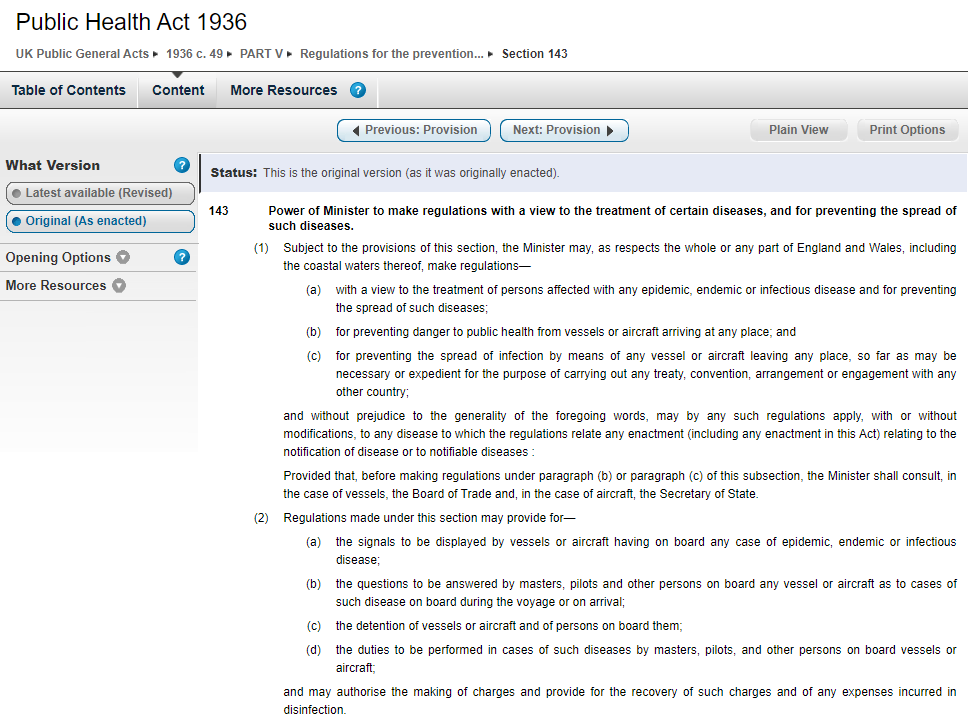
Part V of the Act was about preventing the spread of infectious diseases. Section 143 gave the Minister power to make regulations.
6/22
6/22
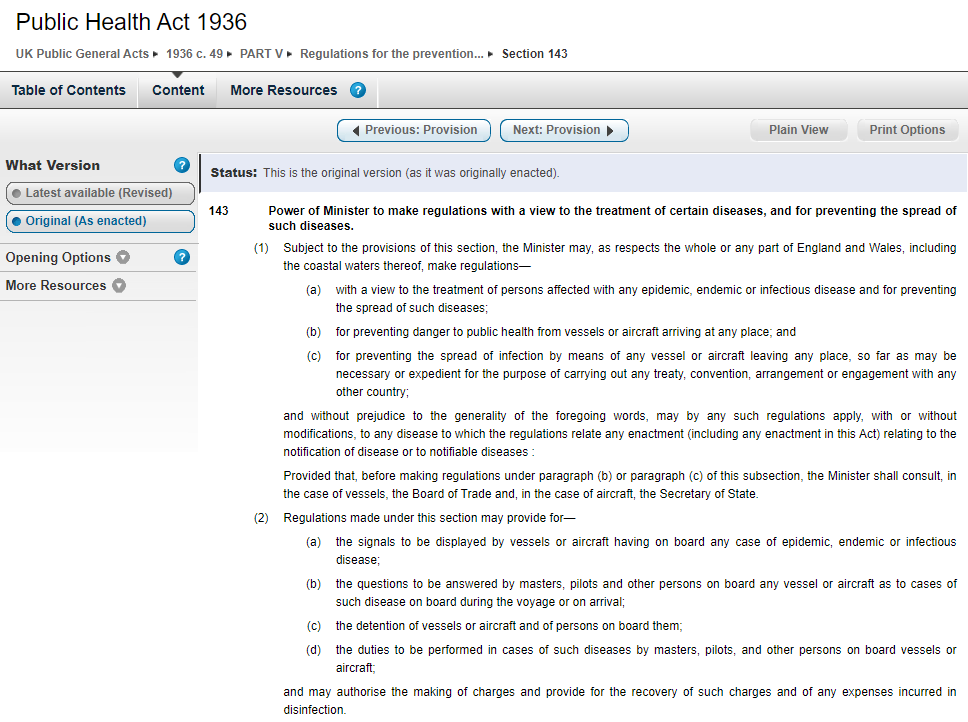
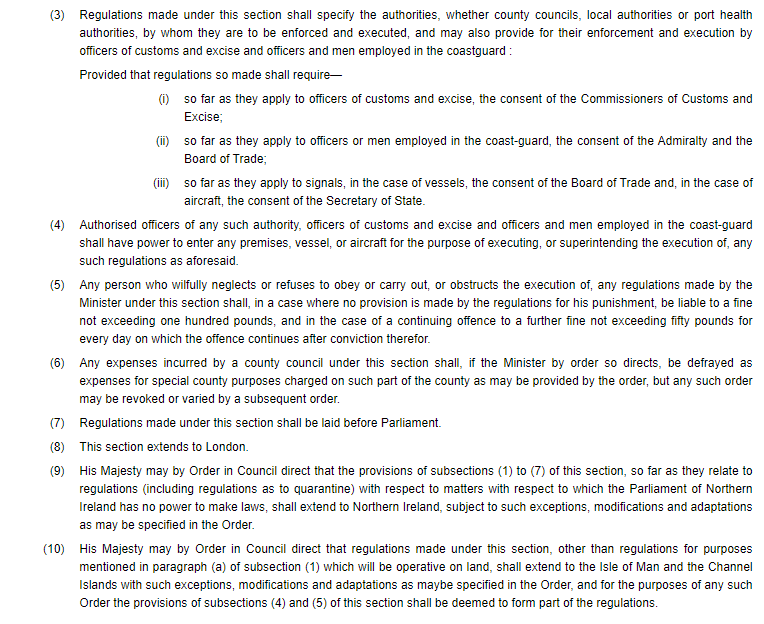
Note the broad wording about geographical scope: “the whole or any part of England and Wales”, and contrast that with the requirement to obtain the consent of other officials for regulations intended to apply to officers in customs and excise and the coast guard.
7/22
7/22
Now we turn to section 341, the predecessor to section 73 in the 1984 Act. What was its purpose? We know from Hansard that the view of the government of the day was that the provisions of the Act did not extend to Crown property.
8/22
8/22

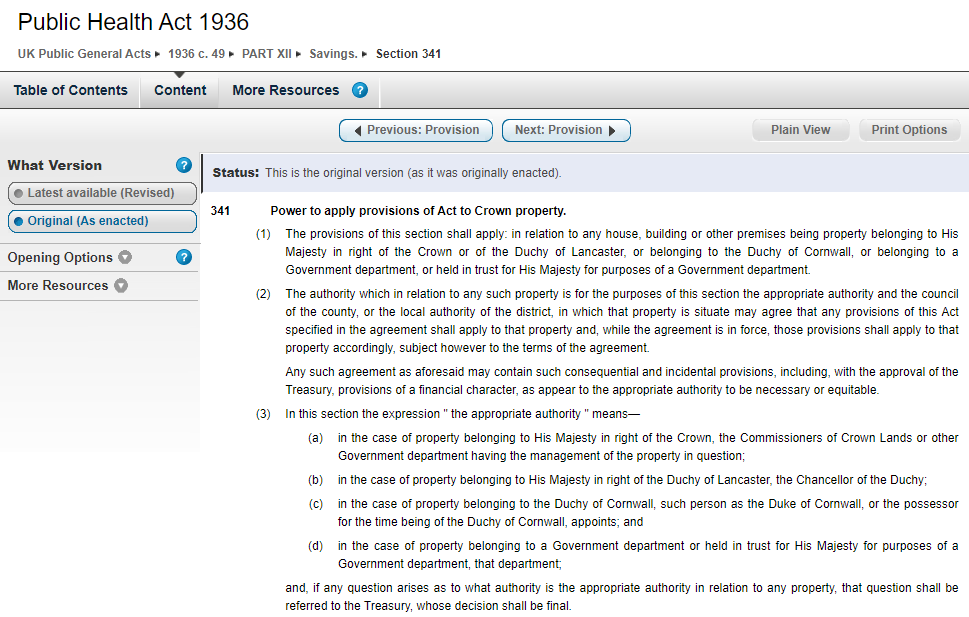
That is unsurprising, because consistent with the general principle discussed above. Section 341 was a cautious expansion of the remit of local authorities, permitting them to police public health on Crown land but subject always to the prior agreement of central government.
9/22
9/22
Cautious because, one imagines, the government in 1936 was no keener on local authority officials running the rule over government buildings than today’s government would be.
10/22
10/22
What section 341 was not intended to do, it is submitted, was to prevent the Minister from regulating conduct on Crown land under section 143.
11/22
11/22
That construction strains the language of section 341 (“apply to the property” is not obviously the same as “apply to any activity on the property”) and conflicts with the express words about geographical scope in section 143.
12/22
12/22
Moreover, the need to protect the Crown from overreach by its own Ministers is considerably less obvious than the need to protect it from overzealous local officials.
13/22
13/22
We now fast-forward to the 1984 Act. This was a consolidating statute, so it’s not surprising that we see similar features to those of the 1936 Act, which is to say powers and duties resting with local authorities and a power for the Secretary of State to make regulations.
14/22
14/22
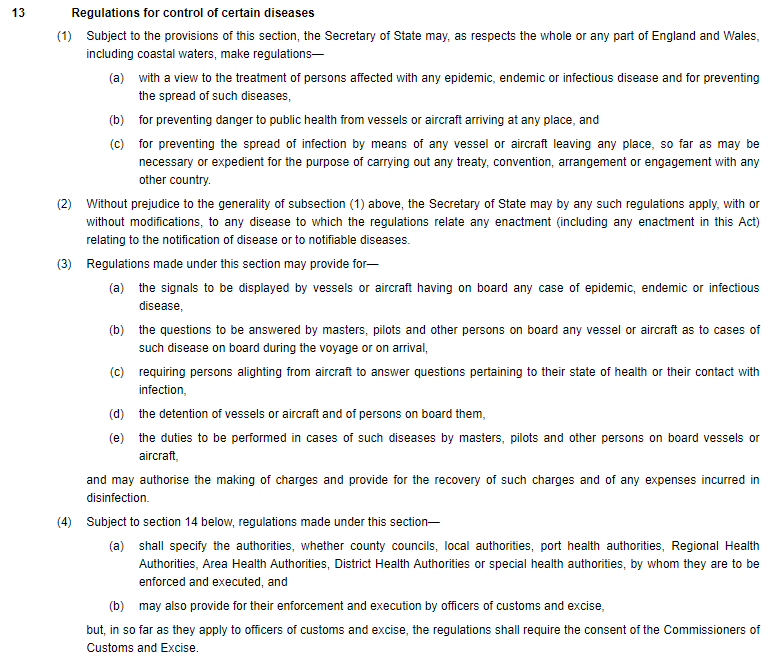
Note the similarities of section 13 with section 143 of the 1936 Act.
15/22
15/22
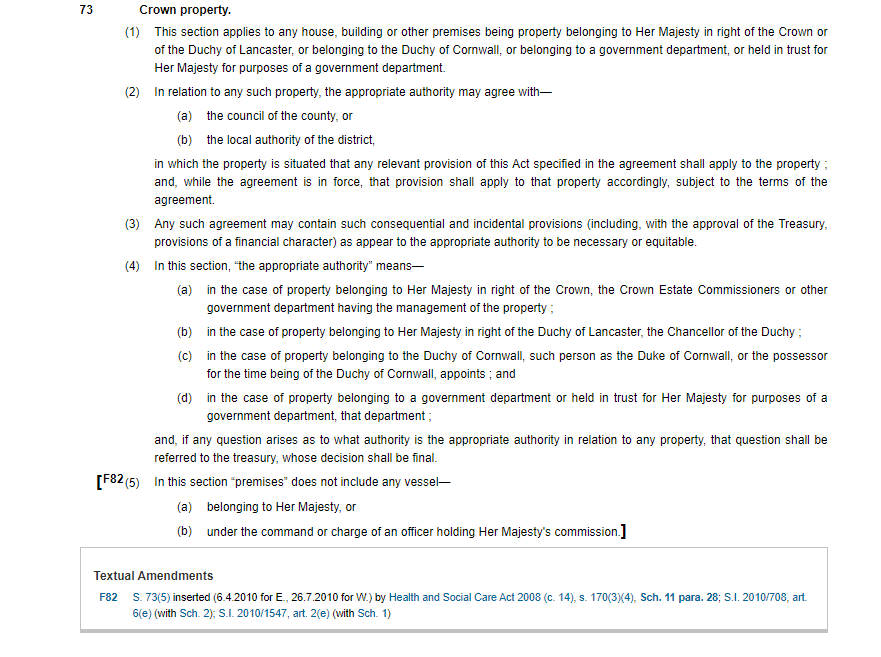
Section 341 of the 1936 Act is essentially re-enacted as section 73 and is, it is submitted, intended to serve the same purpose.
16/22
16/22
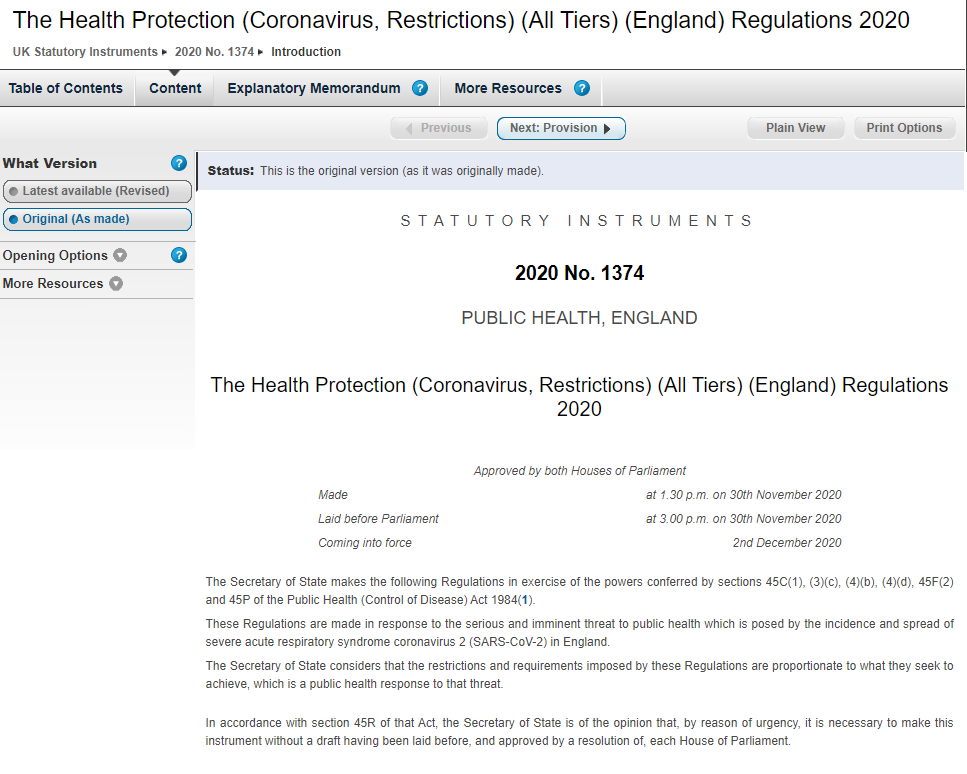
The last piece of the jigsaw is the Health and Social Care Act 2008, which substantially amended the 1984 Act. It introduced broader powers for the Minister to make regulations, and it is these powers that were used to make the regulations in force on 18 December 2020.
17/22
17/22
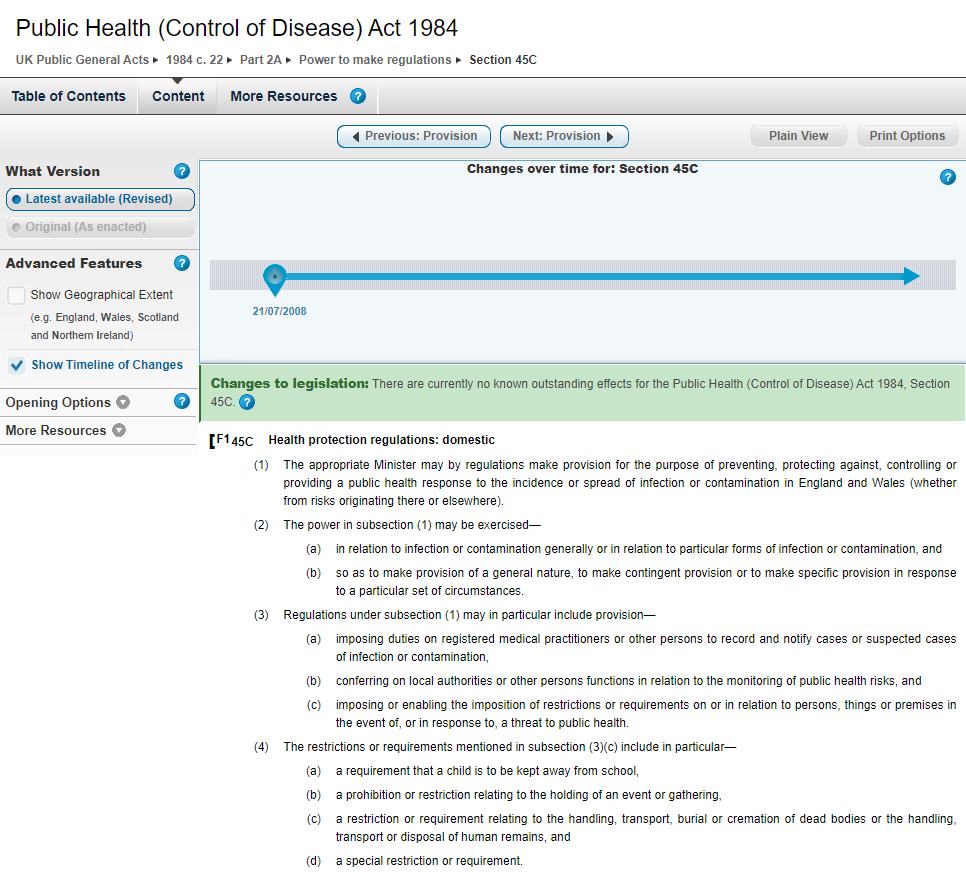
While section 45C doesn’t, unlike section 13, contain express words about geographical scope, equally there is nothing to indicate that the Minister’s power to make regulations is intended to be constrained by section 73.
18/22
18/22
The purpose and effect of s. 73 in the 1984 Act is the same as that of s. 143 in the 1936 Act. It prevents e.g. government officials demanding access to government buildings without prior agreement. It doesn't cut down the scope of the Minister’s powers to make regulations.
19/22
19/22
PS1: the 1984 Act doesn't bind the Crown. In the unlikely event, therefore, that a govt worker breached the regs in the execution of their duty but wasn’t able to rely on any of the statutory defences, they would have a defence. But that is a separate point from s. 73.
20/22
20/22
PS2: some of the various iterations of the Covid regs expressly refer to Crown property. There are times when such references offer useful clues to the interpretation of the primary legislation, but ultimately I'm not persuaded that they're much help here.
21/22
21/22
PS3: this is my view, but the contrary view is by no means untenable. It is not an easy point. I'm grateful to @charlesholland and @jameswmullen for our discussions.
22/22
22/22
• • •
Missing some Tweet in this thread? You can try to
force a refresh




