I decided to release a couple of figures from my PhD thesis, perhaps they might be useful to someone! First off is a remake of the famous Makarova et al. 2020 CRISPR classification. This one also includes a schematic of the targeted nucleic acid.
Next off we have structural renderings and domain schematics of Class 2 effectors released at the time of writing (missed Cas12k then). PDBs: 6O0Z, 6I1K, 5U30, 6NY2, 7C7L, 6XMG, 6W5C, 5XWP
Then we get onto the focus protein - SpCas9.First we have structural renderings of the apo, binary state and the guide RNA. PDBs: 4CMP, 4ZT0
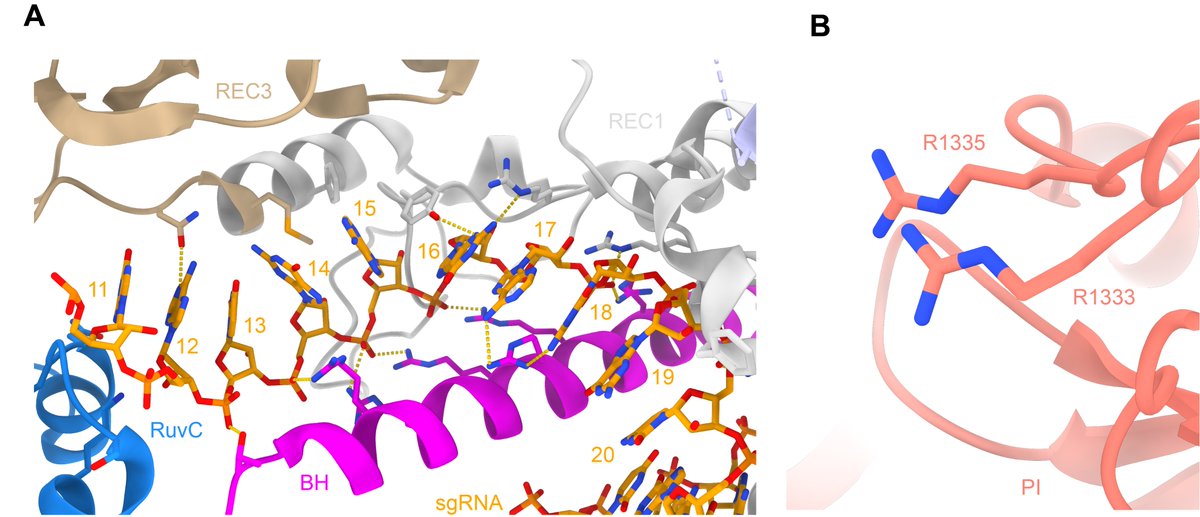
Here I highlight the structural preordering of the guide RNA seed region in a pseudohelical arrangement (A) and the PAM-interacting residues in the binary complex. Both of these significantly increase the efficiency of target sampling and binding. PDB: 4ZT0
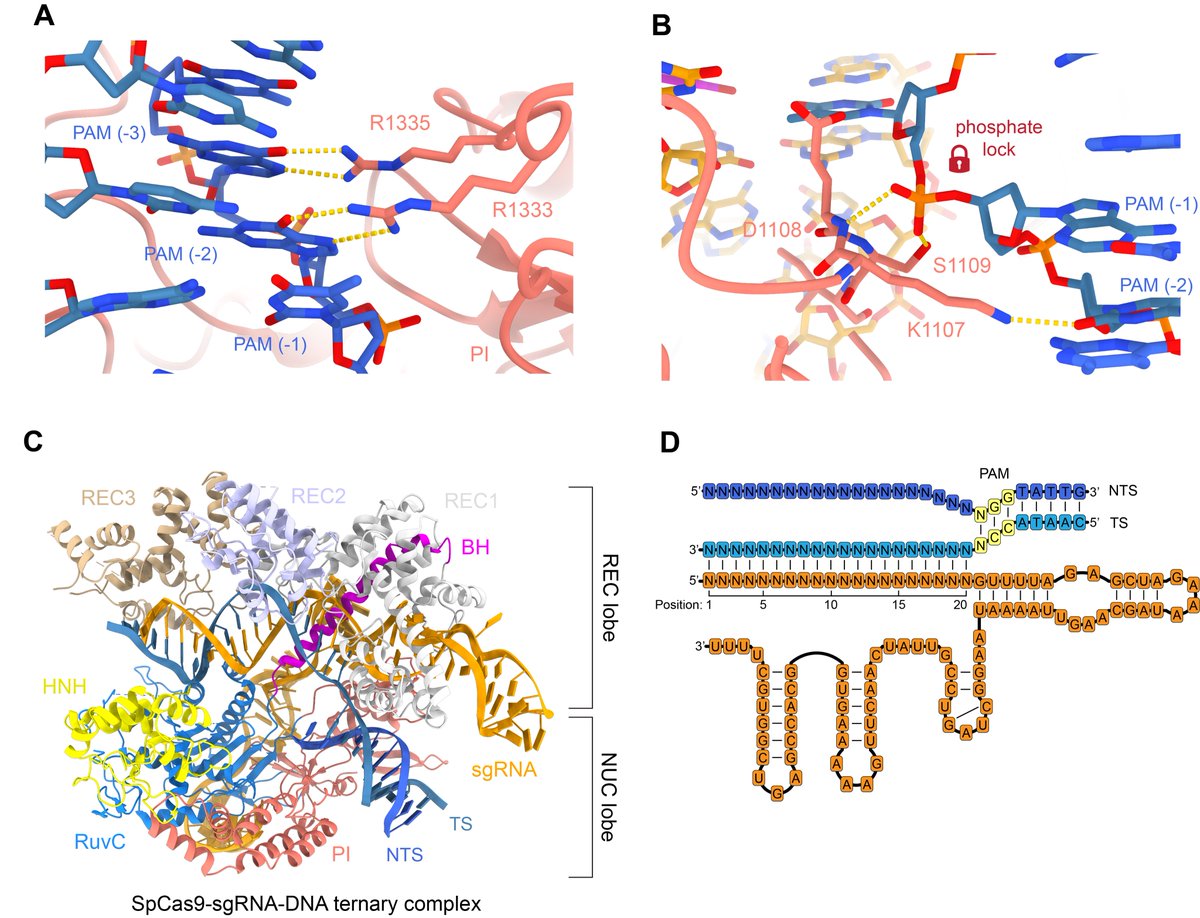
Once the DNA target is bound, the PAM-interacting arginines specifically recognise two GG nucleotides (A). The PAM-proximal phosphate is stabilised (B) to allow base pairing with the guide RNA. PDBs: 4UN3, 6O0Z
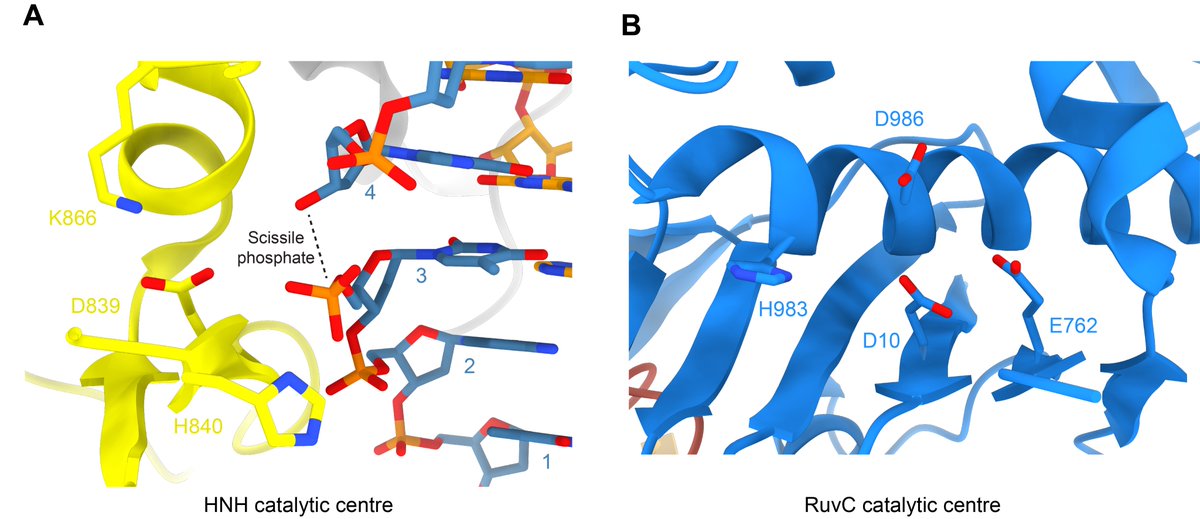
Lastly we have the renderings of the HNH and RuvC nuclease sites and active residues. PDBs: 6O0Y, 4UN3
• • •
Missing some Tweet in this thread? You can try to
force a refresh

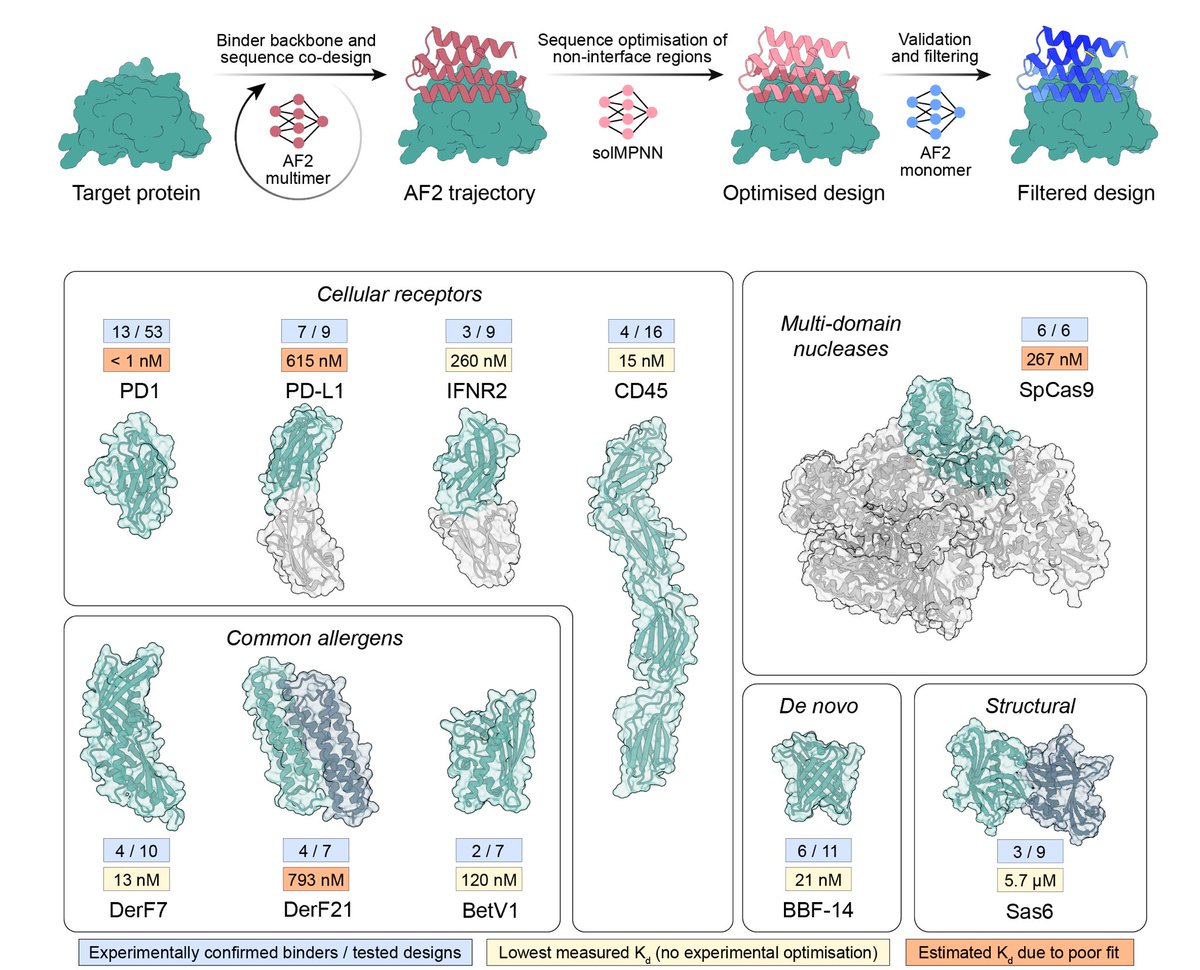
Have you ever wanted to design protein binders with ease? Today we present 𝑩𝒊𝒏𝒅𝑪𝒓𝒂𝒇𝒕, a user-friendly and open-source pipeline that allows to anyone to create protein binders de novo with high experimental success rates. @befcorreia @sokrypton
With Lennart Nickel, we designed binders against a range of challenging targets such as cellular receptors, allergens, and CRISPR-Cas9. With BindCraft, we achieved success rates ranging from 24.5% to 100%, while screening only a handful of binders.
In fact, our pipeline recently won the binder design competition organized by @adaptyvbio , where we designed a nanomolar binder against the challenging EGFR target!
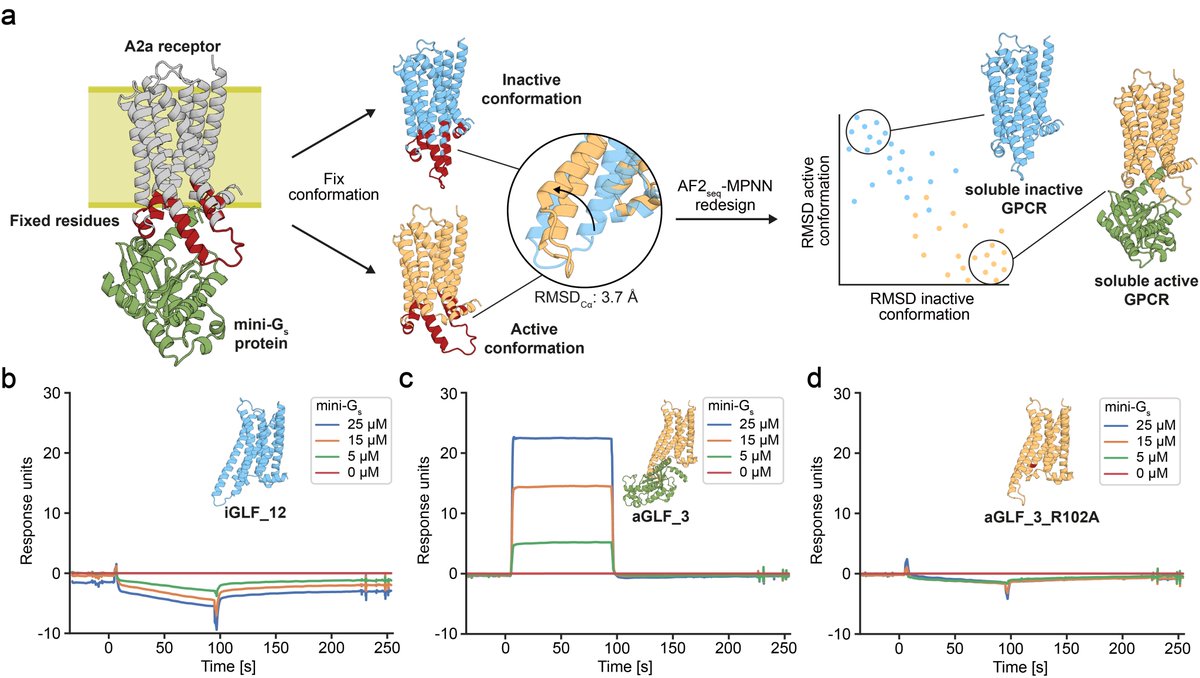
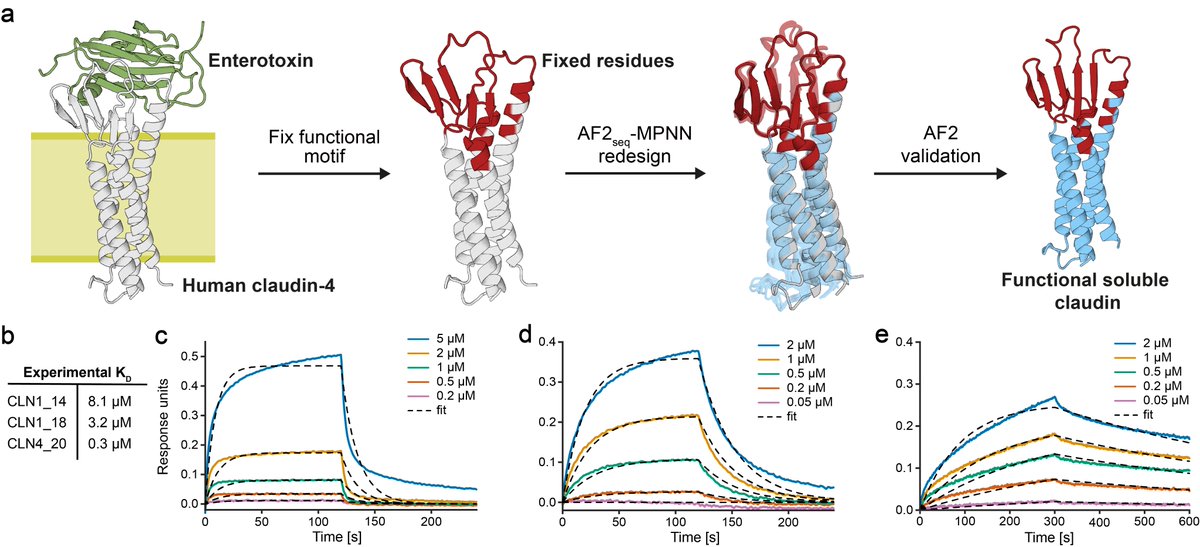
THEY SAID WE COULDN'T DO IT........well, no one actually said that. But in our updated manuscript with @CasperGoverde, @GoldbachNico, and @befcorreia we show you can now design soluble analogues of membrane proteins with preserved functional features!
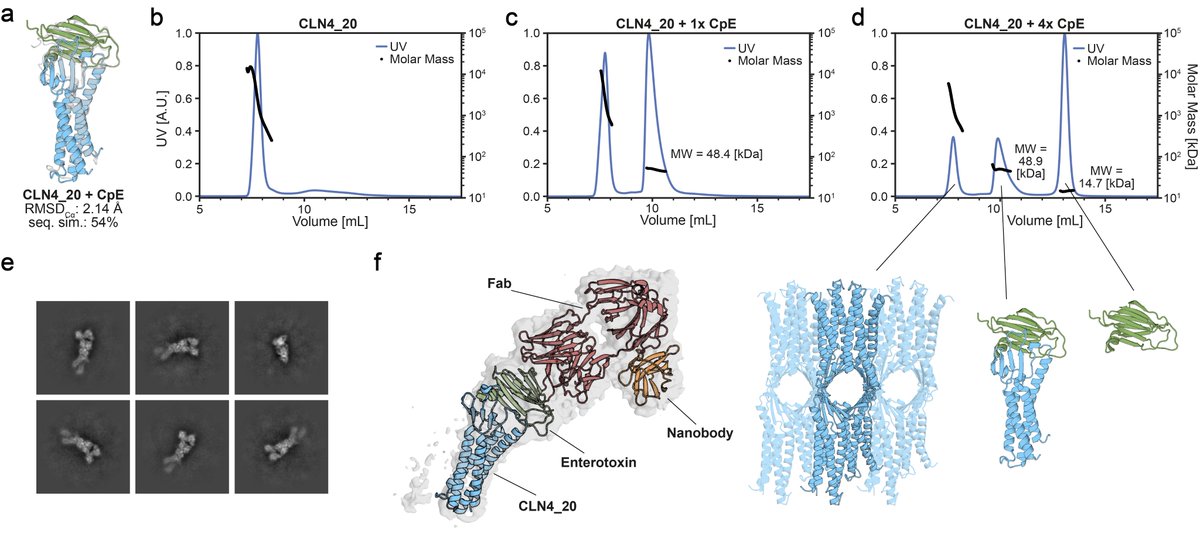
While fixing functional sites during design, we can recapitulate complex interaction sites, such as the Clostridium perfringens enterotoxin binding site on claudins and maintain toxin binding in solution with affinities comparable to its membrane counterpart.
Strikingly, we see that the soluble analogues form high molecular weight species that can be disrupted upon addition of the toxin! Analogous to disassembly of claudin oligomers within tight junctions. @Vecchiology's lab was able to confirm the binding mode using cryoEM.
I am happy to conclude my trilogy on Cas9 specificity with our new preprint from the @MartinJinek lab! We solved a staggering number (15!) of crystal structures of Cas9 bound to bona fide off-targets to investigate the nature of mismatch tolerance.
We observe that mismatch tolerance is primarily facilitated by the formation of non-canonical base pairs within the heteroduplex. This effect is dependent on the type of mismatch, the surrounding nucleotides, and its position within the duplex.
As the level of protein coordination varies along the duplex, in some cases we see that preservation of proper base stacking is preferred over unfavourable pairing. We also observe HNH side-chain coordination of an rC-dT mismatch (on-target positioning in white)!