
Structural biologist working on 🖥️ protein design, AI, and #CRISPR-Cas gene editing ✂️🧬 Avid weirdness connoisseur 🎩
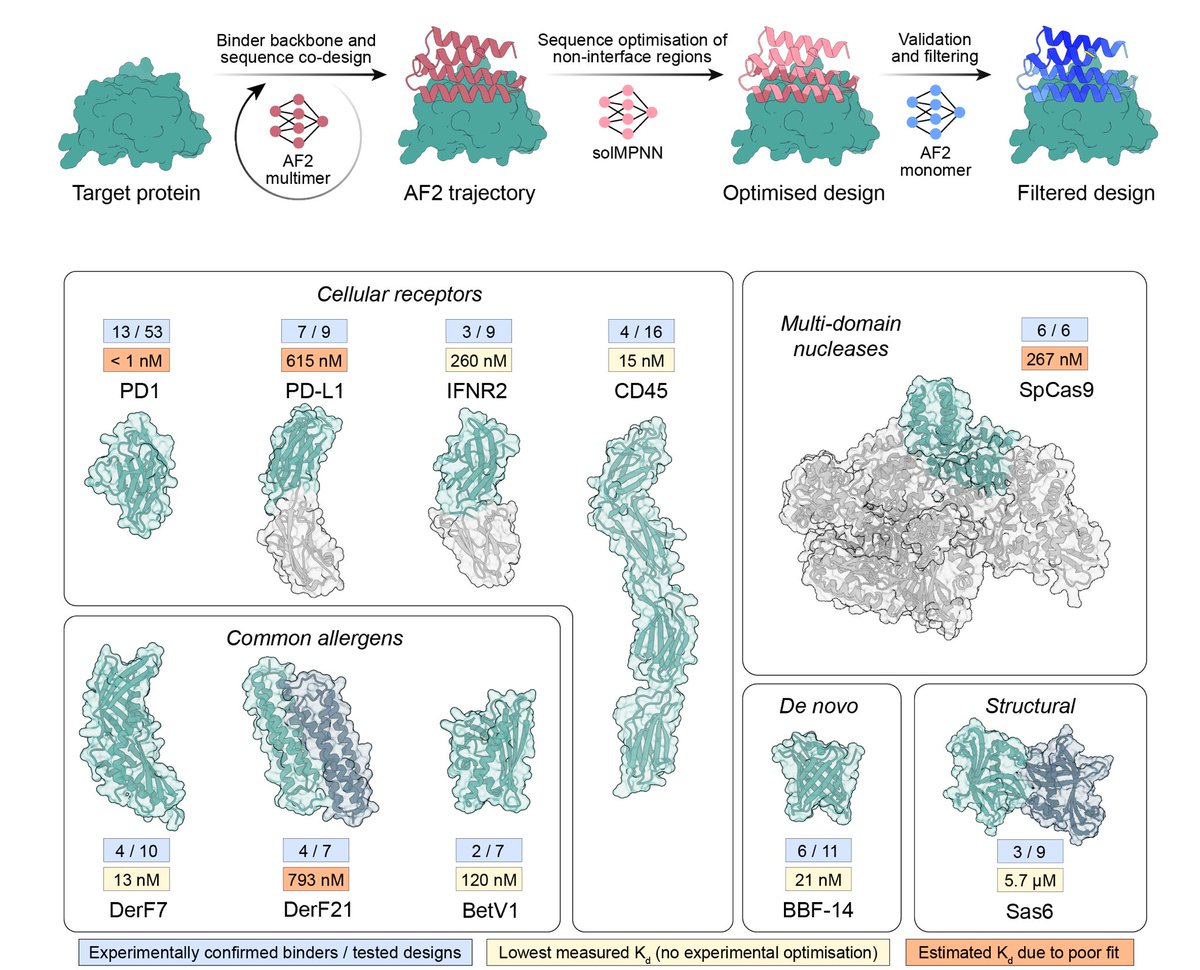
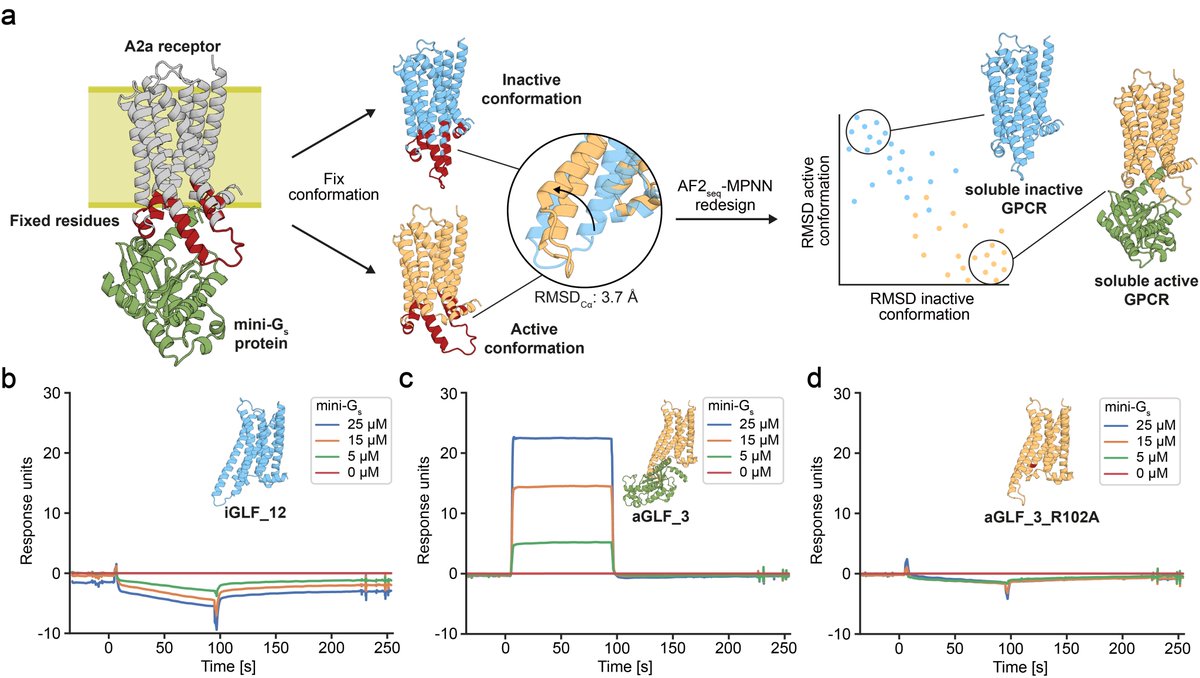 While fixing functional sites during design, we can recapitulate complex interaction sites, such as the Clostridium perfringens enterotoxin binding site on claudins and maintain toxin binding in solution with affinities comparable to its membrane counterpart.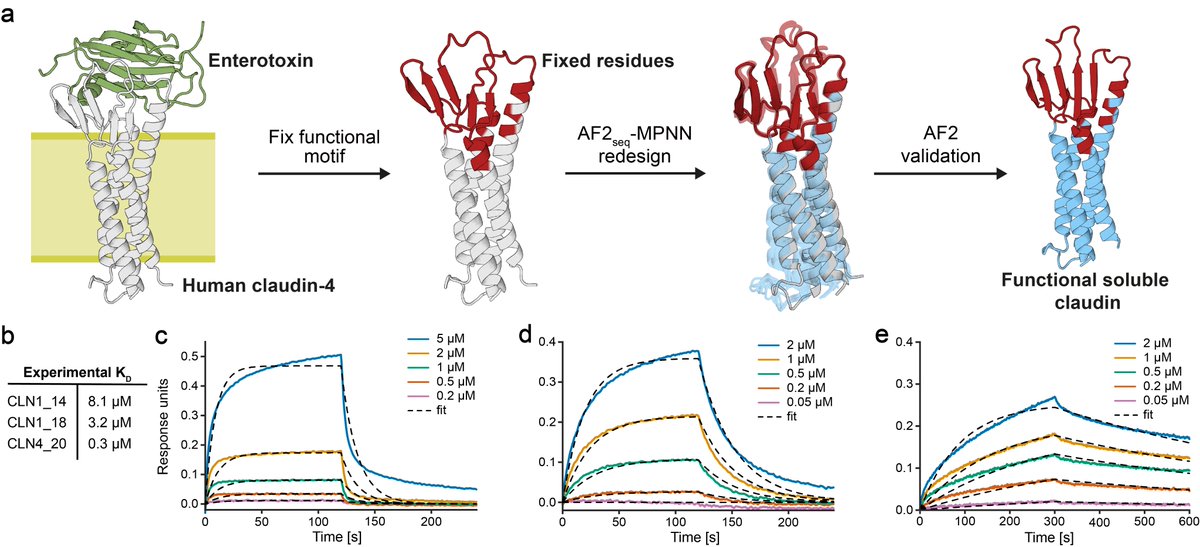

 Next off we have structural renderings and domain schematics of Class 2 effectors released at the time of writing (missed Cas12k then). PDBs: 6O0Z, 6I1K, 5U30, 6NY2, 7C7L, 6XMG, 6W5C, 5XWP

 We observe that mismatch tolerance is primarily facilitated by the formation of non-canonical base pairs within the heteroduplex. This effect is dependent on the type of mismatch, the surrounding nucleotides, and its position within the duplex.