Here's an analysis of cases, deaths and vaccinations, for Australia, broken down by state/territory.
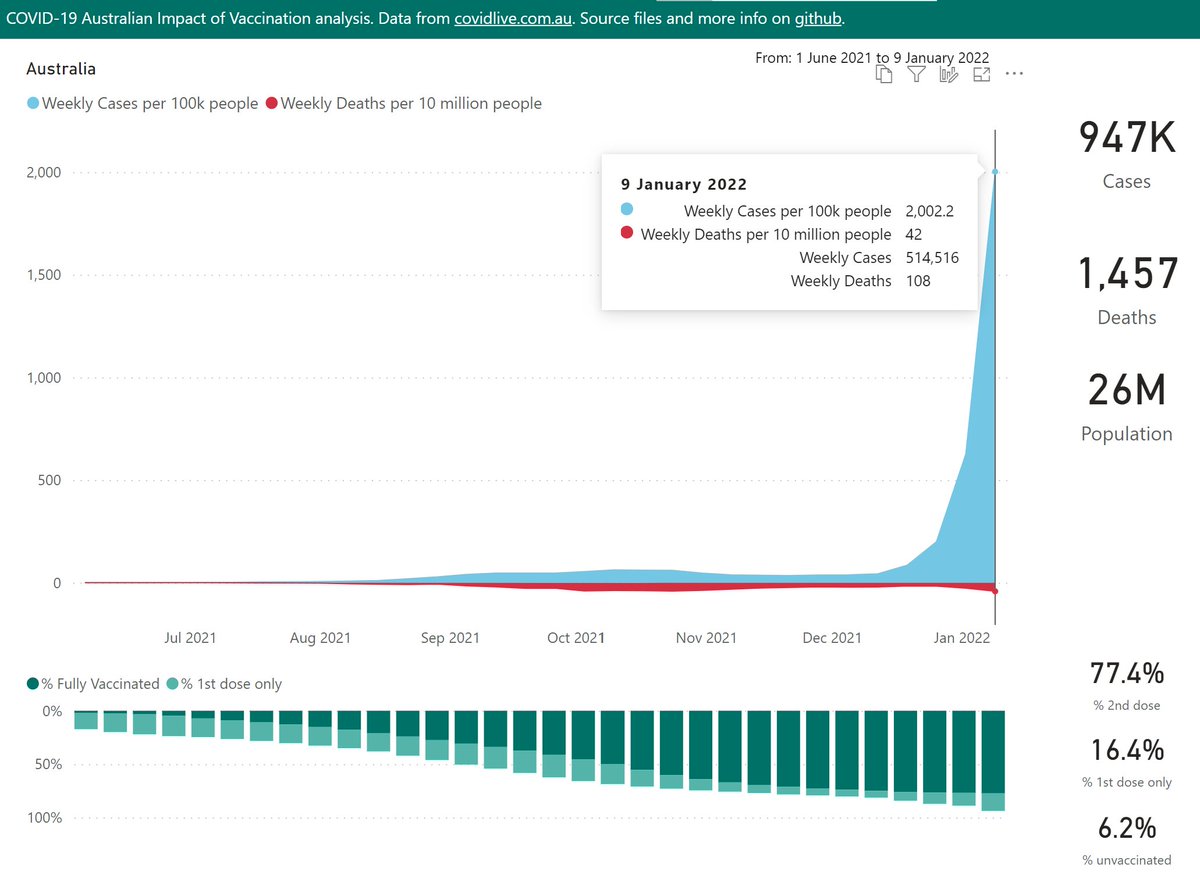
First at the national level. Cases have more than tripled in the latest week, as "let it rip" policies have allowed rampant Omicron spread in most regions.
First at the national level. Cases have more than tripled in the latest week, as "let it rip" policies have allowed rampant Omicron spread in most regions.
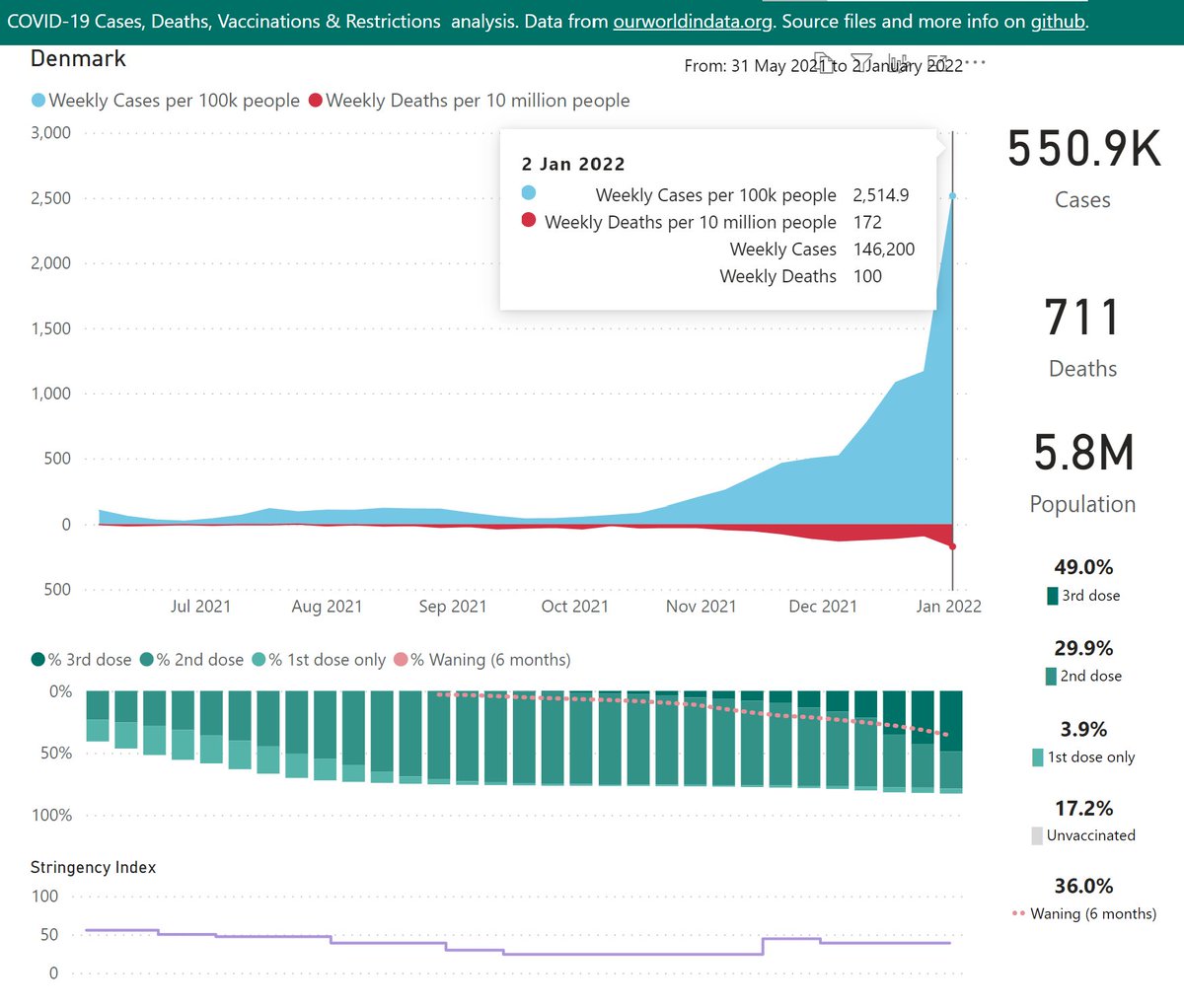
Denmark was the only comparable country with a higher case rate in the prior week.
Their Omicron outbreak built on many weeks of Delta spread, which was not the case in much of Australia.
Their Omicron outbreak built on many weeks of Delta spread, which was not the case in much of Australia.
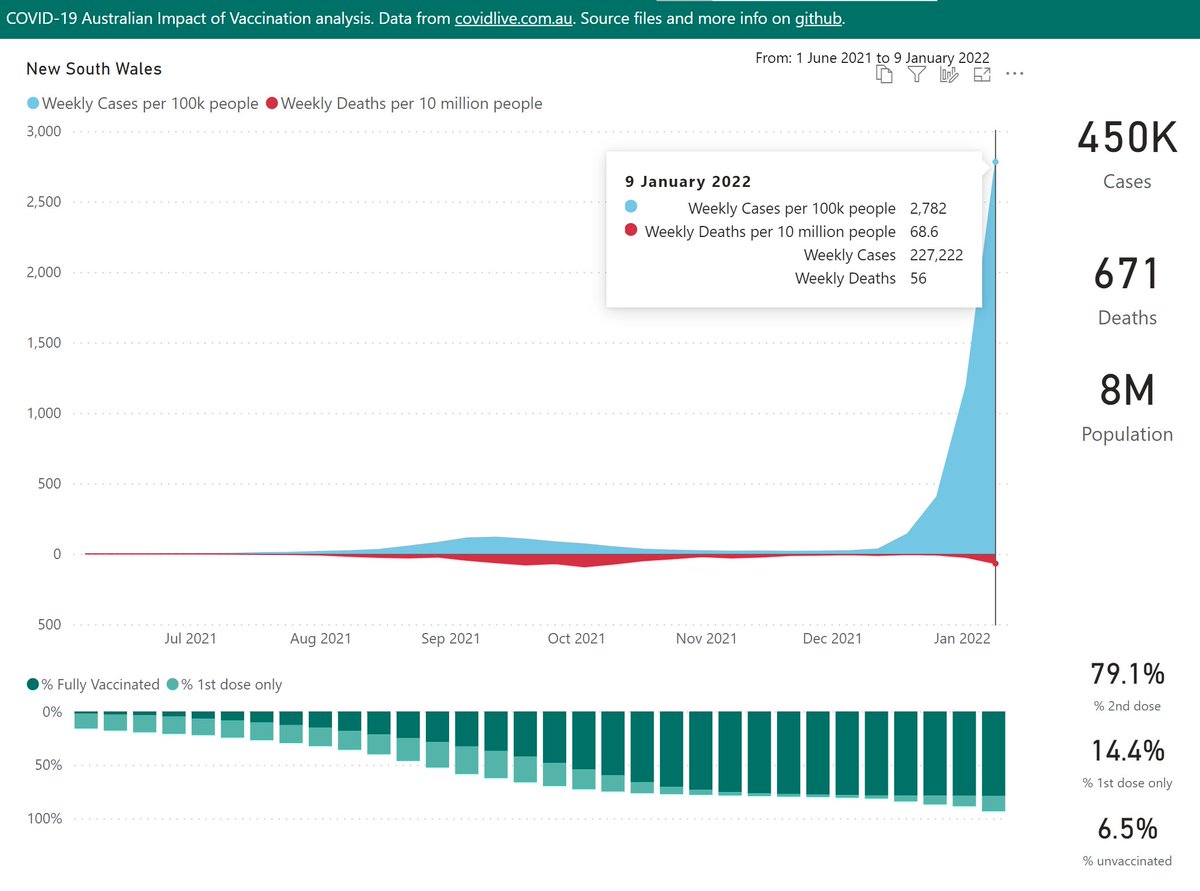
New South Wales has led the "let it rip" / "live with the virus" charge. They have not yet started including RAT counts, so the cases are only what could be processed by their overwhelmed PCR testing capacity.
Deaths typically lag cases by 3 weeks, so are starting to increase.
Deaths typically lag cases by 3 weeks, so are starting to increase.
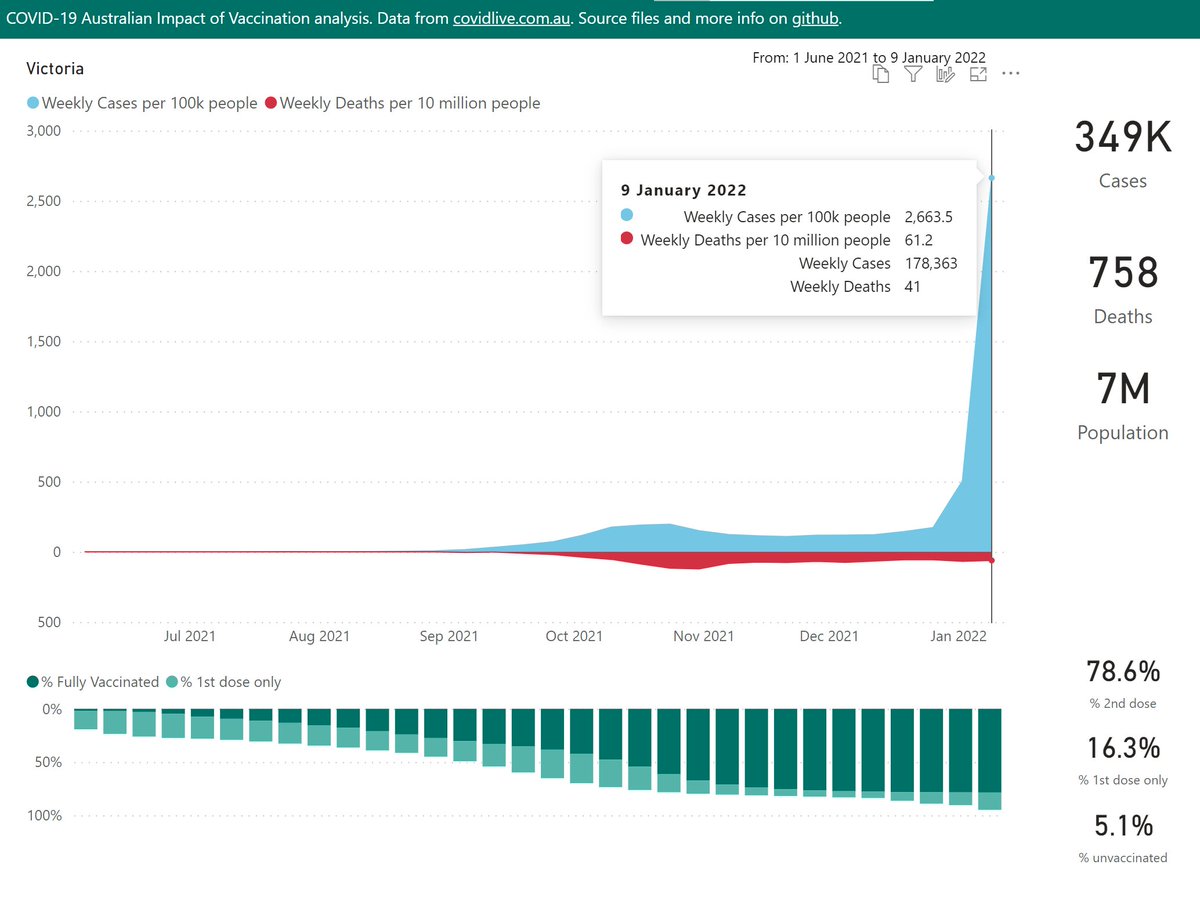
Victoria's case counts include almost a full week of (self-reported) RAT test results, which made up ~40% of this weeks' cases. RAT supply is still utterly inadequate everywhere in Australia.
The Omicron spike is a few weeks behind NSW, so has not yet impacted death rates.
The Omicron spike is a few weeks behind NSW, so has not yet impacted death rates.
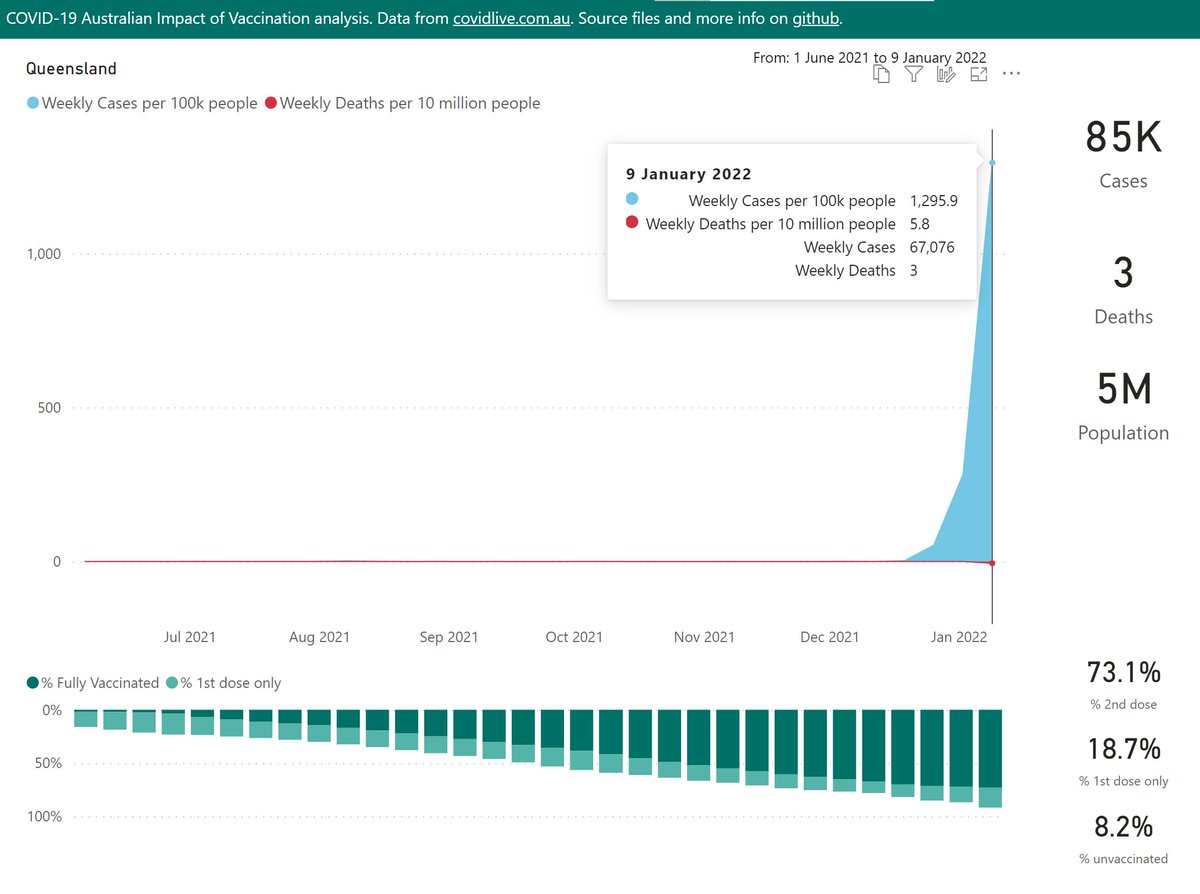
Queensland's Omicron spike is just astonishing. After months of near-zero cases, they threw open their borders to neighbouring NSW, where Omicron super-spreader events had just occurred.
Deaths are just getting started - 3 weeks ago there were only 129 cases for an entire week.
Deaths are just getting started - 3 weeks ago there were only 129 cases for an entire week.
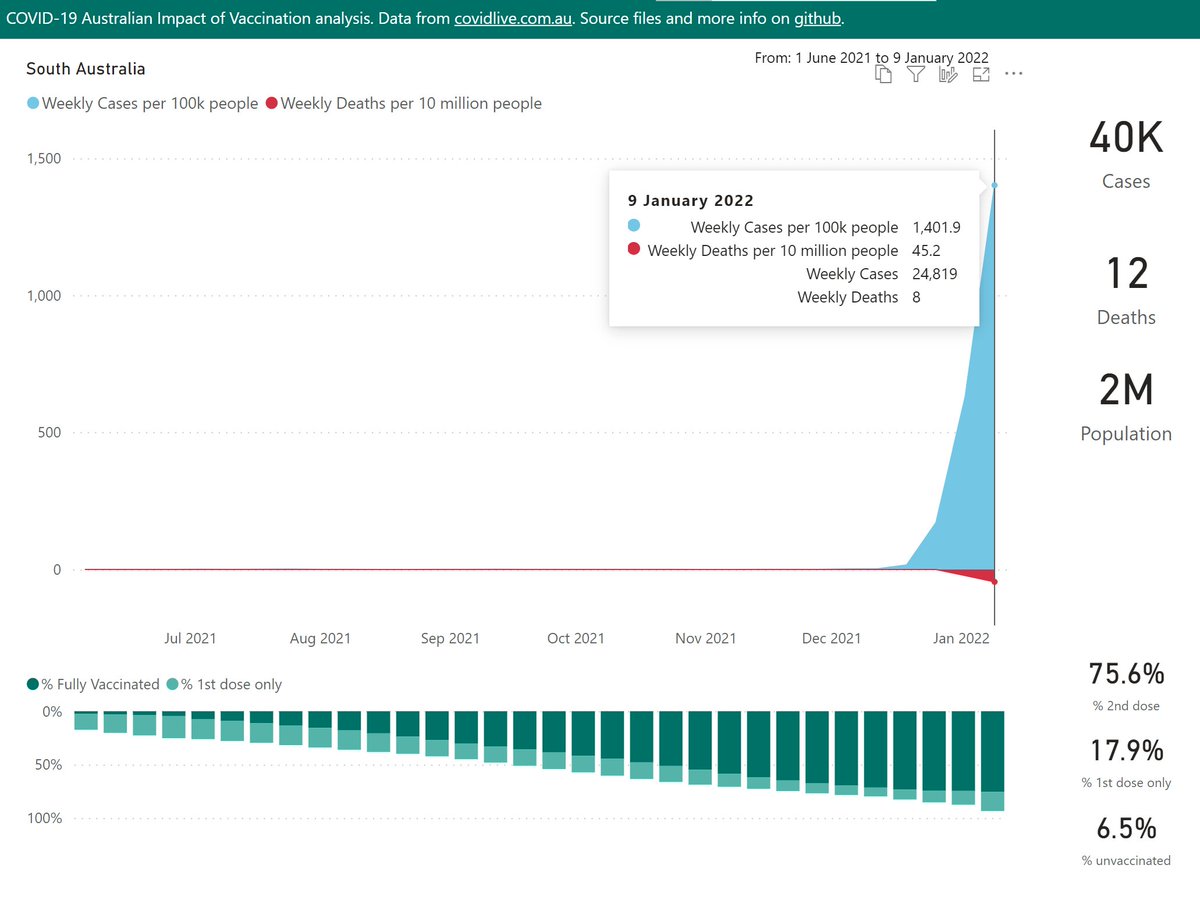
South Australia is another former "zero-COVID" state that opened it's internal borders to Omicron. From sequencing data, they have the purest Omicron outbreak in the world - close to 100%.
Notably, deaths are already climbing, at a faster pace than Delta.
Notably, deaths are already climbing, at a faster pace than Delta.
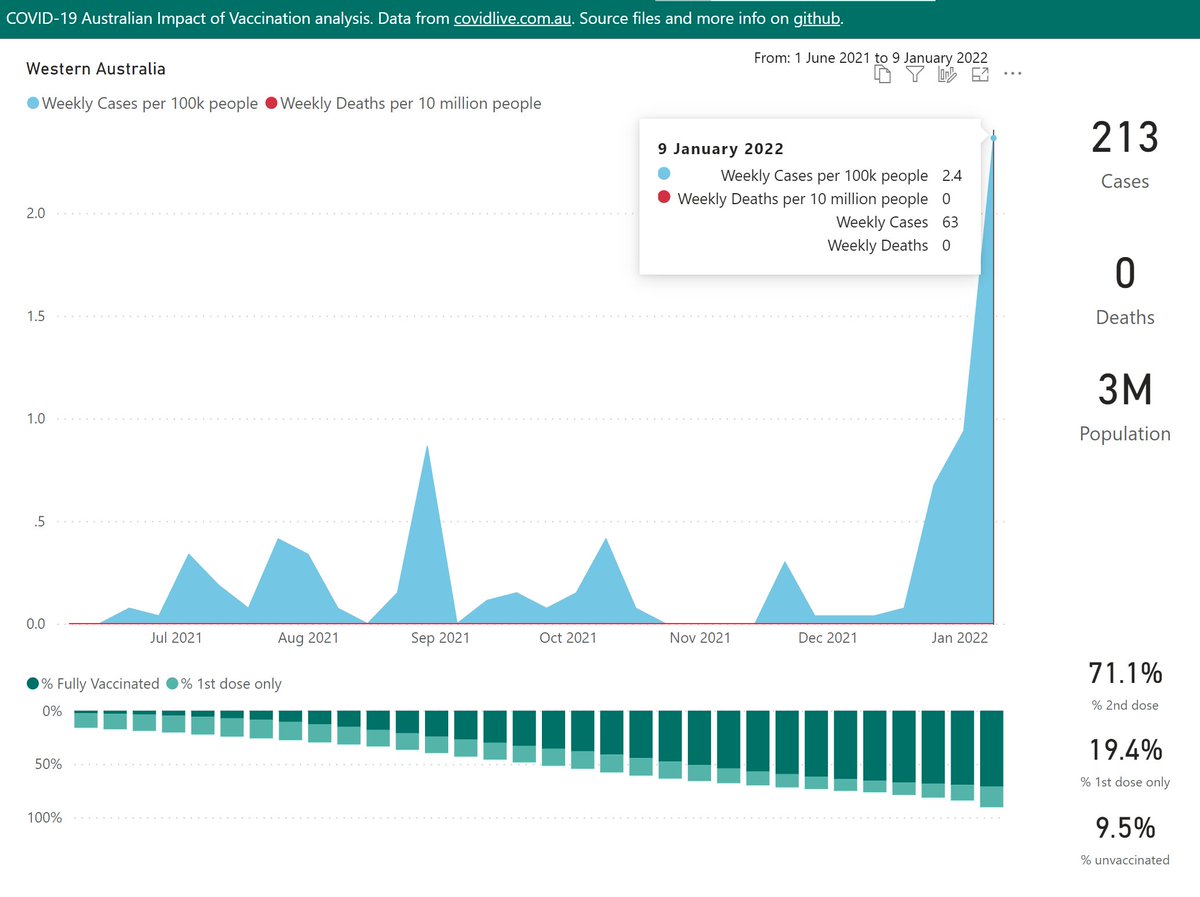
In Western Australia, there has been some Delta and Omicron community spread this week, however, that might now be under control.
It's a mystery to me why the other zero-COVID states did not follow the same course, or at least postpone re-opening a few weeks to assess risk.
It's a mystery to me why the other zero-COVID states did not follow the same course, or at least postpone re-opening a few weeks to assess risk.
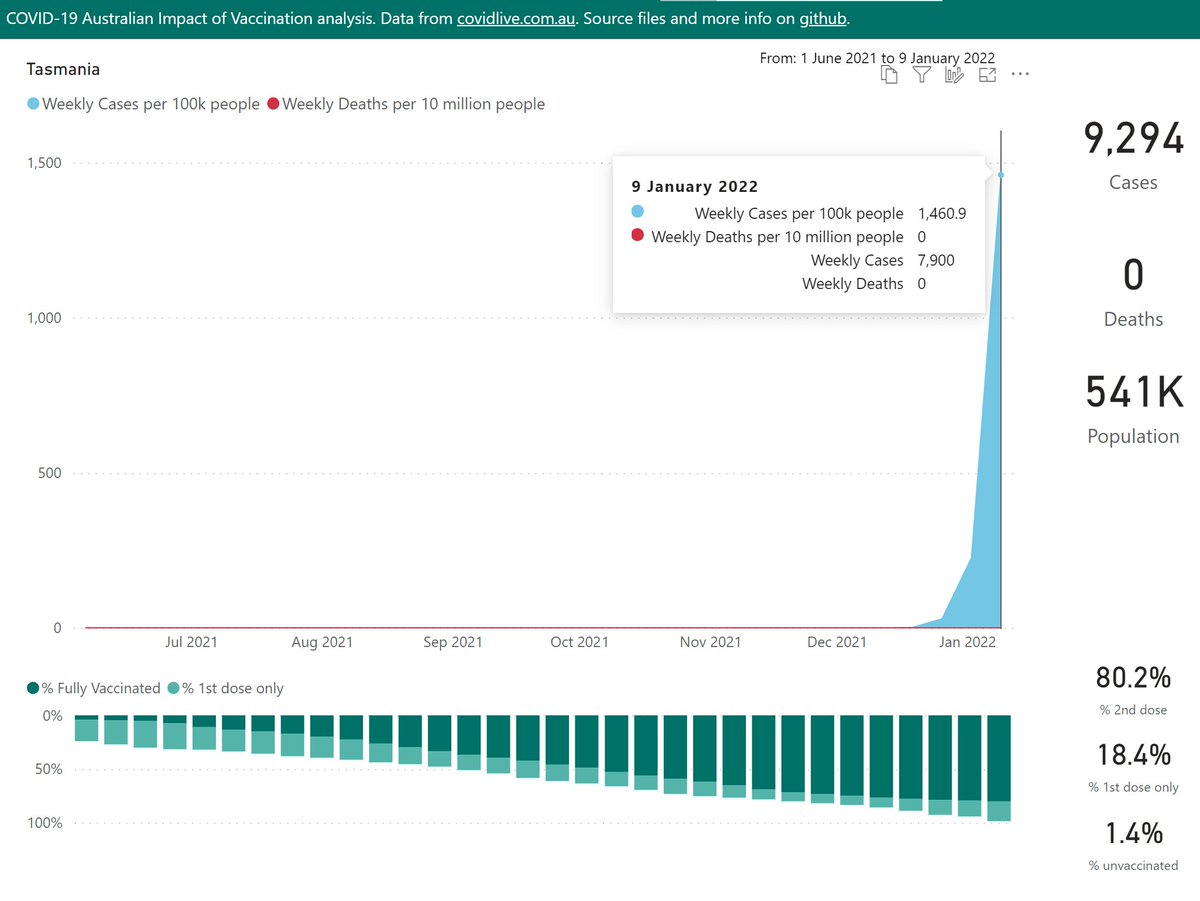
Tasmanian cases have shot up in just a few weeks to rival the worst-affected countries in Europe.
Very high vaccination rates might keep deaths low.
Very high vaccination rates might keep deaths low.
The Northern Territory is now facing the familiar steep Omicron wave.

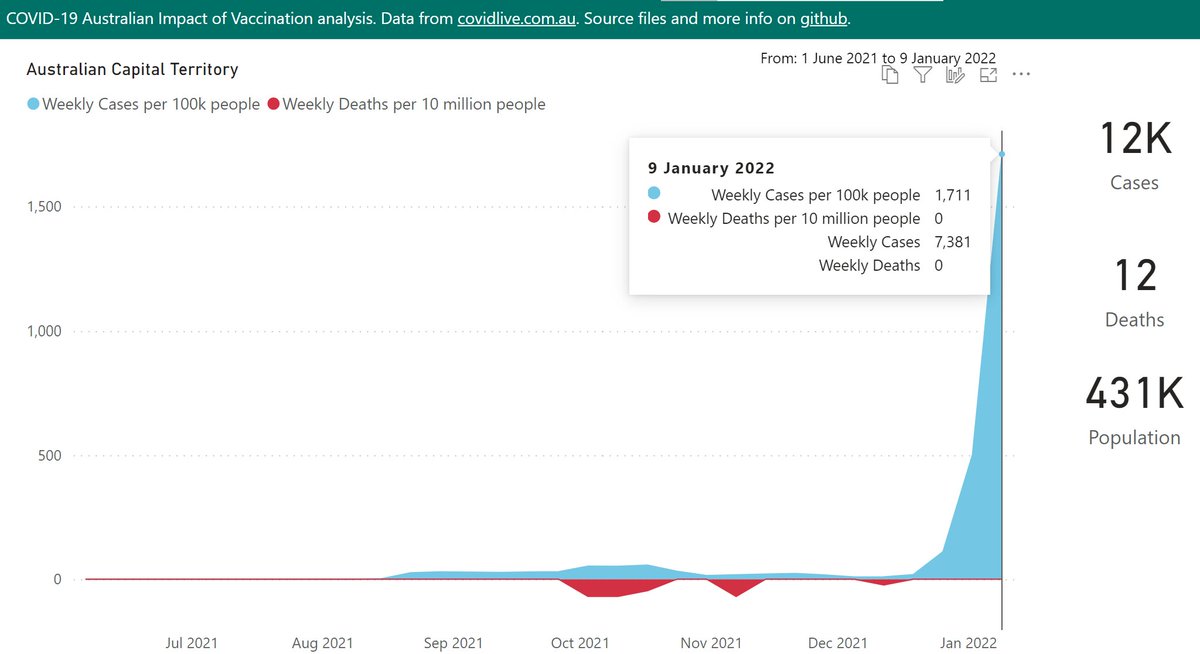
The Australian Capital Territory (surrounded by NSW) has been battling a long Delta outbreak, but now Omicron has certainly arrived.
The QLD, SA & TAS case counts include 1 day of self-reported RAT results.
COVID-19 stats from @covidliveau.
Interactive DataViz here:
github.com/Mike-Honey/cov…
COVID-19 stats from @covidliveau.
Interactive DataViz here:
github.com/Mike-Honey/cov…
• • •
Missing some Tweet in this thread? You can try to
force a refresh