New year, new... fume hood filter?

Not how the saying usually goes, but that's how things go in my lab. This is a ductless hood with a stack of two filters, a doped carbon for organic vapor/acid gas followed by a HEPA to catch carbon particles, sanding debris, etc.
Here's the service plenum with the access cover removed. I change the carbon filter annually and the HEPA only when I notice it's clogged enough to impair airflow.

This is pretty rare since I don't generate a lot of particles in the lab and the overall air quality is excellent.
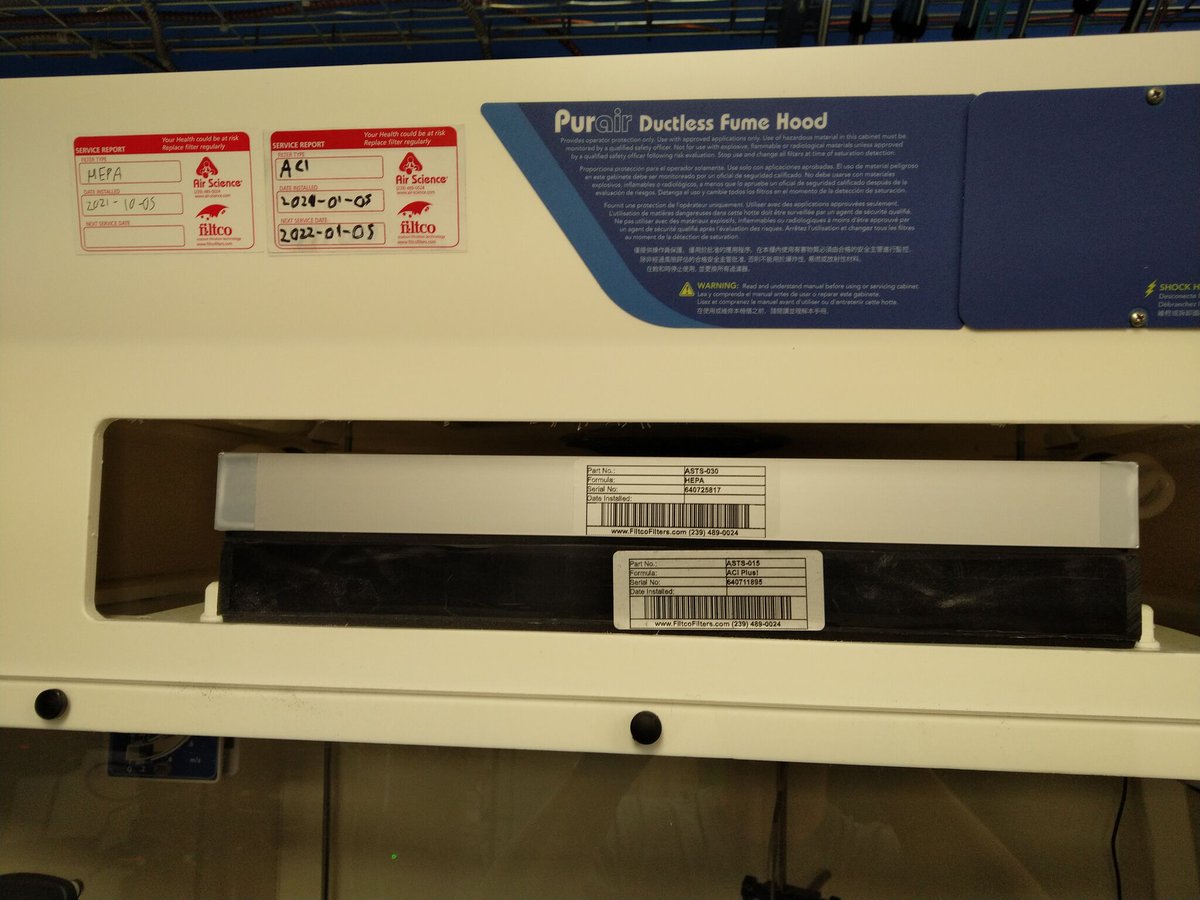
After loosening the compression bar on the filter mount, I can remove the HEPA and save it for re-insertion over the new carbon filter.
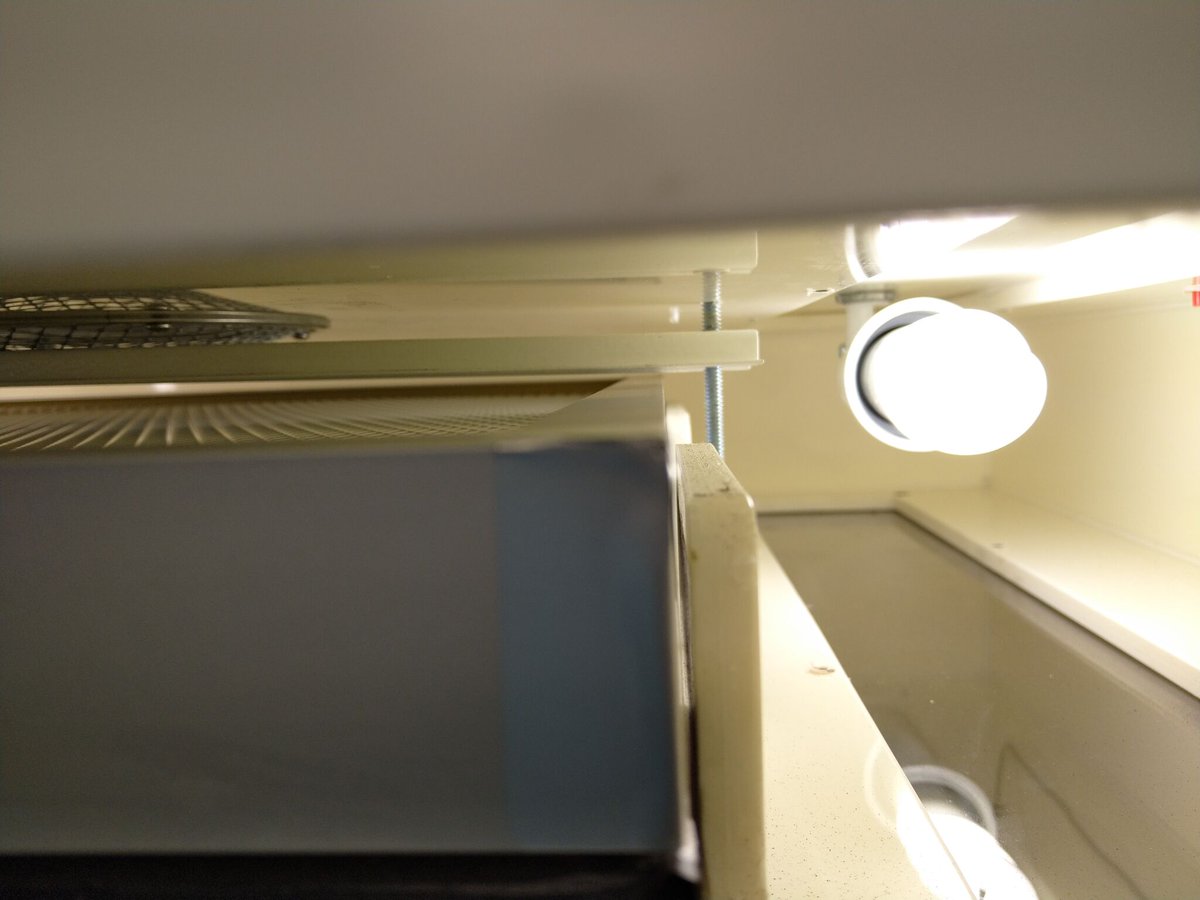
If I used the hood for anything really nasty like asbestos I'd wear a respirator and bag the filter during this stage to prevent contaminating the lab.

But this filter is mostly for carbon particles and occasional paint spray or sanding debris, so no need for extreme care.
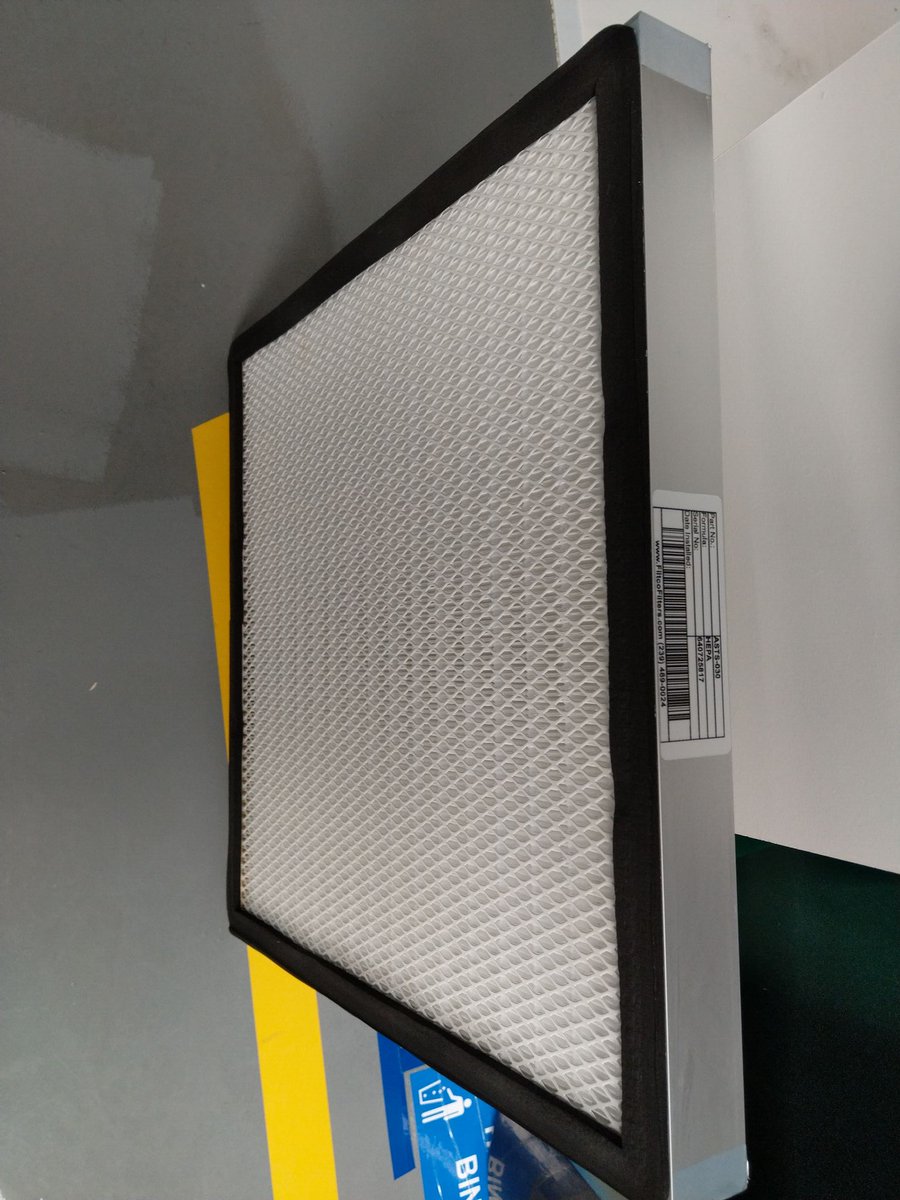
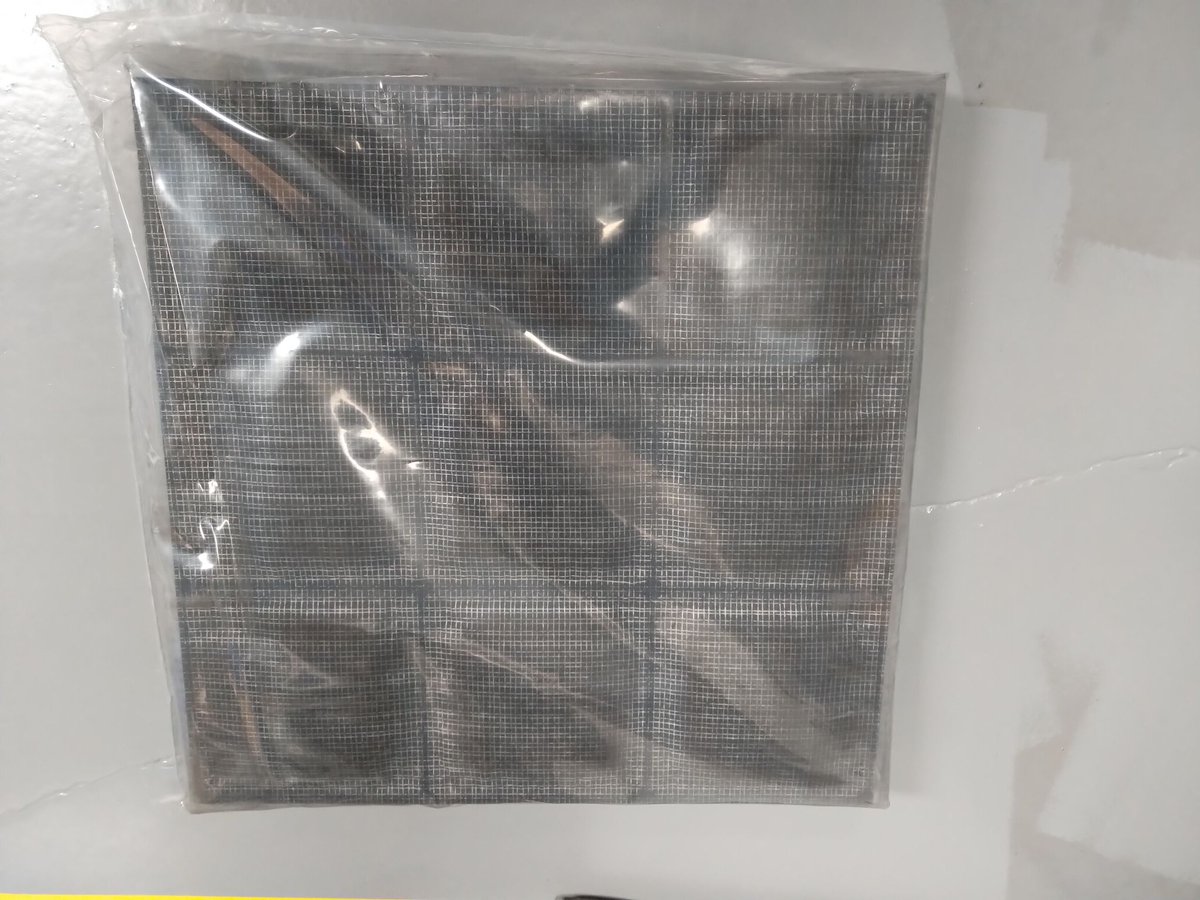
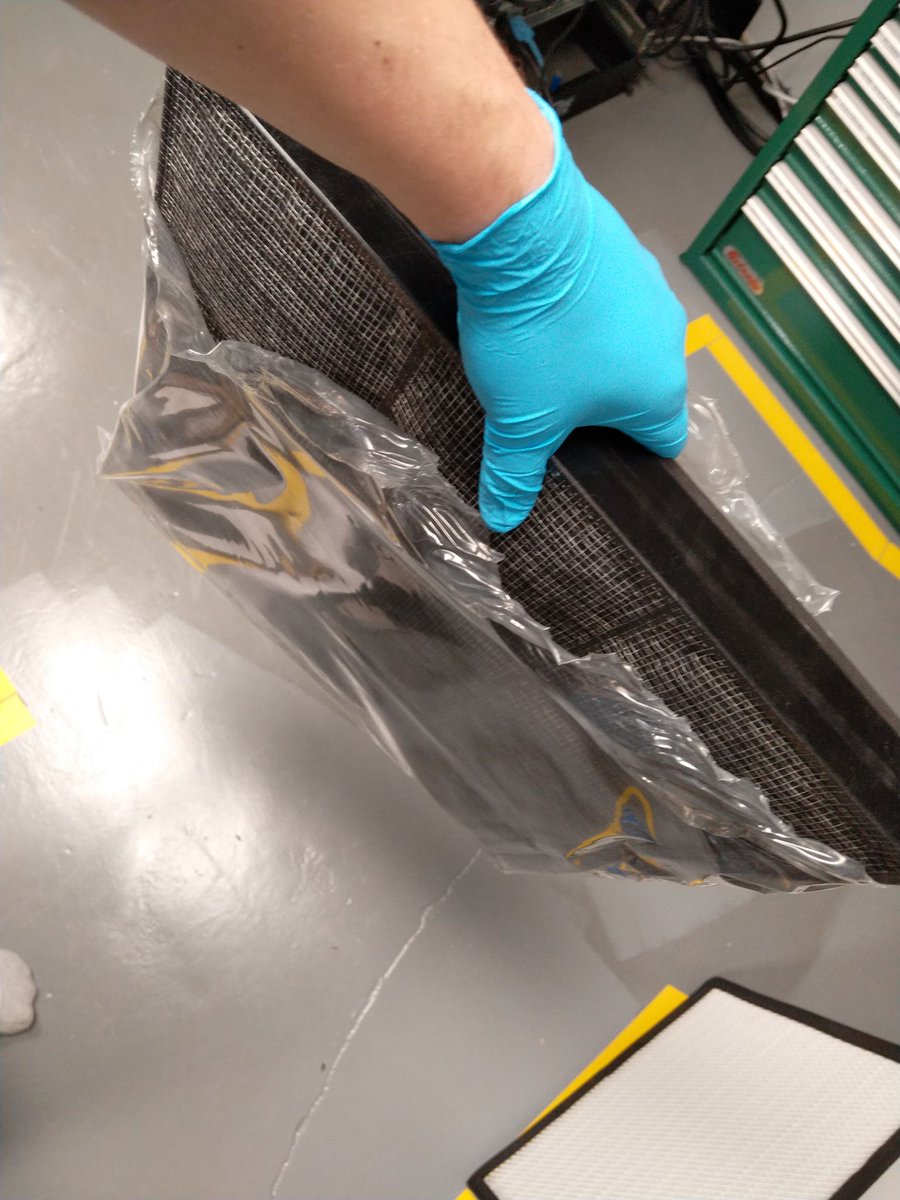
I did bag the used carbon filter, since it tends to shed carbon particles when handling it. The acid gases are converted to non-volatile salts by the alkaline doping on the filter, so no worry about those offgassing.
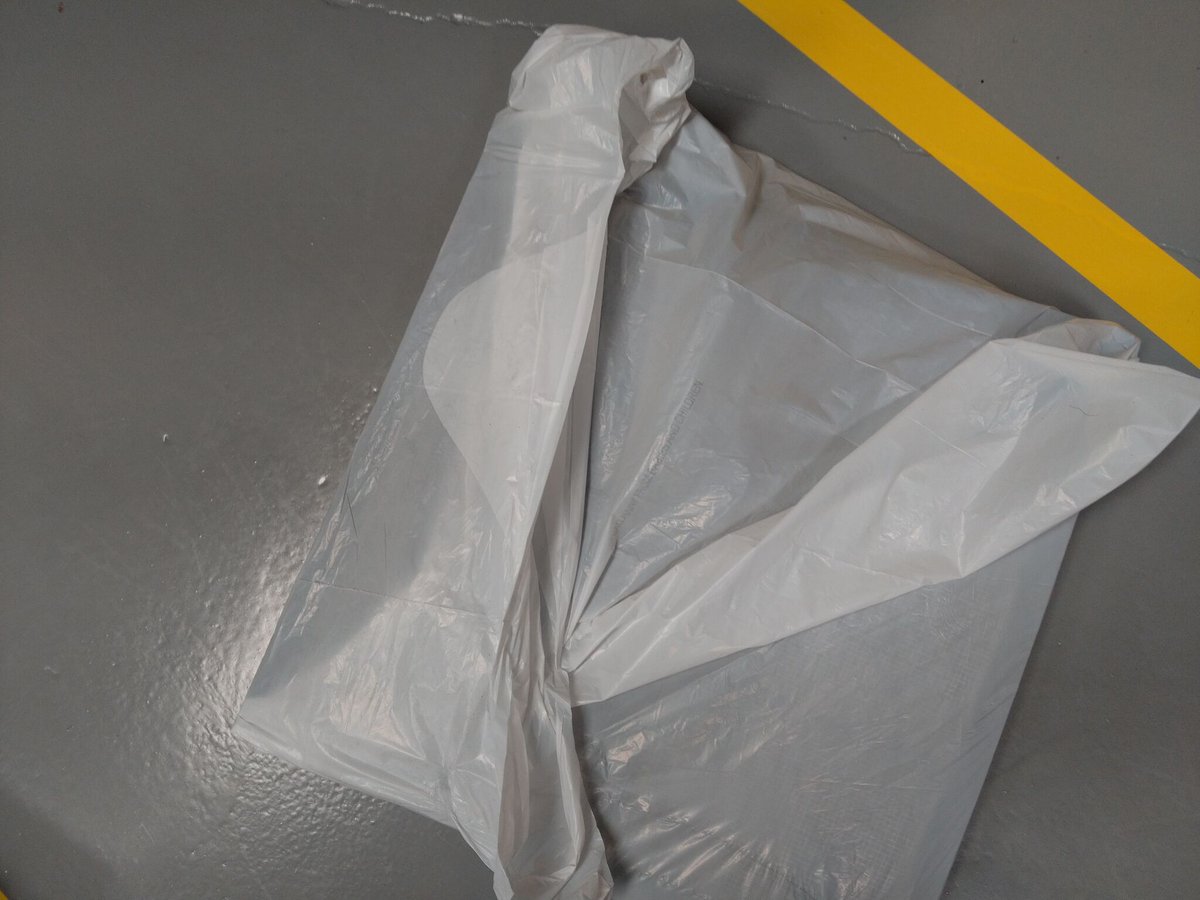
And the only other stuff used in the hood is things like acetone and IPA. Trace quantities of those outgassing isn't a significant air quality concern. Nothing super toxic or carcinogenic, the acid gases are the main reason I use it.
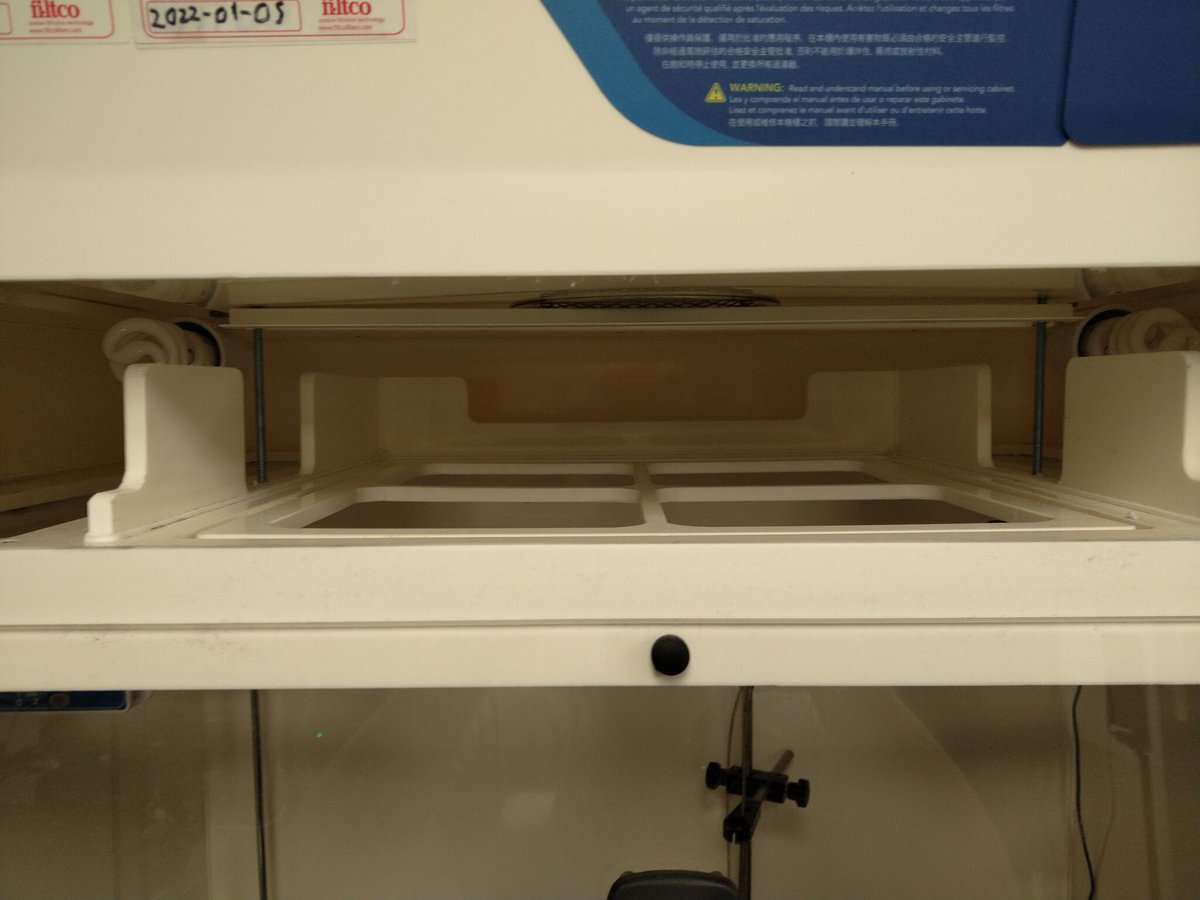
Empty filter plenum awaiting insertion of the new OV/AG filter.

Note my hand for scale in the last photo. While it's chemically the same as an OV/AG respirator cartridge like a 3M 60923, the quantity of media is massively greater!
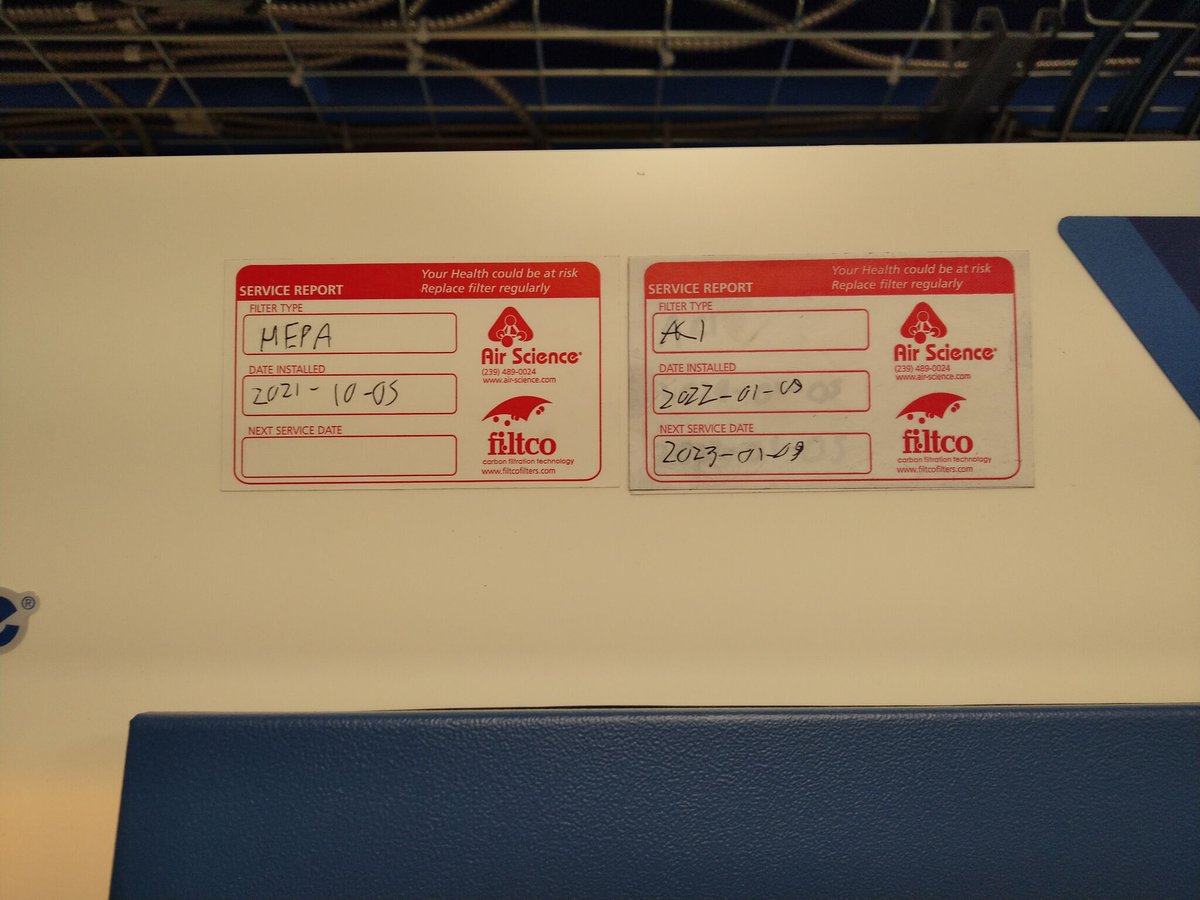
All done, new filter inserted and existing HEPA put back on top of it. Just need to fill out the service sticker and do a flow velocity check.
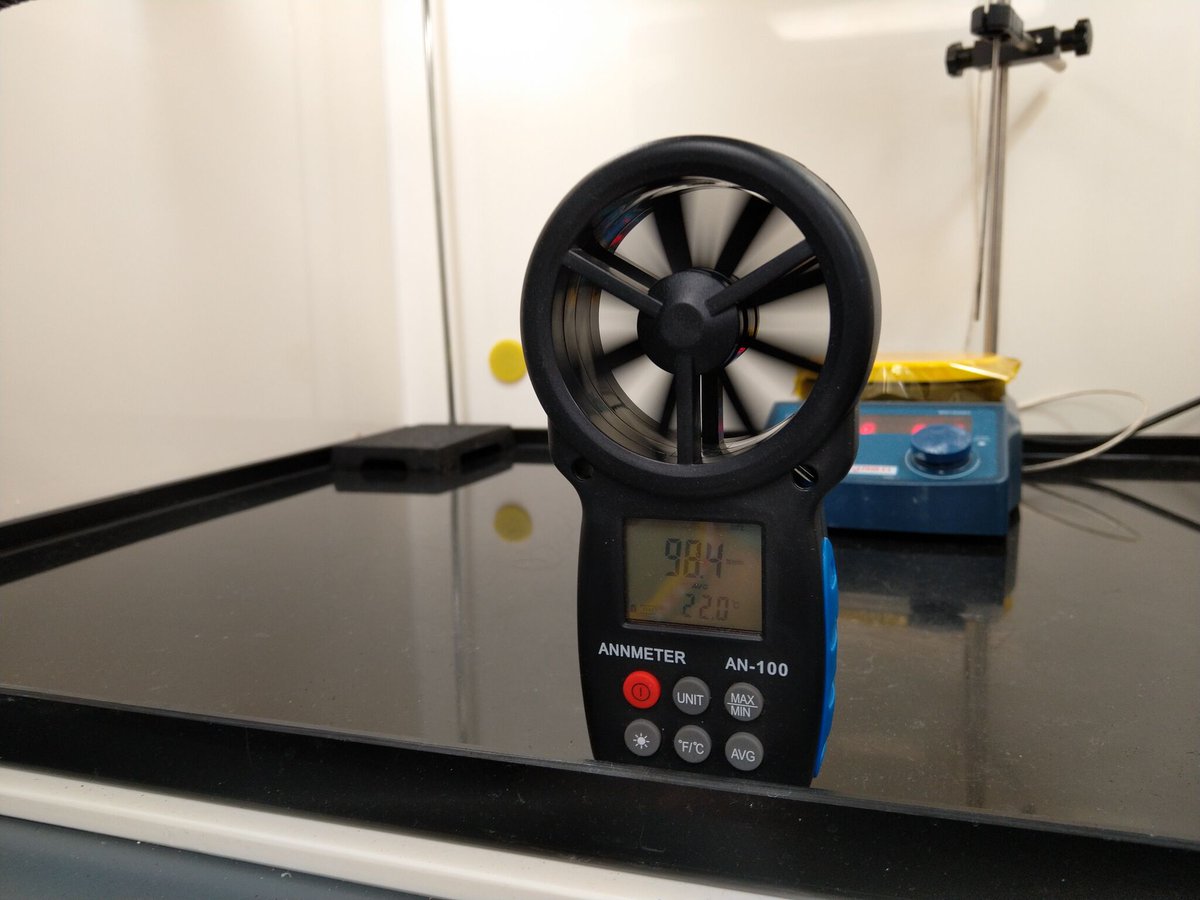
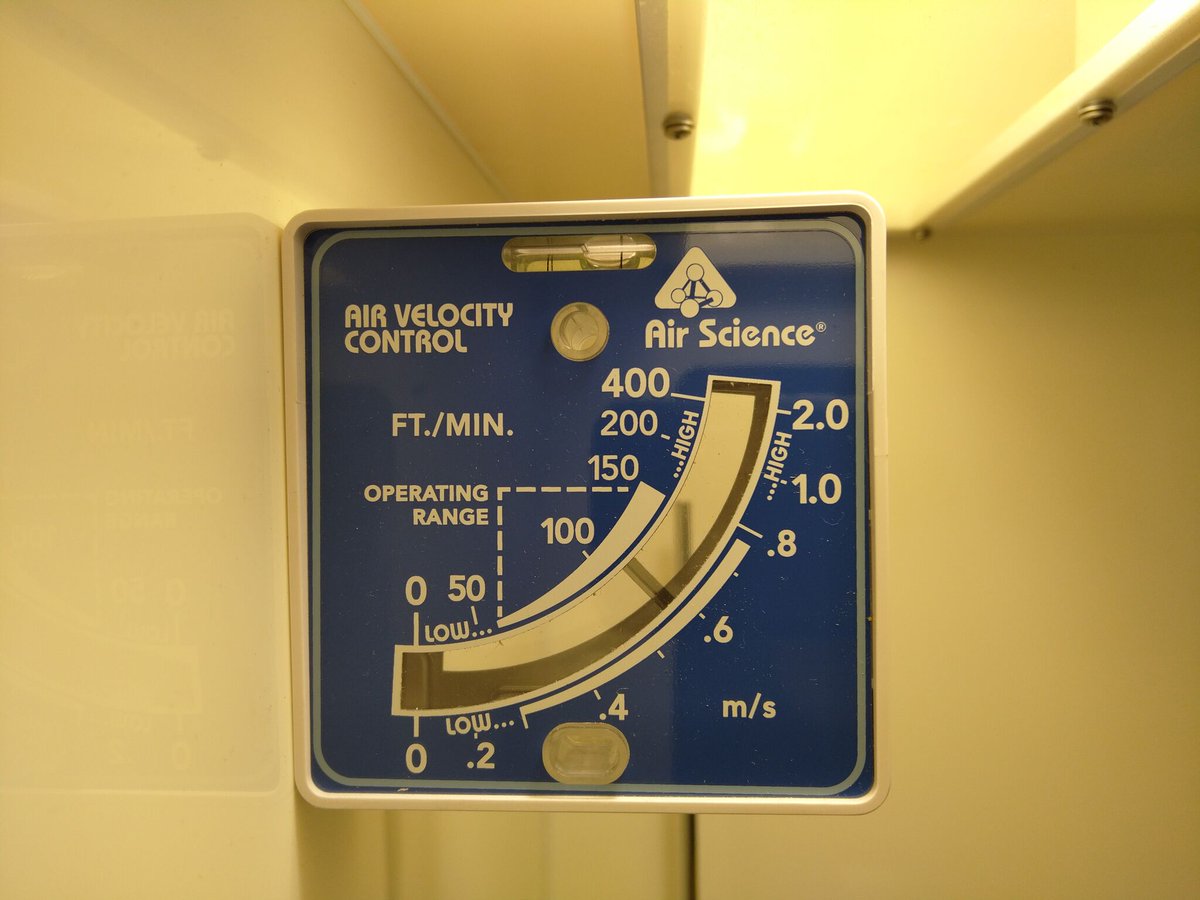
Airflow velocity looks perfect. The moving-vane indicator in the hood reads slightly over 100 ft/min and double checking with an anemometer at the face reads slightly under. Right where we want it.
• • •

Missing some Tweet in this thread? You can try to force a refresh

 

Keep Current with Andrew Zonenberg @azonenberg@ioc.exchange

Andrew Zonenberg @azonenberg@ioc.exchange Profile picture

Stay in touch and get notified when new unrolls are available from this author!

Read all threads

This Thread may be Removed Anytime!

PDF

Twitter may remove this content at anytime! Save it as PDF for later use!

Try unrolling a thread yourself!

how to unroll video
  1. Follow @ThreadReaderApp to mention us!

  2. From a Twitter thread mention us with a keyword "unroll"
@threadreaderapp unroll

Practice here first or read more on our help page!

More from @azonenberg

Oct 26, 2022
Assembled the (v0.6) AKL-AV1 prototype! Characterization results in this thread.

For those of you just tuning in, the AV1 is an open hardware 1.5 GHz class, high impedance, solder-in, single ended active voltage probe (5MΩ || 350 fF, 10x attenuation) that runs on 5.5V DC.
First step is low frequency trimming. This adjusts the DC path (OPA210) and AC path (BUF802) to have the same gain.

Seen here before and after.
Next, high frequency trimming. The JFET amplifier stage has a 2.4 pF input capacitance so to reduce loading on the DUT there's a 5:1 R-C divider in front of it.

Shunt path is a 1MΩ terminator across the BUF802, series path is 4MΩ in parallel with a 250 - 750 fF trim cap.
Read 12 tweets
Aug 27, 2022
Friend of mine has been troubleshooting some major EMC problems for a while so I decided to grace the project with a song. Here's my latest draft. Suggestions?

"The Sound Of Crosstalk"
(to the tune of The Sound Of Silence)
Hello crosstalk, my old friend
I've come to fight with you again
Because a field line softly creeping
Left microstrip while I was testing
And the waveform I was sending through my board
Still remains... it is the sound of crosstalk
In restless days I probed alone
Nearby striplines, coupled tones
'Neath the halo of a H-field loop
I turned my specan to the board and hoped

When my graphs were stabbed
By the peak of a coupled tone
Standing alone
It was the sound of crosstalk
Read 6 tweets
Jul 26, 2022
This is how you're supposed to simulate a circuit with a resistor in it, right?

Device is a R20L125 rod resistor from ResNet Microwave (electrotechnik.com/pdf/ROD.pdf). I'm interested in simulating the flatness of a probe using it as an attenuator.

Vendor doesn't publish S-params.
This model is mostly based on guesswork as I don't have a lot of details from their datasheet on internal construction (e.g. metal layer thicknesses).

But as a first order estimate, I calculate 7-10 fF shunt capacitance depending on frequency.
I asked for samples, and they're going to be sending me two 50-ohm devices.

My hope is that with some EM simulation plus characterization of the 50-ohm parts, I can extrapolate to see how a 450-ohm device behaves.
Read 6 tweets
Mar 22, 2022
I've had an HP LaserJet all-in-one printer in my home office for a couple of years now. I finally ran out of black toner and had to swap the cartridge out.

The box had this cool anti-counterfeiting seal on it, which changes appearance as you tilt it. Let's take a closer look!
There's a barcode and QR code that seem to be printed using fairly ordinary black ink on paper, and then there's a special insert (the blue area) where Magic(tm) happens.

Let's look at the "toner" microprint area.
As you tilt the label, the six little balls rotate while the rest of the graphic remains fairly constant in appearance.
Read 11 tweets
Jan 30, 2022
Open offer: If anyone sends me one of these (or any other similar audiophool products) I'll do a full signal and power integrity workup on it. And send it back after if you want.

I'd love to see how awful that "low noise" power rail really is.
Oh, and of course these geniuses are throwing a fancy TCXO on the board to get "low jitter" clocking.

... except the actual NVMe interface is clocked by the PCIe refclk. Which is spread spectrum modulated on most motherboards.
So even if the flash controller's internal PLL had good enough jitter characteristics that a better reference would improve it, at most you'll improve setup/hold margins between the controller and the NAND die.

Which *totally* helps with audio quality.
Read 4 tweets
Jan 29, 2022
Sample of the green corrosion (no white stuff present) being sent off for EDS.

I expect to see lots of copper but curious what the other peaks will be. Chlorine seems plausible.
Also, I really need to get a polarizer or something on this scope... the glare with shiny surfaces like this carbon tape is pretty extreme.
Sampled another region of slightly transparent yellow stuff.

As long as I'm sending stuff out for analysis might as well do a second specimen.
Read 4 tweets

Did Thread Reader help you today?

Support us! We are indie developers!


This site is made by just two indie developers on a laptop doing marketing, support and development! Read more about the story.

Become a Premium Member ($3/month or $30/year) and get exclusive features!

Become Premium

Don't want to be a Premium member but still want to support us?

Make a small donation by buying us coffee ($5) or help with server cost ($10)

Donate via Paypal

Or Donate anonymously using crypto!

Ethereum

0xfe58350B80634f60Fa6Dc149a72b4DFbc17D341E copy

Bitcoin

3ATGMxNzCUFzxpMCHL5sWSt4DVtS8UqXpi copy

Thank you for your support!

Follow Us!

:(