064. The Start of Office v. NetDocs, by @stevesi …rdcoresoftware.learningbyshipping.com/p/064-the-star…
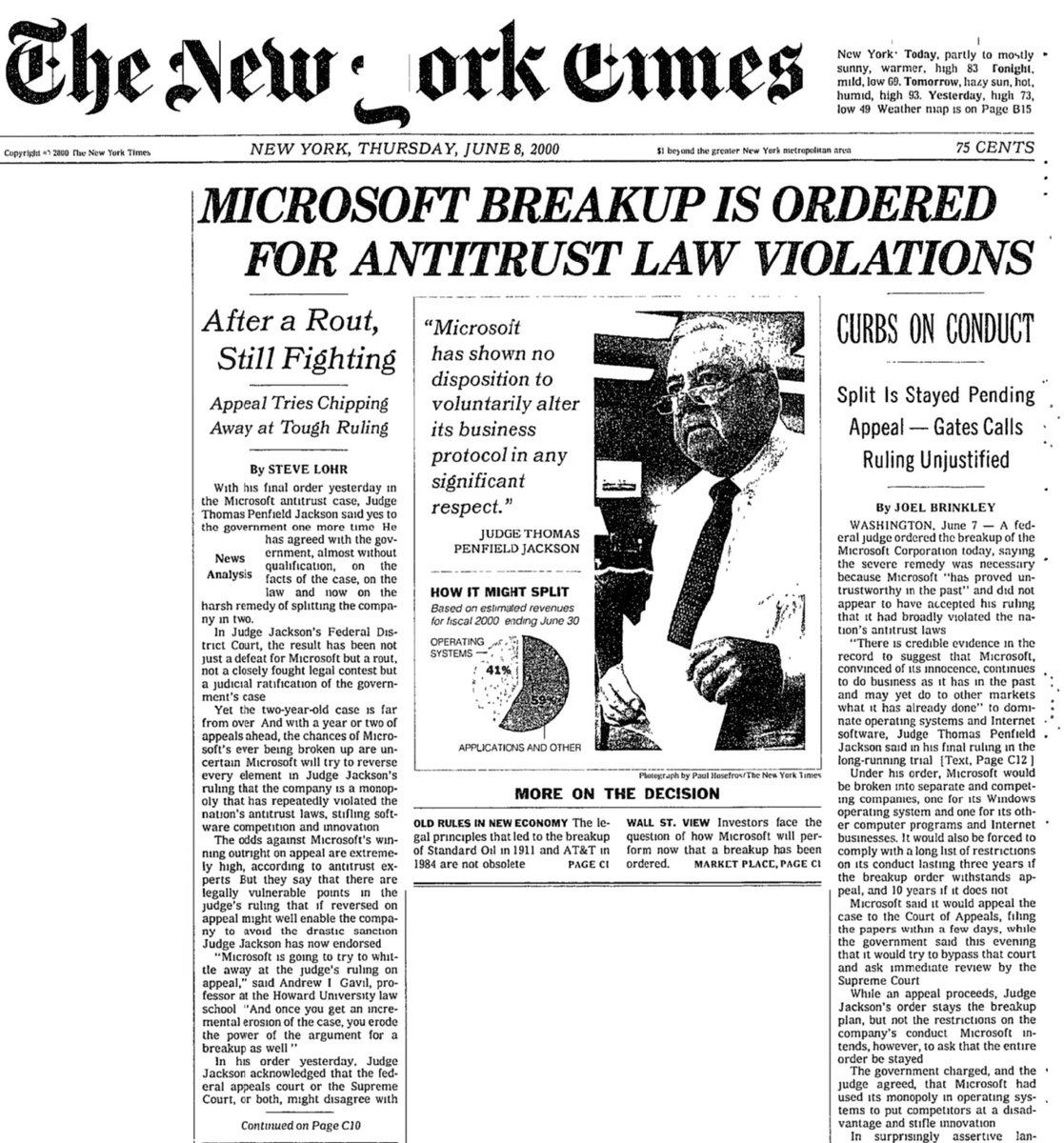
2/ First six months of 2000 were kind of crazy for Microsoft. The DOJ trial awaited a verdict. The stock market hit all time highs and then the dot com crash. BillG stepped down as CEO to a new role "Chief Software Architect". SteveB was now CEO. Would Microsoft even "make it"?
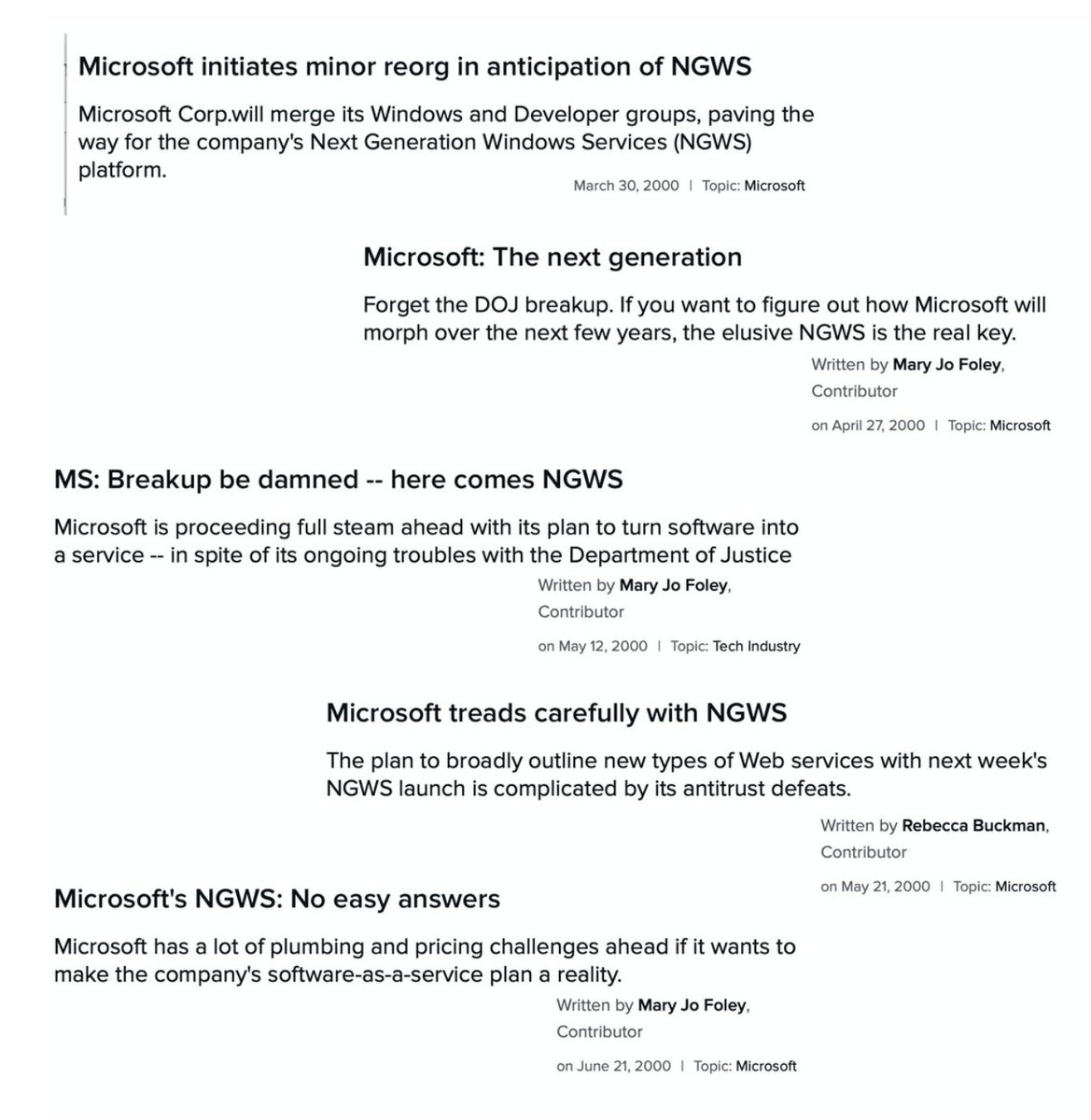
3/ "Disruption" was everywhere and "everything". When faced with the need for a (big) plan, the Windows team loved a good "strategy day" for the press. BillG kicked off "Next Generation Windows Services" as CSA with a bunch of offsites, working groups, and meetings.
4/ First there were memos in early Jan letting everyone know about NGWS. Then mail "we need to have some meetings to figure out what NGWS means". Then we scheduled and rescheduled an event, awaiting the ruling in the trial. A lot of meetings and chaos.
5/ "Forum 2000" was the event, held June 2000. It was a couple of hours of keynote, with futuristic videos (like Information At Your Fingertips, but super good), and live code! Real code. Press spent months speculating. 
6/ The day started with BillG defining NGWS as a transition as big as the move from DOS to Windows. Whenever we wanted something to seem big, this was the narrative we used. But it was a natural evolution too :-) A slide from a video:

7/ The day was structured to deliver on User Experience, Building Blocks, Infrastructure, and Services.
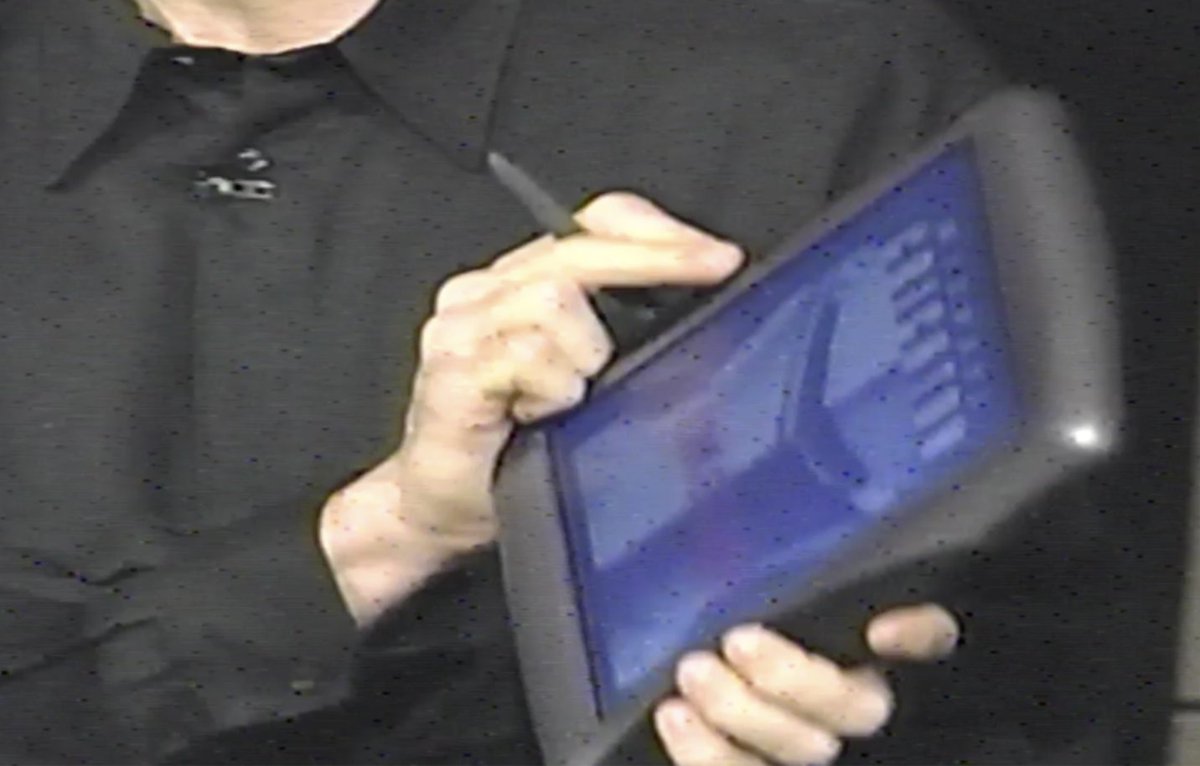
We showed early demos of "Hailstorm"—services and APIs "hosted" by Microsoft (mail, calendar, identity). Also showed business services ("bCentral") and a TabletPC prototype.
We showed early demos of "Hailstorm"—services and APIs "hosted" by Microsoft (mail, calendar, identity). Also showed business services ("bCentral") and a TabletPC prototype.
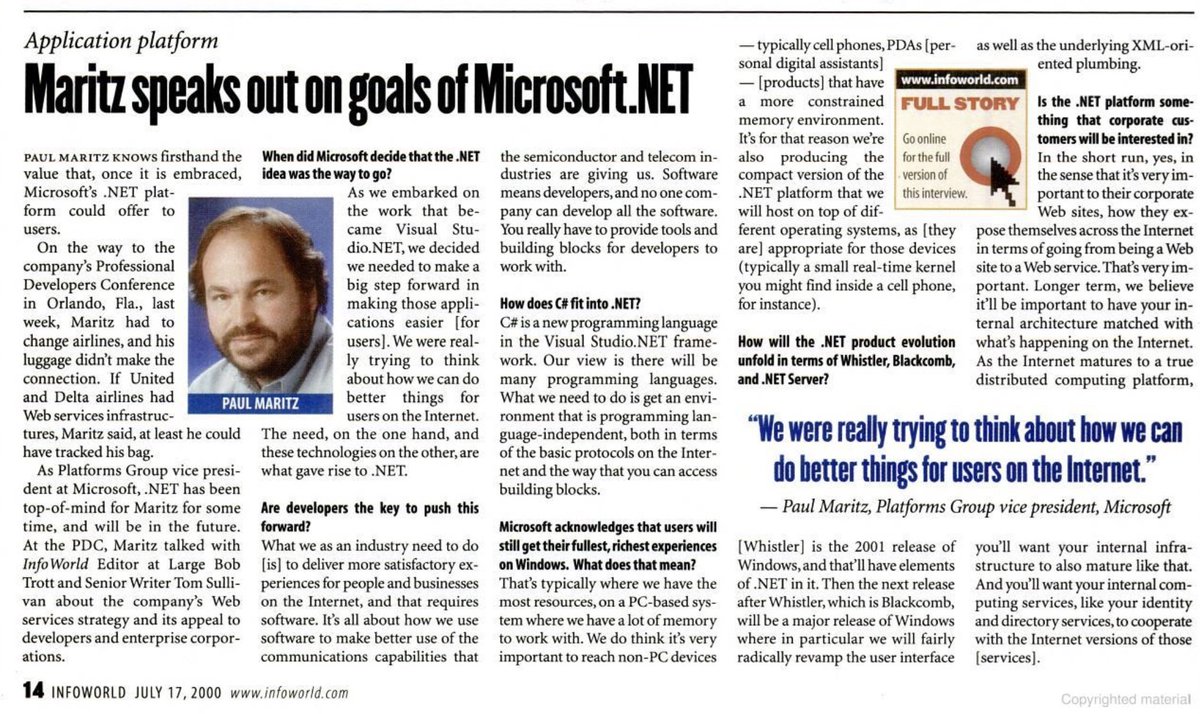
8/ Hearing feedback about "when will it happen" from past events, this event featured very specific slides outlining a product roadmap. While the event was Forum 2000 for NGWS, NGWS was renamed to .NET, which was also the name of products kind of. Yeah it was complicated.
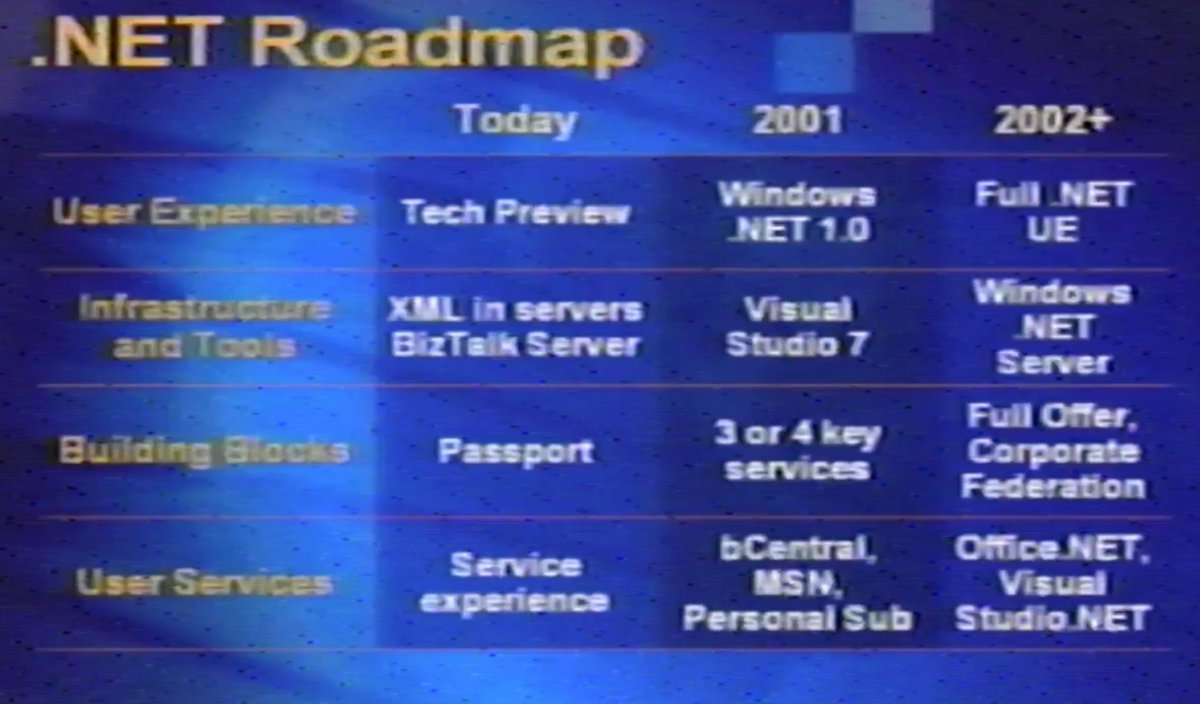
9/ If you look carefully there was something called "Office.NET". I was relatively new SVP of Office but that wasn't on our team. What was it? Where did it come from? Oh my—competing efforts? Not really. Well not a competition at all. But still the press…
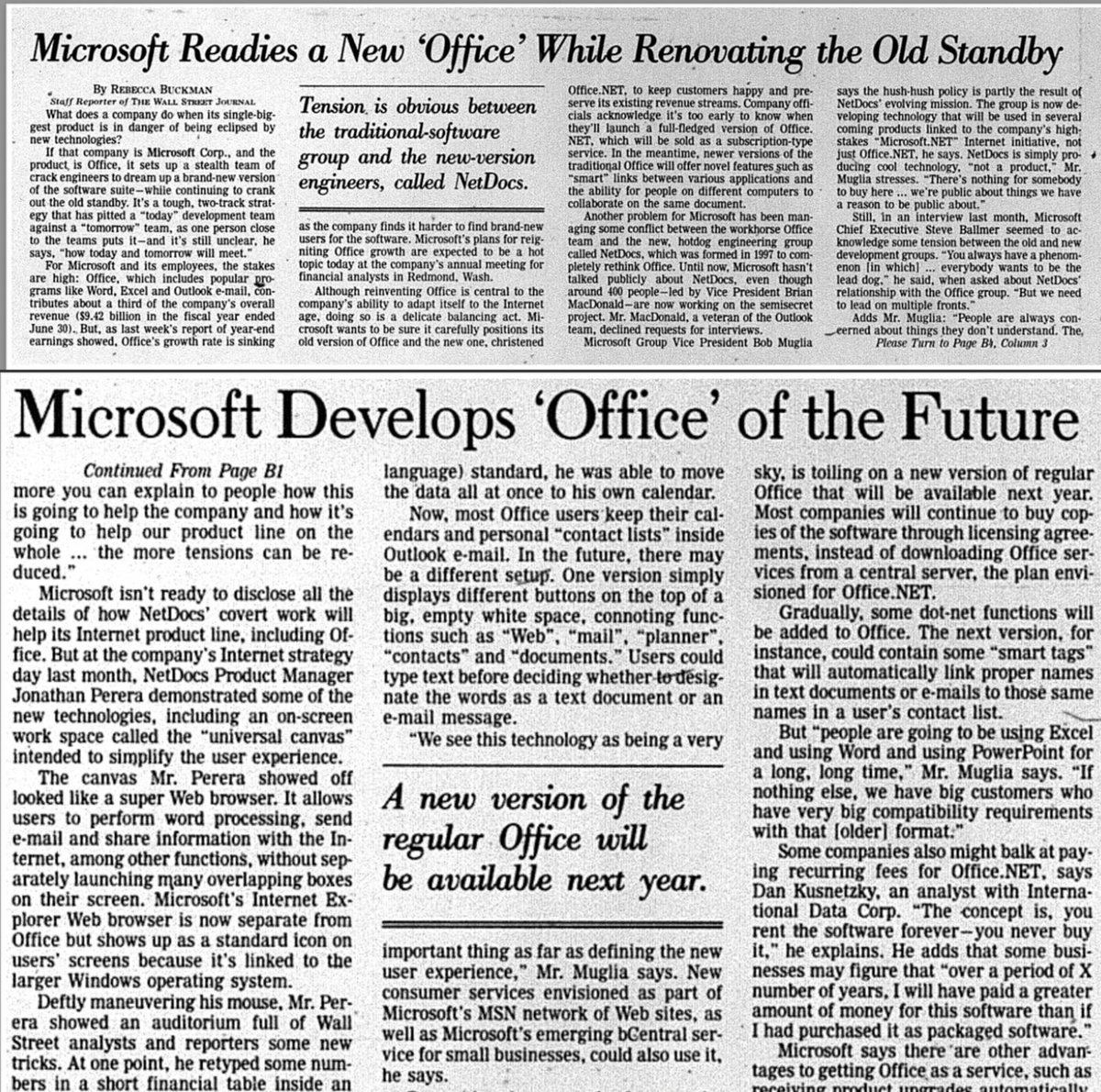
10/ A project spun up with members of the team that created Outlook, called NetDocs. Like Outlook it was free of the constraints of Office, which could be good for innovation but troubling when it came to focusing and shipping. …rdcoresoftware.learningbyshipping.com/p/043-dim-outl…
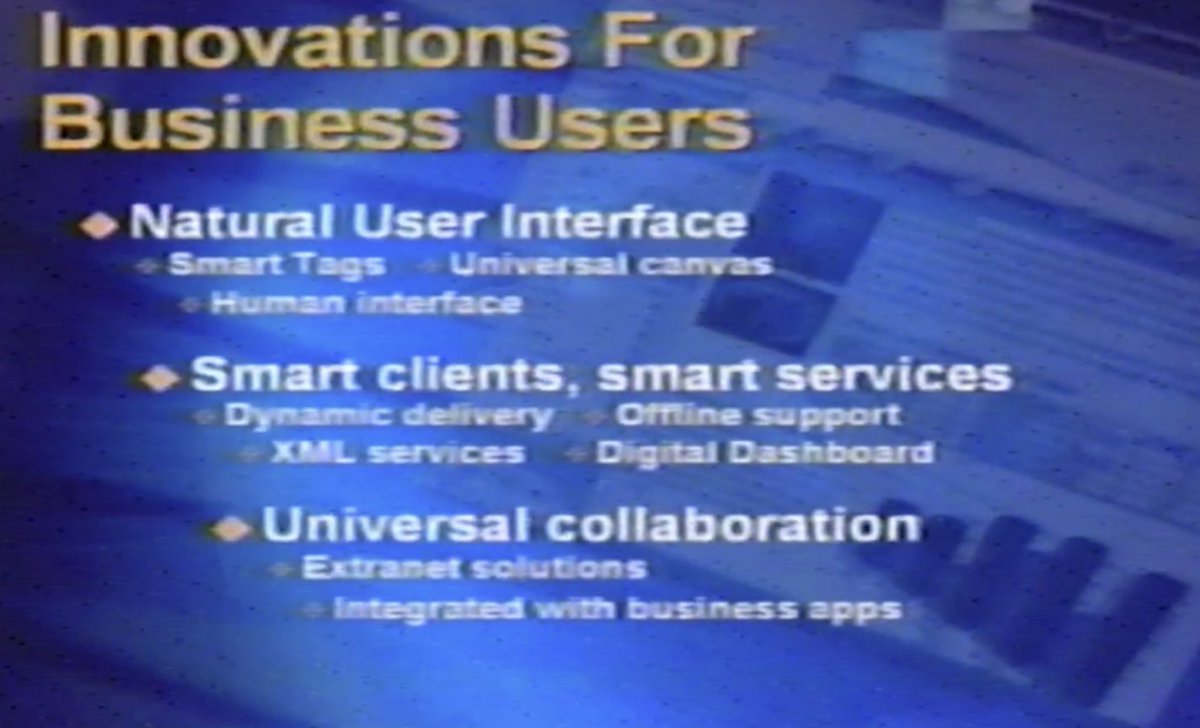
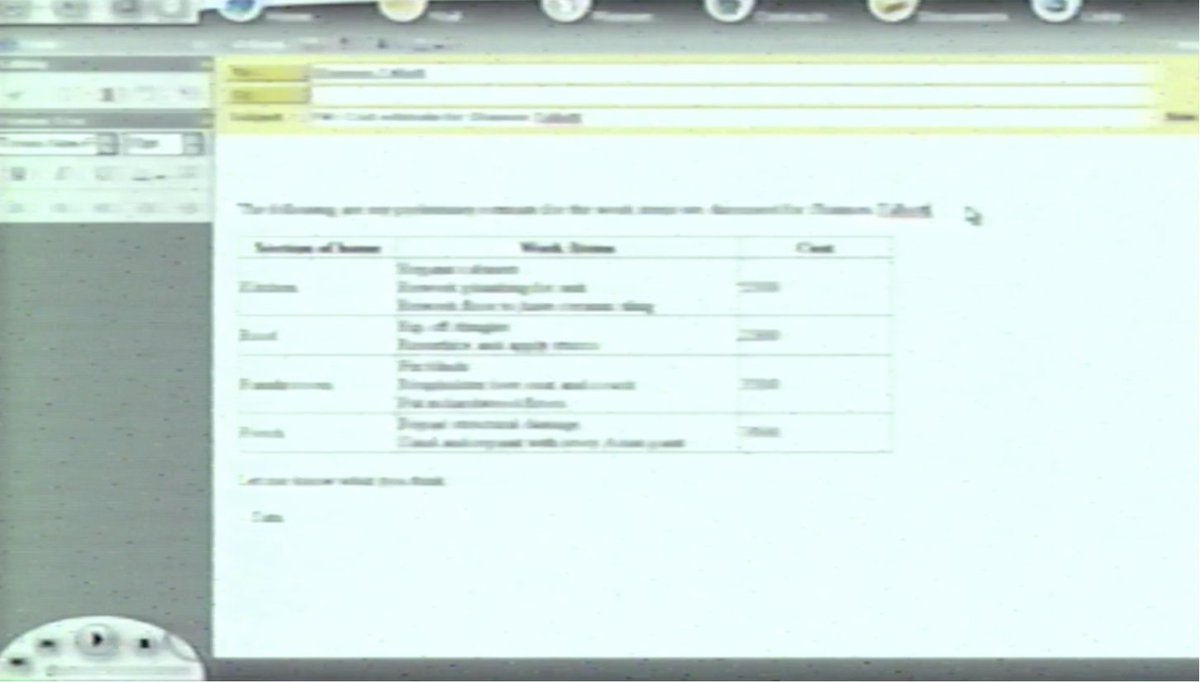
11/ It did *everything* mail, calendar, word processing, spreadsheet, photos, and more. Plus it used all the latest technologies like XML, Internet Explorer. It made it easy to see Office as everything old. Even the roadmap said that. Were we "osborning" Office? Felt so.
12/ OTOH, this was very brave and forward-looking. Microsoft doing the Innovator's Dilemma thing of making sure we were innovating and not resting. Innovation was a key theme. The "universal canvas" feature was innovation.
13/ It seemed that Microsoft intentionally set up this conflict between Office and this new product. Knowing this the demo was called a "technology demonstration" and not a new product. A subtlety lost on everyone, including the Office team.
14/ This put in motion a super interesting dynamic, but it would take 18 months to work out. Office10 was 8 months from finishing. NetDocs just started and needed years (my view). It could have flew under the radar but the company needed "innovation" externally. Super tough.
15/ The event was well-received though kind of confusing ultimately—lots of stuff, lots of names, and a lot of time to wait. But "innovation" and "internet" came through. What is ".NET" would take a while to figure out. What is "Microsoft.NET" or is it "Microsoft .NET"?

PS/ THANK YOU! 🙏 Approaching "modern" times many recall: SharePoint, Office ribbon, Windows 7, Windows 8, Surface, and more. Amazingly, it's been a year of PC history and another year or so to go. Please consider subscribing with this anniversary coupon. …rdcoresoftware.learningbyshipping.com/anniversary
• • •
Missing some Tweet in this thread? You can try to
force a refresh