Suomen epidemia 3.2.2022: tilastokeskuksen julkaisemista tiedoista laskettu ylikuolleisuus on melkein kaksi kertaa niin suuri kuin THL:n ilmoittama kuolemien määrä.
1/x
1/x

Miten yllä oleva kuva on saatu:
1) otettu epidemiaa edeltävän viiden viimeisen vuoden kuolemat tilastokeskuksen datasta
2/x
1) otettu epidemiaa edeltävän viiden viimeisen vuoden kuolemat tilastokeskuksen datasta
2/x

Seuraavaksi on laskettu kuukausittaiset kuolemat vuosilta 2015-2019 ja laskettu siitä keskiarvot.
3/x
3/x

Tuloksena on tämä kuva.
4/x
4/x

Sen jälkeen lisätään toteutuneet kuolemat vuodesta 2015 lähtien.
5/x
5/x

Tässä lopputulos, mikäli vertailukohtana käytetään vuosien 2015-2019 keskiarvoa. Our World in Datan estimaatti (ruskea viiva) on selvästi suurempi kuin tämä laskelma (harmaa viiva).
6/x
6/x

Myös The Economistin estimaatti on selvästi tätä arviota korkeammalla tasolla: (83...120) x 55.4 = 4600-6600 henkeä.
7/x
economist.com/graphic-detail…
7/x
economist.com/graphic-detail…

Yllä oleva arvio (kuva 1) on laskettu käyttäen 2015-2019 keskiarvoa (harmaa viiva). Voidaan myös käyttää esimerkiksi 2016-2019 trendiä (keltainen viiva) tai 2004-2019 trendiä (punainen viiva). Ylikuolleisuus on merkittävä riippumatta siitä, millä tavalla lasketaan.
8/x
8/x

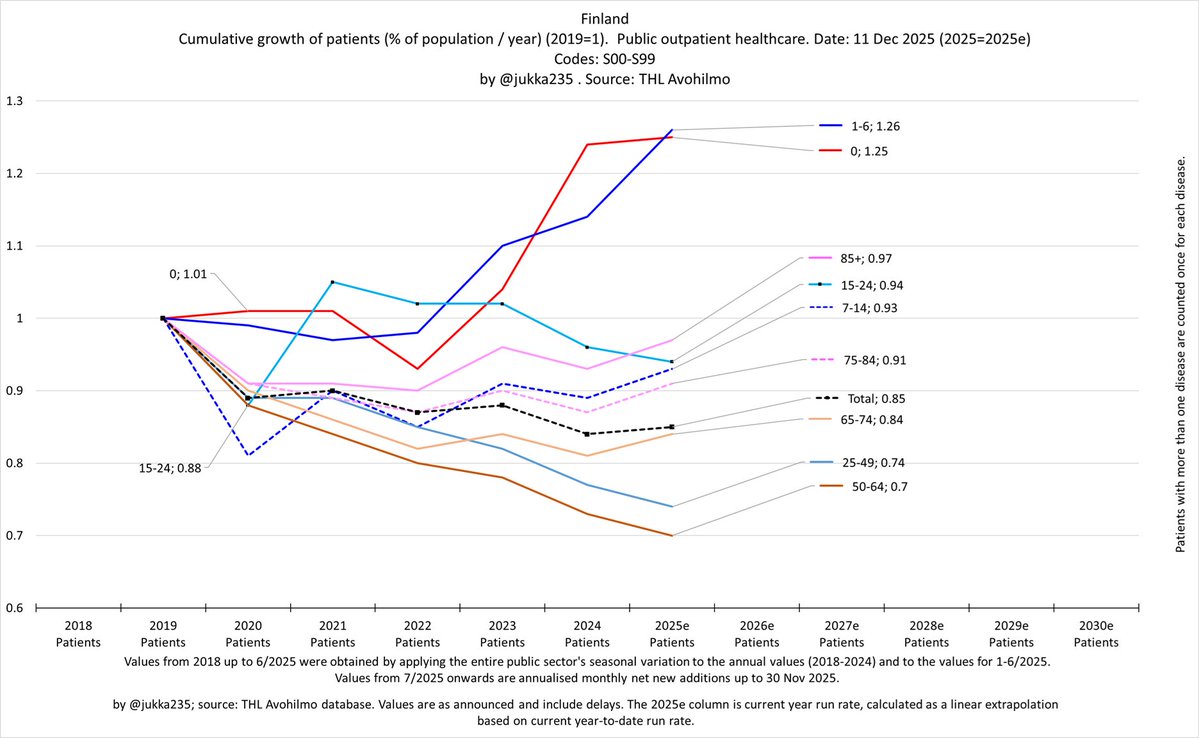
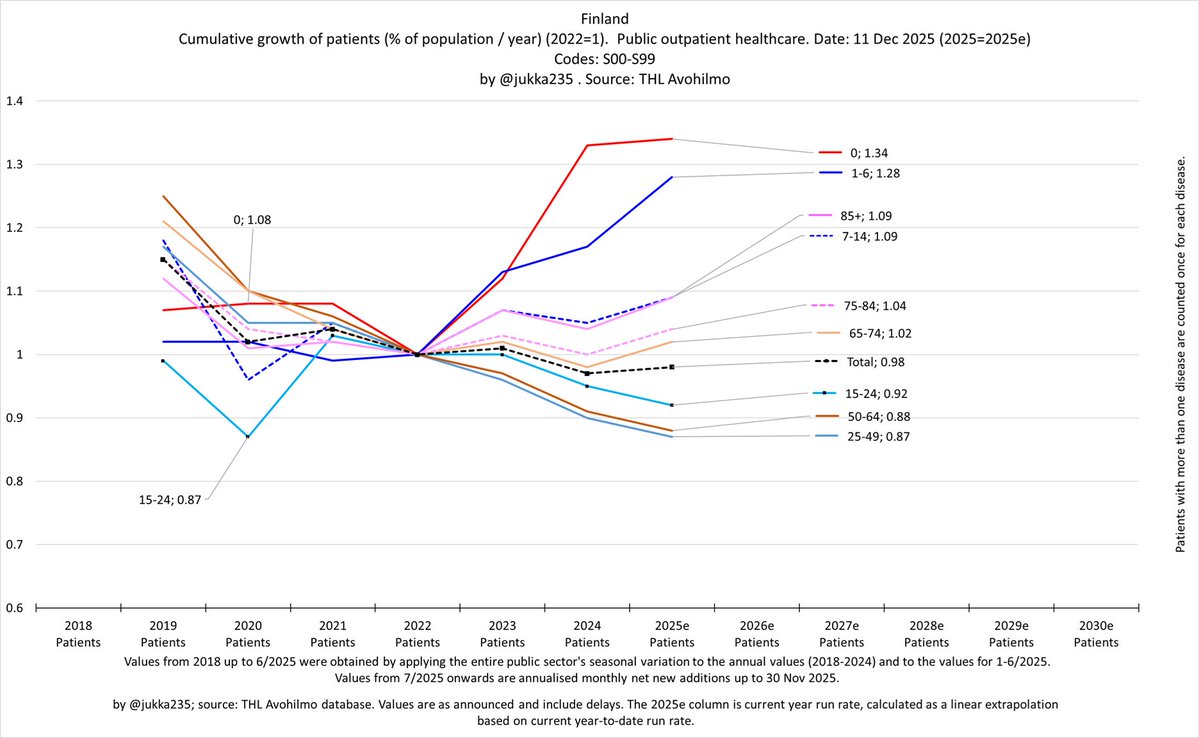
Lasten epämuodostumista johtuvien lääkärikäyntien määrä on noin 3.4-kertaistunut vuoden 2022 alusta lähtien. Tässä on oletettu, ettei kausivaihtelua ole.
9/x
9/x

Tässä sama suomenkielisillä koodeilla. Tämä saattaa liittyä eiliseen tietoon siitä, että Omikron on johtanut merkittävään lasten erikoissairaanhoidon kasvuun.
10/x
sampo.thl.fi/pivot/prod/fi/…
10/x
sampo.thl.fi/pivot/prod/fi/…

Tässä eilisen tilannekatsauksen materiaalien perusteella laskettu kuva lasten erikoissairaanhoidon tarpeen kehityksestä. Onko odottavat äidit priorisoitu 3. rokotusten antamisessa ? Onko odottavien äitien 3. rokotuksia kiirehditty ?
11/x
11/x
https://twitter.com/jukka235/status/1489207712227504133
Eniten nousseet lasten epämuodostumien koodit ovat
- Q61 munuaisten rakkulasairaus
- Q21 sydämen väliseinien epämuodostumat
- Q87 useisiin elimiin kohdistuvat epämuodostumat
tämä siis ei prosentteina vaan absoluuttinen määrän nousu. Vuoden 2022 luvut on annualisoitu.
12/x
- Q61 munuaisten rakkulasairaus
- Q21 sydämen väliseinien epämuodostumat
- Q87 useisiin elimiin kohdistuvat epämuodostumat
tämä siis ei prosentteina vaan absoluuttinen määrän nousu. Vuoden 2022 luvut on annualisoitu.
12/x

Tässä sama suomenkielisillä koodeilla. Pelkästään tammikuussa käytiin 7613 kertaa lääkärissä, mikä vastaa melkein yhtä kolmasosaa (31 prosenttia) koko 2018-2019 keskiarvosta (24400 käyntiä).
13/x
13/x

Suurin prosentuaalinen lasten epämuodostumien kasvu näyttää liittyvän silmiin, sormiin, varpaisiin, munuaisiin ja virtsatiehen. Jos kerroin on yli 12, niin käyntejä on ollut tammikuussa enemmän kuin koko vuonna 2021 yhteensä.
14/x
14/x

Tässä suomenkieliset koodit. Suurin prosentuaalinen lasten epämuodostumien kasvu näyttää liittyvän silmiin, sormiin, varpaisiin, munuaisiin ja virtsatiehen.
15/x
15/x

Tässä on yhdistettu lasten epämuodostumien prosentuaalinen kasvu ja absoluuttinen kasvu.
16/x
16/x

Tässä sama kuva englanninkielisillä koodeilla. Sääliksi käy lapsia.
17/x
17/x

Positiivisten osuuden lasku on hidastunut. Palaan tähän perjantain 4.2. ketjussa.
18/x
18/x

THL ilmoittaa, että lasten epämuodostumisten käsittelyssä on ollut virhe. Jään odottamaan uusia tietoja.
19/
19/
https://twitter.com/THLorg/status/1489578259264131080
Kävin THL:n korjaamattomia lukuja läpi. Siellä näyttää olevan selvä virhe 2022 luvuissa. Sen olemassaolon voi päätellä siitä, että virhe toistuu suunnilleen saman suuruisena kaikissa ikäluokissa.
20/x
20/x
https://twitter.com/jukka235/status/1489920571915780100
• • •
Missing some Tweet in this thread? You can try to
force a refresh