1/ EU's dependency on Russia's gas is still significant.
Russia is the largest supplier of gas to Europe. w/@BHilgenstockIIF
2/ Even if LNG imports have increased sharply
3/ There is limited availability of additional LNG on the market. Global liquefication capacity is almost fully used up and LNG vessels are in very high demand. LNG is sold and acquired largely via long-term contracts.
4/ European buyers would compete for a relatively small share of the market. Finally, additional demand, which represents roughly 20% of the existing global LNG market, would put strong upward pressure on prices.
5/ The overall capacity of LNG terminals in Europe is sufficient.
6/ LNG terminals are unevenly distributed, there will also be issues with the distribution of gas with Europe.
7/ Gas storage levels in Europe at record lows (gas experts of course will correct that there are a lot technicalities around this with monthly data, weather, and seasonality).
8/ Do not forget, Russia is also an important player in the LNG market.
9/ The fact that NS2 is on hold, makes it harder to cut out Ukraine from gas transit in the future. As of now, gas transit is at historical lows.
• • •
Missing some Tweet in this thread? You can try to
force a refresh

1) Russia didn’t give concessions. It, potentially got a win, 30 day no energy strikes would force Ukraine to stop hitting Russian refineries. Russia hasn’t been as effective as feared in disrupting Ukrainian energy.
2) Russia got validation that it is not the aggressor WH “this conflict should never have started and should have been ended … with …good faith peace efforts”
3) WH readout brings back Russia to “bilateral” discussions about Ukraine. Europe doesn’t have “spheres of influence” Trump and Putin do. It even loops Russia in MENA issues akin to the USSR/US talks.
4) Russia reiterated it maximalist demands and asserted it “legitimate security concerns”: no military or intelligence aid to Ukraine, no mobilization in Ukraine, no armament of Ukraine, inability of Kyiv regime to negotiation (hint at a regime change?).
5) the WH seems to want reset even more than Russia. WH last para on “enormous economic deals and geopolitical stability from improved bilateral relationship” goes against macroeconomic logic.
2) Russia got validation that it is not the aggressor WH “this conflict should never have started and should have been ended … with …good faith peace efforts”
3) WH readout brings back Russia to “bilateral” discussions about Ukraine. Europe doesn’t have “spheres of influence” Trump and Putin do. It even loops Russia in MENA issues akin to the USSR/US talks.
The EU should take over Russian assets. Here is why and here is how. A thread🧵
1) The EU is sitting on Russia's frozen assets, more so than any other country. It would have been wonderful to do this with the G7, but the US is now unlikely to do so. The EU is the most exposed to Russia's aggression.
2) The EU raised "financial stability" concerns in the past. The euphemism is for Saudi or China to drop bonds of European countries, for example France with debt to GPD over 110%, and significant holdings by sovereign funds.
3) Saudis warned G-7 over Russia Seizures with debt sale threat (warning made to EU states, said people familiar with matter @business
Sanctions don’t work… they say. Sanctioning Gazprom and another 50 or so banks without wavers had an immediate impact. It also came from fertile soil under macro pressure in Russia. 1/
2/ Inflow of “unfriendly” FX has already been diminishing for months to come, putting pressure on the ruble.
3/ As a result of the pivot to “friendly” currencies, Russia doesn’t have FX to support the Ruble
2/ Federal budget is back to a large deficit in April. A deficit of 3.4 trillion for the first four months of 2023—already 17% above the full-year budget target.
3/ War is expensive. Expenditure continued to trend up in April despite the stories of pre-payment that would have explained Jan-Feb pick-up. Revenues continue to underperform (-22% vs. 2022M1-4) but as big of a problem are soaring expenditures (+26%)
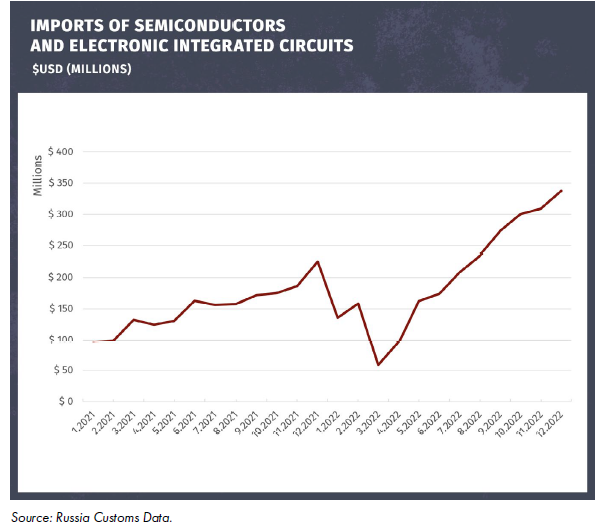
3/ Effect of export controls on Russia, now China and others are stepping in to save the day. Chips, drones and overall trade, recommendations how to strengthen implementation and enforcement.
1/ Russia substantially increased chip imports in 2022, past the pre-war peak. The value of chip imports is up from $1,8 bn recorded for Jan-Sept 2021 to $2,45 bn over the same period in 2022.
2/ China has stepped in to support Russia's access to chips.
3/ China and HK support can be quantified by the value of shipments as well as the number of transactions (exports of chips to Russia). Others, like the US, Germany, and the UK have scaled back.