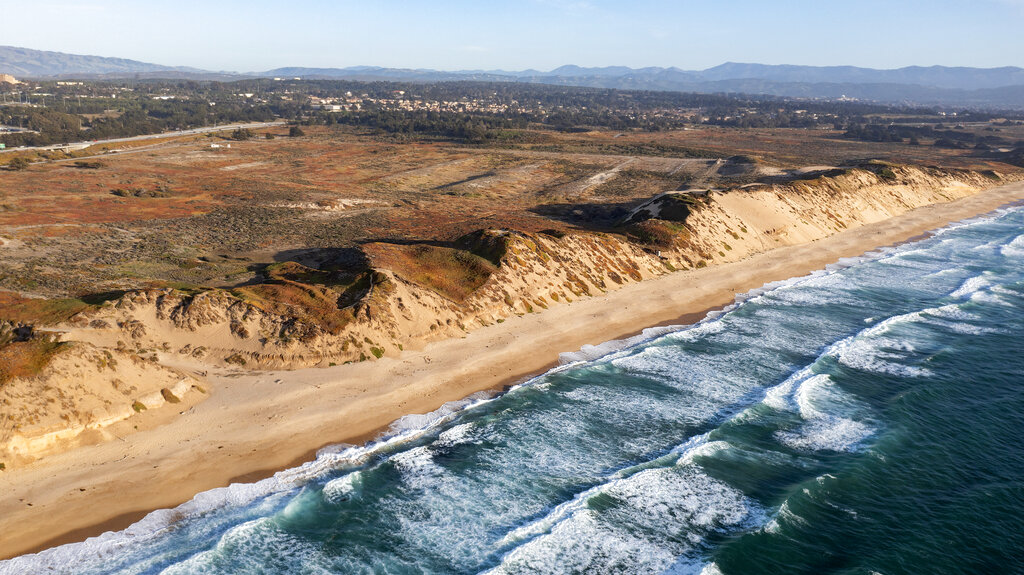
Amid the sparkling sea and sandy dunes at central California’s Fort Ord, soldiers and civilians didn’t question that their tap water was safe to drink.
But in 1990, the U.S Army base was added to the EPA’s list of the nation's most polluted places. apne.ws/sKlbmVR
Decades later, several Fort Ord veterans who were diagnosed with cancers — especially rare blood disorders — took the question to Facebook: Are there more of us?
Soon, the group grew to hundreds who had lived and served there. apne.ws/JbPyNaS
Julie Akey, who arrived at Fort Ord in 1996, said she didn’t know that the ground under her feet and the water that ran through the sandy soil was polluted with cancer causing chemicals.
But an @AP review of thousands of pages of public documents shows the Army knew for years that the chemicals posed a risk at Fort Ord but downplayed them, even after the contamination was documented. apne.ws/JbPyNaS
The military claims there are no adverse health conditions associated with living and serving at Fort Ord. apne.ws/bTeBA2y
Curt Gandy, a former airplane mechanic, recalls being routinely doused with toxic chemicals from the 1970s to the 1990s. He hosed down aircraft with solvents, cleaned engine parts and stripped paint off fuselages without any protection. apne.ws/JbPyNaS
Crews then brought barrels of the used flammable liquids down a bumpy sandy road, dumping solvents, paint and metal chips onto a burn pit. Airfield firefighters would light the toxic sludge into huge roaring fires and then douse them with foam. apne.ws/JbPyNaS
Army documents provide clear evidence that chemicals were being dumped in the burn pit. And it wasn’t the only site where chemical dumping occurred.
The toxins, heavier than water, sank through the sandy ground, contaminating the drinking water supply. apne.ws/JbPyNaS
Without an acknowledgement from the military that the toxins dumped at Fort Ord are linked to specific cancer cases, veterans and community members are unable to get benefits or compensation stemming from their illnesses. apne.ws/JbPyNaS
“You're not just serving for six years, like me, and then you're out,” said Akey, a former Fort Ord recruit who was diagnosed with a rare, terminal cancer at the age of 46. “If you've been given cancer, that's a life sentence.” apne.ws/JbPyNaS
• • •
Missing some Tweet in this thread? You can try to
force a refresh

There has been a dramatic increase in the number of people unaffiliated with organized religion.
AP's religion team explores how this phenomenon is playing out in several countries, including regions where openly being a "none" is rare or even dangerous. projects.apnews.com/features/2023/…
These so-called "nones" — atheists, agnostics, or "nothing in particular" — comprise 30% or more of the adult population in the U.S. and Canada, as well as numerous European countries. Large numbers are secular in Japan, Israel and Uruguay as well. apne.ws/QAEtH23
Most people in Italy, long considered the cradle of the Catholic faith, retain a nominal affiliation. But in a place steeped in tradition, a growing number of Italians have little adherence to doctrine or practice. apne.ws/8dizqIp
Russia has created a vast detention system across two countries to hold thousands of Ukrainian civilians.
An @AP investigation found routine torture, slave labor and psychological abuse within the system. apnews.com/article/ukrain…
Nearly 100 police evidence photos from liberated regions were also obtained by @AP. They showed tools of torture, including the same ones repeatedly described by former civilian captives held in Russia and occupied regions. apnews.com/article/ukrain…
Russia has plans to expand the system in both occupied Ukraine and at home, according to government statements and a document obtained by AP ordering construction of 25 new prison colonies and six other detention centers in occupied Ukraine by 2026. apnews.com/article/ukrain…
BREAKING: The U.S. Supreme Court rules colleges and universities must stop considering race in admissions, putting an end to affirmative action in higher education. https://t.co/jv4l1qxcyqapne.ws/IPmvUPv
The court's conservative majority overturned precedents reaching back 45 years in ruling against admissions plans at Harvard and the University of North Carolina, the nation's oldest private and public colleges, respectively. apnews.com/article/suprem…
The vote was 6-3 in the North Carolina case and 6-2 in the Harvard case. Justice Elena Kagan was the other dissenter. https://t.co/owYOyD9fLVapne.ws/ro1Yz0b
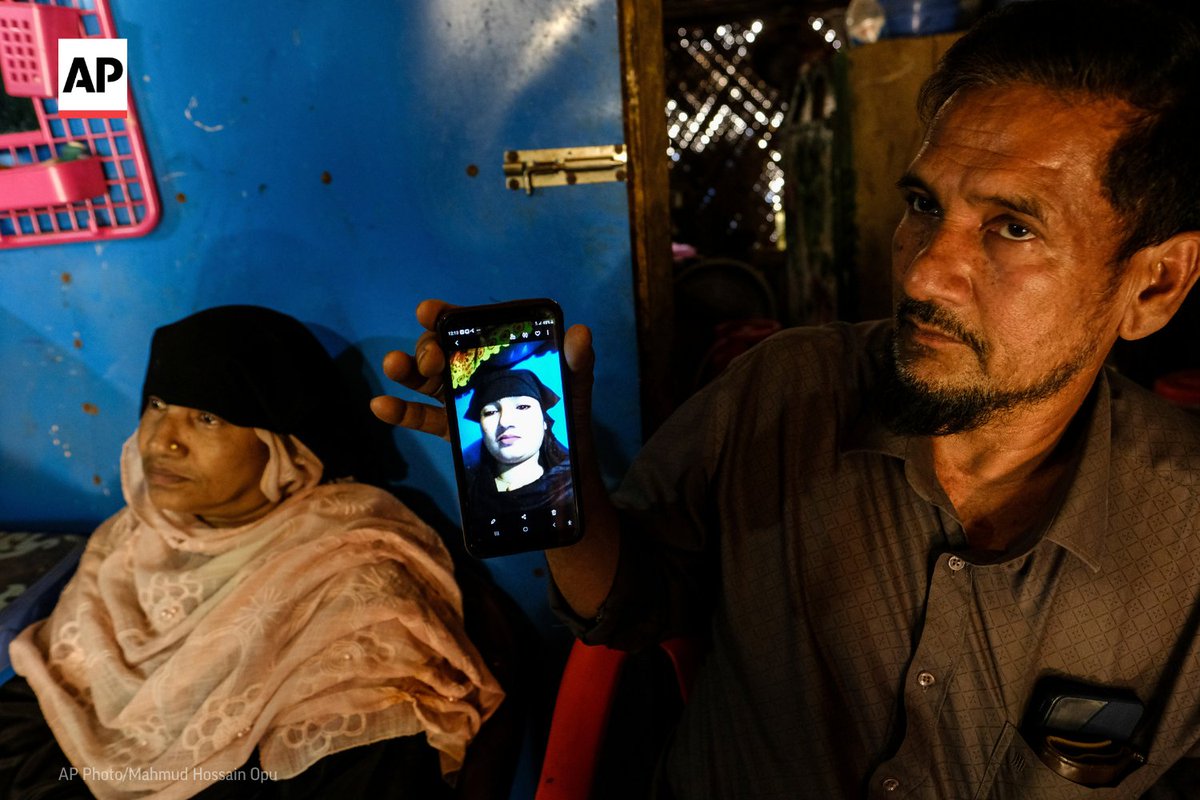
Muhammed Rashid could hear the panic in his wife’s voice and began recording the call.
It would be the last time he spoke with Setera Begum. apne.ws/UaZrZue
Setera’s fateful journey began decades earlier when her family fled civil unrest and a repressive military regime in Myanmar. The persecution of ethnic Rohingya Muslims by the Buddhist majority has pushed more than one million Rohingya to Bangladesh. apne.ws/UaZrZue
The camps have been plagued with violence, widespread hunger and frequent fires. Conditions have deteriorated so much in recent years, that a growing number of Rohingya have decided to risk their lives rather than stay behind in the camps. apne.ws/UaZrZue
Ten years ago, the U.S. Supreme Court halted what many consider the heart of the landmark law known as the Voting Rights Act. Now, the court is set to issue a ruling on whether it will be reinforced or further eroded. apnews.com/article/voting…
The @AP spoke with six people who are part of a small, vanishing group that lived at the epicenter of the struggle for voting rights six decades ago. apnews.com/article/voting…
Stephen Schwerner’s brother was murdered in Mississippi as he tried to register Black people to vote. He is immensely proud of his brother, Mickey Schwerner, but with a great sense of loss: “I don’t think anybody in our family has ever gotten over it.” apnews.com/article/voting…
For many students, new measures restricting how schools address race, gender and sexuality are having deeply personal effects. Some students of color and LGBTQ+ kids feel like their very existence is being rejected. apne.ws/Nx8knLy
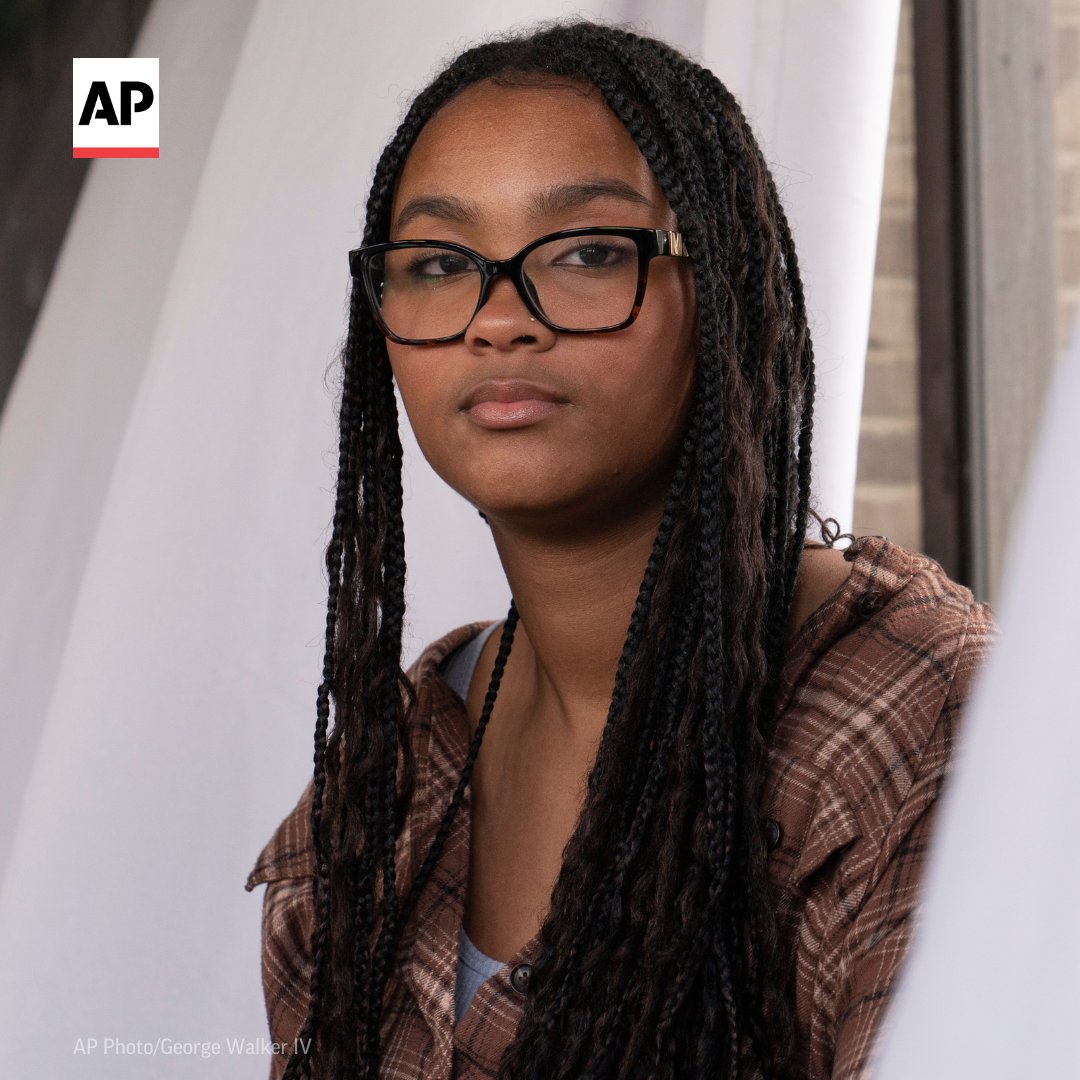
Harmony Kennedy, 16, has experienced racism at her Tennessee school, where a classmate mocked the murder of George Floyd. To her, laws that could limit the teaching of Black history feel like a gut punch. apne.ws/p77SLXI
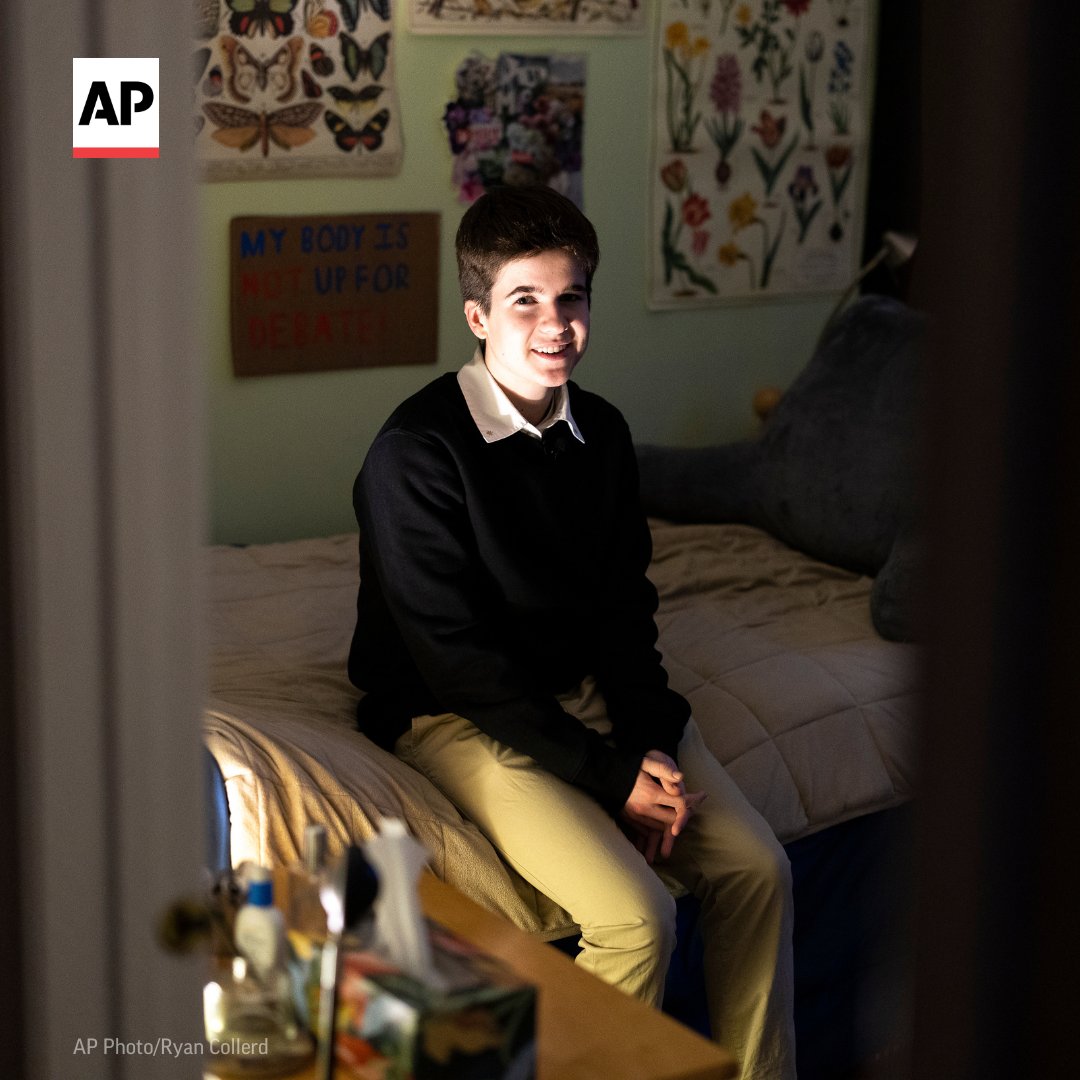
Leo Burchell, a transgender student in Pennsylvania, had teachers’ support when he transitioned in 2020. Then, the school barred using students’ chosen pronouns without parental permission. It feels like a shrinking of the space where he’d felt safe. apne.ws/8te7exg