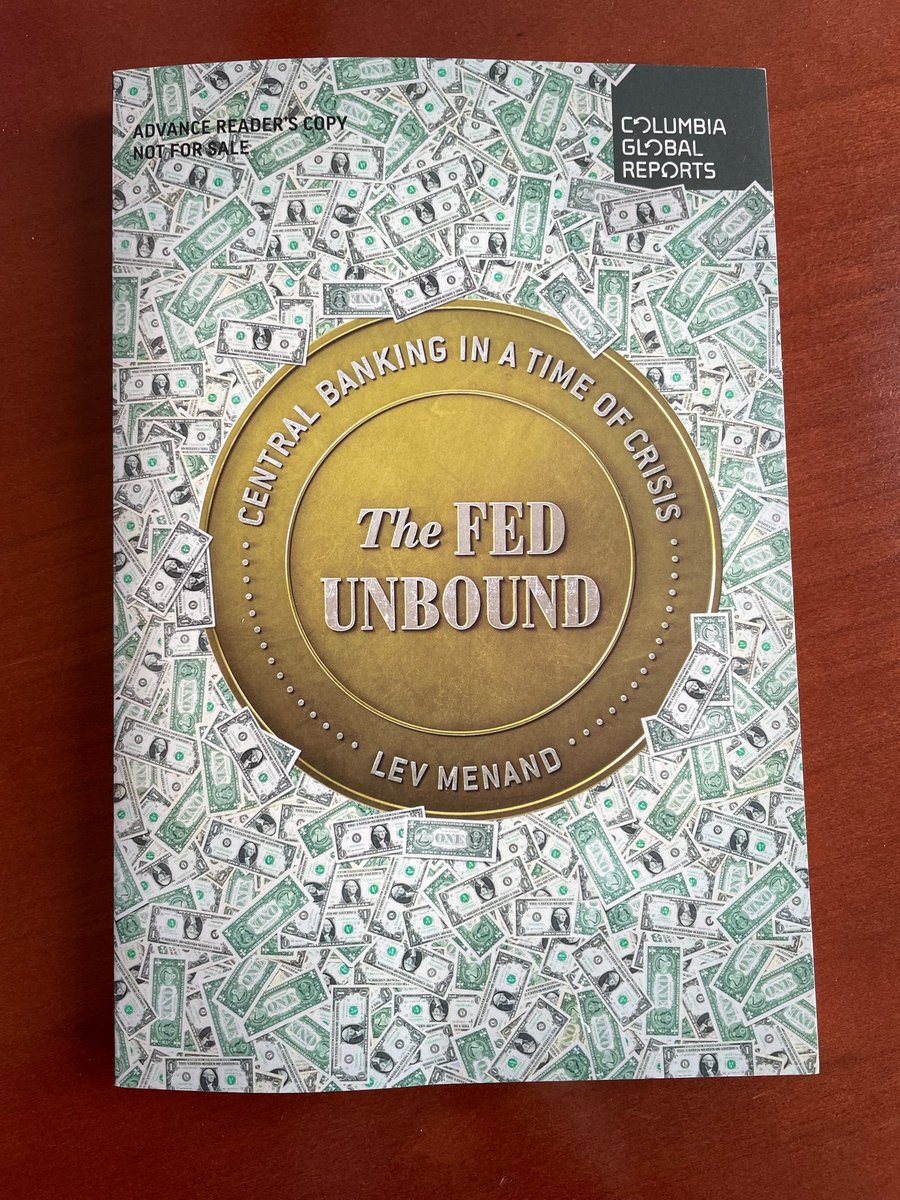
Some news: I've got a book coming out about the @federalreserve and its efforts over the past fifteen years to hold together our increasingly dysfunctional monetary system.
Pre-order a copy using the link below! On sale May 10! 1/6
globalreports.columbia.edu/books/the-fed-…
Pre-order a copy using the link below! On sale May 10! 1/6
globalreports.columbia.edu/books/the-fed-…
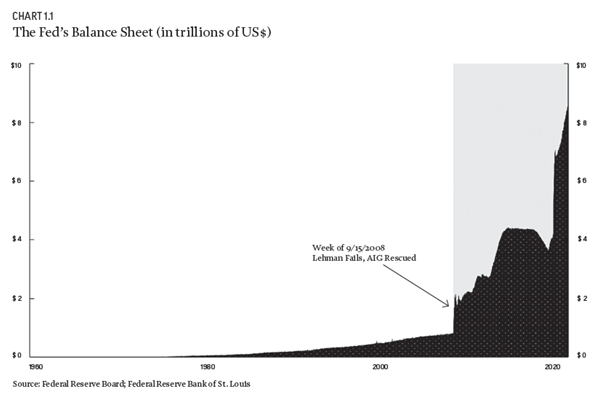
Part explainer, part critique, part proposal for reform, the book takes as its starting pt the following puzzle: from 1950-2008 the Fed's balance sheet was, by and large, a passive product of cash demand; now its an active tool of macroeconomic and fin mgmt. What happened? 2/6
The answer requires unpacking how money works in America: who creates it, on what terms, and for whose benefit. It also requires understanding how the Fed was designed to work (it was built to administer the banking system: to manage the quantity and quality of bank money). 3/6
The Fed's transformation over the past fifteen years is the product of a breakdown in the banking system that dates back more than a half century (a breakdown, it turns out, the Fed played a key role in bringing about). 4/6
"Shadow banking" -- the creation of alternative forms of money by nonbanks -- exploded since the 1990s and prompted the 2008 collapse, the Fed's response and, directly and indirectly, the still expanding set of Fed balance sheet programs. 5/6
Unfortunately, today's arrangements politically and economically unstable, inequitable and unjust. We need to stop relying on the Fed to backstop shadow banks and instead get Congress to rebuild our fiscal and monetary architecture on more solid ground. 6/6
• • •
Missing some Tweet in this thread? You can try to
force a refresh