You might be wondering: Why hasn't the ruble fallen *further* following US EU UK sanctions against the Russian Central Bank? After all, don't these sanctions prevent currency stabilization by freezing Russia's $630 bn+ of reserves? 1/n 
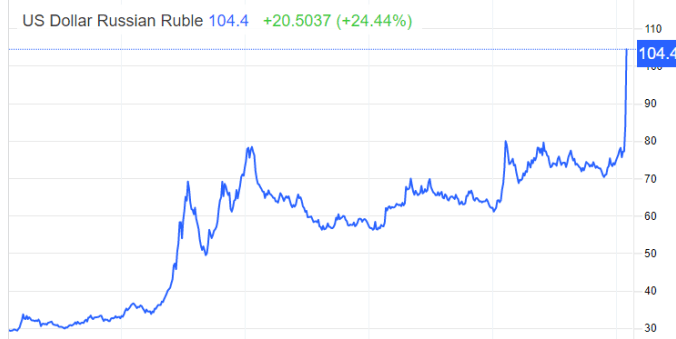
Yes but: Russia still has positive fx flows and the Russian Central Bank has enlisted exporters to act as currency stabilization agents by requiring them to sell 80 % of their fx for rubles, meaning when they receive dollars they sell most of them from rubles 2/n
Because the EU is still buying energy from Russia through Russian banks using dollars and euros, the Russian exporters and banks turn around and sell those dollars and euros for rubles, substituting for the central bank 3/n
At current trade volumes, exporters and Russian banks (the biggest and third biggest still have SWIFT access) can likely buy over $1.5 bn in rubles per day, 50% more than the central bank bought last Thursday using its reserves 4/n
reuters.com/markets/europe…
reuters.com/markets/europe…
Perversely, if the US UK EU eventually unfreeze Russian reserves, its central bank will have been able to preserve its own reserves while forcing exporters to stabilize the currency 5/end
• • •
Missing some Tweet in this thread? You can try to
force a refresh